dailynewsnblog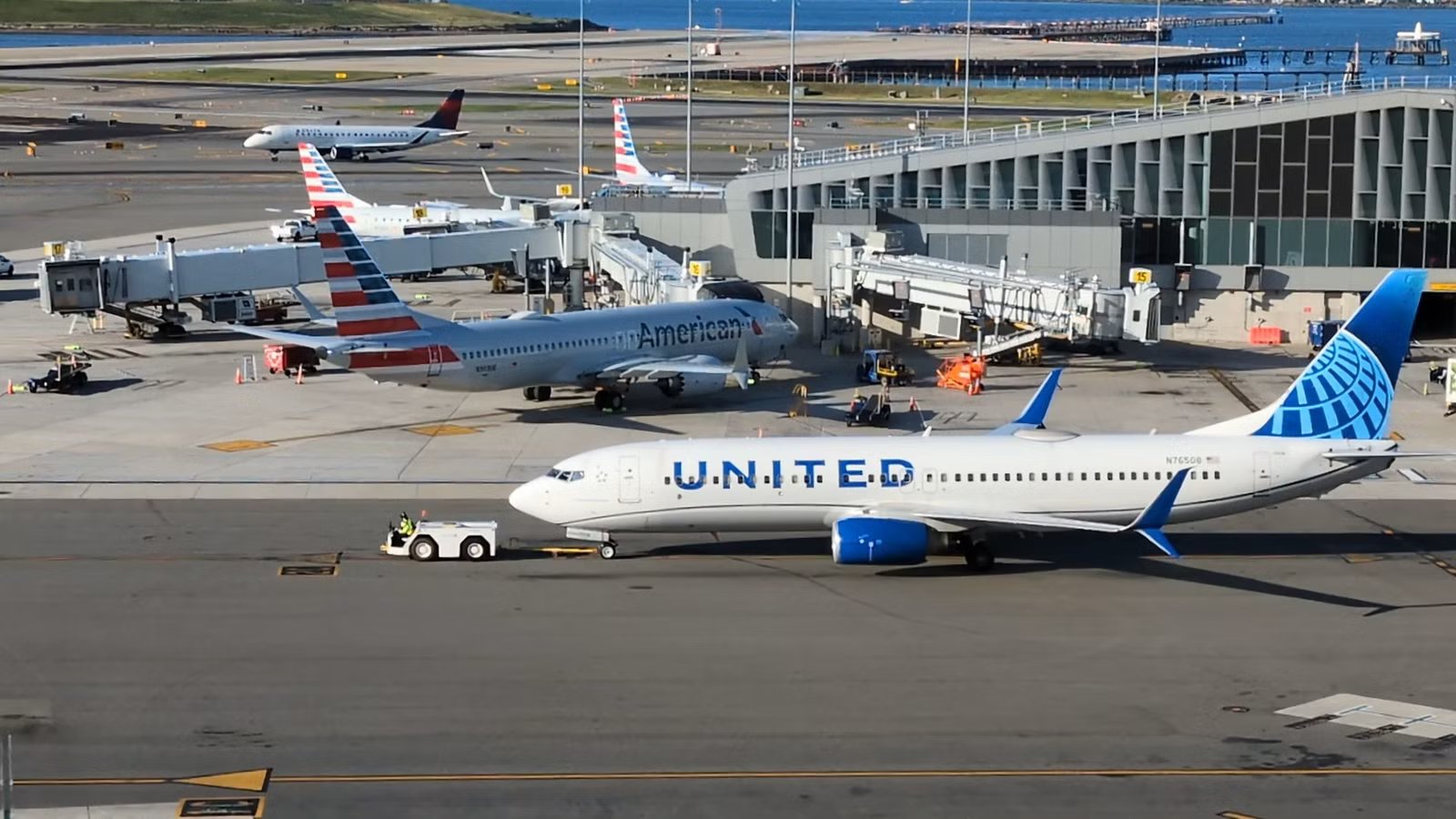
The Merger That Never Was

Kirby’s ambitious proposal, which he made in a meeting with none other than Donald Trump, was based on the fact that, in a time of rising costs for airlines, particularly as far as fuel is concerned, the scale offered by consolidation would help mitigate such pressures. The combined carrier would naturally have been the largest in the world, and accounted for around 30% of all air travel in the United States.
Simple Flying Quiz
Easy (15s)Medium (10s)Hard (5s)
However, within days, Kirby’s pitch was publicly dismissed by American Airlines, with the carrier saying in a statement that such a merger would be “inconsistent with our understanding of the Administration’s philosophy toward the industry and principles of antitrust law.” This recently prompted Kirby to publicly rule out any future mergers, with American having been the only suitable partner. American added that:
“While changes in the broader airline marketplace may be necessary, a combination with United would be negative for competition and for consumers.”
Network Implications

American Airlines and  United Airlines already both have huge networks at their disposal. The former boasts hubs in Charlotte (CLT), Chicago (ORD), Dallas/Fort Worth (DFW), Los Angeles (LAX), Miami (MIA), New York (JFK and LGA), Philadelphia (PHL), Phoenix (PHX), and Washington (DCA). This hub network gives the oneworld founding member extremely extensive domestic and international coverage.
United, meanwhile, lists Chicago (ORD), Denver (DEN), Guam (GUM), Houston (IAH), Los Angeles (LAX), Newark (EWR), San Francisco (SFO), and Washington (IAD) as the places that it calls home. As such, an obvious impact of a merger would be the ability for American to establish itself in Guam, an overseas territory in Micronesia with prime access to Asia. However, such a deal could also help build bridges.
Indeed, American and United have recently found themselves in a battle for supremacy in Chicago, but, in the case of a merger, they might have found that working together would yield better results. Elsewhere, coming together would allow the pair to lock down most of the West Coast (apart from Seattle), and to dominate in cities where they have multiple combined hubs, such as New York and Washington.
What Do You Make Of Scott Kirby’s Proposed United-American Merger?
Simple Flying reported overnight that United Airlines CEO Scott Kirby had proposed a mega merger between his carrier and American Airlines in a meeting with US President Donald Trump.
What Would The Combined Fleet Have Looked Like?

Aside from the network implications of such a merger, one of the most obvious indicators of the scale of combining  American Airlines and United Airlines would be the fleet. Both already have among the largest mainline fleets in the world, with ch-aviation showing that American has 1,030 mainline aircraft at its disposal and another 285 on order.
United, meanwhile, has 1,104 and 602 respectively. As such, joining forces would result in a mainline fleet of some 3,000+ aircraft once all future deliveries are accounted for. The new airline would also showcase the great and the good in American aircraft manufacturing, with all of American and United’s widebodies having been made by Boeing.
While the latter does officially have an Airbus A350 order on its books, this has been shrouded in considerable uncertainty in recent times, and may not be taken up. In any case, while a merger between American and United would have resulted in a force to be reckoned with, it will ultimately go down in history as a dream that was never realized.