dailynewsnblog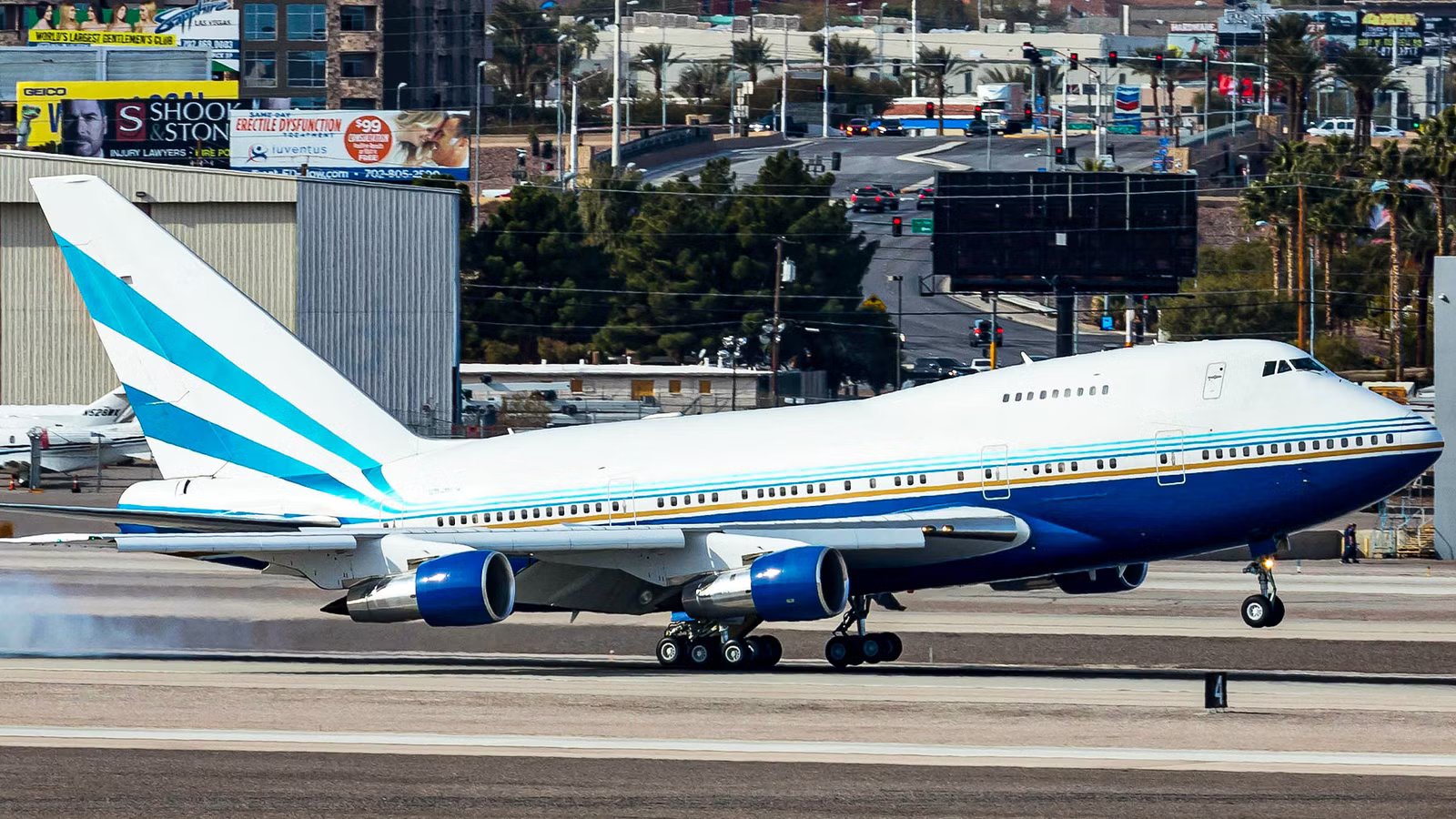
The Boeing 747SP remains one of the most unusual aircraft ever produced because it combined two concepts that rarely coexist in commercial aviation – a dramatically shortened fuselage and ultra-long-range capability. While most aircraft variants become longer and carry more passengers over time,  Boeing instead removed a substantial section of the standard Boeing 747 fuselage to create an aircraft capable of flying farther than nearly anything else in commercial service during the 1970s. The result looked unconventional, yet it delivered performance that several airlines desperately needed as intercontinental travel rapidly expanded.
In 2026, however, replicating the exact philosophy behind the Boeing 747SP would be nearly impossible, not because aerospace engineering has become less advanced, but because modern aviation economics, environmental pressures, certification requirements, and twin-engine efficiency have completely changed the way long-range aircraft are designed. The industry that created the 747SP no longer operates under the same priorities, and many of the conditions that once justified such an unusual aircraft have disappeared.
The Boeing 747SP Was Built For A Very Different Aviation Market

The Boeing 747SP emerged during a period when airlines wanted longer range but lacked efficient aircraft capable of connecting distant city pairs economically. Boeing developed the Special Performance variant after requests from carriers such as Pan Am and Iran Air, which needed an aircraft that could operate ultra-long-haul routes without the seating capacity of a full-length jumbo jet. Instead of developing an entirely new aircraft, Boeing shortened the standard 747 fuselage by more than 45 feet while keeping much of the wing, landing gear, and fuel-carrying capability intact.
That approach gave the aircraft exceptional range and climb performance for its era, but it also produced proportions unlike almost any other commercial aircraft. The shortened fuselage made the aircraft appear dominated by its enormous wing and distinctive upper-deck hump, and Boeing engineers even had to enlarge the vertical stabilizer because shortening the body altered directional stability and changed the aircraft’s aerodynamic balance.
During the 1970s, airlines accepted highly specialized aircraft because route networks were still developing and long-haul travel was dominated by four-engine aircraft. Twin-engine aircraft had not yet gained the regulatory freedom provided by modern ETOPS rules, meaning airlines still depended on large quadjets for many intercontinental operations.
By 2026, the market looks completely different, and airlines often now prioritize aircraft capable of serving multiple mission types while maintaining maximum efficiency. Specialized variants with limited customer appeal are significantly harder to justify financially, especially when development costs can reach billions of dollars.

The Aircraft Replacing The Boeing 747
As Boeing’s flagship, the Boeing 777X is the closest thing to replacing the Jumbo, although it is not a direct replacement.
The Aircraft’s Shortened Fuselage Created Major Engineering Challenges

One of the most remarkable aspects of the Boeing 747SP was how unusual its fuselage design really was from a structural perspective. Aircraft fuselages are typically optimized around efficiency, passenger capacity, aerodynamic drag, and pressurization loads. When Boeing dramatically shortened the 747 while retaining much of its original wing structure and systems architecture, engineers created an aircraft with entirely different stress characteristics than the standard model.
Because the wing remained enormous relative to the fuselage length, the Boeing 747SP experienced different bending moments and aerodynamic forces throughout the airframe. The US manufacturer had to redesign structural components and reinforce key sections to maintain acceptable fatigue life and handling characteristics, and the enlarged tail became one of the clearest visual indicators that the aircraft required significant compensatory engineering changes.
Modern aircraft manufacturers, such as Boeing and Airbus, are far less willing to pursue low-volume structural specializations because certification and production costs have become extraordinarily expensive. The Boeing 747SP sold only 45 aircraft, a number that would be difficult to justify in today’s aerospace market. During the 1970s, Boeing could still leverage existing 747 infrastructure to keep development manageable, but modern programs operate under tighter financial pressures and far greater investor scrutiny.
Aircraft manufacturing has also become more optimized around production efficiency, and composite fuselage sections, digital assembly methods, and highly standardized platforms all favor long production runs rather than unusual niche variants. A modern equivalent of the Boeing 747SP would create manufacturing inefficiencies that most aerospace companies actively try to avoid. Even if engineers could technically recreate the concept using modern materials and systems, the business case would remain extremely difficult because airlines increasingly demand fleet commonality and predictable operating economics.
Modern Twinjets Eliminated The Need For Aircraft Like The Boeing 747SP

Perhaps the biggest reason the Boeing 747SP’s design philosophy cannot easily be repeated is the dominance of modern long-range twin-engine aircraft. In the 1970s, four engines represented the necessity for ultra-long-haul travel. By 2026, they mostly represent higher fuel burn, increased maintenance complexity, and reduced efficiency.
Modern aircraft such as the Airbus A350-900 and Boeing 787-9 can fly substantial distances while carrying fewer passengers than traditional jumbo jets and consuming dramatically less fuel. Improvements in engine reliability, aerodynamics, and lightweight materials have completely transformed long-haul operations.
The Boeing 747SP essentially existed because airlines needed the fuel capacity and operational robustness of a large four-engine platform but did not always need the seating capacity of a full-length 747. Modern twinjets solve that problem much more effectively, and rather than shortening a massive airframe, manufacturers now design aircraft specifically around long-range missions and optimized passenger capacities from the beginning.
The economics are impossible to ignore, and airlines now focus intensely on seat-mile costs, fuel consumption, and maintenance efficiency. A modernized equivalent of the Boeing 747SP would almost certainly require four engines because of the aircraft’s size, yet airlines have spent decades retiring quadjets in favor of efficient twin-engine fleets. The decline of passenger Boeing 747 fleets around the world demonstrates how dramatically the market has shifted away from aircraft designed around older operational assumptions. Today, very few 747s remain in commercial service, with  Lufthansa being the world’s largest operator, as outlined in the table below:
|
Airline |
Boeing 747-400 |
Boeing 747-8 |
Total |
|---|---|---|---|
|
Lufthansa |
8 |
19 |
27 |
|
Air China |
2 |
7 |
9 |
|
Korean Air |
4 |
4 |
8 |
The Boeing 747’s Famous Upper Deck Made The Design Even More Complex

Another reason the Boeing 747SP would be difficult to replicate is its dependence on the 747 design, particularly the aircraft’s iconic upper-deck hump. The hump originally existed because Boeing intended the aircraft to transition easily into cargo service if supersonic passenger aircraft eventually dominated long-haul travel, and by placing the cockpit above the main deck, Boeing allowed the nose section to open for freight loading.
The design worked extremely well for the original Boeing 747 and became one of the most recognizable silhouettes in aviation history. However, the 747SP inherited this unusual architecture despite having a much shorter fuselage, which made the hump appear even more exaggerated.
Modern aircraft are designed around aerodynamic smoothness and manufacturing simplicity, meaning such a feature would be difficult to justify today unless absolutely necessary. The hump creates structural and aerodynamic complexities that modern engineers generally prefer to avoid. Modern freighters also rely primarily on large side cargo doors rather than swing-nose loading systems, reducing the need for elevated cockpit configurations. At the same time, airlines no longer demand the same level of passenger-freighter adaptability that Boeing originally anticipated during the 1960s.
The Boeing 747SP therefore depended on a design philosophy that modern aviation has largely abandoned. Its shortened fuselage only amplified the unusual appearance and engineering compromises already present in the baseline 747 design.

Which Commercial Airline Flies The Oldest Boeing 747?
The world’s oldest passenger 747 is based in the Middle East, with the second-oldest based in Asia.
Environmental & Regulatory Pressures Work Against The Concept

The commercial aviation industry of 2026 operates under environmental pressures that barely existed when the Boeing 747SP entered service, with airlines now facing emissions targets, sustainability initiatives, and increasing political scrutiny regarding long-haul air travel. Designing a specialized four-engine ultra-long-range aircraft today would immediately raise concerns regarding efficiency and environmental impact.
Even though the Boeing 747SP was impressive for its era, its basic architecture belongs to an earlier generation of aerospace engineering where capability often mattered more than optimization. Boeing essentially shortened its fuselage, among other things, to achieve the required range, which, while effective at the time, conflicts sharply with modern priorities focused on minimizing fuel burn and reducing emissions.
Noise regulations also create additional complications. Modern engines are significantly quieter and more efficient than those available during the Boeing 747SP era, but integrating them into such an unusual fuselage design would require substantial aerodynamic and structural redesign work. Airports themselves have evolved as well, and modern hubs prioritize fleet commonality, gate efficiency, and rapid turnaround times. Operating a tiny fleet of highly specialized aircraft creates logistical complications involving maintenance, spare parts, crew training, and scheduling flexibility.
With that in mind, even if a manufacturer successfully developed a modern Boeing 747SP-style aircraft, airlines would likely reject it because operating economics no longer support highly specialized quadjets.
Why Didn’t Boeing Build The 747-9?
Unveiling the Mystery of Boeing’s Shelved 747-9
The Boeing 747SP Came From An Era Of Aviation Experimentation

One of the most fascinating reasons the Boeing 747SP cannot easily be replicated is cultural rather than technical. The aircraft emerged during a period when manufacturers were willing to pursue unconventional solutions to airline demands. During the 1960s and 1970s, commercial aviation expanded rapidly, and manufacturers experimented more aggressively with aircraft concepts.
The Boeing 747SP reflected a willingness to create something visually unusual and operationally specialized if it solved a particular problem. Modern aerospace companies operate much more conservatively because development programs now involve enormous financial risk and increasingly strict certification requirements. As a result, modern aircraft programs focus heavily on scalable platforms, broad market appeal, and operational efficiency, and the industry now rewards predictability and commonality rather than niche specialization.
The Boeing 747SP almost feels like a product of another philosophical era in aviation. It looked unconventional, performed highly specialized missions, and occupied a narrow but important market niche. Airlines and manufacturers accepted those compromises because the technological and economic environment encouraged experimentation.
In 2026, ultra-long-range travel is accomplished through highly efficient twinjets rather than shortened jumbo aircraft with oversized wings and enlarged tails. The market no longer demands an aircraft like the Boeing 747SP, and manufacturers no longer possess strong incentives to build one. That is precisely why the aircraft remains such a fascinating chapter in aviation history decades after its debut.