dailynewsnblog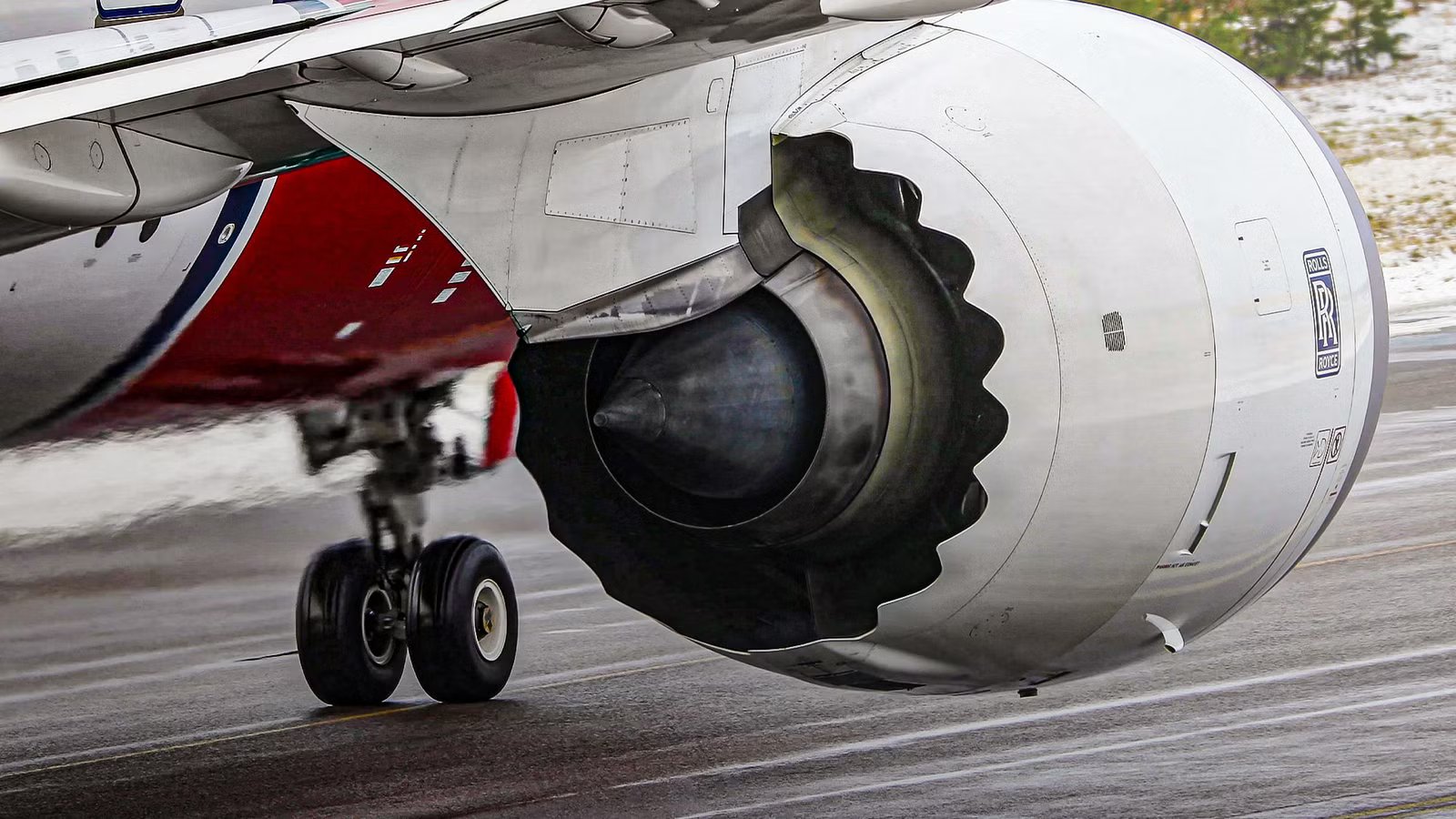
Aircraft manufacturers don’t like to offer multiple engine options on their models, since this increases development costs as pylons and systems need to be tailored for each engine type. However, airlines prefer this since it allows for commonality with other aircraft types and may help them attain better terms with a manufacturer that they’re familiar with.
For example, before its merger with Continental, United Airlines equipped most of its aircraft with Pratt & Whitney engines (Pratt & Whitney is a major partner on the A320’s IAE V2500 option). United could do this because all of these aircraft types were offered with multiple engine choices, including a Pratt & Whitney option.
While manufacturers have been moving towards sole-sourcing regardless, Boeing nevertheless elected to offer the General Electric GEnx-1B and the Rolls-Royce Trent 1000 on the 787. Initially, the two engines were quite competitive with one another, but today, the GEnx dominates the 787 market, while the Trent 1000 is barely picking up any new orders.
The Early Days Of The Boeing 787

Boeing selected the GEnx-1B and the Trent 1000 to power the 787 in the 2000s, with both coming with advantages and disadvantages. Leading up to the 787’s debut in 2011, Rolls-Royce held close to 50% market share on the 787, and it was the first engine to be selected for the 787-8, 787-9, and the 787-3 variants (which were later cancelled). In addition, the Trent 1000 powered the first 787 prototype, as well as the first 787s to enter commercial service with All Nippon Airways.
In terms of pure fuel burn, the Trent 1000’s triple-spool design gave it an advantage during climb and descent, giving it a small fuel burn advantage on routes under 3,000 NM (5,550 km), while the GEnx held a small fuel burn advantage on longer routes. The two engines were expected to have similar maintenance costs, and choosing between the two was primarily due to the overall packages offered by each manufacturer. Those familiar with one or the other would prefer a certain engine, while pricing would be a major factor as well.
Going into the 2010s, both engine models were winning large orders. All Nippon Airways ended up ordering a total of 83 Trent 1000-powered 787s, while British Airways ordered 42 787s with the Trent 1000. United Airlines and Continental Airlines both selected the GEnx, while Northwest Airlines ordered the Trent 1000 for its 787-8s (these orders were later cancelled by Delta Air Lines). Singapore Airlines, which launched the 787-10 variant in 2013, also selected the Trent 1000.
The Initial Signs Of Trouble For Rolls-Royce

Both the Genx-1B and Trent 1000 initially missed fuel burn specifications, which were quickly rectified by the manufacturers. But even as the Boeing 787 was first entering service, the GEnx began pulling ahead in market share. Despite the 787 originally being positioned as a replacement for the Boeing 767, it quickly became clear that the Dreamliner, particularly the larger 787-9 with longer range, would be a machine that could revolutionise long-haul and ultra-long-haul flying, giving the GEnx a slight advantage in the 787 market.
In 2016, ANA discovered corrosion-related fatigue cracking of the intermediate-pressure turbine blades. This required engines to be pulled from service and repaired, with several airlines having to ground their 787s temporarily until the repairs could be carried out. The issues continued into 2017, and then in 2018, inspection intervals for the Trent 1000 decreased from every 200 flights to 80, while the ETOPS rating for the Trent 1000-powered 787 was downgraded from 330 minutes to 140 minutes.
While the GEnx experienced initial troubles as well, it soon proved to be the more dependable engine of the two. Trent 1000 operators were increasingly having to ground their aircraft and were severely restricted as to the routes that they could operate. Going into 2018, the GEnx was selected for over 53% of 787 engine orders, while just 32% of orders were for the Trent 1000, with just under 14% of orders having been undecided. Later in 2018, Rolls-Royce also discovered additional cracking issues in the IPC rotor blades.
The Real Reason Why Rolls-Royce Owns The Airbus A350 Engine Slot
A closer look at the host of advancements offered by the Trent XWB, and how it continues to develop.
The Fall Of The Rolls-Royce Trent 1000

The Trent 1000 TEN was intended to be a significant improvement to the Trent 1000, incorporating a scaled-down compressor derived from the Airbus A350’s Trent XWB-84 engines and core technology from the company’s Advance3 demonstrator. It was meant to deliver 2% lower fuel burn while also being more durable, and had only 25% parts commonality with prior Trent 1000 variants. The Trent 1000 TEN debuted in 2017 and soon became Rolls-Royce’s standard 787 engine, but it did not solve the durability issues.
The Trent 1000 TEN began experiencing premature deterioration in its high-pressure turbine blades. It was also discovered that internal vibrations could cause cracking in the intermediate-pressure compressor, as well as corrosion-related cracking of the intermediate-pressure turbine blades. During this time, Rolls-Royce was spread thin with ramping up production of the Trent XWB while also developing the Trent 7000, and it was unable to repair engines promptly, resulting in more groundings.
|
Rolls-Royce Trent 1000 Variants |
Introduction |
|---|---|
|
Trent 1000 Package A |
2011 |
|
Trent 1000 Package B |
2011 |
|
Trent 1000 Package C |
2014 |
|
Trent 1000 TEN |
2017 |
|
Trent 1000 XE |
2025 |
The Trent 1000 was designed with an extremely high focus on thermal efficiency, weight reduction, and low noise levels, resulting in an engine that’s generally more stressed than the GEnx. In addition,  Boeing significantly increased the thrust requirements for the 787 relatively late in the aircraft’s development, as the plane became larger and heavier than originally envisioned. This increased the stress on both engines, but the Trent 1000 was already pushing the limits more than the GEnx, resulting in years of durability issues and grounded Dreamliners.
Today’s Outlook On The Rolls-Royce Trent 1000

Today, the GEnx is powering two-thirds of the worldwide 787 fleet. The Trent 1000 has won strikingly few orders since the COVID-19 pandemic, with the vast majority of 787s still on order being specced with the GEnx. This has serious implications for Rolls-Royce, as it’s now faced with a dwindling backlog that threatens the long-term viability of the program.
Most of the remaining Trent 1000-powered 787s are being delivered to Lufthansa, while Rolls-Royce has also recently been selected to power three new 787s on order for LATAM. Beyond the GEnx winning the vast majority of new 787 customers, General Electric has also been grabbing orders from existing Trent 1000 customers.
In addition, Air New Zealand went with General Electric over Rolls-Royce for future 787 deliveries, as did All Nippon Airways. Delta Air Lines, which operates Rolls-Royce-powered A330neos and A350s, went with the GEnx for its recent 787-10 order. In 2025, Rolls-Royce began delivering an improved version of the engine, called the Trent 1000 XE, with  Lufthansa taking the first examples.
It’s a significant overhaul of the Trent 1000 TEN aimed squarely at improving durability, and Rolls-Royce is already working on a second set of upgrades for the Trent 1000 XE. It hopes to retrofit the entire worldwide fleet of Trent 1000 TENs to the XE specification, aiming to improve on-wing time by 30%. Whether this will be enough to claw back market share from General Electric remains to be seen.

Comparing The 2 Boeing 787 Dreamliner Engines
The Boeing 787 comes with both GE and Rolls-Royce engine options, although GE’s engines have become more popular in recent times.
Lack Of Troubles On The Airbus Side

Rolls-Royce is the sole manufacturer of engines for the Airbus A330neo and Airbus A350, producing the Trent 7000 and Trent XWB, respectively. While the Trent 1000 has been experiencing significant issues for years, the Trent XWB is one of the industry’s greatest modern success stories. The Trent XWB is both fuel-efficient and reliable, with the Trent XWB-84 variant becoming a benchmark for on-wing time.
While there have been some concerns regarding the Trent XWB-97’s durability in challenging climates, they’re relatively mild issues, and Rolls-Royce is working on boosting its on-wing time. The Trent 7000 is essentially a bleed-air version of the Trent 1000 TEN, installed on the A330neo. There were initial concerns regarding the Trent 7000’s durability, but the company has been continuously developing upgrade packages and has more than doubled the engine’s on-wing time
|
Rolls-Royce Airbus Engines (In Production) |
Aircraft |
|---|---|
|
Trent XWB-84 |
Airbus A350-900 |
|
Trent XWB-97 |
Airbus A350-1000, Airbus A350F |
|
Trent 7000 |
Airbus A330neo |
Rolls-Royce now advertises the Trent 7000 as the world’s most reliable widebody engine, and there’s little evidence to counter the claim. While the company was severely impacted by issues relating to the Trent 1000 and has lost significant business, its Airbus engines have been steady sources of income that have left their customers highly satisfied. With further improvements coming to these engines, the future looks positive for Rolls-Royce overall, even if the Trent 1000 specifically is in a difficult position.