dailynewsnblog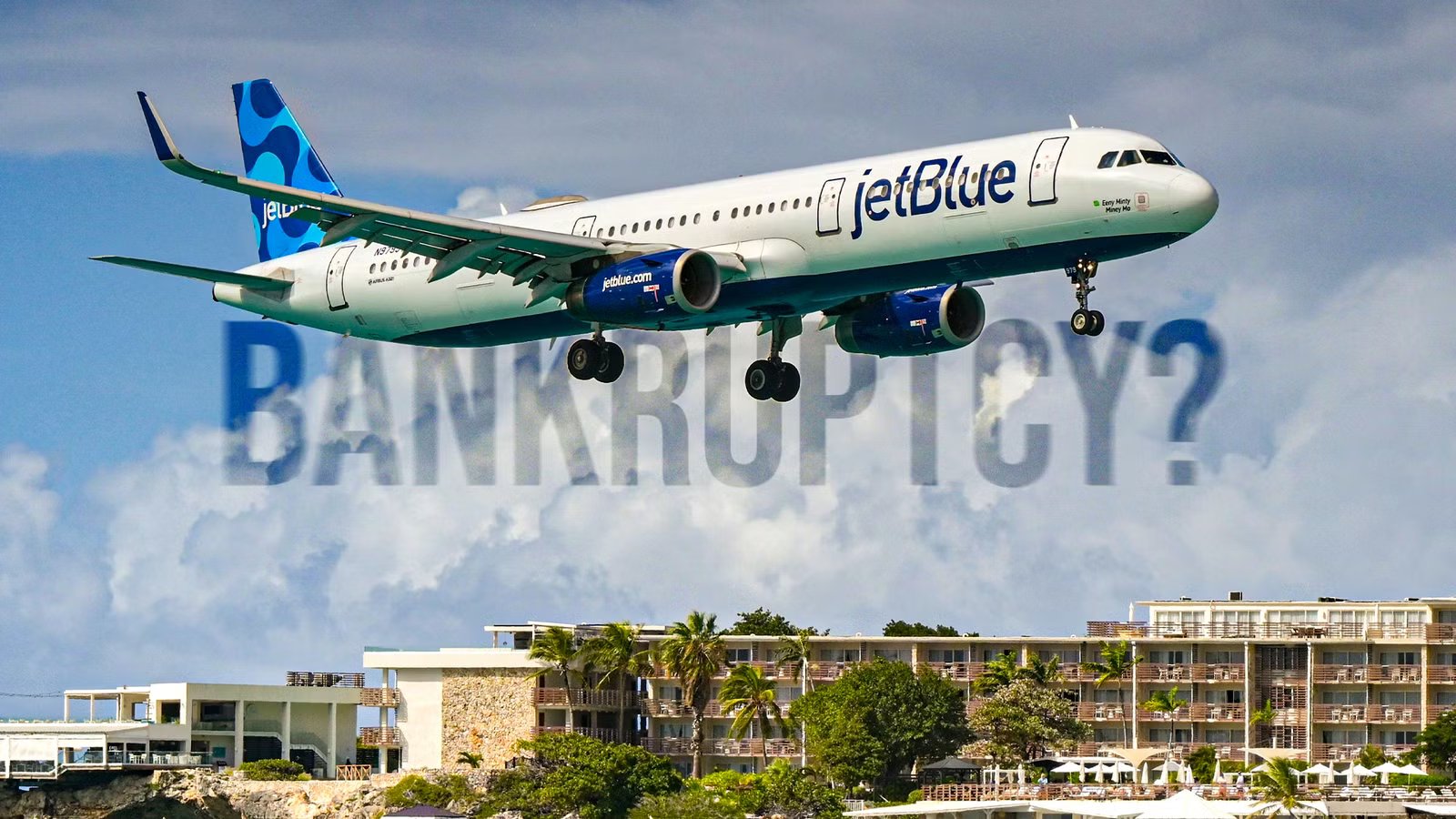
The collapse of Spirit Airlines has intensified scrutiny across the American aviation industry, particularly among carriers operating outside the dominance of the major legacy airlines. Analysts are now increasingly focused on whether the same economic pressures that pushed Spirit into bankruptcy could eventually overwhelm other low-cost and mid-tier operators. Among the airlines attracting the most concern are JetBlue and Frontier Airlines.
Both of these carriers face mounting financial strain at a time when borrowing costs, fuel expenses, and competitive pressures are all rising simultaneously. The concerns are not based on speculation alone. JetBlue is carrying roughly $9 billion in debt, has posted six consecutive years of losses, and recently saw its credit rating downgraded to CCC+, a level associated with substantial default risk.
Frontier, while operating with lower overall debt exposure, is facing approximately $800 million in annual aircraft lease expenses alongside $1.4 billion in aircraft purchase commitments due in 2026. At the same time, jet fuel prices climbed to roughly $4.20–$4.30 per gallon by late April 2026, representing a sharp increase from earlier in the year and reaching some of the highest levels seen in recent months. As such, analysts estimate JetBlue’s bankruptcy risk by 2027 at greater than 75%, while Frontier’s risk is believed to sit closer to 45–50%.
JetBlue’s Financial Cushion Is Shrinking

Despite growing concern surrounding JetBlue’s future, the airline is not currently facing an immediate liquidity crisis. The company finished the first quarter of 2026 with approximately $2.4 billion in available liquidity, access to a further $600 million revolving credit line, and more than $6 billion in unencumbered assets that could potentially be used to raise additional financing if required. Those figures provide the airline with a temporary safety net even as market conditions worsen.
The larger problem is JetBlue’s inability to consistently generate profits. The carrier has now recorded annual losses for six consecutive years, steadily weakening its financial position while investor confidence continues to decline. Negative operating margins have made it increasingly difficult for the company to improve cash flow, particularly as interest rates remain elevated and borrowing costs across the airline industry continue rising.
The recent downgrade to CCC+ status significantly increases refinancing risk because lenders often demand higher interest rates and stricter conditions from companies operating at distressed credit levels. Although JetBlue still possesses meaningful liquidity today, continued losses could rapidly reduce that buffer over the next 18 to 24 months if revenue growth fails to outpace rising expenses.
The 2029 Debt Wall Could Define JetBlue’s Fate

JetBlue’s near-term debt maturities are substantial but not yet catastrophic. The airline faces approximately $755 million in maturities during 2026, followed by another $411 million in 2027 and $516 million in 2028. Under normal market conditions, those obligations could likely be refinanced or managed through asset-backed borrowing and operational adjustments.
The real danger emerges in 2029, when JetBlue faces a massive $1.768 billion balloon payment. That single maturity represents the airline’s largest financial hurdle and could become extremely difficult to refinance if profitability remains weak, leading into the end of the decade. Airlines heavily depend on debt markets for survival, and lenders become increasingly cautious when companies continue producing losses year after year.
This looming debt wall is one reason analysts view 2027 as such an important turning point. If JetBlue enters that period with declining liquidity, weak margins, and limited improvement in earnings, the market may begin pricing in a restructuring scenario well before the 2029 maturity actually arrives. Financial distress in the airline industry often develops gradually before accelerating very quickly once refinancing confidence disappears.

Merger Hint? JetBlue Adds Nonstop Flights Between Houston George Bush & New York-JFK
JetBlue’s ‘JetForward’ strategy focuses on high-demand markets and partner networks, leveraging the ‘Blue Sky’ partnership to expand its reach.
Frontier Faces Pressure From a Different Direction

Unlike JetBlue, Frontier Airlines is not dealing with a massive long-term debt wall. Its direct maturities are relatively smaller, with approximately $303 million due in 2026 and just $63 million due in 2027. However, Frontier faces pressure through a different part of its business model: ongoing operating commitments tied to aircraft leases and fleet expansion. The airline currently carries around $800 million in annual aircraft lease obligations, a major expense burden for a carrier built around low fares and thin profit margins.
On top of that, Frontier also faces approximately $1.4 billion in aircraft purchase commitments scheduled for 2026 alone. Those commitments become increasingly difficult to manage when ticket prices remain under competitive pressure. Frontier’s ultra-low-cost strategy also leaves it particularly exposed to fare wars and swings in consumer demand, meaning even small declines in ticket pricing can quickly pressure margins and cash flow.
|
Category |
JetBlue Airways |
Frontier Airlines |
Spirit Airlines |
|---|---|---|---|
|
Business Model |
Hybrid carrier |
Ultra-low-cost carrier |
Ultra-low-cost carrier |
|
Estimated Bankruptcy Risk by 2027 |
75% |
45–50% |
Already bankrupt/shutdown process |
|
Total Debt / Major Obligations |
$9B debt |
$800M annual leases + $1.4B aircraft commitments |
Multi-billion dollar debt and lease liabilities pre-collapse |
|
Liquidity Position |
$2.4B liquidity + $600M revolver |
Smaller liquidity cushion |
Liquidity deteriorated rapidly before bankruptcy |
|
Debt Maturities |
$755M (2026), $411M (2027), $516M (2028), $1.768B (2029) |
$303M (2026), $63M (2027) |
Unable to sustain/refinance obligations |
|
Profitability Trend |
Six consecutive years of losses |
Margins under pressure |
Persistent losses before collapse |
|
Credit Situation |
Downgraded to CCC+ |
Financial outlook pressured |
Distressed before bankruptcy |
|
Fuel Price Exposure |
High |
Extremely high |
Extremely high |
|
Strategic Weakness |
Stuck between legacy and budget carriers |
Thin margins and price-sensitive customers |
Weak balance sheet and fare wars |
|
Major Survival Challenge |
Refinancing long-term debt |
Managing rising operating costs |
Liquidity collapse |
The company retains some flexibility through aircraft delivery deferrals and sale-leaseback transactions. However, those tools can raise long-term costs and reduce financial flexibility over time.
Ultra-Low-Cost carriers rely heavily on volume and efficiency to remain profitable. Even relatively small increases in operating costs can significantly damage margins because customers in the budget travel market are highly sensitive to fare increases. Frontier therefore faces the challenge of maintaining passenger demand while simultaneously absorbing rising fuel, financing, labor, and maintenance expenses.
Fuel Prices Are Becoming A Serious Industry Threat

Rising fuel prices have become one of the most dangerous variables facing airlines in 2026. Jet fuel costs climbed by late April, compared to prices recorded at the end of February. For airlines operating on narrow margins, a fuel spike of that magnitude can erase profitability across major portions of their route networks.
Fuel typically represents between 15% and 20% of an airline’s total operating expenses, meaning sustained price increases can rapidly destabilize weaker carriers. Low-cost airlines are especially vulnerable because they compete aggressively on price and often lack the pricing power needed to pass increased costs directly onto consumers without reducing demand.
The timing of the increase also worsens the pressure. Airlines frequently sell tickets months in advance, locking in lower fares before operational costs rise. That creates a lag effect where carriers experience higher fuel expenses immediately, while revenue remains tied to previously sold lower-priced tickets. In prolonged periods of fuel inflation, that mismatch can severely damage quarterly earnings and liquidity.

$500 Million: JetBlue Secures Debt Financing Using Over 20 Airbus A320 & A220 Family Aircraft
The airline has a pathway towards financial stability.
JetBlue’s Strategic Position Has Become Increasingly Difficult

JetBlue’s problems extend beyond debt and fuel prices. The airline also faces structural disadvantages within the broader US aviation market. It lacks the enormous global networks and corporate travel dominance of the largest legacy airlines, yet its operating costs are often too high to consistently compete with ultra-low-cost rivals on price alone.
This strategic weakness partly explains JetBlue’s repeated attempts to pursue partnerships and consolidation. Its failed merger plans involving Spirit and its previous alliance efforts with  American Airlines were designed to improve scale, strengthen route coverage, and compete more effectively against the industry’s dominant carriers. Without that additional scale, JetBlue remains trapped in a highly competitive middle ground.
Corporate travelers often prioritize flight frequency, international connectivity, and loyalty programs offered by larger airlines, while budget-focused travelers tend to choose the cheapest available fare regardless of brand. That leaves JetBlue competing in one of the most challenging segments of the market, too expensive to dominate budget travel, yet too small to fully compete with the biggest network airlines.
Bankruptcy Would Not Necessarily Mean Collapse

Despite alarming predictions surrounding both airlines, bankruptcy does not automatically mean liquidation within the aviation industry. Chapter 11 restructuring is often used as a financial reset mechanism that allows airlines to renegotiate debt obligations, restructure aircraft leases, reduce costs, and stabilize operations while continuing to fly passengers normally.
Several major US airlines have previously gone through bankruptcy before eventually recovering. Delta Air Lines, United Airlines, and American Airlines all used restructuring processes during earlier financial crises to repair balance sheets and restore profitability. In many cases, passengers experienced minimal disruption despite the severity of the financial headlines.
The outcome for JetBlue and Frontier will likely depend on whether industry conditions stabilize before liquidity pressure intensifies further. If fuel prices moderate, travel demand remains resilient, and financing markets improve, both airlines may still avoid formal restructuring. However, if losses continue accumulating through 2027 while debt and operating obligations remain elevated, the pressure on both carriers could increase substantially as the decade progresses.