dailynewsnblog
The Boeing 777X is entering a critical stage as Boeing pushes toward certification after years of delays. The flight test fleet has now logged more than 4,500 hours across 1,600 flights, far above a typical certification campaign. Much of that testing stems from stricter FAA requirements introduced after the Boeing 737 MAX groundings.
The 777X is one of Boeing’s most important commercial aircraft programs and a major investment for airline customers, including Lufthansa. The aircraft is now targeting a 2027 entry into service after missing its original 2020 timeline. Boeing has accumulated billions of dollars in development charges as certification requirements expanded. With FAA Phase 4A testing underway and production-standard aircraft joining the campaign, the program is approaching a decisive period.
Why Boeing 777X Testing Expanded Dramatically

The 777X testing campaign expanded as delays and technical setbacks forced regulators to demand far more data than Boeing originally planned to provide. Structural issues discovered during testing, including problems uncovered in high-stress certification trials, increased FAA scrutiny at a time when the agency was already under pressure after the Boeing 737 MAX crisis. The result was a certification effort that became significantly larger and longer than Boeing anticipated. What began as a conventional widebody development program evolved into one of the most exhaustive test campaigns in Boeing’s history.
The growing scope of testing also reflected the complexity of the aircraft itself. The 777X combines an all-new composite wing, folding wingtips, updated avionics, and the GE9X, the largest commercial jet engine ever built. Engine durability concerns and repeated validation requirements added further delays as Boeing and GE worked to satisfy regulators. Boeing ultimately expanded the test fleet and increased flight hours to gather enough operational data for FAA approval.
Those delays created ripple effects across the airline industry. Lufthansa was forced to extend the life of older Airbus A340s and Boeing 747s because replacement aircraft never arrived on schedule. Qantas also cited uncertainty around the 777X timeline when selecting the Airbus A350 for Project Sunrise, handing Boeing a high-profile competitive loss. For Boeing, the prolonged testing campaign became more than an engineering challenge. It has become a direct financial and competitive problem with consequences in the global widebody market.
FAA Special Conditions Reshaping Certification

The 777X certification campaign grew far beyond Boeing’s original expectations after the FAA tightened oversight following the 737 MAX crashes. Regulators required more direct validation of systems, structures, and flight performance instead of relying heavily on previous Boeing certifications. The 777X became the first major Boeing widebody program developed entirely under those stricter standards. That shift turned the program into one of the largest flight-test efforts in modern commercial aviation.
The expanded campaign helps explain why the test fleet has logged more than 4,500 flight hours across roughly 1,600 flights. FAA Special Conditions forced Boeing to verify aircraft systems and handling characteristics in greater detail than those required for earlier 777 variants. Even features considered evolutionary, including the folding wingtips and composite wing, faced extensive scrutiny. Boeing also added production-standard aircraft to testing, so regulators could confirm that factory-built jets matched certification prototypes.
The broader goal is to avoid another post-delivery crisis, like the 787 battery fires or the 737 MAX groundings. The FAA’s post-MAX approach emphasizes identifying risks before airlines begin passenger operations. That process has extended the timeline and increased costs, but it also reduces the likelihood of future grounding events after entry into service. For Boeing and its airline customers, a slower certification is preferable to another major operational failure after delivery.
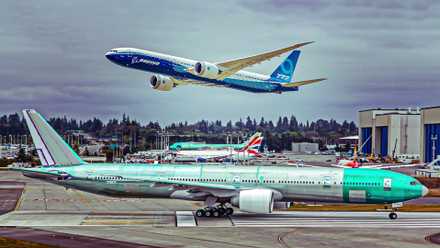
Here’s How Much More Range The Boeing 777X Has Compared To The 777-300ER
While the 777-300ER has more range than the larger 777-9, the similarly sized 777-8 can fly 1,375 NM further, while carrying a few more passengers.
Boeing 777X Current Development Phase

The 777X program has now entered what is effectively its final stretch before certification, though the remaining work is still substantial. With Phase 4A underway, Boeing and the FAA have shifted from validating isolated systems to evaluating the aircraft as a complete operational platform. This stage focuses on how the jet performs during realistic airline conditions, including adverse weather, extended operations, and high-workload scenarios. It is one of the last major hurdles before type certification can be granted.
Recent activity has also included preparation for testing production-standard aircraft rather than heavily instrumented prototypes alone. That distinction matters because regulators want to confirm that factory-built aircraft perform consistently under operational conditions. FAA participation has also become more direct during this phase, reflecting the agency’s stricter post-MAX oversight approach.
Even with progress accelerating, risks to the timeline remain. Certification campaigns often encounter integration problems late in testing, particularly when multiple systems are evaluated simultaneously under real-world conditions. Boeing must also avoid disruptions tied to suppliers, software revisions, or additional FAA findings that could trigger retesting requirements. For airlines waiting for deliveries, the current phase represents the clearest indication yet that the 777X is moving toward completion, but it is not yet a guarantee that further delays are off the table.
Lufthansa Aircraft Signals Certification Progress Ahead

 Lufthansa’s role as the launch customer for the 777X has made the airline a key indicator of the program’s progress toward certification. The carrier is expected to receive the first 777-9 deliveries once FAA approval is secured, currently targeted for 2027. As testing advances through the final Type Inspection Authorization phases, Lufthansa has continued preparing its fleet strategy around the aircraft’s eventual arrival. That preparation reflects growing confidence that the program is finally approaching completion after years of uncertainty.
The airline has ordered 20 777-9s and plans to use them primarily as replacements for aging Boeing 747 aircraft. Delays to the 777X forced Lufthansa to keep older jets in service far longer than originally planned, including both the Boeing 747-400 and Airbus A340 fleets. Those aircraft remain operational partly because the 777X has yet to arrive, despite originally being scheduled for delivery in 2020. The continued reliance on older wide bodies has increased operating costs and slowed cabin modernization plans across parts of Lufthansa’s long-haul network.
Simple Flying Quiz
Easy (15s)Medium (10s)Hard (5s)
Lufthansa’s continued commitment to the program also highlights the importance of the 777X to Boeing’s broader widebody strategy. With more than 500 orders for the 777-9 alone, Boeing still has strong long-term demand despite the delays and rising development costs. Emirates and Qatar Airways account for the largest share of orders, meaning successful certification is critical not only for Boeing but also for several major international carriers planning future fleet renewals. For now, Lufthansa remains the clearest signal that airlines still expect the 777X to become a central part of long-haul operations once certification is complete.

How Much Does A Boeing 777X Cost?
A few hundred million must be spared to acquire a brand-new Boeing 777X.
How Delays Have Affected The Boeing 777X’s Cost

The Boeing 777X has now generated more than $15 billion in program charges, placing it among the most expensive commercial aircraft development efforts in aviation history. Those losses accumulated gradually as certification timelines slipped year after year, forcing Boeing to absorb ongoing engineering, testing, and production expenses far longer than originally planned. What was intended to be a relatively low-risk derivative of the existing 777 evolved into a prolonged and highly capital-intensive certification campaign.
Much of the financial damage comes from the simple reality that Boeing has spent years funding a program without delivering aircraft at scale. Flight testing expanded dramatically, redesign work continued deep into development, and partially completed aircraft had to be stored while awaiting certification. Boeing also carried the cost of maintaining supplier networks and production infrastructure during periods when deliveries remained frozen. The longer the aircraft stayed out of service, the larger the financial burden became.
The challenge does not necessarily end once certification is granted. Aircraft assembled years before approval may require additional inspections, modifications, or configuration updates before airlines accept delivery. Boeing faced a similar issue with early 787 production aircraft, some of which required extensive rework after the program matured. The 777X risks creating the same expensive dynamic, where already-built jets become another major workload before they can generate revenue.
When Boeing Plans 777X Service Entry

Shutterstock | Simple Flying
Boeing currently expects the first 777-9 deliveries to begin in 2027, nearly seven years later than originally planned. Lufthansa remains positioned as the launch customer and is expected to receive the first aircraft once FAA certification is complete. Before deliveries can begin, Boeing still must complete the remaining Type Inspection Authorization phases, including operational reliability and ETOPS validation testing using production-standard aircraft. Those final stages are intended to confirm the aircraft can safely handle real-world long-haul operations.
The timeline remains important for airlines that built long-term fleet plans around the 777X. Lufthansa has kept older Boeing 747s in service longer than expected because replacement aircraft have not arrived, while Emirates and Qatar Airways are also waiting on large orders tied to future network growth. Boeing still faces the risk of additional testing or certification findings, but the program is now closer to entry into service than at any point since its launch more than a decade ago.