dailynewsnblog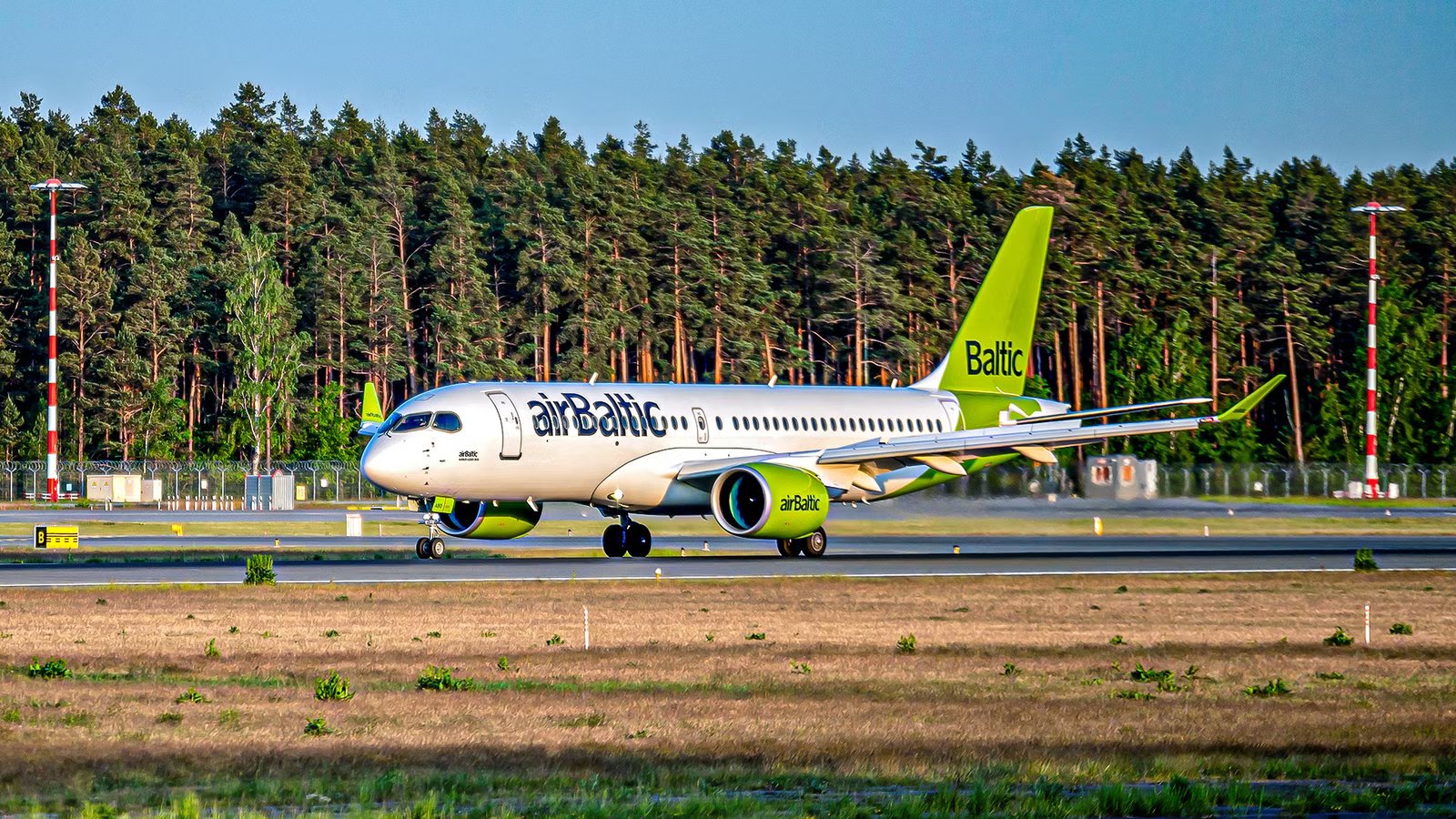
The year 2026 has, to date, not been a great one for the airline industry, as geopolitical conflicts have resulted in rising costs, operational restrictions, and changes in travel demand. In the US, Spirit Airlines, the country’s largest budget airline, recently filed for bankruptcy, while Lufthansa Group decided to ground the fleet of its regional subsidiary, CityLine, overnight. At the same time, Ryanair CEO, Micheal O’Leary, is taking the spotlight once again, telling the press he believes Air Baltic and his own largest competitor, Wizz Air, will follow Spirit’s fate by fall.
While Wizz Air’s situation does not appear as critical as is being suggested by some, Latvian flag-carrier airBaltic seems to be in a bit more trouble. According to the company’s annual report, there were only 11 million euros in cash left at the end of 2025, while having significant outstanding debt. However, financial issues are nothing new for AirBaltic, and in 2011, the airline was in serious trouble. And after finding a path out of these troubled waters, the airline managed to replace its entire aging mixed fleet with a single-type fleet consisting of the brand-new, efficient Airbus A220 (Bombardier CSeries). Despite airBaltic managing to pull through before, the airline’s financial issues are once again, or perhaps still, threatening its future.
How Do AirBaltic’s Operations Look In 2026?

AirBaltic is officially the flag carrier of Latvia, despite the airline’s name referring to the entire region including Estonia and Lithuania. The carrier positions itself as a “hybrid” airline, bridging the gap between full-service airlines and low-cost carriers by combining the successful elements from both of these models. Furthermore, the airline is committed to innovation and provides passengers with Starlink connectivity onboard its aircraft and has also introduced a blockchain-based loyalty program.
AirBaltic currently operates a fleet of 55 Airbus A220 aircraft, making the airline the world’s largest operator of the type. By 2032, the carrier is planning to grow this fleet to 99 aircraft. The Latvian government holds a majority share of 88.37% in the company, while Lufthansa Group holds a strategic 10% minority share. A number of private investors own the remaining 1.63% of the company. While the airline is primarily Latvian, it also maintains a strong position in the two other Baltic States as well.
 Riga International Airport (RIX) in Latvia is airBaltic’s primary hub, with the airline holding a 57% market share in 2025. Both the airports of Vilnius (VNO) and Tallinn (TLL) in neighboring Lithuania and Estonia serve as secondary hubs, with airBaltic having a significantly lower market share at these airports, at 15% and 30% respectively. Besides its operations in the Baltic States, the airline has in recent years also explored alternative regions and segments for growth.
Can airBaltic Make It Through The Next Winter Season?

As mentioned before, financial troubles are not uncommon for airBaltic and the airline struggles with structural profitability. The last time the Latvian airline achieved a full-year profit was back in 2023, and prior to that in 2018. Last year, these continued financial challenges, in combination with Pratt & Whitney engine issues, which resulted in large-scale route and frequency cuts, also led to Martin Gauss, the airline’s CEO at the time, being dismissed.
Looking at airBaltic’s results for 2025, the airline’s revenue grew by 4% to €779.3 million compared to 2024, and the company improved its net losses by €73.8 million in 2025, totaling €44.3 million at the end of the financial year. While these results are far from excellent, any improvement in the bottom line is good news for the struggling airline. However, the real short-term problem for airBaltic is liquidity, as the airline only had €11 million cash available at the end of 2025 while carrying significant outstanding debt, including significant short-term leasing liabilities.
|
Financial highlight |
2024 |
2025 |
Change |
|---|---|---|---|
|
Revenue |
€747.6 million |
€779.3 million |
+4% |
|
Adjusted EBITDAR |
€184.2 million |
€143.9 million |
-22% |
|
Net loss |
€118.2 million |
€44.3 million |
Improved by €73.8 million |
|
Total passengers |
8.3 million |
8.7 million |
+5% |
|
Total flights |
73,263 |
78,384 |
+7% |
|
ACMI-out revenue |
€146.9 million |
€157.0 million |
+7% |
|
Total ASKs |
12.31 billion |
13.08 billion |
+6% |
|
Routes |
143 |
133 |
-7% |
Unsurprisingly, the 2026 Iran Crisis, which started in late February, has put additional pressure on airBaltic, with the airline hedging only around 10% of its fuel for the remainder of the year. This leaves the carrier highly exposed to high jet fuel prices which increases short-term liquidity pressure. As a result, rating agency Fitch downgraded airBaltic’s long-term credit ratings in April 2026, citing “very weak financial flexibility and acute liquidity pressure, which, absent additional external support, could lead to a liquidity crisis within the next six to 12 months.”
A few days after the rating was downgraded, the Latvian parliament approved a €30 million ($35.3 million) short-term loan to airBaltic to be repaid by the end of August 2026. This loan will help the airline at least survive the profitable summer season and allow for additional time to find new financing. According to Fitch Ratings, the company is expected to end 2026 with a large funding gap that will need to be bridged by its existing shareholders or a new strategic investor. Furthermore, the credit rating agency says there is “limited visibility on the feasibility of such support”, making debt restructuring an increasingly realistic option. It is thus highly uncertain what will happen to airBaltic after the summer season ends, and forward bookings will start to decline as we go into the low-demand winter season, especially if fuel prices do not go down or even continue to rise.
Reinforcing concerns about airBaltic’s financial position are its Q1 results published on May 13, 2026. In the first quarter of 2026, the airline’s net results declined by €40.7 million compared to the same quarter a year earlier, amounting to a loss of €70.1 million. Despite this, it was the airline’s highest-ever Q1 result with €149.1 million in revenue, up 12.3% compared to Q1 2025. Furthermore, all aircraft in the airline’s fleet are now fully operational again, following the Pratt & Whitney engine issues, which grounded 13 aircraft on average in the first quarter of 2025, are over. These additional aircraft also appear to have directly translated into capacity growth in both the airline’s own network and its ACMI operations. Erno Hildén, President and CEO of airBaltic, stated:
“From an operational perspective, the first quarter was stable for airBaltic, with higher passenger volumes, more flights, and improved EBITDAR performance. However, the wider operating environment remains challenging for the airline industry, and external factors continue to affect our financial results. Our focus for 2026 is on revenue quality, cost discipline, and making full use of our improved fleet availability.”
Wizz Air And airBaltic Might Not Survive The Winter, Says Ryanair CEO
The continued unrest in the Middle East has seen the price of fuel rocket up, and airline share prices drop.
How Is airBaltic’s ACMI Business Working Out?

In recent years, airBaltic has also started expanding its core offerings beyond flights to and from the Baltic States, in an effort to overcome its financial difficulties. The new offerings, including a relatively large wet-lease business, help the struggling airline to diversify operations, reduce seasonality risks, and improve aircraft utilization.
In 2025, AirBaltic leased a substantial portion of its fleet to other airlines, and while the exact number of aircraft varied throughout the year, the airline simultaneously leased out up to 20 aircraft. The majority of these aircraft operate flights on behalf of airlines owned by strategic partner  Lufthansa. Lufthansa’s 10% stake in airBaltic is also a direct result of this strong partnership, and was originally planned to be reduced to 5% at airBaltic’s previously planned Initial Public Offering (IPO). Another two to four aircraft are operated out of Belgrade (BEG) on behalf of Serbian flag-carrier Air Serbia.
The airline’s decision to enter the ACMI market has definitely played out well and now accounts for 20.3% of the airline’s revenue. And for 2026, the ACMI business is expected to grow with another +30 to 40% ACMI-out capacity in 2026. While this new segment is becoming increasingly important for the airline’s survival, it is also sparking criticism in its home markets, as the state-owned carrier relies on millions of taxpayers’ money to fund its loss-making operations, while its own aircraft are generating profit for other airlines.
However, the government of Latvia, as the largest shareholder, is continuing to support the airline, as proven by its recent loan commitment, political tensions regarding the airline are increasing. At the same time, the government of neighboring Estonia, where airBaltic also has a substantial market share, is withholding financial support for the airline, with some politicians even going as far as calling it a “bottomless financial hole.”
How Does airBaltic’s Network Look Beyond The Baltic Region?

Other than the airline’s ACMI business, airBaltic has also diversified its own scheduled network with bases outside its home market in the Baltic region. In 2022, the airline opened a base in Tampere (TMP), in Finland, with flights to a wide range of destinations across Europe. However, by 2025, the airline had already reduced its presence at the Finnish airport due to network realignments resulting from financial pressure and Pratt & Whitney engine issues.
More lucrative for airBaltic appears its seasonal base on Gran Canaria (LPA) in the Canary Islands, launched in December 2023. From here, the airline is operating numerous winter seasonal routes to destinations across Northern Europe. For AirBaltic, this move appears to have been successful, as moving capacity to the Canary Islands during the low-demand winter months, the airline is able to counter seasonality patterns and keep aircraft utilization high in a generally profitable leisure market. Evidence of this success is that the airline is continuing to expand winter operations from the Canary Islands, with a second base in Tenerife (TFS) opening in October 2026 despite its financial struggles.
Europe has one of the strongest seasonality patterns in the wider airline market, with carriers often struggling to be profitable during the winter months. The Canary Islands, however, are one of the strongest markets in winter due to their popularity among Western and Northern European tourists looking for good weather during the winter months. However, the market between Europe and the Canary Islands is highly competitive, dominated by ultra-low-cost airlines (ULCCs) and traditional leisure airlines. To avoid direct competition, AirBaltic has mainly been focusing on niche point-to-point routes with thinner demand well-suited for its A220s.