dailynewsnblog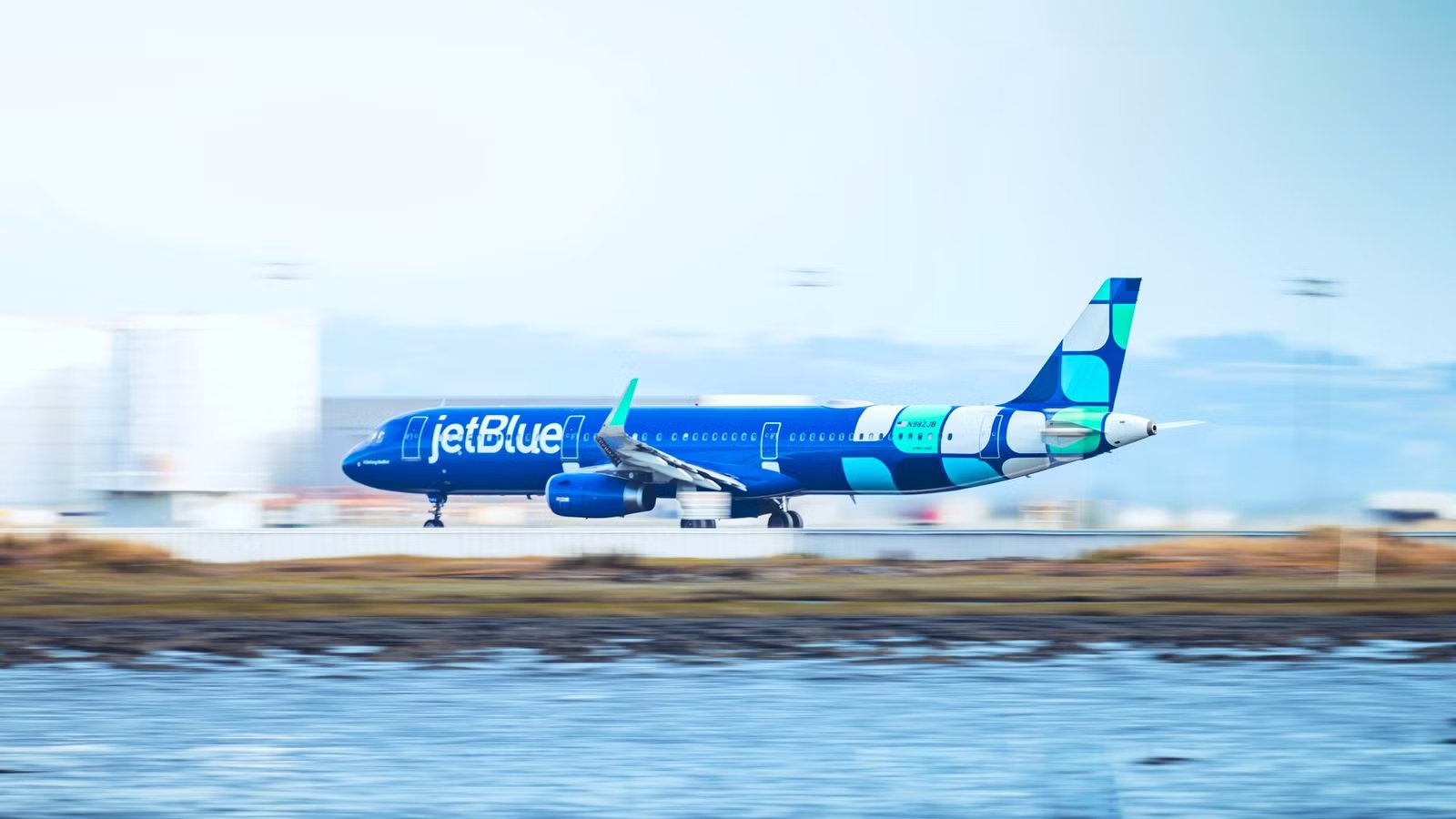
JetBlue has spent much of the past year trying to reshape itself into a leaner, more profitable airline. That has not stopped the carrier from adding flying where it sees a clear opportunity, especially in Florida, where Spirit Airlines’ demise has created openings for rivals to move in. Earlier this month, JetBlue announced 11 new routes from  Fort Lauderdale-Hollywood International Airport, allowing the airline to build upon its market leadership there, while filling part of the vacuum left by Spirit.
But there is a flip side to that expansion. JetBlue’s fleet is not unlimited, and aircraft availability remains one of the biggest constraints on its network. The airline only expects to take delivery of 12 Airbus A220-300s this year, while it has deferred deliveries of its Airbus A320neo-family aircraft until 2030 and beyond. That means adding new routes in one part of the network requires cuts somewhere else.
JetBlue Is Adding In Florida, But Pruning Elsewhere

JetBlue’s Fort Lauderdale expansion is one of the clearest signs yet of where the airline sees its best near-term opportunity. The carrier is leaning harder into Florida, Latin America, the Caribbean, and major leisure/VFR markets where it already has brand recognition and customer loyalty. Fort Lauderdale is especially important, because JetBlue has the largest market share there, and has the opportunity to fill the void left by Spirit, which was the number two carrier.
However, this is not a growth story in the traditional sense. JetBlue is not flooding the market with new aircraft. It is moving capacity around. With aircraft deliveries limited, Pratt & Whitney engine issues still complicating the wider Airbus narrowbody world, and JetBlue under pressure to improve profitability, every route has to justify its place in the network. A marginal route is no longer just a weak performer; it is also blocking an aircraft from flying somewhere more strategically useful.
The most visible example is Manchester-Boston Regional Airport (MHT), where JetBlue is removing its three remaining routes and ending service entirely. The carrier only returned to Manchester last year, but the experiment hasn’t lasted long, with an internal staff announcement having the following to say:
“We’ll be ending service to Manchester (MHT) effective July 8. Manchester was just added in 2025 and has not performed to expectations. Customers in the area will continue to have access to JetBlue through nearby New England BlueCities, including Boston, Portland, and Worcester.”
The Ten Routes JetBlue Is Cutting

The Manchester exit is only part of the story. JetBlue is also ending routes from Hartford’s Bradley International Airport (BDL),  Newark Liberty International Airport (EWR), and
  Orlando International Airport (MCO), creating a 10-route pullback that shows how aggressively the airline is pruning flying that does not meet its expectations. The cuts are not all from weak-looking routes either, at least not by load factor alone, as several of these markets carried healthy traffic over the past year.
|
Route Being Cut By JetBlue |
12-Month Load Factors |
Competitor(s) |
|---|---|---|
|
Hartford – Tampa |
87.3% |
Breeze Airways, Southwest Airlines |
|
Manchester – Fort Lauderdale |
67.9% |
None |
|
Manchester – Fort Myers |
78.7% |
Breeze Airways |
|
Manchester – Orlando |
79.8% |
Southwest Airlines |
|
Newark – Aruba |
84.4% |
United Airlines |
|
Newark – Cancún |
84.6% |
United Airlines |
|
Newark – Punta Cana |
87.4% |
Arajet, United Airlines |
|
Newark – Santo Domingo |
85.0% |
Arajet, United Airlines |
|
Newark – Tampa |
83.3% |
United Airlines |
|
Orlando – San José, Costa Rica |
76.5% |
Frontier Airlines, Southwest Airlines, Volaris |
That is what makes this round of cuts interesting. These were not necessarily empty airplanes. Hartford–Tampa and Newark–Punta Cana has 87% load factors over the past 12 months, well above the JetBlue network average of 82%. So the issue is likely not whether JetBlue could fill the seats, but rather whether it could fill them at fares high enough to make the route worthwhile.
That points to yield rather than raw demand. Most of these routes face strong nonstop competition. In Hartford–Tampa, JetBlue was up against  Southwest Airlines and Breeze Airways. In Orlando–San José, it faced strong low-cost carrier competition from the likes of Frontier Airlines and Volaris. Meanwhile, at Newark, the airline was competing directly against
  United Airlines at one of the most powerful hubs in the country. In that environment, JetBlue may have been able to attract passengers, but not necessarily the right mix of high-yielding passengers.
Hartford is worth watching next. JetBlue is only cutting one route in this round, but Tampa International Airport (TPA) is not the only change. The airline is already ending its route to Fort Myers’ Southwest Florida International Airport (RSW) in June, and the remaining JetBlue routes from BDL face growing competition from Breeze Airways as it builds out its base there.
That does not mean Hartford is destined to follow Manchester, but the pattern is notable. If JetBlue is now prioritizing scale, yield, and aircraft productivity above station breadth, smaller outstations like BDL with heavily contested leisure routes could face more scrutiny.
5 Airports Most Likely To See More JetBlue Flights Soon And What It Means For Passengers
JetBlue is not replacing Spirit everywhere — only where its network gives it an edge.
Newark Is At The Heart Of The Pullback

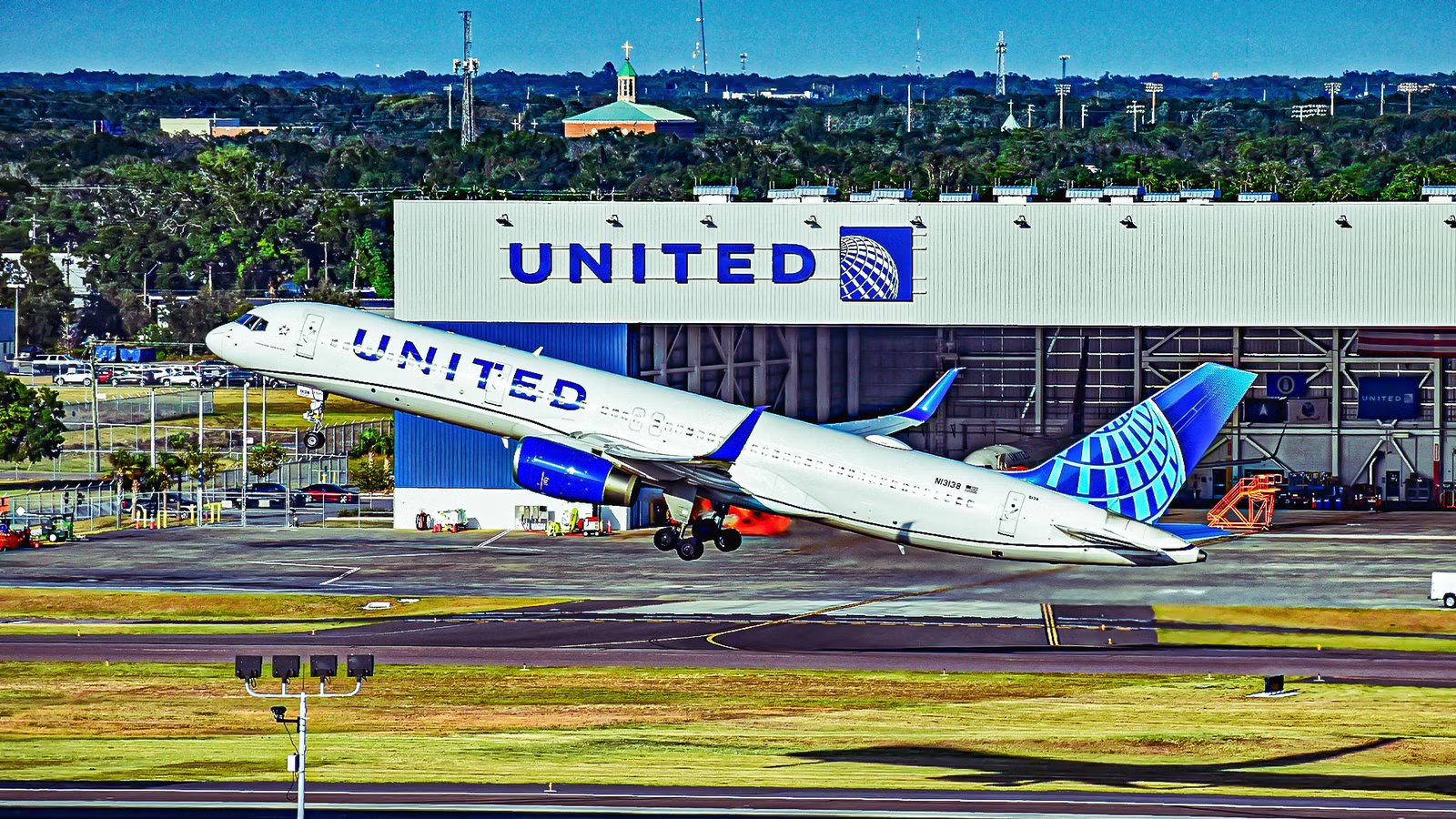
The most strategically revealing cuts are at Newark. JetBlue’s presence there has always been somewhat unusual because its primary New York base is across the Hudson at  New York JFK Airport (JFK). Newark gives JetBlue access to another huge New York-area catchment, but it is also expensive, congested, and dominated by United. For a carrier trying to simplify its network and chase profitability, that is a difficult combination.
JetBlue made its sentiments clear within its staff announcement:
A big part of these changes is tied to Newark, where several routes simply have not performed the way we need them to. Newark in particular is an extremely high-cost airport, and as a smaller player there, we have to be disciplined about where we continue flying and where we can make money over the long term.
On the surface, Spirit’s demise might have suggested the opposite move. Spirit was previously a meaningful player at Newark, operating 20 routes with a nearly 10% market share, double that of JetBlue. That leaves quite a gap at the New Jersey airport, so why is JetBlue expanding in Spirit’s former Fort Lauderdale stronghold while retreating from Newark?
The answer is that not all Spirit vacuums are equally attractive. Fort Lauderdale is a JetBlue focus city where it can build scale. Newark is United’s backyard, and there are several factors that make Newark particularly difficult for JetBlue:
-
Newark is extremely expensive to operate from. JetBlue said it clearly — Newark is an “extremely high-cost airport,” and some have suggested it is the most expensive airport in JetBlue’s network, even more costly than
 London Heathrow Airport
(LHR). - United has the home-field advantage. United can feed Newark routes from across its domestic network, bundle them into corporate contracts, and support them with a much larger loyalty base.
- JetBlue is a smaller player at EWR. Without the same network depth, JetBlue is more exposed to local traffic and price-sensitive leisure demand.
- Strong load factors may still hide weak economics. An 85% full aircraft can still underperform if the average fare is too low, seasonality is sharp, or airport costs are too high.
- The aircraft are worth more elsewhere. JetBlue can get better strategic value from deploying capacity into Fort Lauderdale, Boston, JFK, San Juan, or other markets where it has more scale.
It is also worth noting that as JetBlue and United continue to draw closer together via their ‘Blue Sky’ loyalty partnership, it doesn’t make sense for the smaller carrier to be spinning its wheels on competing directly if the yields aren’t there. JetBlue can just as easily sell seats on the same route, just operated on United metal.
That is the key takeaway from these cuts. JetBlue is still in repair mode. The airline is not simply chasing more passengers; it is chasing profitable passengers. That means shifting its own aircraft toward airports and routes that are strategically important, where it has economies of scale, and where it has a better chance of achieving stronger yields. So more network consolidation like this can be expected, because as JetBlue fights its way back to profitability, full airplanes are no longer enough.