dailynewsnblog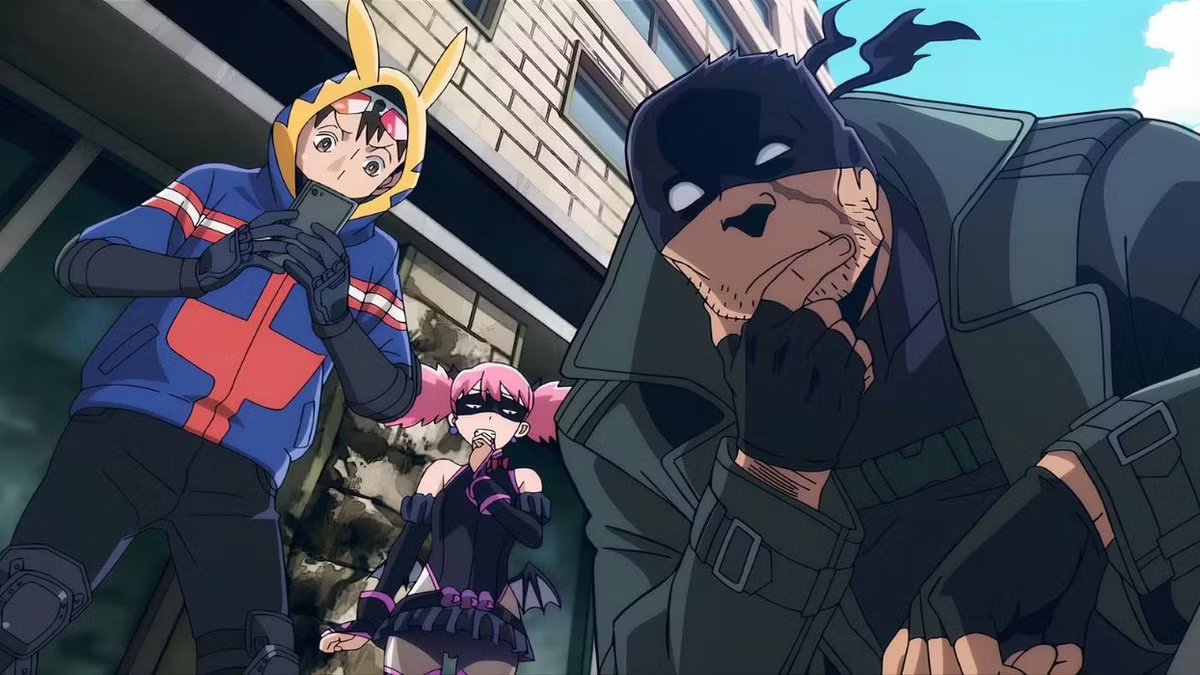
Anime is an art form that can be enjoyed without getting overcomplicated: You can feel the energy rush from Dragon Ball without pondering its immense global cultural impact. Naruto is equally good if you consider its profound anti-war message, or you just enjoy some ninja battles. Chainsaw Man is a beautiful character study as much as it is a gore-filled splatter extravaganza. The same can be said about My Hero Academia, one of the best shonen in recent years that delivers the classic action beats of the genre while weaving a deeply moving message into its narrative.
What makes My Hero Academia stand out among its peers is the emotion threaded through a story about kid superheroes and the veridicity with which it’s depicted. While every great shonen tries to connect with its audience through universal lessons on not giving up and overcoming adversities, it is the depiction of these hurdles and their resonance to the real world that pushes MHA to a level above. Still, it’s not that intuitive to understand what the series’ “universal message” is, but it becomes much easier after watching its beautiful, underrated spin-off: My Hero Academia: Vigilantes.
Vigilantes began in 2016 as a manga written by Hideyuki Furuhashi and illustrated by Betten Court, supervised by My Hero Academia’s creator Kohei Horikoshi. Its story takes place five years before the events in the main series and focuses on different characters, with some prominent Pro Heroes like Eraser Head and All Might having significant roles. While the series was licensed by Viz for the United States starting in 2018, it remained somewhat obscure for international audiences until an anime produced by Bones was released on Crunchyroll in 2025.
My Hero Academia fans looking for a fix after the emotional conclusion of the series, and the second, even better finale, may not appreciate Vigilantes immediately. The two series are very different: Vigilantes, with its focus on unofficial heroes who operate at the street level, often feels more like a slice-of-life show than epic superhero action. The main character, Koichi Haimawari, is a university student who uses his (apparently) weak Quirk to help people in need in the Naruhata district in Tokyo. Koichi once dreamed of being a hero like his idol All Might, but he was late to the entrance exam for a hero high school. Here is where Koichi and Izuku Midoriya (the protagonist of MHA) paths diverged, and it’s also where Vigilante shows it’s a lot more than a spinoff.
Koichi could have taken the exam the following year, but he never tried again. He didn’t give up, but, like many other young people who live in the My Hero Academia world, he realized that, while everyone is born with a superpower, not everyone can become a hero. In fact, the majority of the population has to adapt to a “normal” life, and that’s what the conscientious Koichi does. Izuku and his friends are the exception, the elite. And while it’s normal for a shonen manga to focus on the elite, Vigilantes takes a bold, different direction, showing us the life of Koichi and the people he meets, along with their daily struggles. These can be as menial as organizing a concert, but there is also enough superhero and villain action in the show.

Koichi did not abandon his impulse to help people in need, and he “patrols” the streets of Naruhata as the Crawler. In fact, his strategy is simply to stall villains while someone calls the official heroes, making sure that the civilians don’t get injured. However, Koichi unwillingly finds himself involved in a wider, more sinister plot developing through the two seasons of the show, involving powerful villains and prominent Pro Heroes.
[Ed. note: Spoilers ahead for My Hero Academia: Vigilantes season 2]
In season 2’s climax, the American hero Captain Celebrity is holding a party in the Tokyo Sky Egg (a fictional tower resembling the Tokyo Sky Tree). After the villain Number 6 sends his mutated exploding villains to attack the tower, Captain Celebrity sustains the structure from falling with help from Koichi, but even the intervention of the other Pro Heroes present proves insufficient, and the tower begins falling, with thousands of civilians trapped inside.
Luckily for everyone, All Might arrives on the scene, saving everyone with a cartoonish feat of speed and strength. The episode makes a point of showing just how outlandish All Might’s abilities are, depicting him as a true god among gods. Even All for One, the mastermind behind Number 6’s actions, tells his frustrated protege that even if it’s hard to believe, a man like this truly exists. “A veritable deus ex machina, capable of bending physics and fate to his will,” All for One says. The personification of the concept of hero.
However, if you watched My Hero Academia, you know that this is not true at all.
All Might’s mission of becoming “the symbol of peace,” the one hero that could solve anything on his own and make the impossible feel possible by sheer power, proved to be a mistake. It made society become over-reliant on heroes and on outside intervention (a deus ex machina) to solve their problems, and in turn made the other heroes too complacent. When All Might is forced to retire due to his injuries, All for One and Shigaraki plunge Japan into chaos, exposing that the heroes can not, after all, save everyone, society finally reaches the verge of collapse. The people feel betrayed, abandoned, and can no longer trust each other. “I am not here,” says the sign hung on All Might’s statue in Tokyo, reversing and mocking the hero’s iconic line.
Midoriya saves Japan by showing everyone a different way: the way of weakness. He’s not All Might; he cries a lot, he stumbles, and he has to rely on the help of others to move forward (a lesson learned painfully during the Dark Hero arc). Even his hero name, Deku, means “useless,” and it was originally an insult from Bakugo. But he makes people believe in heroes again, by showing that they are also human, and not unreachable gods. Deus ex machina means “the god behind the machine” in Latin, and that’s what All Might was; despite his good intentions, that’s not what a hero should be.

Vigilantes really drives home that lesson during the Tokyo Sky Egg crisis. Captain Celebrity, Koichi, and the Pro Heroes all do their best and in some cases surpass their limits, but it’s pointless. Only All Might’s divine intervention stops the crisis, which can feel a little frustrating to watch, until you put this in the right context. Vigilantes is showing us the world before Deku, when a single man foolishly thought he could carry everything on his shoulders. In parallel, the series depicts the small but meaningful everyday acts of heroism carried out by “ordinary” people like Koichi, thus reinforcing the message that supports My Hero Academia’s entire story.
My Hero Academia: Vigilantes is much more than the lesser-known spinoff of a popular series. It’s a fundamental piece of the franchise, and an underrated series on its own. Hopefully, a third season will be confirmed soon.