dailynewsnblog
For all its rip-roaring Indiana Jones adventure, its ancient civilizations and pulpy supernatural peril, Call of the Elder Gods’ true heart is perhaps its tatty leather-bound journal. That won’t be a surprise to anyone that’s played Call of the Sea, its well-received predecessor, but it’s gratifying to see that – for all this follow-up’s bigger, bolder ambitions – the original’s first-person narrative charms and smart, deductive spirit remains.
Developer Out of the Blue’s third game, following on from 2023’s fascinating Truman Show-inspired cinematic puzzler American Arcadia, picks up some considerable time after the events of Call of Sea. Gone are the tropical island exploits of original protagonist Norah Everhart, circa 1934, in favour of a globe-trotting 1950s adventure beginning in Arkham, Massachusetts. Yes, that Arkham.
While Call of the Sea took its sweet time wandering toward the cosmic horror of H.P. Lovecraft, Call of the Elder Gods – as its name suggests – goes full throttle from the start. But anyone anticipating existential chills should be forewarned: this sequel might muck around in the Cthulhu Mythos sandbox, namechecking the likes of Miskatonic University and Dr. West, but it’s Lovecraft reimagined as a pulpy 30s-style matinee adventure.
That begins with new protagonist Evangeline Drayton, a physics student at Miskatonic who’s been having some very strange dreams about ancient cities and ineffable beings. Then, soon enough, we meet her adventuring companion-to-be, Professor Harry Everhart – the university’s Dean of Archaeology and, of course, grieving husband of Norah. As to Norah’s exact fate, players are given the option to shape it based on choices they may have made in the first game, but either way she’s long gone. Except that isn’t entirely true. For reasons that aren’t immediately clear, she’s back as the narrator for this new adventure, and an absolute hoot – spicing up the action with wry observations and witty aside. Which is probably just as well given Harry and Evangeline, for all their pep, are fairly bland presences.
That’s a bit of a shame given the sterling character work in Out of the Blue’s previous games, but Norah’s lively narration keeps things afloat, and there’s plenty to admire besides. For starters, Call of the Elder Gods is just a lovely thing to behold. Freed from the tropical island constraints of the first game – as our adventuring duo face secret societies, ancient civilisations, cosmic horrors, and even nazis in a globe-spanning race against time – Out of the Blue tackles the rich variety of new locations with gusto, building an engaging world from bold, vibrant hues.
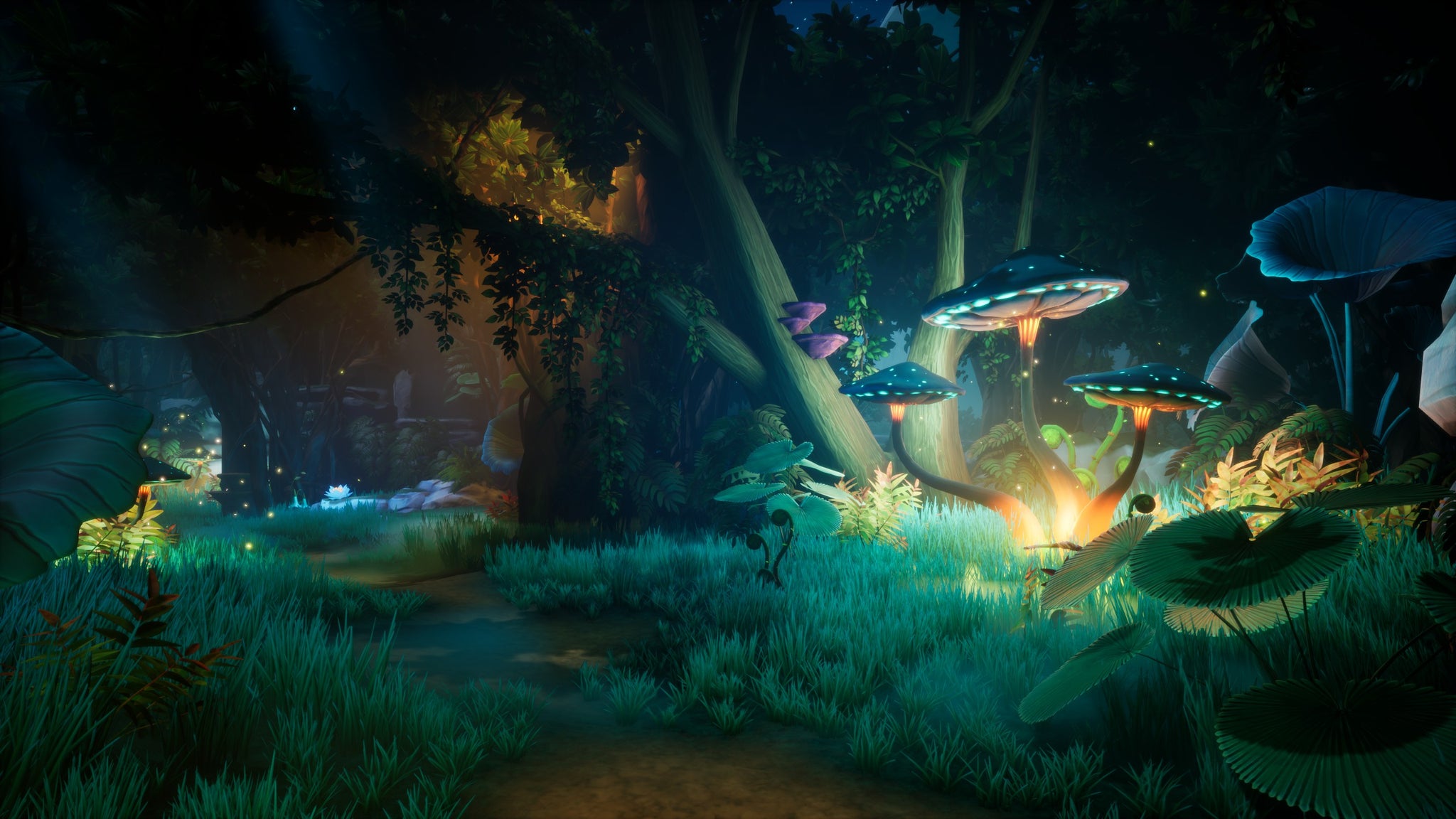
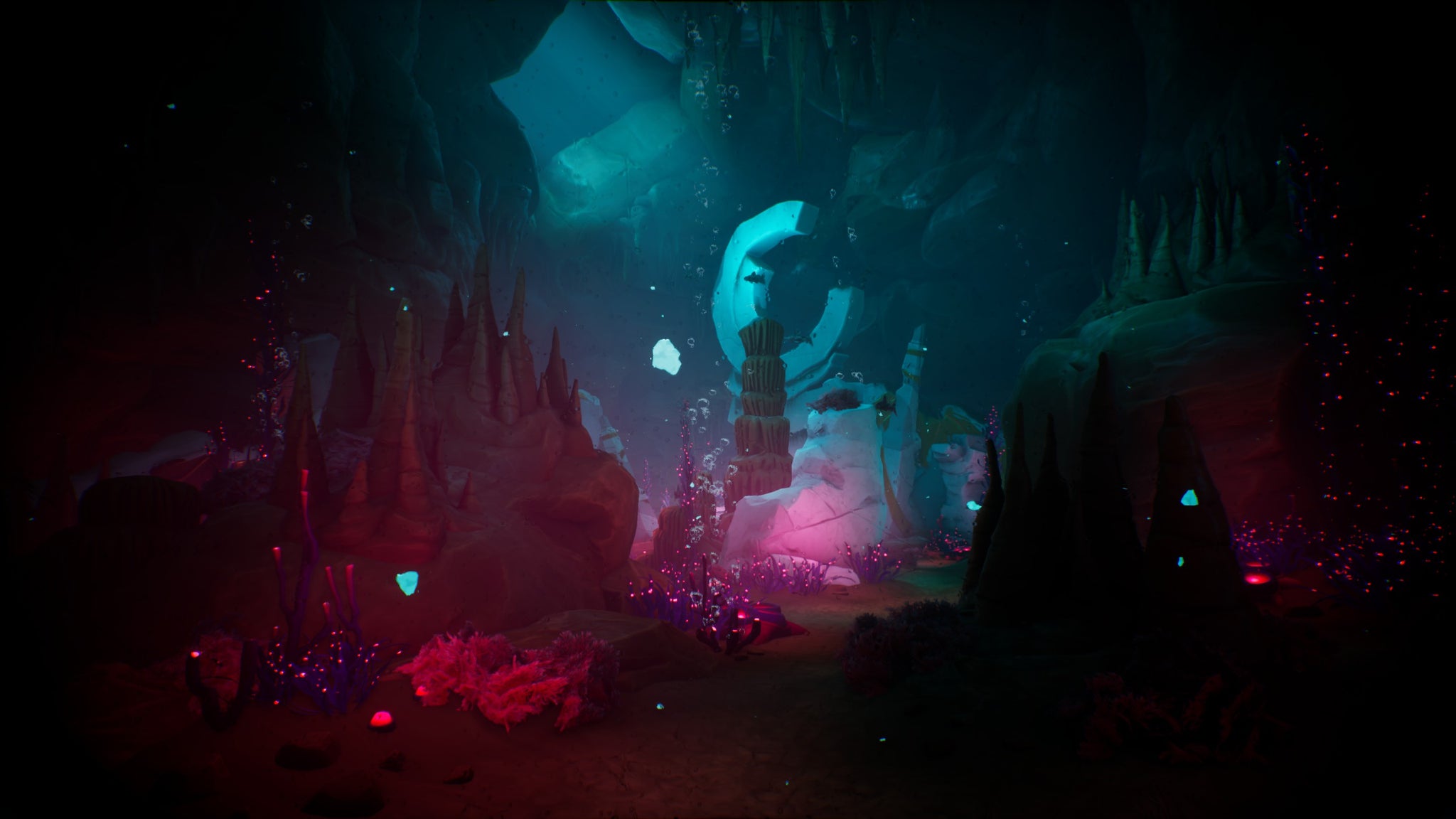
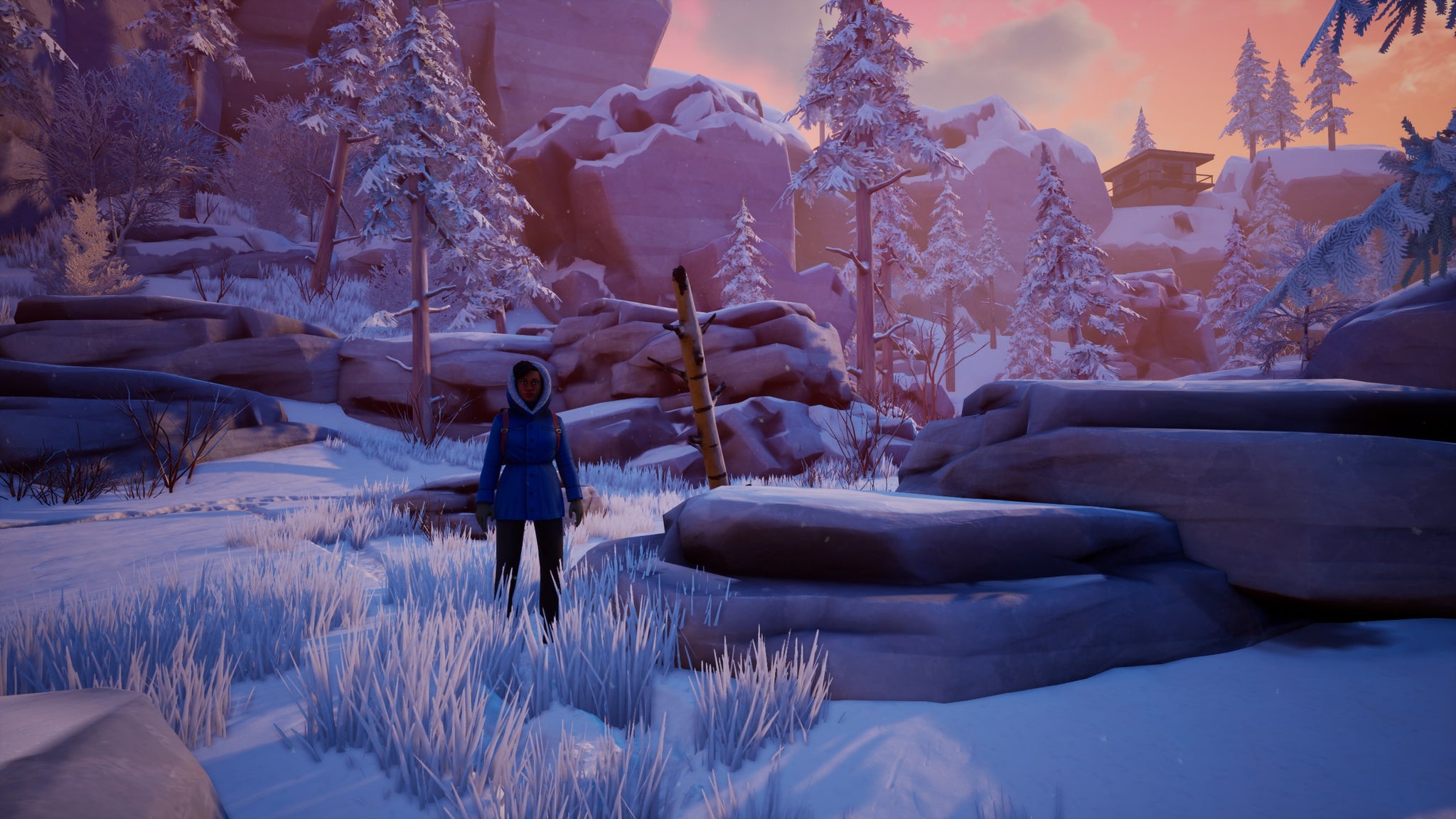
Ten minutes in, we’re off to Boston for a wonderfully atmospheric snoop around a gloomy manor – lighting illuminating shadowy staircases, rain battering against library windows – before venturing out into its sprawling grounds. And that’s just for starters! As the pair begin to investigate a mysterious statue said to contain the blood of an elder god, their adventure leads to them to crystalline caverns full of ancient secrets; the opulent gold-and-black-marble HQ of an Egypt-obsessed cult; an abandoned nazi stronghold lost amid the blizzard-blasted mountains of Norway, and on it goes.
It’s lovely stuff, full of wonderful ambient detail – do we really need to glimpse the gaslit city streets outside a heavily frosted office window? Probably not, but Out of the Blue goes that extra mile. And yes, we do get to watch red lines squiggling across maps as the story unfolds. Admittedly, the stiff 3D characters don’t quite live up to their surroundings, and the handful of rudimentary 2D cutscenes can be rather jarring compared to the lavish environments, but for the most part, Call of the Elder Gods sells its pulpy world well.
But if you’ve played Call of the Sea, you’ll know we’re really here for that journal. In a manner of speaking, at least. Video games have given us some great journals over the years, of course; we’ve had Max Caulfield’s teenage musings in Life is Strange, Nathan Drake’s scribbles in Uncharted, and Indiana Jones’ own doodles in the Great Circle. Call of the Elder Gods, though, like its predecessor, takes things a bit further. Here, your journal (technically, Norah’s journal, as it’s her disembodied spirit keeping notes “for the sake of clarity”) becomes the focal point for some often surprisingly elaborate puzzles.
You know when a tricky puzzle game comes along and someone warns: you’ll need a pen and paper handy? That’s very much the deal in Call of the Elder Gods – only, the notetaking stuff is built in. And because Out of the Blue knows you’ll have everything you need in front of you, it dares to go a bit bigger. Not necessarily harder, but more expansive and more involved – with puzzles often spanning whole locations. Usually, you’ll stumble across an obvious roadblock – an inaccessible room, perhaps, or a curious contraption – soon after entering a new area. And that’s where Call of the Elder Gods takes an investigatory turn. You’ll pick notes out of bins, flip over photos, study carelessly discarded timetables, and more. And if leads look promising, they’re automatically added to your journal – all rendered with Norah’s usual flair. But these tiny fragments of information don’t mean much on their own, which is where, for the grander puzzles at least, careful cross-referencing, inference, and deduction begins.
One note might reference past and future events, for instance, allowing you to mentally construct a timeline of dates you’ll need elsewhere. Or perhaps you’re trying to match names with occupations, and you suddenly realise the camera operator you’re looking for can’t possibly be one of the people in the photo. And often, one solution is nested inside another, opening things out further. There’s clear logic to all these threads, and while pulling them all together isn’t always simple, the fact everything is helpfully laid out in your journal – easy to visualise and easy to scrutinise – keeps things manageable. But it’s not all big-brained stuff; there are plenty for simpler challenges to shake up the pace and stop your grey matter from squirting out your ears. And the wonderfully tactile nature of Call of the Elder Gods’ various contraptions – with their levers and buttons and satisfyingly swirly dials – acts as a nicely physical counterpoint to all that thinkery. It’s often very clever, and is good at making you feel clever too.
Admittedly, I’m not sure I’m enjoying Call of the Elder Gods quite as much as the first game. I certainly appreciate the variety Out of the Blue’s has brought to its globe-trotting sequel, and I admire its vibrant attention to detail, but it’s harder to settle into the mood of it all compared to its single-location predecessor when the slightly flaccid cutscenes and thinly sketched story provide so little connective tissue. And thank goodness for Norah. Two-thirds in, I still haven’t warmed to its new protagonists, meaning I’m just not as emotionally engaged here.
But even so, Call of the Elder Gods is, I think, good stuff; smart, atmospheric, frequently beautiful, and genuinely rewarding. And as ever in the age of companion characters bellowing out solutions before you’ve even had time to blink, it’s just hugely refreshing to play a game that doesn’t treat you like a complete moron. I absolutely intend to stick around to see where things go from here – let’s just hope that wherever the whispers of the cosmic ancients take me, it’ll be something worth scrawling in my journal.