dailynewsnblog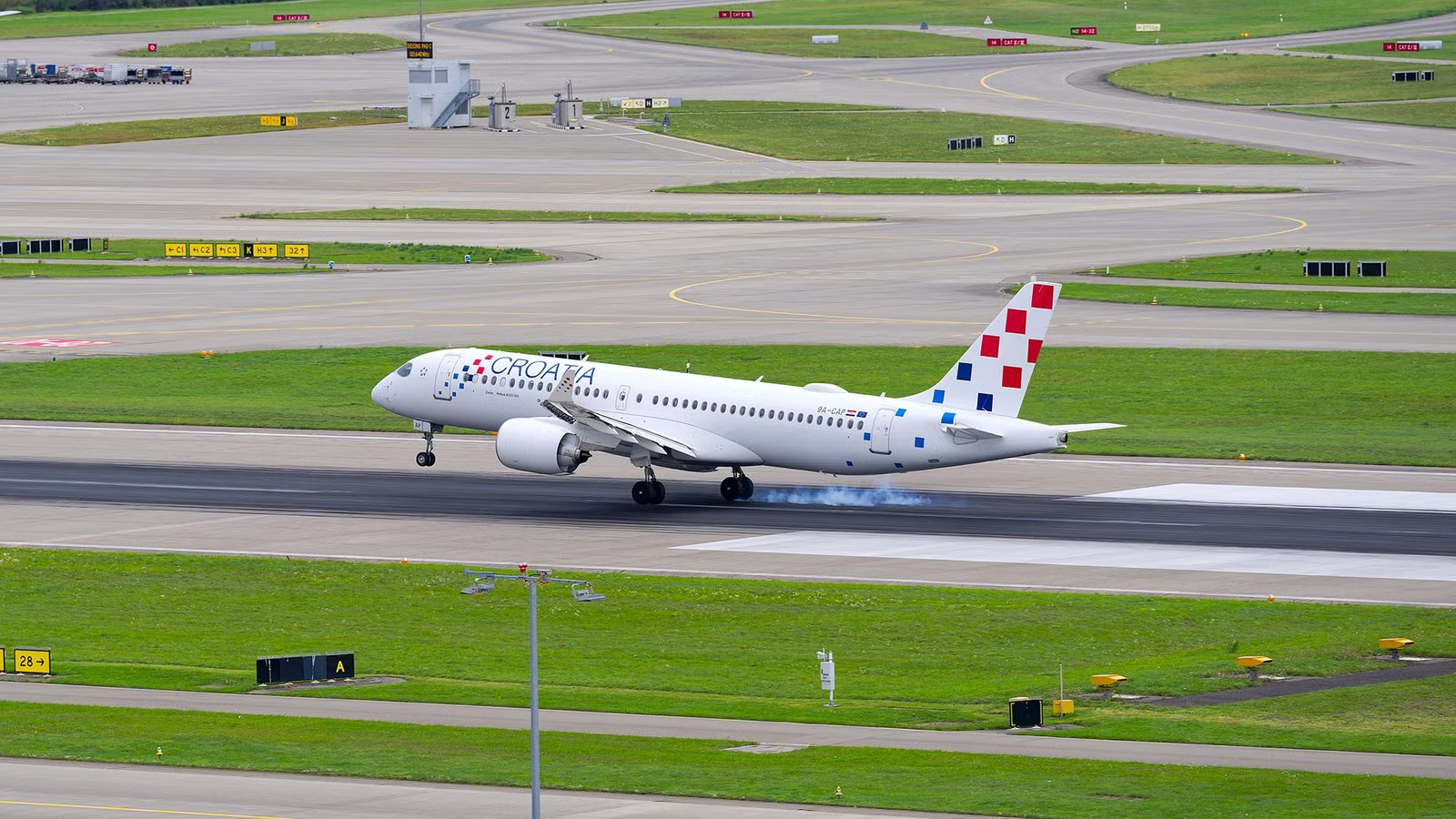
A Croatia Airlines Airbus A220 suffered a runway excursion on Saturday at Split Airport (SPU) after the flight crew executed a high-speed rejected takeoff at speeds of over 130 knots. Footage of the accident shows the A220-300 sharply veer to the left during its takeoff roll, exiting the runway and smashing through signs and lights as it tore across the grass.
The narrowbody eventually came to a halt with no reported injuries among the 135 passengers or crew. The aircraft sustained damage, including its left engine cowling, after striking a runway marker, while authorities have launched an investigation into the cause of the aborted takeoff.
Croatia Airlines A220 Damaged After Runway Excursion

The dramatic accident occurred as Croatia Airlines Flight OU412 – an A220-operated service to  Frankfurt Airport(FRA) on Saturday afternoon – accelerated down Split’s Runway 23. The jet suddenly veered left as it was seconds away from rotating, speeding onto the grass and ploughing into a runway sign. As per flight tracking data from Flightradar24, the aircraft’s maximum recorded ground speed was 131 knots, which is close to (or may have exceeded in this particular takeoff) the A220’s typical V1 speed.
Also known as ‘decision speed’, the V1 of an aircraft varies based on weight, weather and runway conditions. The A220 traveled a significant distance on the grass, kicking up dust and debris before coming to a halt around 6,000 feet down the runway. Passengers and crew disembarked the aircraft via stairs, and there have been no reported injuries. A Croatia Airlines spokesperson has confirmed that the flight “interrupted its takeoff” at Split, adding,
“We are in coordination with Split Airport, the competent services and the aviation authorities. The safety of passengers and crew members is an absolute priority for the company, and more information will be released after the completion of the first expert checks and official procedures.”
What Caused This Accident?

At this early stage, investigators have yet to publicly pinpoint the cause of the rejected takeoff and sudden directional change. Many have speculated that the aircraft’s left engine encountered a problem and subsequent loss of thrust as the plane approached V1. The pilots performed what is known as a high-speed rejected takeoff, which is when an aircraft aborts its takeoff roll at speeds of around 100 knots or above.
Rejections at this speed are inherently more dangerous and are only performed in emergencies, such as engine failures or loss of directional control. Weather conditions could also be a factor, with data from The Aviation Herald revealing significant crosswind gusts of up to 27 knots. While this may not have contributed to the initial loss of directional control, it could have exacerbated the aircraft’s sharp turning towards the left.
Operations at Split Airport were halted as the airport closed the affected runway while emergency vehicles attended to the scene. This caused a handful of flight cancellations and inbound flight diversions before the airport eventually resumed normal operations by late afternoon. However, the knock-on effect has been significant, with scores of delayed flights reported.
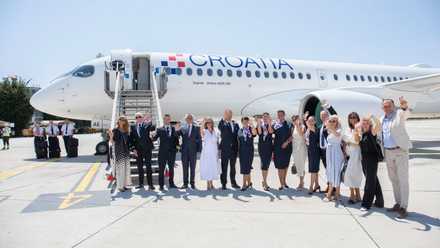
Croatia Airlines’ 1st Airbus A220 Enters Service
Will the type be the savior the airline hopes and needs it to be?
Aircraft Is Less Than A Year Old

The aircraft involved in this accident is 9A-CAN, delivered to Croatia Airlines in June 2025. The extent of the damage incurred is unclear at this stage, although images of the plane show significant damage to its left engine cowling. According to Croatia’s air accident investigator AIN, the A220 lost one of its landing gear wheels after braking, confirming that “minor damage” was sustained to the aircraft.
The A220-300 can seat up to 150 passengers in economy and is one of just six A220-300s in the carrier’s fleet. Ch-aviation data shows that Croatia Airlines has a total of eight A220s, including two new A220-100s with a smaller capacity for 127 passengers.
If the airframe faces an extended spell undergoing repairs, it would prove a major blow to the carrier’s operational capacity. Croatia Airlines operates a small fleet of 16 total aircraft, which includes its eight A220s, four Airbus A319s, three De Havilland Dash 8 Q400s, and one ATR 72.