dailynewsnblog
Aviation has continually expanded the limits of what is physically possible, ranging from ultra-light experimental craft that barely skim the air to enormous machines capable of carrying massive amounts of cargo across continents. The contrast between the lightest and heaviest aircraft ever built reveals how engineers have tackled radically different challenges at opposite ends of the weight spectrum, producing some of the most remarkable achievements in flight history.
Examining these extremes offers more than impressive numbers. It provides insight into the evolution of aerospace engineering, materials science, and aircraft design philosophy. Lightweight aircraft emphasize efficiency, agility, and innovation, while the heaviest aircraft showcase structural strength, endurance, and logistical capability. Together, these machines demonstrate how differing priorities, whether reducing weight to the absolute minimum or maximizing carrying capacity, have driven innovation throughout the history of aviation.
The Heaviest Aircraft Of All Time

The heaviest aircraft ever built represents the pinnacle of large-scale aerospace engineering, combining immense lifting power with the ability to transport cargo that few other aircraft could accommodate. These massive machines were designed to solve logistical challenges that conventional transport aircraft could not handle, including the movement of industrial equipment, military hardware, and even components of space programs. Their extraordinary size and weight required equally advanced innovations in structural design, aerodynamics, and propulsion systems. Among these giants, the Antonov An-225 Mriya stands as the most iconic example ever created.
The Antonov An-225 Mriya achieved a staggering maximum takeoff weight of 1,410,000 pounds (640,000 kilograms), making it the heaviest aircraft in aviation history. Originally developed to support the Soviet space program, the aircraft was engineered to transport oversized payloads such as orbiters and space shuttles. Powered by six Progress D-18T turbofan engines producing 51,600 pounds (23,405.37 kg) of thrust each, the aircraft combined enormous carrying capacity with long-range capability. Its cargo hold measured more than 142 feet (43.28 meters) in length and offered approximately 46,000 cubic feet (1302.58 cubic meters) of internal volume, allowing it to transport loads that were impossible for most other aircraft.
Following the collapse of the Soviet Union, the An-225 transitioned to commercial service with Antonov Airlines, where it became internationally recognized for transporting unusually large and heavy cargo across the globe. The aircraft could carry up to 209.44 tons (190 tonnes) while maintaining a range of roughly 9,600 miles (15,449 km) with maximum fuel capacity, further demonstrating the scale of its engineering achievement. In 2022, the world’s only completed An-225 was destroyed during the Russian invasion of Ukraine, marking the loss of one of aviation’s greatest technological accomplishments. Although rebuilding efforts have been discussed, the aircraft’s destruction remains a significant moment in the history of aerospace engineering and heavy air transport.
The Heaviest Aircraft Still In Service

The heaviest aircraft still operating today demonstrate how commercial aviation has evolved to meet the growing demands of global air travel. These enormous airliners combine high passenger capacity, long-range performance, and advanced engineering to transport hundreds of travelers across continents in a single flight. Their scale reflects decades of innovation in aerodynamics, fuel efficiency, and structural design, allowing airlines to move unprecedented numbers of passengers while maintaining operational reliability. Among these giants, the Airbus A380 remains one of the most recognizable and ambitious commercial aircraft ever produced.
The Airbus A380 earned worldwide recognition as the largest passenger airliner ever built, with a maximum takeoff weight of 1,235,000 pounds (560,000 kilograms). Designed as a double-decker Superjumbo, the aircraft could accommodate a typical passenger load of 575 travelers while offering a maximum certified capacity of more than 850 passengers in high-density configurations. Powered by four high-thrust turbofan engines, the aircraft cruises at approximately Mach 0.85 while maintaining a range of around 9,200 miles (14,805.96 km). Its immense interior volume and cargo capacity allowed airlines to operate high-demand international routes with unmatched passenger capacity.
Despite its engineering achievements and iconic status, the Airbus A380 faced significant commercial challenges that ultimately led to the end of production. Airlines increasingly shifted toward smaller twin-engine aircraft that offered greater route flexibility and improved operating economics, reducing demand for ultra-large four-engine jets. Even so, the A380 remains a defining symbol of modern aviation ambition and continues to serve with several major international carriers, particularly on high-capacity long-haul routes. Its massive dimensions, quiet cabin experience, and unmistakable silhouette have secured its place as one of the most influential commercial aircraft ever created.
Airbus Just Built The Largest Cargo Door In Aviation History For Its New A350F
This marks a major milestone, as Airbus is soon set to begin flight testing the A350F later this year.
The Lightest Powered Aircraft Of All Time

The pursuit of extremely lightweight powered aircraft pushed aviation engineers toward some of the simplest and most unconventional airplane designs ever constructed. Reducing weight to the absolute minimum required designers to rethink nearly every component of a traditional aircraft, from cockpit layout and structural materials to engine size and landing gear configuration. These aircraft emphasized efficiency and minimalism above comfort or long-range capability, often stripping away nonessential features in order to achieve powered flight with remarkably low empty weights. Among the most notable examples ever created, the Wee Bee earned recognition as one of the lightest powered aircraft in aviation history.
Developed during the late 1940s by aerospace engineer William Chana, the Wee Bee reportedly achieved an empty weight of approximately 210 pounds (95.25 kg). The aircraft used a highly compact airframe powered by a small piston engine, relying on lightweight construction techniques and minimal structural complexity to remain airborne. Its most unusual feature placed the pilot in a prone position on top of the fuselage rather than in an enclosed cockpit, a decision intended to reduce both size and overall mass. Although the design appeared unconventional and exposed, it demonstrated just how little structure was required to sustain controlled powered flight.
The legacy of aircraft such as the Wee Bee can still be seen throughout modern ultralight and experimental aviation. Many later lightweight aircraft adopted improved materials, enclosed cockpits, and safer handling characteristics while continuing to prioritize low empty weight and fuel efficiency. The continued interest in lightweight powered airplanes reflects aviation’s long-standing fascination with efficiency, proving that engineering innovation is often driven as much by reducing mass as by increasing speed or size.
The Lightest Human-Powered Aircraft Made

Human-powered aircraft represent the opposite extreme of aviation design from the massive cargo planes and commercial airliners that dominate modern aerospace engineering. Instead of relying on powerful engines and heavy structural reinforcement, these aircraft are built around absolute weight reduction, requiring pilots to generate enough energy through pedaling alone to sustain flight. The challenge pushed engineers toward radically lightweight materials, enormous wingspans, and highly efficient aerodynamic layouts that could remain airborne using only limited human power. Among the most influential examples ever created, the Gossamer Condor demonstrated that controlled human-powered flight was not only possible, but practical under carefully engineered conditions.
The Gossamer Condor achieved international recognition in 1977 after successfully completing a figure eight course to claim the Kremer Prize, a milestone once considered nearly impossible within the aviation community. Designed by aerospace engineer Paul MacCready, the aircraft weighed roughly 70 pounds (31.75 kg) without the pilot and relied on an immense lightweight wing structure covered in thin plastic film. Its exceptionally low weight allowed a cyclist to generate enough thrust through pedal power to maintain flight speeds of approximately 11 mph (17.7 km/h). The aircraft’s design emphasized aerodynamic efficiency above all else, using a slow flight profile and extremely lightweight construction to overcome the severe power limitations of human propulsion.
The success of the Gossamer Condor directly influenced later experimental aircraft, including the Gossamer Albatross, which became the first human-powered aircraft to cross the English Channel. These aircraft demonstrated how minimizing structural weight could unlock entirely new categories of flight, even when propulsion power was extraordinarily limited. Although human-powered aircraft remain highly specialized and impractical for mainstream transportation, their development contributed valuable research into lightweight composite structures, aerodynamic optimization, and low-speed flight efficiency. Their achievements remain some of the clearest demonstrations of how far engineers can push the limits of minimal weight in aviation.
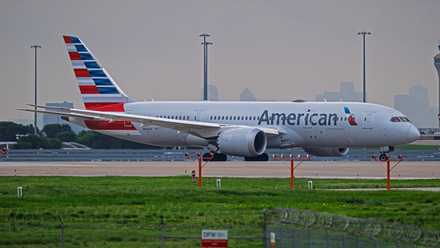
Smallest Widebody: American Airlines To Begin Its New Longest Boeing 787-8 Dreamliner Flight
Dallas/Fort Worth to Athens has never been served before.
The Lightest Passenger Commercial Craft In Modern Aviation

Modern aviation often raises a practical question about how light a passenger-carrying aircraft can become while still retaining the performance, safety, and systems expected of a commercial jet. This challenge is especially relevant in the very light jet category, where manufacturers attempt to combine business aviation comfort with minimal structural weight and simplified operation. The result is a class of aircraft that pushes the boundaries of size and efficiency while still accommodating multiple passengers in a pressurized cabin. Among the most notable examples in this category is the Cirrus Vision SF50, also known as the Vision Jet.
The Cirrus Vision SF50 achieves a maximum takeoff weight of approximately 6,000 pounds (2721.554 kg) while carrying up to six occupants in a compact but highly engineered air frame. Powered by a single Williams FJ33-5A, the aircraft delivers enough thrust for cruise speeds above 300 knots (555.6 km/h) while maintaining relatively low fuel consumption compared to larger business jets. Its carbon fiber fuselage helps reduce structural weight while increasing cabin volume efficiency, allowing designers to maximize internal space without significantly increasing mass. The aircraft also integrates advanced avionics and automation systems that reduce pilot workload, which indirectly allows for a more streamlined cockpit design and overall weight optimization.
Differences In Design: Heavy Vs. Light Aircraft

The world’s heaviest and lightest aircraft highlight two completely different approaches to aviation engineering. Heavy aircraft prioritize structural strength, payload capacity, and long range performance, requiring powerful engines, reinforced air frames, and highly complex systems to move enormous loads through the air. Lightweight aircraft focus instead on efficiency, simplicity, and minimal drag, often relying on compact structures and lightweight materials to achieve flight with as little mass as possible. Despite their differences, both categories reflect how aircraft design is shaped by the balance between weight, power, and aerodynamic performance.
Advances in aerospace technology continue to influence both extremes of aviation. Modern composites, improved propulsion systems, and more efficient aerodynamic designs have allowed large aircraft to reduce operating weight while enabling smaller aircraft to become safer and more capable. From massive cargo transports to ultralight experimental planes, these aircraft demonstrate how aviation innovation is often driven by the pursuit of either carrying more weight or eliminating as much of it as possible.