dailynewsnblog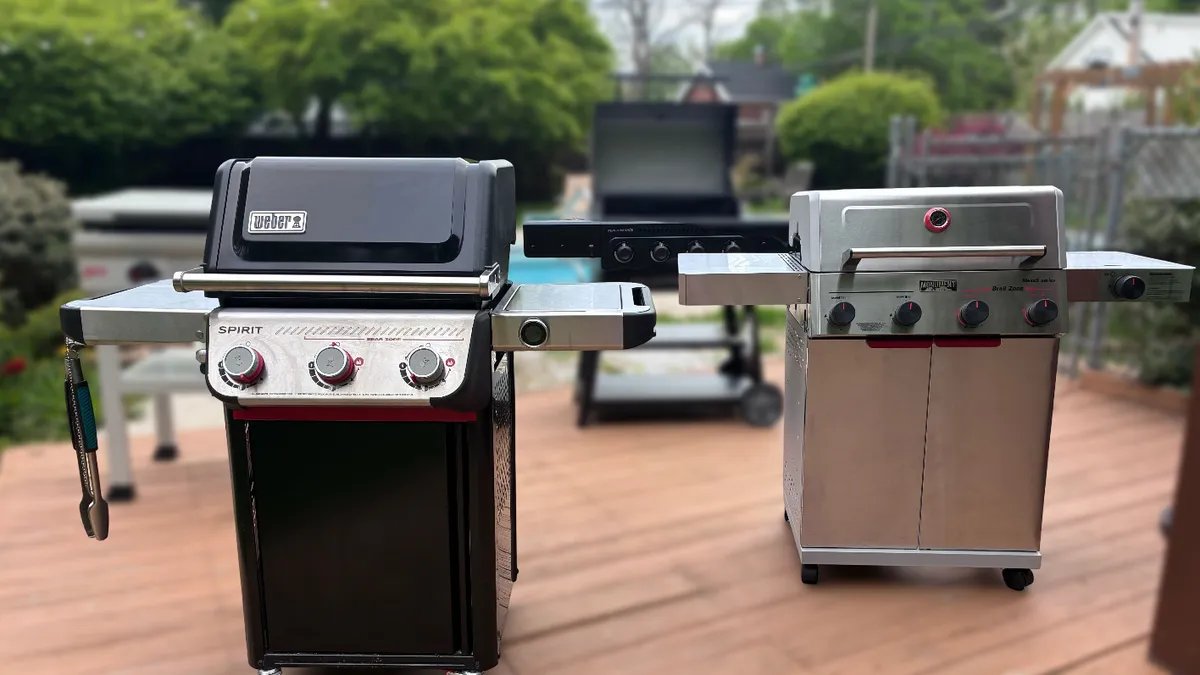
How much should you spend on a gas grill?
A few of the pricier smart grills had built-in probe systems for precise temperature monitoring.
While knowing what you want in a gas grill is important, knowing what you can spend is the first step when buying a grill. This is because you may want a six-burner grill, with a hot plate on the side, and a searing deck, but if you’ve only got $350 to spend, you’re going to have to make some compromises. Now, there are still plenty of good gas grills in this price range, but when the spread between entry level and high-end is thousands of dollars, it’s best to determine what you can afford first.
A side burner is nice to have but not something we deem essential.
The reliable full-size grills we tested start at around $400 for a two-burner Weber. You can go cheaper with a budget grill brand like Charbroil or lesser-known producer, but don’t expect that unit to last as long or function as efficiently.
Charbroil’s Performance Series can be had for under $300.
Larger 5- and 6-burner grills typically run between $700 and $1,000. At that price, you’ll get more total cooking area and often more raw power for searing steaks and extras like a side burner, smart connectivity. In the case of the Ninja FlexFlame, a built-in smoker and convection fan for outdoor roasting and baking.
Gas grill fuel source: Propane vs. natural gas
Milk crates make great holders for propane tanks to keep them upright and easier to carry for transportation.
The most common gas grill you’ll find when shopping around is propane. These grills are more portable, as you can simply hook them up to a 15- to 20-pound bottle and roll them wherever you need them. Just make sure you properly dispose of or trade in your propane bottle when it’s empty.
The other type of gas grill would be one that uses natural gas. For some this isn’t an option at all because this utility isn’t available at your home, or you prefer to have a more mobile grill. If you have natural gas as a fuel option, the main benefit would be that you won’t have to worry about running out of fuel and you’ll save money in the long run since you won’t have to pay for propane bottles or refills.
We take our gas grills seriously.
Benefits of natural gas grills
- Low-maintenance, always-ready grill for regular backyard use
- Long-term savings on fuel
- A cleaner, greener way to cook
Benefits of propane gas grills
- Easier to move your grill around
- Fewer installation costs and logistics
- More grill options to choose from
How much raw heat do you need?
For the best crust on steaks and burgers, a grill with sear burners is preferred.
The heat rating for grills is done in British Thermal Units, and while the higher the BTUs generally means more heat, a lower number doesn’t make the grill bad. There are many factors that go into determining the best BTUs needed for a particular grill. A grill with 700 square inches of cooking space would likely be underserved by only 25,000 BTUs, but a smaller grill would be perfect at that rating. A good rule of thumb to ensure the BTU rating and grill size are optimal for your needs is to divide the total BTUs by the total cooking area. Aim for around 110 BTUs per square inch.
Size and capacity
The Denali from Monument sports a whopping 900 square inches of cooktop.
Before you buy, do a mental audit of how many people you’ll be cooking for regularly. If you tend to host large gatherings, you’ll appreciate the extrs grate real estate. If it’s only once in a while, the smaller grill will save money and space on the deck.
Small, portable gas grills start at around 150 square inches, enough for 5 to 7 burgers. Midsized grills offer 300 to 400 square inches of cooking space, enough for 10 to 12 burgers. The largest gas grills we tested had as many as 900 total square inches of cooking space.