dailynewsnblog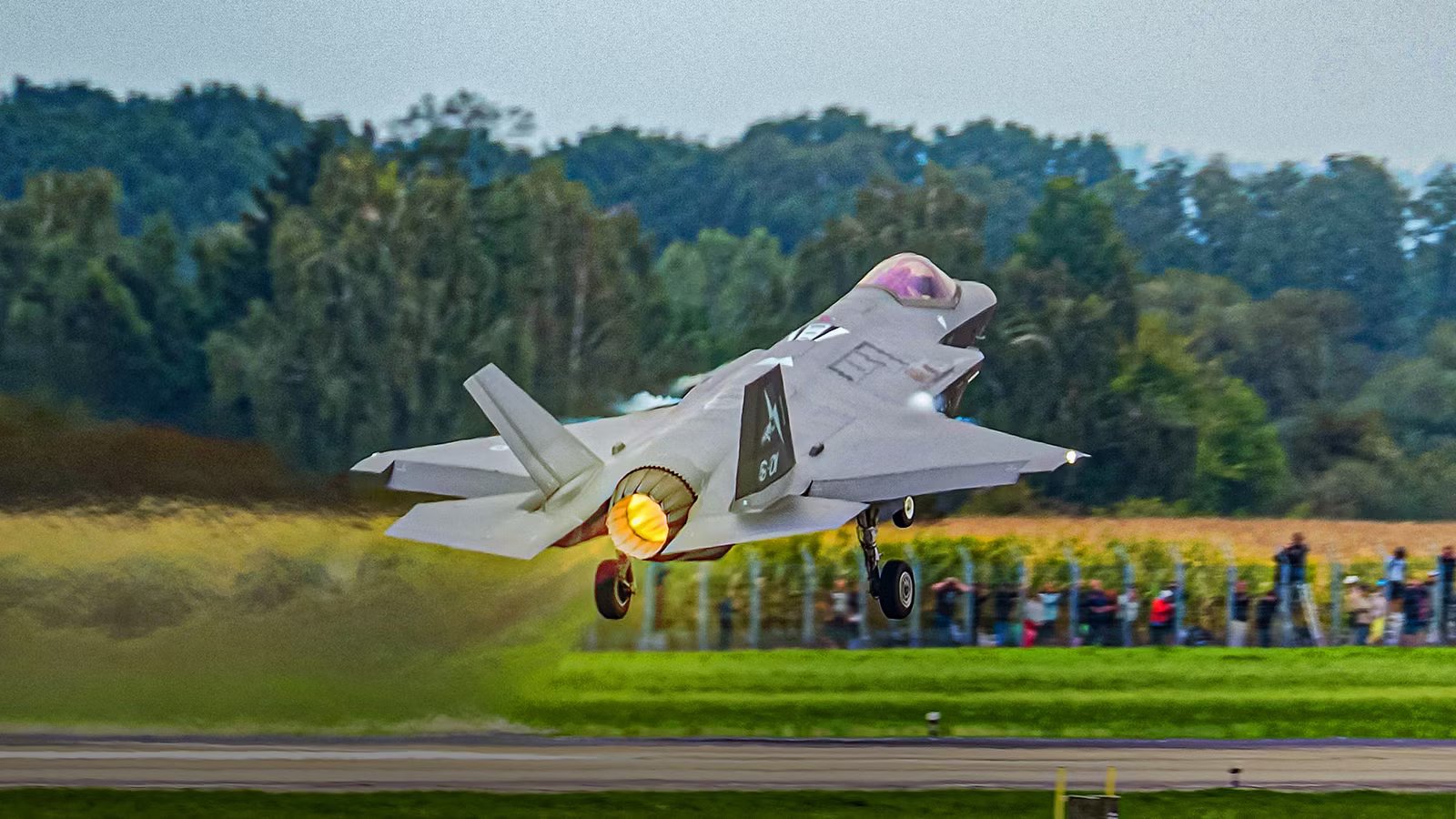
The United States has threatened to ‘take over’ Canadian airspace if the Royal Canadian Air Force doesn’t purchase Lockheed Martin F-35 Lightning II stealth fighters. This dramatic ultimatum is tied to a geopolitical roadblock caused by the US Presidential Administration of Donald Trump. The unprecedented hostility to America’s northern neighbor not only threatens the RCAF’s next-generation fighter program but also its role in the North American Aerospace Defense Command.
While the government of Canada has already committed to a small batch of its total order for 88 of the American fifth-generation stealth fighters, its full procurement is in doubt now. Steadily growing political tensions between the two nations, as well as disagreements over economic sharing under the F-35 program, have opened an opportunity for the Saab JAS 39 Gripen E to arise as a possible alternative.
One of the largest fallouts of choosing the Saab over the F-35, for Canada, would be the erosion of the NORAD Alliance. This has historically been a basis for Canada to share military assets and platforms that the US Armed Forces operate. That closely knit defense pact has included access to data-link, weapons systems, and military facilities that would otherwise not be made available. Canada, in turn, must provide a great deal of surveillance and support infrastructure as well as air patrols over its own territories and alongside American forces.
The US claims it would be in a strategically compromised position if Canada chose the Saab Gripen because it would create a technological and operational ‘blind spot’ in North American defense. The US relies on Canada through the NORAD alliance to provide an integrated shield against threats over the Arctic. US officials have warned that if Canada’s fleet is ‘lower tech,’ the US Air Force would be forced to fly more missions in Canadian airspace to fill the security gap, or ‘takeover’ its airspace.
An Alliance On The Rocks: The NORAD Dilemma

The US position voiced by Ambassador Pete Hoekstra in January framed the purchase of the F-35, not as an optional commercial deal but as a requirement for continental joint security. The US suggested that if Canada chooses an ‘inferior’ or less interoperable jet, referring to the Swedish Saab, it would create security gaps. American officials argued that such a gap would necessitate altering or revising the NORAD agreement to allow more frequent and direct US Air Force operations over Canadian territory, according to CBC.
The rhetoric regarding a takeover of Canadian airspace is not about a hostile invasion but rather a leveraged renegotiation of the NORAD alliance terms. The Canadian Department of National Defence continues to study whether to proceed with the remaining 72 aircraft or pivot to a mixed-fleet strategy that includes non-US fighters. Canadian analysts and officials have interpreted these warnings as tactics intended to leverage the F-35 purchase during wider trade disputes.
The current NORAD Commander, General Gregory Guillot, has publicly stated that 5th-generation stealth jets like the F-35 are not always critical for continental border defense, preferring 4th-generation modernization instead. This suggests the security gap argument is more a political leverage tool than a purely military necessity.
Under existing NORAD terms, US jets already have the legal ability to enter Canadian airspace for refueling and intercept missions without explicit permission for each flight. The ‘threat’ is essentially an escalation of this existing authority into a permanent, dominant presence.
Fate Uncertain: Canada’s F-35 Fleet

The RCAF is known to have committed to buying at least 30 F-35 jets but is still debating whether or not it will purchase the full number of Joint Strike Fighters that it originally planned to procure. The Government of Canada has been reconsidering the deal due to a combination of political issues with the current administration of the United States and surging program costs. The original F-35 deal was for 88 jets at an estimated $19 billion CAD, with lifecycle costs now projected at $27.7 billion, according to Zona Militar.
Canada currently has 16 F-35s firmly funded, and it has paid for long-lead parts on an additional 14, according to Army Recognition. The primary reason that these are still being purchased is that the F-35 still outperforms other airframes that were considered to succeed the outgoing Boeing F/A-18 Hornets.
The Canadian Ministry of Defense is considering the Swedish alternative overstated concerns that the US holds a ‘kill switch’ control over the jets despite the fact that it rated the F-35 significantly higher than the Saab JAS 39 Gripen E during tactical evaluations, as Hushkit reported.
The other side of the conversation about Canada’s next fighter is economic. There are many Canadian businesses involved in the F-35 program and a complete withdrawal would devastate at least some of them. At the same time, Saab has offered to stand up a nearly fully independent manufacturing process in Canada to support the RCAF Gripen fleet domestically. This would give Canada sovereignty over its fleet and potentially afford a larger economic opportunity for citizens.
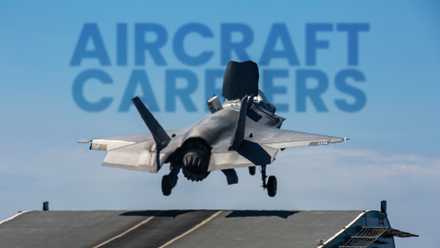
Here’s Why The Royal Navy May Never Fill Its Aircraft Carriers With F-35s
Will the UK’s Fleet Air Arm be cut down to size?
Sovereignty For Canadian Warbirds And Airspace

The fact that Canada would have total sovereign control over mission data and software is one of the most alluring features of choosing the Gripen. In contrast, the F-35 necessitates the use of an American cloud-based logistics system that is housed on US servers. Canada’s whole air force might be grounded if the US chooses to cut off Canada during a trade dispute. Canada is vulnerable to US politicians’ ‘kill switch’ authority if it depends only on the American defense industrial base.
Canadian Defense Minister David McGuinty gave remarks on April 27 that gave no indication that a decision may be near. AeroTime reported him saying:
“The review of the purchase of the F-35s is continuing. We are taking the necessary time to study very, very closely the question of the fighter fleet.”
The Trump administration’s plans to buy land or impose 25% tariffs on Canadian aerospace components have changed the calculations. The Saab arrangement includes a Canadian Production Center. With the Avro Arrow in the 1960s, Canada lost the ability to build complete fighter jets; this allowed it to restore that capability. A major shift from integration to autonomy is represented by the short-term choice of the Saab Gripen and the long-term enrollment in the Global Combat Air Program.
Canada is also seeking collaboration with other world powers that share its concerns about the dangers posed by American isolationism. The country is proposing a partnership with the United Kingdom, Italy, and Japan under the Global Combat Air Program. If Canadian corporations joined GCAP as Tier 1 partners, they would be able to participate in the design of sixth-generation technologies. This protects the intellectual property in Canada and prevents the “brain drain” of engineers to the United States that occurred following the Arrow’s shutdown.
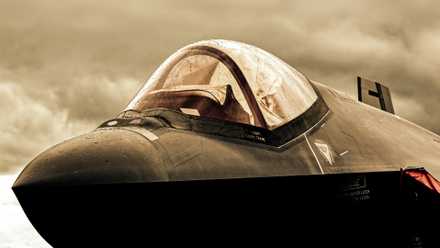
Why NATO’s Most Advanced American Fighter Jet Is Now Being Built In Italy
The epicenter of Europe’s stealth air power lies just outside Milan.
Showdown Between American And Swedish Fighters

The factors pushing Canada towards swapping the remaining 58 airframes for the Saab Lightfighter are threefold: national policy, domestic economic growth, and technical sovereignty over the fighter jets. The RCAF desperately needs to replace its aging CF-188 Hornets, which are nearing the end of their service life. The F-35 won the original 2022 competition by a wide margin, scoring 95% on military capabilities compared to the Gripen’s 33%.
Canada is still legally and operationally invested in the F-35 program despite recent concerns. Early in 2023, Canada formally committed to the first batch of F-35 fighters. Production of these aircraft is already well underway. In order to keep its spot in the manufacturing queue for the second batch, which is almost all funded, Canada also paid for long-lead components.
Despite having better technology, the F-35 is expected to cost between $74 and $80 billion throughout its lifetime. Operating and maintaining the Gripen E is far less expensive, especially for regular Arctic patrols. The government currently seems to be following a dual-fleet or mixed-fleet plan, replacing the remaining 58 to 72 aircraft with Gripens for industrial autonomy while keeping the first 16 to 30 F-35s that it has already paid for.
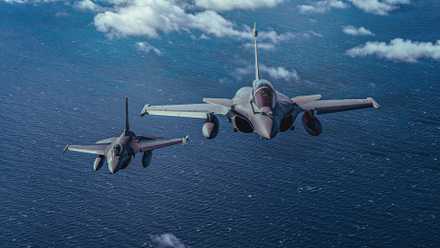
How The Dassault Rafale Stacks Up Against The F-16, Gripen, & Typhoon In 2026
Comparing France’s exquisite omnirole jet to the leading fighters.
A New Era For Canadian Defense Industry

The F-35 program has been heralded as a long-term driver for Canada’s aerospace industry, which is the fifth-largest in the world. That came under fire in early 2025 when the Trump administration launched a trade war, imposing almost universal tariffs on Canadian and Mexican imports. Then, in early 2026, Trump threatened to ‘decertify’ any Canadian-made aircraft, including Bombardier business jets, as reprisal for Canada’s perceived failure to certify select new Gulfstream business jets.
Canada is more than just an American defense industrial complex client. With a history comparable to that of any other major state, it is an independent aerospace superpower. In light of this, Sweden has made a very attractive offer to build these aircraft in Canada, potentially creating 12,600 jobs in the country. Unlike the F-35, which is assembled in Texas, Saab proposes building a domestic assembly line in Canada. This will include the establishment of regional hubs for sustainability and upgrading across Ontario and Quebec.
Canada once developed what could have been the world’s most advanced interceptor jet, the CF-105 Arrow. Its dramatic cancellation in 1959 remains a contentious source of national pride to this day. Despite the F-35’s vast technological advantage over the Gripen E, the Canadian government is seriously contemplating reinvesting in domestic aerospace and defense, given the uncertainty of the American supply chain under Donald Trump’s administration.