dailynewsnblog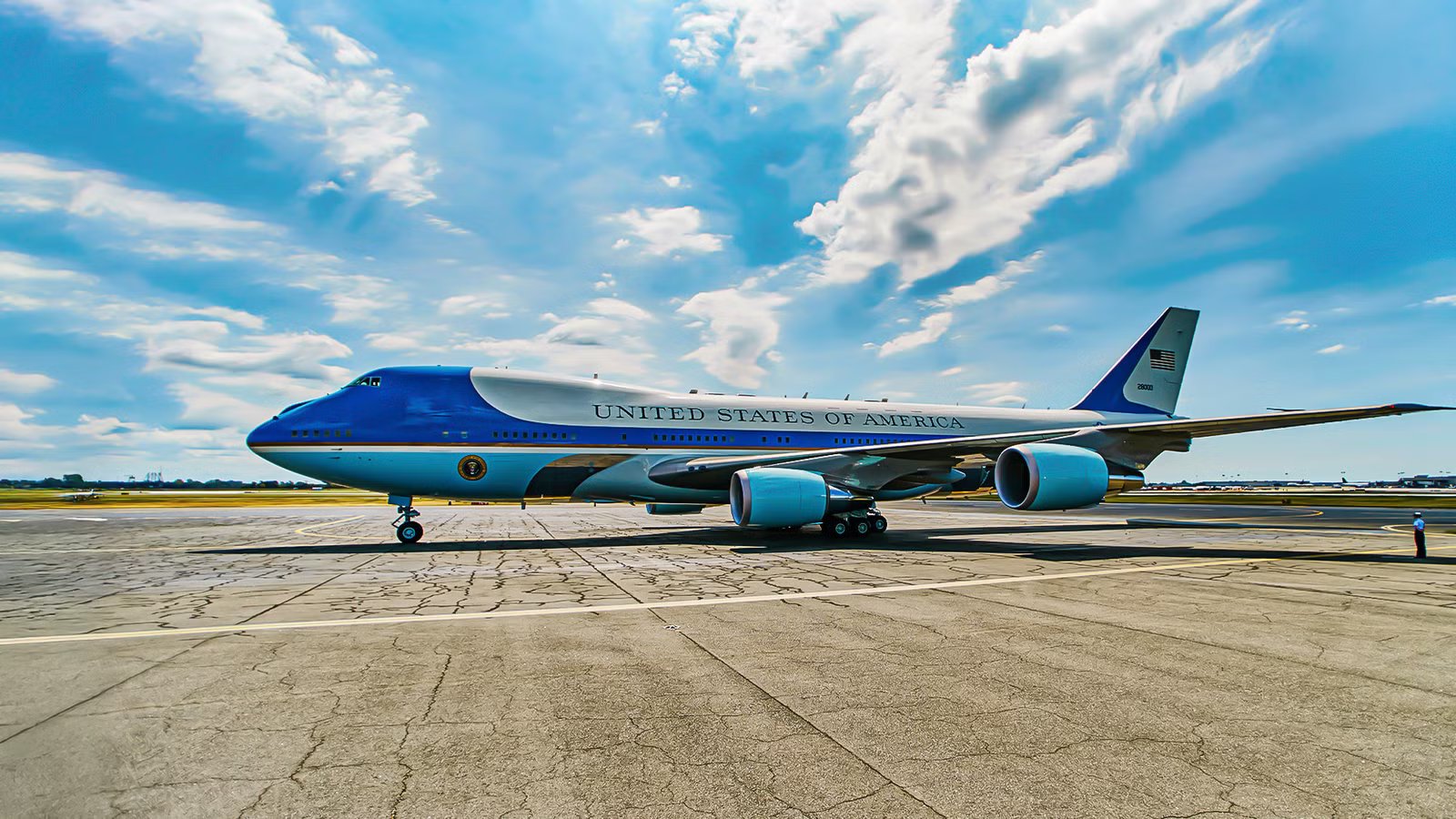
The Boeing 747 Jumbo series proved much more successful than the larger Airbus A380 Superjumbo for a range of reasons. One is that the A380 came too late when ultra-large quadjets were being superseded by more efficient twin-jets. But another reason is that the 747 is much more versatile in its applications. Both NASA and the US Air Force have operated the Boeing 747, and it has been the only aircraft capable of carrying out some of the tasks, such as those of the VC-25 “Air Force One” and the famous Space Shuttle Carriers.
Boeing is currently in the process of replacing the existing, but rapidly aging, heavily modified Boeing 747-200 Presidential transport aircraft with new Boeing 747-8-based aircraft. As an interim measure, the Air Force has also acquired an ex-Qatari Boeing 747-8 for Presidential use and is purchasing two second-hand Lufthansa Boeing 747-8s. Here is why the Boeing 747 is the only aircraft fit for US Presidential use.
The Boeing 747 Is Iconically American

One of the most important aspects of Presidential transport aircraft is that they are very high-profile and function as ambassadors of the nation. Countries that produce advanced aircraft almost invariably use examples of their national aircraft to transport their heads of state. This means it is pretty much unthinkable for the US to use Airbus aircraft, even if Airbus aircraft were more suited to the task. With Lockheed and McDonnell Douglas no longer making aircraft (or merged), Boeing is the only game remaining in town.
Something can be seen in Russia. Following the collapse of the USSR, almost no commercial airlines wanted to purchase Russia’s inferior Tu-204, Il-96, etc. aircraft, including Russian airlines like Aeroflot and S7 Airlines. However, these aircraft remained in production, mostly for the Russian government and military. The Russian president flies in a highly modified Ilyushin Il-96 aircraft.
The Ukrainian president flies on a Ukrainian Antonov aircraft; top German, French, and British officials fly on modified A330 and A350 aircraft. A notable outlier is China, which hasn’t been able to produce large commercial aircraft until now. The VIP aircraft used for Xi Jinping are modified Boeing 747-8s, although it’s likely China will change to domestic aircraft if it develops its own analogs (e.g., C929 or C939) in the 2030s, as China’s state-run COMAC intends to develop.

The Aircraft Replacing The Boeing 747
As Boeing’s flagship, the Boeing 777X is the closest thing to replacing the Jumbo, although it is not a direct replacement.
Only Five Available Aircraft Designs

As the selection of the type of aircraft for the Presidential one is a geopolitical choice as much as it is a practical one, the Air Force is de facto limited to Boeing’s lineup of aircraft. Boeing offers the Boeing 737, 767, 787, and 777 in production, although Boeing 747-8s are still available on secondary markets. The two Boeing 747-8s Boeing is converting were originally built for Russia’s Transaero before its collapse in 2015.
The aircraft were never delivered and are essentially new. It’s also worth noting that the Air Force’s C-32 “Air Force Two” aircraft are based on the much smaller Boeing 757. However, these are aging and have been out of production for two decades. Occasionally, US Presidents do fly on these 757-200s, like when Biden flew to visit Ukraine in 2023 and when Trump flew to Europe in 2026 after his 747-200 broke down. When the President is on these aircraft, they have the callsign “Air Force One.”
With just five available Boeing commercial aircraft, the Boeing 737, Boeing 767, and Boeing 787 can be easily eliminated as they are too small. This process of elimination basically means that the Air Force has a choice of the 777 or the 747. While this article will argue that the 747-8 is the only aircraft big enough to meet the Air Force’s requirements, the “wow, that’s a big American airplane” factor should not be overlooked. These high-profile aircraft are intended to impress and visually establish the importance of the US.
The Only Aircraft Big Enough

The large size of the Boeing 747-8 allows the Air Force to extensively modify it with a range of systems and for it to have the capacity to meaningfully carry a share of the President’s entourage, including reporters. With a large airframe, the Air Force can retrofit a vast array of structural, defensive, communications, and operational systems, including aerial refueling and EMP hardening against nuclear attacks.
Air Force One aircraft are not just transports, they are also mobile national command centers able to maintain government continuity during nuclear war. They have numerous self-defense systems to protect the aircraft from incoming missiles. Another important factor is that the aircraft has four engines. Commercial operators are concerned about fuel savings per seat mile; the Air Force is not. Four engines provide the redundancy that military aircraft value.
Air Force next-gen VC-25B “Air Force One” aircraft (per Boeing) | |
|---|---|
Quantity | 2 |
Planned delivery | 2028/2029 (perhaps) |
Interior floor space | 4,000 square feet |
Range | Unlimited with in-air refueling |
Cost | $3.9 billion |
The VC-25A aircraft has 4,000 square feet of interior floor space. This accommodates the presidential suite, various offices, conference facilities, galleys able to serve up to 100 meals, quarters for staff, the Secret Service, reports, and more. A smaller aircraft like the 767 or upgraded 787 would not have the space needed. The 777 would also quickly run out of space.
The Air Force’s Fleet Of Seven 747s

The Air Force has, or soon to be in possession of, seven Boeing 747 aircraft related to the VC-25 “Air Force One.” Two are the existing rickety old Boeing 747-200s currently used to transport US Presidents that were delivered in the 1990s. The third is the ex-Qatari Boeing 747-8 that the Air Force appears to be calling the VC-25 Bridge Aircraft. Reports suggest the aircraft is now in test flights and is expected to enter service this summer.
Given the truncated retrofit timeline, it seems the Bridge Aircraft is only receiving a selection of the heavy modifications military VC-25s are intended to receive. It might not be properly hardened against nuclear attacks, it likely doesn’t have the full suite of comms, it probably can’t conduct in-air refueling, and more. It is only expected to be in service until around 2028 and will likely only be used by Trump.
Two other aircraft are the two ex-Lufthansa Boeing 747-8s that the Air Force purchased. These are reportedly to be used for testing and maybe other roles, perhaps also for spares. The Air Force realized that a transition to the 747-8-based VC-25B will require a larger support infrastructure base than previously planned. As of the time of writing, one of these two 747-8s appears to have been delivered, with the other still flying with Lufthansa for now. The final two Air Force One-related Boeing 747s are the two VC-25Bs Boeing is developing, more on those below.
Why The E-4B Nightwatch & VC-25B Air Force One Are Critical To US National Security
Air Force One and the Doomsday aircraft are both designed as Presidential transports and command centers (for times of peace and emergencies).
Delayed & Over Budget Air Force One Replacements

In a twist of fate, in Trump’s first term, he lauded his accomplishment in forcing Boeing to accept a lower fixed-price contract for delivering the two VC-25Bs at just $3.9 billion. This seems to be an agreement that all came to regret. The fixed price contract has resulted in Boeing absorbing more than $2 billion in losses on the contracts; it has also meant Boeing was not interested in accepting the Air Force’s fixed-price E-4 Nightwatch replacement program.
The contract amplified already extreme pressures on the complex task of retrofitting the white tail 747-8s to the sophisticated VC-25B standard. This has contributed to the delivery timeline slipping from the initially planned 2022 delivery date to 2028 or even 2029. This means that Trump may or may not get to fly them during his final term.
At the same time, this likely hasn’t saved the Air Force any money; in fact, it is likely costing the Air Force more money. Not only does the Air Force have to foot the increasing bill to keep the old VC-25As in service for longer, but also the “free” ex-Qatari Bridge Aircraft is very expensive. It is unclear how much the Air Force is paying to rapidly retrofit the Bridge Aircraft, but the New York Times has reported that around a billion dollars has been pulled from its IBCM Sentinel program to fund the jet in a black box project.
Air Forces Are A Bastion For Old Aircraft

While the stereotype of air forces is that they operate the most modern and cutting-edge technology, the truth is extremely complicated and often self-contradictory. Commercially, the Boeing 767 is now considered an essentially obsolete aircraft, having been replaced by the Boeing 787 Dreamliner (and upcoming 777-8F and A350F), and yet the Air Force is planning to continue purchasing it as the KC-46A tanker well into the 2030s and fly it perhaps to the end of the century.
Adding to that, the Air Force is also purchasing them with the Pratt & Whitney PW4000 engines, an engine that the commercial industry has long stopped ordering. Remaining commercial freighter orders are powered by the GE Aerospace CF6. The Air Force is now one of the only operators of the mostly retired Boeing 747-200, and it purchased those aircraft in the late 1980s and early 1990s when the 747-400 was already in advanced design/early production.
When the Air Force eventually receives its new Boeing 747-8 VC-25Bs in 2028 or 2029, it will do so five or six years after the Jumbo has already gone out of production. These aircraft will be something of a common enigma found in the Air Force, where an older airframe design is incredibly specialized, with many of the world’s most advanced air defense, comms, and other equipment. Something similar is happening with the Boeing 747-8-based Nightwatch replacement that is not planned to enter service until 2032, almost a decade after Atlas Air took the final commercial 747-8.