dailynewsnblog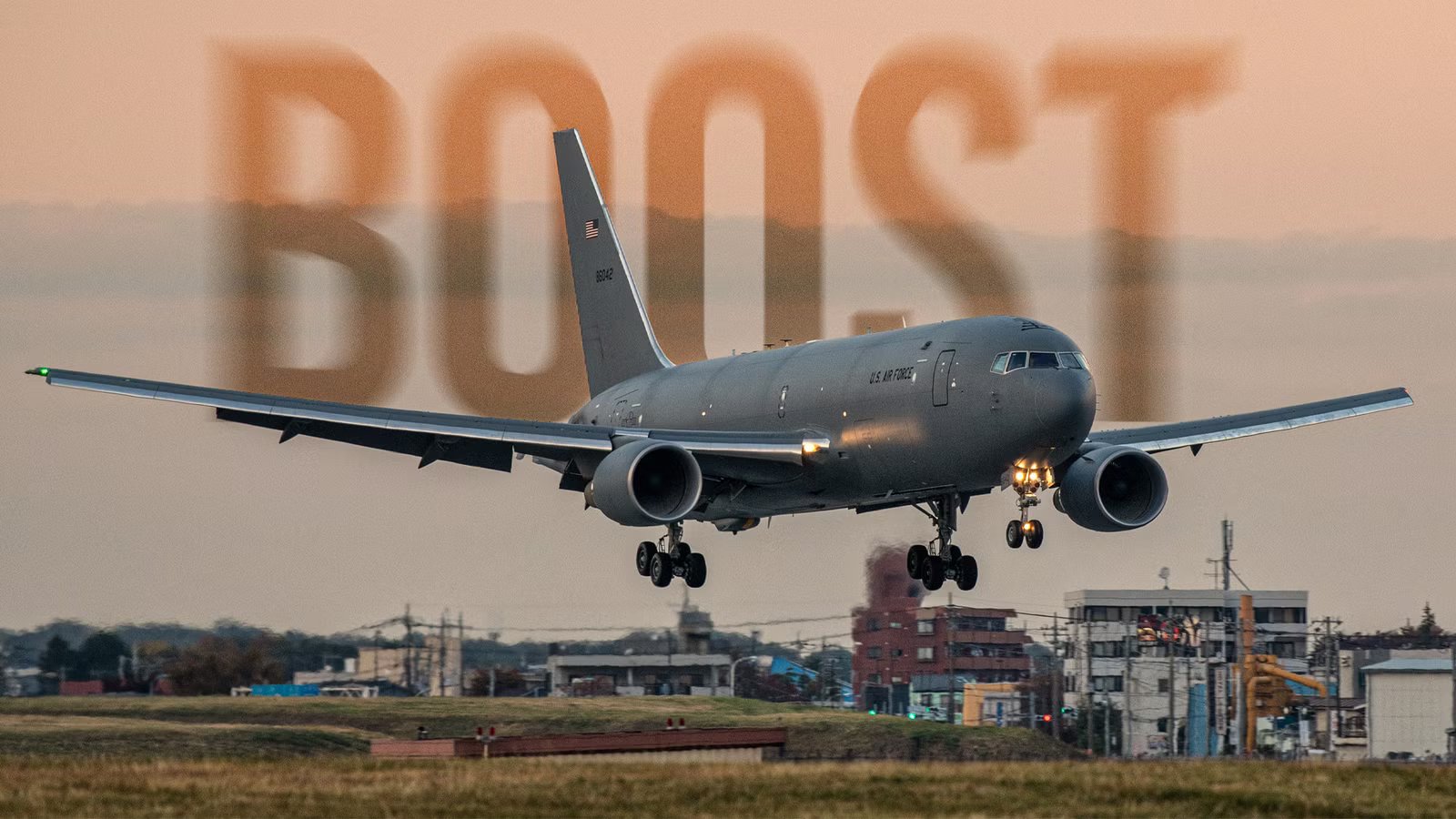
The  Boeing KC-135 service underscores how a 70-year-old airframe continues to anchor modern airpower. Now, the United States Air Force is committing billions to replace it, and the numbers involved are extraordinary enough to merit close attention from anyone who follows the economics and strategy of airpower. For US-based readers, this matters directly: every long-range sortie flown by bombers, fighters, or reconnaissance aircraft, whether over the Middle East or supporting NATO, depends on aerial refueling capacity that is now stretched by real-world operations like the 2026 Iran crisis.
This article examines why the Air Force is caught between sustaining the Stratotanker and scaling the Boeing KC-46 Pegasus, taking into account declassified Air Mobility Command mission records, FY2027 budget justification documents, and operational reporting from recent combat deployments. Specifically, it breaks down three key factors: the Stratotanker’s historical workload (including 1.4 billion gallons offloaded in Vietnam), the Pegasus’ measurable performance leap and persistent technical deficiencies, and the operational shock of tanker losses during high-intensity missions. Together, these elements explain not just a fleet transition, but a strategic constraint shaping how the US projects power globally.
The Cold War Icon The Air Force Cannot Quit

The KC-135 Stratotanker entered service in June 1957 at Castle Air Force Base, California — the first of what would eventually become a fleet of over 800 aircraft delivered before the production line closed in 1965.
It was conceived to extend the reach of Strategic Air Command’s nuclear-armed bombers far enough into Soviet territory that a first strike could never fully neutralize American retaliatory capability. In that Cold War calculus, fuel was as strategic as warheads. One declassified account from Air Mobility Command illustrates how the missions actually played out. A KC-135 crew took off from Fairbanks, Alaska, tasked with refueling an RC-135 reconnaissance aircraft gathering intelligence near Soviet airspace. What was supposed to be a short mission stretched on as the RC-135 crew requested continued support — ultimately pulling the tanker so far off track that, by the navigator’s own reckoning, they were closer to England than to their departure point when they finally turned around. Retired Maj. Jim Hickman, the navigator on that crew, put the KC-135’s strategic role in the bluntest possible terms:
“The tankers were the lifeblood for the B-52s. Without the KC-135s, the bombers may or may not have reached their destination. If they did reach their destination, they would be required to drop their weapons. Then, they would probably just crash.”
That deterrence logic has simply evolved. As Simple Flying has documented in depth, the KC-135 went on to become the quiet backbone of every major US air campaign from Vietnam, which produced more than 194,600 sorties and 1.4 billion gallons of fuel offloaded, through Desert Storm, Kosovo, and the Global War on Terror.
Decades of upgrades, including a CFM56 turbofan re-engining under the KC-135R modernization program, kept the airframe competitive far beyond any original planning horizon. The problem is that no amount of structural reinforcement can suspend physics indefinitely, and an aircraft first delivered nearly 70 years ago is approaching the hard limits of even the most aggressive sustainment program.
A $3.9 Billion Bet On The Pegasus

The Air Force’s fiscal year 2027 budget request, released on April 21, 2026, asks Congress for $3.9 billion to acquire 15 KC-46A Pegasus tankers — an $800 million jump over the FY2026 request and a clear acceleration of the fleet recapitalization effort. The unit procurement cost listed in the budget justification documents is $199.8 million per aircraft in FY2027, a figure that rises sharply to $321.9 million per aircraft in FY2028, reflecting the complexity of ramping up to 18 aircraft per year through 2031. Taken together, these tranches represent a sustained multiyear commitment that will define the Air Force’s tanker posture well into the 2030s.
The mechanism through which this expansion is happening is equally significant. Rather than launching a new competition, which would have given Airbus and Embraer an opening to challenge Boeing, the Air Force is extending its existing KC-46 contract through the Tanker Production Extension program. This keeps the 767-based production line at Everett, Washington, active and avoids the years of delay a fresh competition would introduce.
The program of record was initially reported as 319 aircraft, but the Air Force corrected that figure on April 24, confirming the official number stands at 263 KC-46As, as reported by Defense Daily, aligning the procurement baseline with updated budget planning assumptions and long-term force structure requirements.
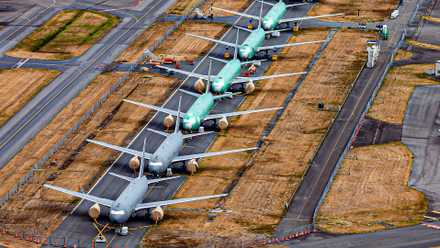
How Many KC-46 Tankers Are Left?
How many KC-46 tankers are there? A deep analysis of the USAF plans, Boeing’s 767-based Pegasus, production numbers, and what comes next!
What The KC-46A Actually Brings To The Fight

Strip away the procurement politics and what remains is a genuinely capable aircraft. The KC-46A is derived from the Boeing 767-2C airframe but has been substantially reengineered for the military role, borrowing its flight deck architecture from the 787 Dreamliner and carrying Pratt & Whitney PW4062 turbofans. The result is a modern, digital, multi-mission tanker that does things the KC-135 was never designed to do.
As highlighted by Simple Flying, the leap from KC-135 to KC-46 is doctrinal: where the Stratotanker was designed for uncontested Cold War skies, the Pegasus was built with the assumption that future tankers may need to operate within reach of near-peer air defenses.
The numbers behind the Pegasus are worth understanding in concrete terms. Its key performance figures, compared to the KC-135R it replaces, tell a clear story of expanded capability across every mission dimension:
- Fuel capacity: up to 212,000 lbs (96,162 kg) — edging past the KC-135R’s approximately 200,000 lb (90,718 kg) maximum, and deliverable via both boom and hose-and-drogue simultaneously.
- Boom transfer rate: 1,200 gallons per minute (4,542 liters per minute) via the fly-by-wire boom; 400 gallons per minute (1,514 liters per minute) on the hose-and-drogue, enabling the KC-46 to service Navy and allied aircraft the standard KC-135 cannot reach.
- Cargo capacity: 18 standard 463L military pallets — three times the KC-135’s six, and equivalent to a C-17 Globemaster III. Conversion from tanker to transport configuration takes under two hours on the ground.
- Passenger capacity: Up to 114 passengers versus 54 on the KC-135, with the conversion between refueler and transport roles achievable in under two hours on the ground.
- Medical evacuation capacity: 30% greater patient capacity than the KC-135, with emergency oxygen and independent power systems for critical care missions.
- Defensive systems: a self-protection suite designed for operations in contested airspace — something the KC-135 never had and, given its Cold War origins in uncontested skies, was never designed to need.
- Receiver compatibility: Certified to refuel virtually every fixed-wing, probe-equipped aircraft in the Western inventory, including Navy and allied aircraft that the boom-only KC-135 cannot service without modification.
|
Specification |
KC-135R Stratotanker |
KC-46A Pegasus |
|
First Delivery |
1957 |
2019 |
|
Engines |
4× CFM56-2B-1 (re-engined) |
2× Pratt & Whitney PW4062 |
|
Fuel Capacity |
~200,000 lb (90,718 kg) |
212,000 lb (96,162 kg) |
|
Cargo Pallets |
6 |
18 (same as C-17) |
|
Max Passengers |
54 |
114 |
|
Boom Operation |
Manual, prone operator with direct view |
Remote Vision System (RVS 2.0) |
|
Cockpit |
Analog / legacy digital |
787-derived glass cockpit |
|
Defensive Systems |
None standard |
Yes — integrated self-protection suite |
The Pegasus is, in sum, a multi-mission platform — one that Air Mobility Command can configure for cargo, passenger movement, or aeromedical evacuation on the same sortie that it delivers fuel. That flexibility matters enormously in high-tempo operations where airlift assets are simultaneously stretched.
Still Grounded By Growing Pains: The Category 1 Problems

The KC-46’s capability numbers would make for an easy sell if the aircraft didn’t have a complicated relationship with its own boom. As reported by Breaking Defense, in May 2025, then-Air Force Chief of Staff Gen. David Allvin told the House Appropriations defense subcommittee that the Pegasus still carried five Category 1 deficiencies — Pentagon shorthand for flaws capable of causing loss of life or aircraft. Two of those five trace directly to the Remote Vision System: poor depth perception during boom contact, glare under certain solar angles, and shadow artifacts that make precise fuel transfer genuinely difficult.
The RVS shortcomings caused delivery freezes early in the program’s operational life and have continued to limit the aircraft’s effective capability. Boeing’s fix is RVS 2.0, an upgraded system introducing full-color 4K resolution, 3D imaging, and six additional panoramic cameras. A KC-46 fitted with the new system flew for the first time in November 2025.
Fielding is now projected for summer 2027, three years behind the schedule originally agreed by Boeing and the Air Force. The Air Force’s budget materials state that all KC-46 shortfalls are expected to be resolved by 2028, though the program’s history of schedule slippage warrants healthy skepticism. The financial cost to Boeing of these persistent deficiencies has been staggering: the company has absorbed more than $7 billion in losses on the KC-46 under its firm-fixed-price development contract, losses that have had material effects on Boeing’s wider defense business.
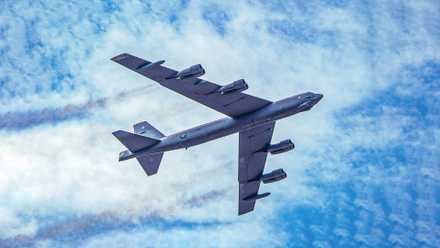
7 Reasons Why The US Air Force Still Operates The B-52
From nuclear deterrence to missile truck missions, the B-52 Stratofortress remains essential to US airpower even in 2026.
Tested By Fire: Operation Epic Fury And The Tanker Reckoning

Abstract procurement debates have a way of becoming very concrete when tankers start taking damage. Operation Epic Fury, the sustained US air campaign against Iranian targets during the 2026 Iran crisis, has exposed the full weight of what it means to depend on a 70-year-old aerial refueling fleet during prolonged high-intensity operations.
According to the Atlantic Council, approximately 33% of the Air Force’s mission-capable tanker fleet was committed to this single operation. That is not a sustainable draw on a resource that is simultaneously expected to support training, global mobility operations, and contingency tasking across every combatant command on the planet.
The vulnerability of aging KC-135s in a contested environment became impossible to ignore when a KC-135 was lost in western Iraq on March 12, 2026, during a refueling-related incident that US Central Command confirmed was not the result of hostile or friendly fire, but the midair collision with another KC-135. The situation worsened the day after, when Iranian missiles struck multiple Stratotankers on the ground at Prince Sultan Air Base in Saudi Arabia, damaging aircraft that were irreplaceable on short notice. The events marked the first loss of a US Air Force tanker in over a decade, and a jarring reminder of how much strategic value each individual airframe represents.
This operational reality is reshaping the urgency of the procurement argument. When budget documents show a $3.9 billion FY2027 request arriving in the same week that tanker crews are sustaining a near-continuous airborne presence over the Middle East, the investment is no longer theoretical. The tanker has always punched far above its visibility — a platform whose contributions rarely make front-page news precisely because, when it works, everything else works too. The events of Operation Epic Fury have made that invisible contribution starkly visible.
Beyond The Pegasus: What Comes After The $3.9 Billion Ramp-Up

The FY2027 budget request contains one additional item that deserves close reading: the redirection of Next-Generation Aerial Refueling System (NGAS) funding toward a new effort called Advanced Tanker Systems. NGAS had been the Air Force’s conceptual horizon for a stealth or unconventional airframe tanker — a program that attracted proposals including Lockheed Martin’s stealthy, potentially pilotless rendering and JetZero’s blended wing body demonstrator. By shifting that funding toward mission systems and survivability upgrades for existing and near-term platforms rather than a new airframe, the Air Force is explicitly acknowledging that a next-generation tanker is unlikely to reach operational fielding before the mid-2030s at the earliest.
The practical implication is that the KC-46A fleet being built through 2031 is the Air Force’s primary aerial refueling asset for at least the next 15 to 20 years, and the $3.9 billion annual investment is the cost of that reality. The 263-aircraft program of record will not fully replace the KC-135 fleet on a one-for-one basis — the Stratotanker’s enduring numerical dominance ensures that some KC-135Rs will remain airworthy into the early 2030s, particularly given the Northrop Grumman B-21 Raider‘s first aerial refueling certification using a KC-135 as recently as April 2026. What the KC-46 ramp-up will achieve is reducing the Air Force’s dependence on irreplaceable Cold War hardware at precisely the moment when that hardware is proving most vulnerable to the operational stresses of great-power competition.
The tanker is the kind of platform that only makes headlines when something goes wrong. When it works, it is invisible — the reason a B-2 can fly 44 hours and return home, the reason Navy fighters from carrier air wings can stay on station over Iran for hours longer than their fuel loads would otherwise allow. Spending $3.9 billion a year to replace the KC-135 is an acknowledgment, finally visible in appropriations language, that without the tanker, none of the rest of the Air Force’s ambitions are achievable. The Pegasus may still be working through its growing pains — but after Epic Fury, the Air Force can no longer afford to wait for a perfect replacement before fielding a good one.