dailynewsnblog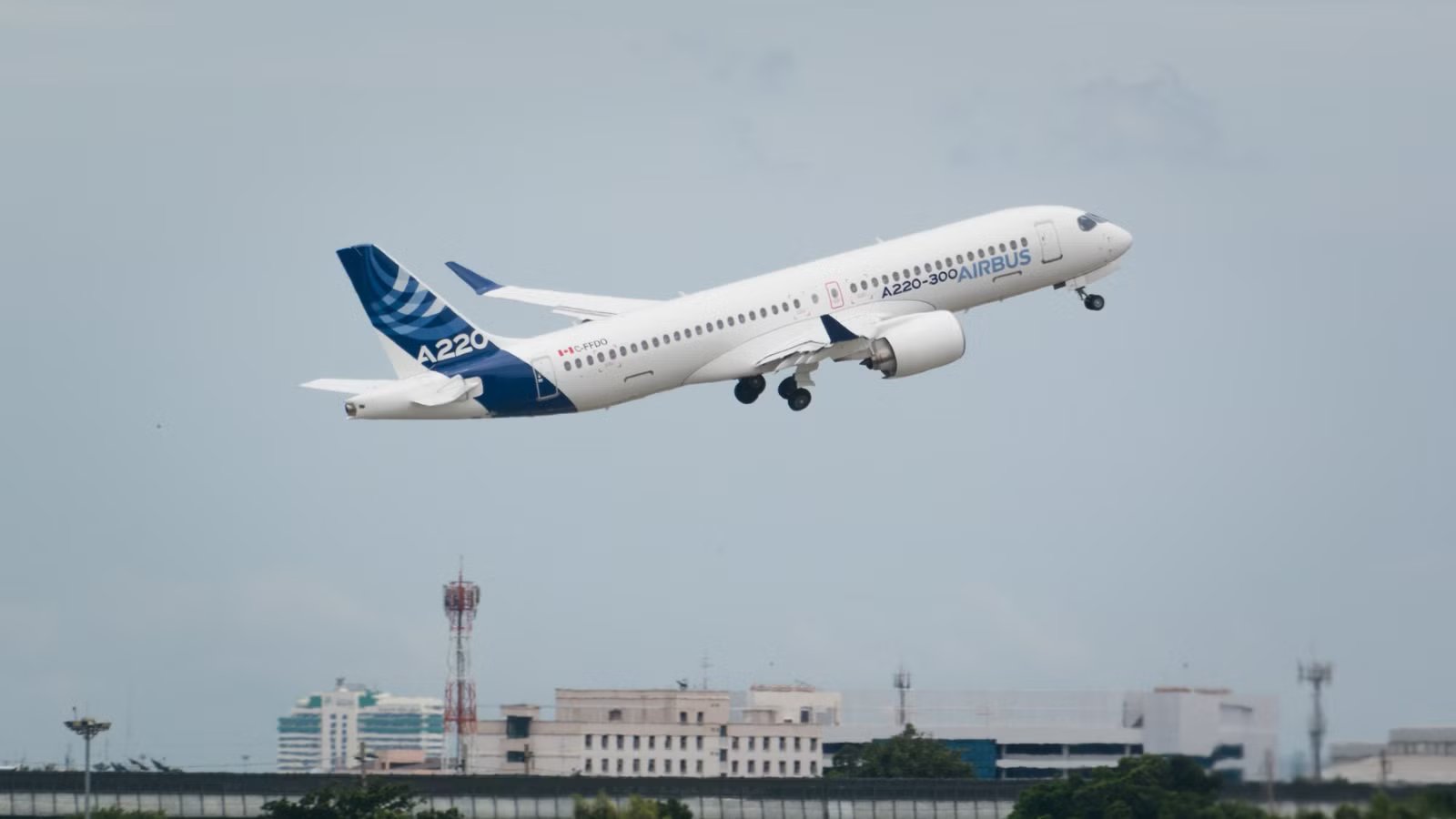
Africa’s largest carrier, Ethiopian Airlines, is reportedly eyeing the Airbus A220 for its network expansion within the region. With the airline currently in talks with the manufacturer, it is worth understanding how the regional jet would fit in well within the airline’s fleet and how it would influence Ethiopian’s existing network and future growth.
Apart from the regional jets, the airline is also in the process of expanding its widebody fleet. Having recently ordered more Dreamliner aircraft, the carrier is also reportedly looking to order more widebody jets from Airbus as well.
Ethiopian Considering 20 Regional Jets

Ethiopian Airlines, as part of its fleet expansion, is currently in early talks with the European manufacturer, Airbus. According to reports from Bloomberg, the airline is considering 20 of the manufacturer’s A220 regional jets, and if the talks progress to an order, the airline would be a new customer for the A220 program. Additionally, the airline would be among the very few operators of the type within the African continent.
While the talks between the airline and the OEM remain confidential and private, if an order does come into fruition, there are certain implications to be considered. Ethiopian, thus far, has relied exclusively on the Boeing 737 family aircraft for its short-haul narrowbody flights, along with an aging fleet of de Havilland Dash 8-400 turboprops for regional and domestic flights. Therefore, adding the A220 to the airline’s fleet would add to the carrier’s fleet complexity, but if done right, opens up more markets for the carrier.
Rather than fleet replacement, it is more likely that the A220 would allow the airline to strategically right-size its capacity and operations on certain routes. The A220 would also allow the carrier to expand to certain (leaner) routes that require the range, but not the capacity of the 737s.
How The A220 Holds Up Against The 737s

It is important to keep in mind that the airline is still taking delivery of the Boeing 737 MAX aircraft, with more on order, and the fleet data indicates that some of the airline’s older 737 variants are also considerably young. Therefore, if the A220 were to be ordered, it would only complement Ethiopian’s 737 operations, and by no means replace its 737s.
That being said, it is worth evaluating how the A220 family aircraft compares to Ethiopian’s current narrowbody fleet, which consists of the Boeing 737 MAX 8, Boeing 737-800, and the Boeing 737-700. The following table compares the airline’s 737 specifications with the manufacturer’s A220 specifications:
Aircraft Specification | Ethiopian Airlines Specifications | Airbus Specifications | |||
|---|---|---|---|---|---|
737-700 | 737-800 | 737 MAX 8 | A220-100 | A220-300 | |
Capacity | 118 (16C / 102Y) | 154 (16C / 138Y) | 160 (16C / 144Y) | 100-120 | 120-160 |
Range | 3,065 nm (5,675 km) | 3,000 nm (5,556 km) | 3,500 nm (6,480 km) | 3,600 nm (6,667 km) | 3,450 nm (6,389 km) |
Considering the fact that the A220 is a clean-sheet design that features the latest technology and systems, the aircraft is also extremely efficient and is popular among operators for its great operational economics.
As seen from the figures in the table, the A220 would enable the airline to profitably deploy flights on routes that do not warrant the use of a 737 due to low demand, but still require the range. Additionally, depending on how the airline might choose to configure its A220s, the carrier also has the option to deploy them alongside the 737 to increase frequency on high-demand sectors.
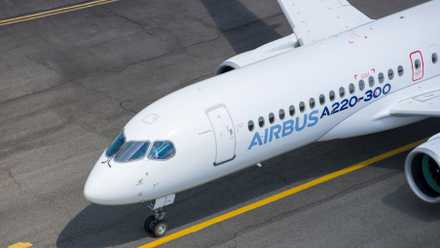
How The Airbus A220’s Engine Efficiency Is Changing Regional Travel
The aircraft has seen decent sales.
Ethiopian Investing Heavily For Future Growth

With the airline aiming to be a super connector within Africa, the carrier has been investing significantly in its future. The airline recently exercised its options for more Boeing 787 Dreamliners, while also increasing its order for the 737 MAX aircraft. Additionally, it is also reported that the carrier is in early talks to order more Airbus A350 aircraft alongside the aforementioned A220 jets.
The airline is clearly looking to grow its already extensive fleet and global network. Complementing this growth, the airline is also investing considerable capital in the new airport project in Ethiopia, which is set to become the largest airport and first mega-hub within the African continent. The airline will fund 30% of the project, which is set to commence operations in 2030, and eventually grow to become a hub that can handle 110 million passengers per year.
Considering the fact that the airline’s hub and Ethiopia’s largest airport can currently only handle 25 million passengers per year, the airline is forecasting itself to contribute considerably to a project that will see over 400% capacity growth.