dailynewsnblog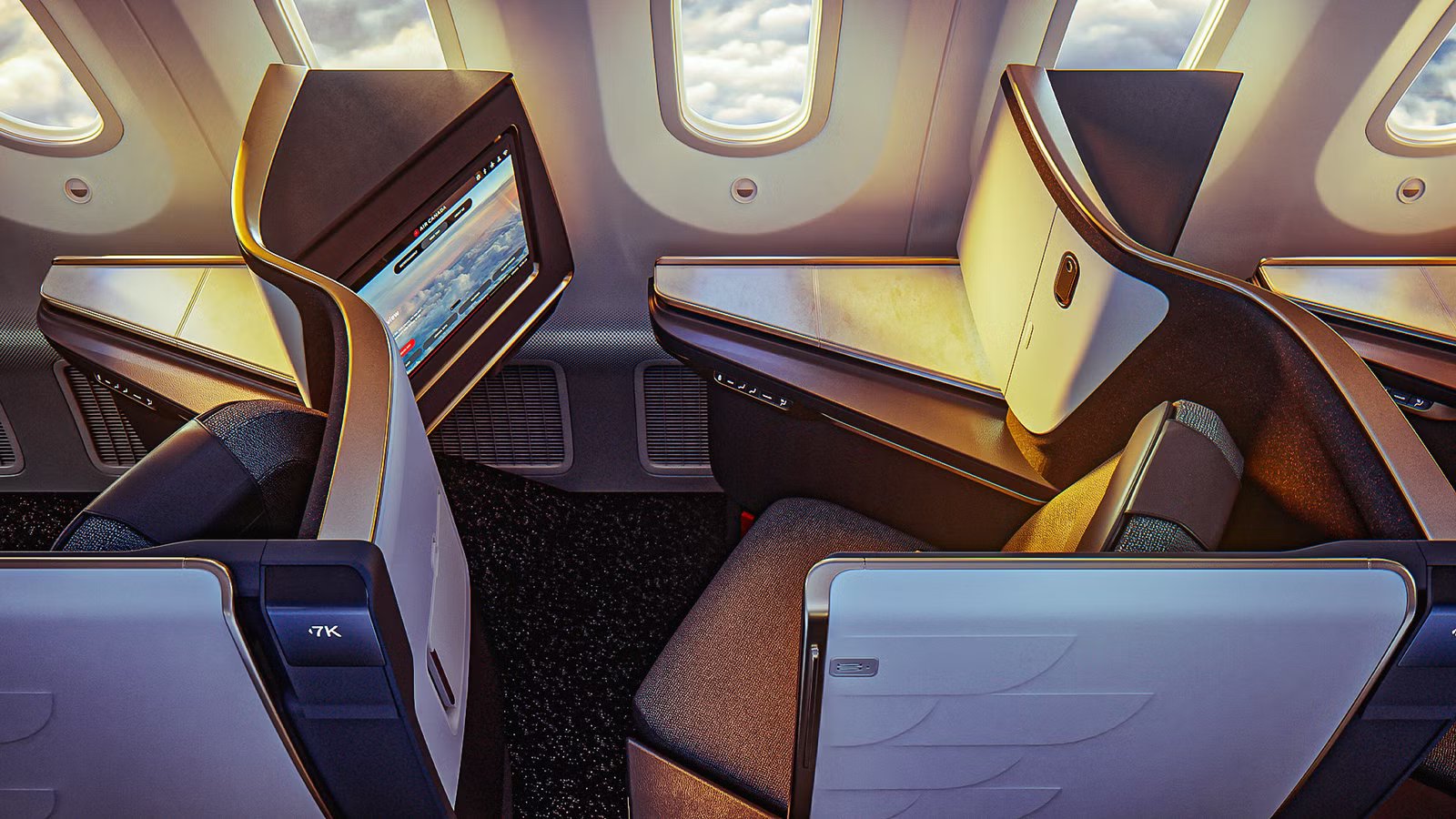
 Air Canada has never been an airline to chase headlines for the sake of it, but its latest cabin reveal suggests a far more calculated move beneath the surface. At the Aircraft Interiors Expo in April 2026, the carrier quietly introduced a new configuration for its incoming Boeing 787-10 fleet, one that, at first glance, appears to be a simple evolution of its existing Signature Class product.
However, this is not just another business class refresh with better finishes and larger screens. Instead, it signals a broader industry shift that has been building for years, where traditional first class is gradually being replaced by something more flexible, more efficient, and ultimately more profitable. Air Canada’s new Signature Plus Suite sits at the center of that transformation, occupying a space that once belonged to an entirely separate cabin. Let’s take a closer look…
A New Tier Hidden In Plain Sight

The most striking aspect of Air Canada’s Boeing 787-10 configuration is not the total number of seats or even the updated styling, but the introduction of a distinct sub-cabin within business class itself. Branded as the Signature Plus Suite, this new tier consists of just four seats located in the first row of the aircraft’s forward business class section, immediately setting them apart both physically and psychologically from the rest of the cabin.
These suites are not marketed as first class, and in many ways, that is the point. By avoiding the label altogether, Air Canada sidesteps the expectations and operational complexities traditionally associated with first class while still delivering a product that rivals it in many key areas. The result is a product that bridges the gap between business class and first class without formally committing to either.
This approach allows the airline to monetize the most valuable real estate on the aircraft without dedicating an entire cabin to a small number of passengers. Instead of installing eight or even six first class seats, the airline offers four enhanced suites within an already existing footprint, maximizing both flexibility and yield.

What Are The Best Seats In Each Class Of Air Canada’s Boeing 777s In 2026?
A cabin by cabin look at the best and worst seats on Air Canada’s Boeing 777.
Introducing The Signature Plus Suite

Physically, Air Canada’s Signature Plus Suite is similar to the carrier’s Airbus A321XLR business class product, and introduces several features that push it well beyond the standard business class experience. Each suite offers a fully flat bed measuring approximately two meters in length, ensuring that even taller passengers can rest comfortably on long-haul flights. While lie-flat seats are now standard in business class, the added space in the first row allows for a noticeably more expansive sleeping area.
The design incorporates sliding privacy doors, a feature that has become increasingly common in premium cabins but is executed here with an emphasis on height and enclosure, creating a more secluded environment. This sense of privacy is further enhanced by the suite’s layout, which minimizes direct sightlines from the aisle and neighboring seats.
One of the more distinctive elements of the  Star Alliance carrier’s latest product is the inclusion of a quartzite-topped table, a material choice that signals a move toward more residential-inspired interiors. This is complemented by a companion seat, allowing a second passenger to join for dining or conversation, a feature traditionally reserved for first class suites.
Technology also plays a central role, with each suite equipped with a 27-inch 4K OLED display, significantly larger than what is typically found in business class. Combined with Bluetooth audio connectivity and modern power options including USB-C, the suite is designed to cater to both productivity and entertainment in equal measure.
Social Space In The Sky

While privacy is a defining feature of the Signature Plus Suite, the design also introduces a level of flexibility uncommon in premium cabins. The two center suites include fully retractable privacy panels that open up into a shared space during the cruise phase of the flight. This configuration enables up to four passengers to interact more freely, effectively creating a semi-private lounge environment within the aircraft. For families, colleagues, or small groups traveling together, this adds a dimension that traditional first class cabins often struggle to accommodate due to their rigid layouts.
The ability to switch between complete privacy and a more social setting reflects a broader trend in cabin design, where adaptability is becoming just as important as exclusivity. Airlines are increasingly recognizing that premium passengers do not all have the same needs, and products that can cater to multiple use cases tend to generate stronger demand. At the same time, this feature underscores the hybrid nature of the Signature Plus Suite. It is not purely about isolation or indulgence, but about offering a customizable experience that can shift depending on the passenger’s preferences.
The latest data from ch-aviation shows that Air Canada has a total of 14 Boeing 787-10s on order, with the largest variant of the Boeing 787 family joining the carrier’s existing Boeing 787-8 and Boeing 787-9 aircraft. Air Canada’s mainline fleet is outlined in the table below:
|
Aircraft |
Number In Fleet |
Number On Order |
|---|---|---|
|
Airbus A220-300 |
42 |
23 |
|
Airbus A320 |
16 |
2 |
|
Airbus A321 |
21 |
– |
|
Airbus A321XLR |
– |
30 |
|
Airbus A330-300 |
20 |
|
|
Airbus A350-1000 |
– |
8 |
|
Boeing 737 MAX 8 |
51 |
– |
|
Boeing 777-200LR |
6 |
– |
|
Boeing 777-300ER |
19 |
– |
|
Boeing 787-8 |
8 |
– |
|
Boeing 787-9 |
32 |
– |
|
Boeing 787-10 |
– |
14 |

Luxury Comfort: Inside American Airlines’ New Premium Boeing 787-9
The airline has introduced brand new business class suites and revamped the premium economy and main cabin.
The Rest Of The Cabin Still Matters

Behind the four Signature Plus Suites, the remaining business class cabin consists of 38 seats based on the Adient Ascent platform, arranged in a reverse herringbone configuration. While these seats may lack some of the extra space and bespoke finishes of the front row, they still represent a significant upgrade over previous generations of business class.
Each seat includes its own sliding door, ensuring a high level of privacy across the entire cabin, not just in the premium tier. The reverse herringbone layout remains one of the most popular configurations in long-haul business class, offering a balance of privacy and accessibility, with every passenger enjoying direct aisle access.
This consistency is important, as it ensures that the gap between standard business class and the Signature Plus Suite is noticeable but not alienating. Passengers in the main cabin still receive a competitive product, while those in the front row benefit from additional space and exclusivity.
The aircraft itself is configured to carry 332 passengers in total, with 42 seats in business class, 28 in premium economy, and 262 in economy. This relatively high-density layout reflects the operational realities of modern long-haul flying, where airlines must carefully balance comfort with profitability. By contrast, Air Canada’s Boeing 787-8 and 787-9s can accommodate a total of 255 and 298 passengers, respectively. Meanwhile, the airline’s Boeing 777-300ER fleet has an even higher capacity.
Design Language & Brand Identity

The new cabins are part of Air Canada’s broader Glowing Hearted design standard, which aims to create a more cohesive and distinctly Canadian onboard experience. This is evident in the choice of materials, colors, and finishes throughout the aircraft, from subtle maple leaf motifs to warm wood grain textures and bronze accents. In the Signature Plus Suite, these elements are elevated further, with higher-end materials and more refined detailing that reinforce the sense of exclusivity. The use of quartzite, for example, is not just about aesthetics but also about durability and tactile quality, contributing to a more premium feel overall.
Lighting also plays a key role, with carefully calibrated ambient and task lighting designed to enhance both comfort and functionality. The goal is to create an environment that feels less like a traditional aircraft cabin and more like a contemporary living space, aligning with broader trends in premium travel design. This emphasis on brand identity is particularly important as airlines move away from clearly defined cabin classes. Without the traditional markers of first class, carriers must rely more heavily on design and service elements to differentiate their highest-tier offerings.

What Are The Benefits Of Air Canada’s Premium Economy?
Premium economy with Air Canada offers extra comfort, dedicated services, and a more relaxing in-flight experience.
The Bigger Picture: First Class By Another Name

Perhaps the most important aspect of Air Canada’s new configuration is what it represents in the broader context of the airline industry. Dedicated first class cabins have been disappearing from many fleets over the past decade, particularly among North American carriers (including  American Airlines and
  United Airlines), where demand has not always justified the cost.
The Signature Plus Suite is a direct response to this reality. By embedding a higher-tier product within business class, airlines can capture much of the revenue associated with first class without the need for a separate cabin, dedicated crew, or additional galley space. This approach delivers what many passengers perceive as much of the first class experience, including enhanced privacy, larger seats, and premium materials, while maintaining the operational efficiency of a business class cabin. For airlines, this translates into lower costs and greater flexibility, particularly in managing demand across different routes.
Air Canada is not alone in pursuing this strategy, but its implementation on the Boeing 787-10 is among the clearest examples to date. With 14 of these aircraft on order, the airline is making a long-term commitment to this hybrid model, suggesting that it sees little need to reintroduce traditional first class in the foreseeable future. The carrier also has eight Airbus A350-1000s on order. At the same time, this shift raises interesting questions about how premium travel will continue to evolve. As the lines between business class and first class become increasingly blurred, the focus is likely to shift toward personalization, flexibility, and overall experience rather than strict cabin definitions.
For passengers, this may ultimately be a positive development, offering access to higher-end products at more attainable price points. For airlines, it represents a pragmatic solution to the economic challenges of long-haul operations, one that balances luxury with sustainability in a way that traditional first class often struggled to achieve.