dailynewsnblog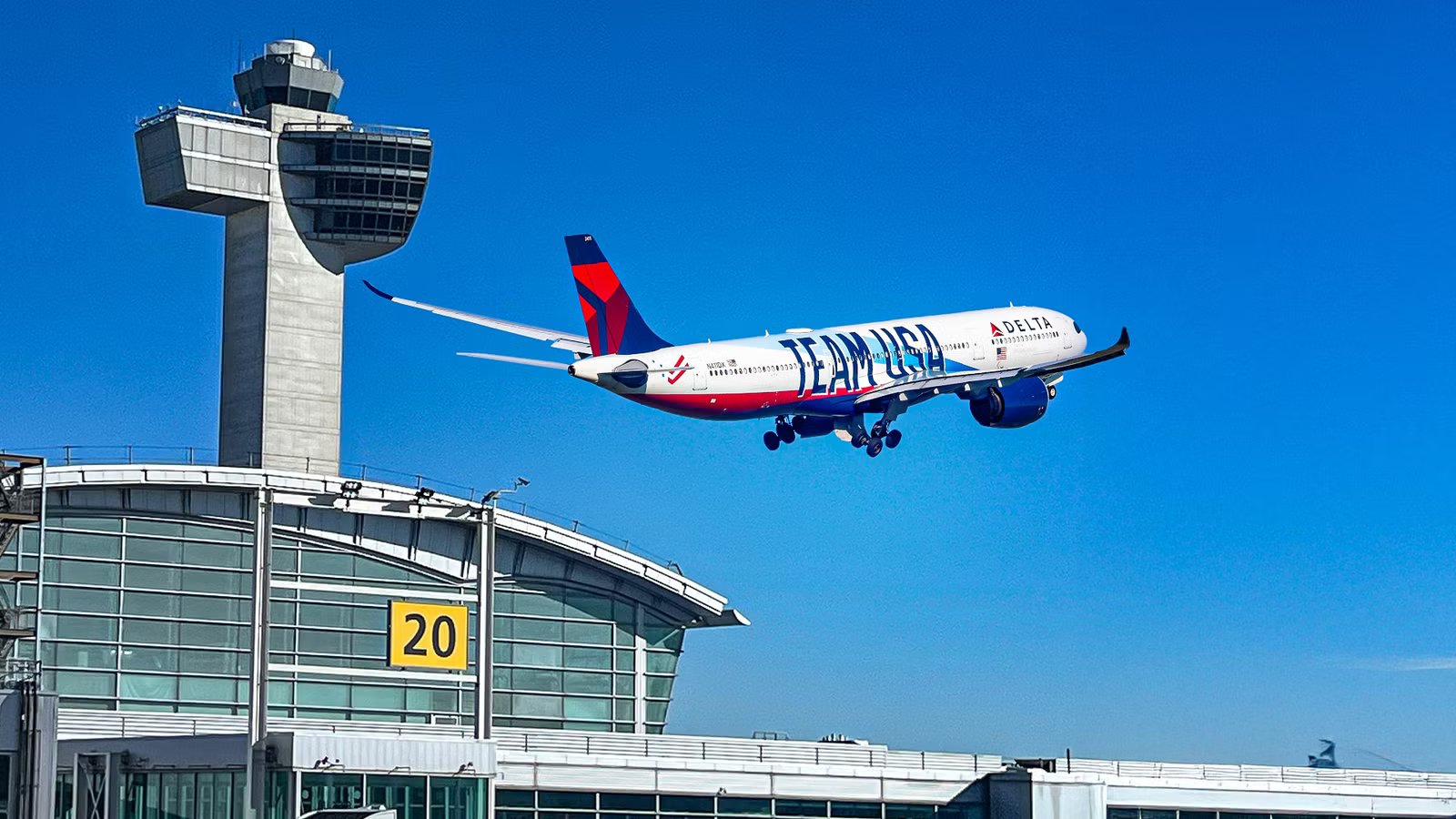
John F. Kennedy International Airport (JFK) is the busiest airport in the New York City area and the primary long-haul gateway for the region, making it the clearest symbol of New York’s global aviation reach. In 2024, JFK handled a record 63.3 million passengers, cementing its position as the largest airport in the metropolitan area by total traffic and one of the world’s most important hubs for international travel. What makes JFK especially significant is not just its scale, but also its balance. The airport moved roughly equal shares of domestic and international travelers, underlining its dual role as both a national connector and an international front door to the United States.
Beyond passenger traffic, JFK also processed a massive amount of cargo and supported a large-scale economic ecosystem, with more than 39,000 on-airport jobs and an estimated regional economic impact of around $35.7 billion. Physically, the airport spans over 4,930 acres in Queens and handled more than 420,000 aircraft operations in 2024. Those figures help explain why JFK sits at the center of the Port Authority’s long-term redevelopment strategy. As new terminals and infrastructure come online, the airport is being positioned not simply to remain New York’s busiest airport, but to strengthen its status as one of the continent’s primary global gateways for passengers, freight, and investment across the board.
A High-Level Look At JFK’s Commercial Operations

At the highest level, JFK’s commercial operations are built around a core and immediately visible role. The facility is New York’s principal long-haul and international network gateway. That gives the airport a different commercial profile from the short-haul focus of LaGuardia Airport (LGA). The airport is also differentiated from Newark Airport (EWR)’s much broader mix of domestic and international services. At JFK, the business model is primarily driven by a combination of premium international demand, dense local New York-origin traffic, airline hub activity, and high-value cargo.
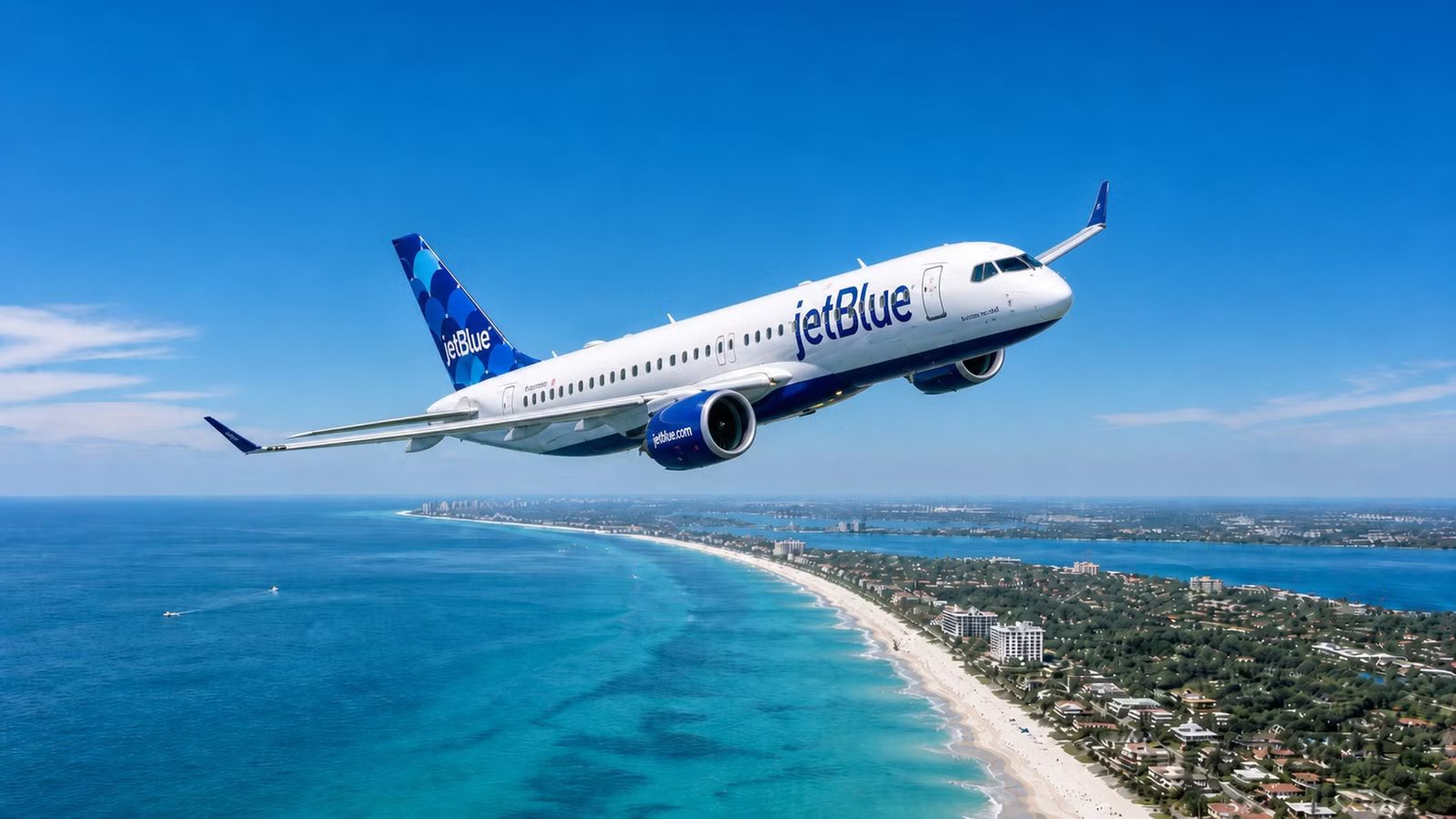
Terminal 4 functions as the airport’s largest shared international complex and hosts Delta alongside a wide range of foreign carriers. Terminal 5 is JetBlue’s flagship base, while Terminal 8 anchors  American Airlines and key oneworld partner activity. Terminals 1 and 7 round out the airport’s multinational mix of carriers. That terminal structure helps JFK serve both local passengers starting or ending trips in New York and connect travelers moving between domestic and international networks.
In 2024, the airport handled a record 63.3 million passengers, with traffic split almost evenly between domestic and international markets, which shows how unusual JFK is. The facility is both a major local airport and a global transfer gateway. Commercially, cargo is also central to the facility’s identity. JFK handled a significant amount of freight in 2024, and the Port Authority has continued investing in cargo infrastructure to improve throughput and reduce overall congestion.
A Look At The Infrastructure & Facilities Of John F. Kennedy International

JFK’s facilities reflect both the age of the airport and decades of transformation efforts. At present, the airport operates through five different active passenger terminals, all of which are connected landside by AirTrain JFK rather than by a single unified post-security complex. That means that the airport functions more like a collection of independently operated terminals gathered around one central airfield than a single seamless terminal building. This often comes at the detriment of the total passenger experience.
For the vast majority of passengers, the facilities mix is relatively broad, especially when it comes to seemingly randomly placed garages and parking lots. The airport is accessed by New York City’s subway system with AirTrain links to Jamaica Station and Howard Beach Station. The airport’s overall infrastructure system includes rental car and hotel shuttle access, ride-hail pickup zones, lounges, retail and dining, free internet, pet relief areas, lactation rooms, and accessibility-focused services, all of which are all part of the current operational infrastructure. The bigger story, however, is redevelopment.
The Port Authority’s $19 billion overhaul is reshaping JFK with a new all-international Terminal 1, a new Terminal 6, and upgraded Terminals 4 and 8, plus redesigned roadways and a new ground transportation network. The first gates of the new Terminals 1 and 6 are scheduled to open in 2026. When complete, the project will add massive amounts of additional gate area and give JFK a much more coherent and modern physical plan that better matches its status as New York’s busiest airport.

New York-JFK Vs. Newark Liberty: Which Airport Wins With International Routes?
A look at which New York airport foreign airlines prefer, and why.
What Are The Airport’s Biggest Carriers?

In terms of passenger traffic, JFK’s largest carriers are clearly  Delta Air Lines, JetBlue, and American Airlines. In the Port Authority’s 2024 figures, Delta carried around 19.1 million passengers at JFK, JetBlue handled the second-most at around 15 million, and American Airlines carried roughly 7.6 million. Collectively, those three carriers accounted for about two-thirds of all passengers using the airport, which tells you a lot about how JFK works commercially.
The airline plays host to dozens of airlines, but a relatively small group of operators manages to drive the vast majority of traffic. Delta is the airport’s largest carrier overall and has built a major operation around Terminal 4. JetBlue is the second-largest carrier at the facility, and it remains the defining airline at Terminal 5, which functions as its flagship base in New York. American is the third pillar, centered on Terminal 8, where it also overlaps with key alliance and partner traffic.
After those three, the next tier is made up largely of international carriers rather than major US-based players. British Airways was the airline’s fourth-largest player in 2024 with around 1.37 million passengers. The carrier is followed by Avianca, Alaska Airlines, Virgin Atlantic, Air France, and Emirates. That ranking is important because it highlights what makes JFK different from most large US airports. The airport’s service base extends far beyond domestic majors, as its traffic base is heavily shaped by foreign flag carriers and long-haul international demand. In other words, JFK’s largest players are not just large airlines, but also carriers that reflect the facility’s role as New York’s primary global gateway.
What Are The Busiest Routes From JFK?

JFK’s busiest routes highlight the unique duality of the airport’s operations. It serves as both a primary gateway for premium long-haul travel and a major hub for domestic trunk routes. By sheer flight activity in 2024, Los Angeles was JFK’s top destination, with about 27 departures per day, while London and San Francisco followed at roughly 17 or more daily departures each.
That tracks with the facility’s broader operational role, as it serves both transcontinental business and leisure demand. Routes to California are extremely dense, and London is by and large the airport’s largest international destination. Industry data provider OAG ranked JFK-London Heathrow Airport (LHR) as the busiest international route in North America in 2024, offering more than 4 million seats, a remarkable number because it outpaced most other cross-border markets on the continent.
On the domestic side, the airport’s busiest destination is Los Angeles, followed by San Francisco, Orlando, Miami, and San Juan. Other cities like Atlanta, Las Vegas, Fort Lauderdale, Seattle, and Phoenix also see large amounts of traffic. This highlights that the busiest routes to and from the facility are not just business-heavy links to major commercial centers like Los Angeles and San Francisco, but also high-volume leisure and VFR markets in Florida and Puerto Rico.

The Most Popular Aircraft Types Flying From New York-JFK
New York’s busiest airport has a diverse number of aircraft types, including the CRJ900, and Airbus A321neo.
What Does The Future Have In Store For JFK International?

The future of JFK is defined by a massive physical and commercial reset. The airport is currently in the middle of a $19 billion redevelopment that is replacing its fragmented, aging layout with a more modern hub built around new terminals, upgraded roadways, and expanded passenger amenities.
The biggest near-term milestone is later this year, when the first gates of the new all-international Terminal 1 and the new Terminal 6 will become fully operational at maximum capacity. At the same time, Terminal 4 has already been substantially expanded and modernized, all while Terminal 8’s redevelopment has continued with new commercial space, dining, and retail.
The long-term goal is not just to make JFK bigger, but rather to make it function better. The airport wants to help passengers have shorter and more intuitive journeys, improved interactions at the gate, and simpler baggage capacity management. The airport wants to help ensure that its passenger experience better matches New York’s status as a global city. In practical terms, JFK is being rebuilt to remain the region’s busiest airport while becoming a more efficient and competitive international gateway for decades to come.
What Is Our Bottom Line?

John F. Kennedy International Airport is the anchor of one of the world’s largest and most important commercial aviation markets. For both business and leisure traffic, this facility is undoubtedly one of the globe’s busiest. It is very challenging for any seasoned traveler to avoid the airport entirely.
From a competitive perspective, the airport remains one of the nation’s most active battlegrounds. Multiple different carriers (including both legacy airlines and low-cost players) are actively jostling for control of the market, one that provides resilient demand and exceptionally high yields.
The airport is prepared to face the challenge of being New York and, in many ways, America’s gateway for decades to come. This, however, is something that will require extensive and constant renovation and network improvement efforts, something the ambitious facility has never shied away from.