dailynewsnblog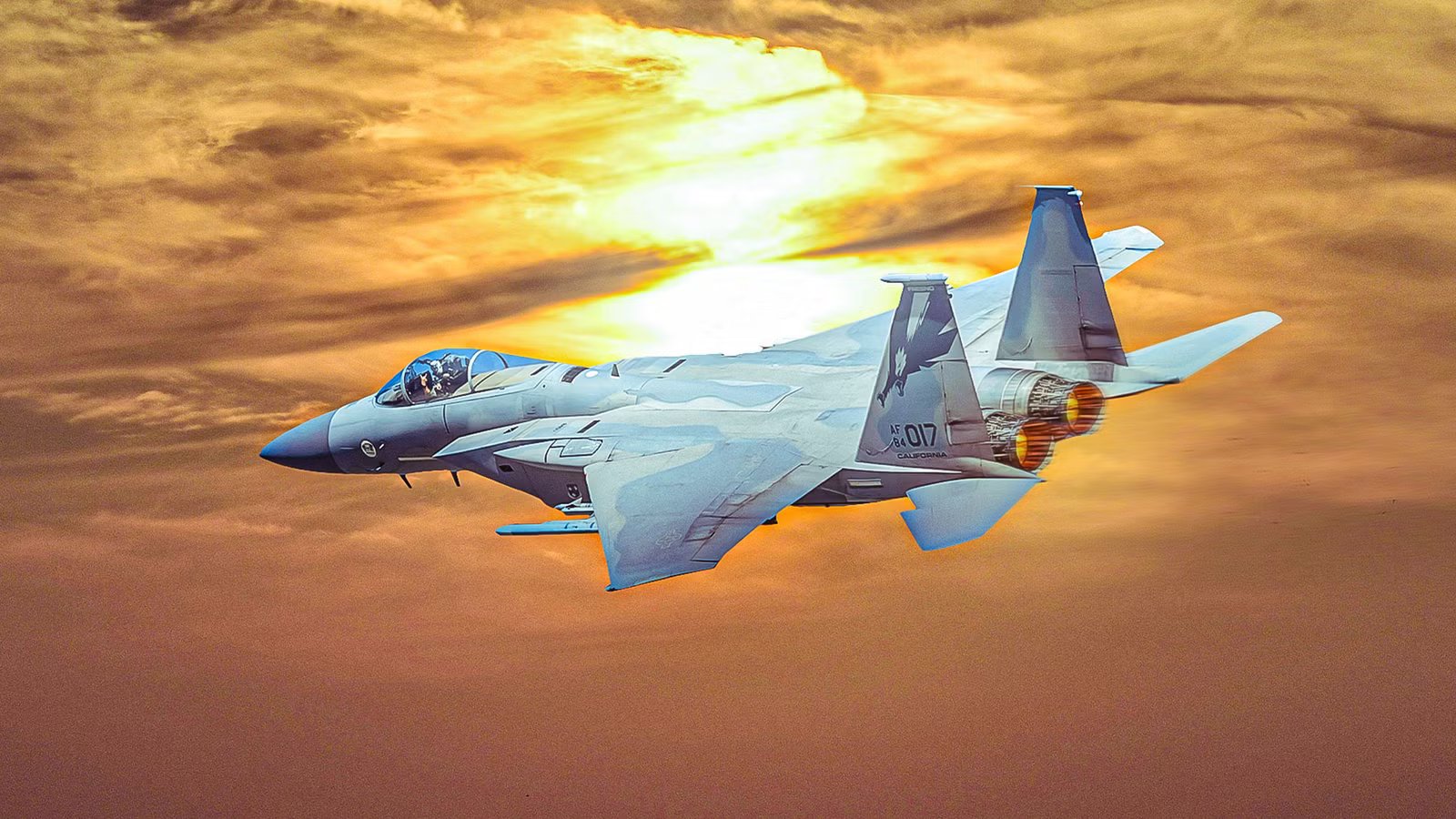
The Lockheed MartinF-22 Raptor entered service in December 2005, following its first flight in 1997, and by 2026, it is already as old as some of the pilots flying it. That single data point captures a broader reality across the United States Air Force(USAF): frontline aircraft, with some dating back to the early 1970s, continue to define American airpower despite being decades older than the aviators in their cockpits. As reported by USAF personnel trends, most operational pilots are in their late 20s to mid-30s, meaning even relatively modern jets like the F-22 are no longer “new” in generational terms.
According to official US Air Force fact sheets and fleet data, our article examines five aircraft that remain central to USAF operations in 2026: three fighters, one attack aircraft, and one trainer, ranked from newest to oldest by entry into service. This structure reflects how the USAF itself categorizes platforms like the Fairchild Republic A-10 Thunderbolt II within the fighter/attack inventory, while the Northrop T-38 Talon remains the essential stepping stone for every future fighter pilot. Together, they illustrate a striking generational divide: the machines endure, while the pilots cycle through far more quickly.
F-22 Raptor
One of the newest fighters in the fleet—now sharing its age with its pilots

The Lockheed Martin F-22 Raptor first flew in 1997 and entered service in 2005, positioning it as the newest operational fighter in the USAF inventory. Yet even this fifth-generation platform has now surpassed the 20-year mark, placing it in an unusual position: it is no longer dramatically younger than the pilots flying it. Designed to dominate the skies with stealth, supercruise, and advanced avionics, the F-22 remains unmatched in air superiority, but its timeline is rapidly converging with that of a new generation of aviators.
That convergence is best illustrated by Samuel “Razz” Larson, who became an F-22 pilot at just 23 years old and later joined the F-22 Demonstration Team. Now slightly over 30, Larson is almost the same age as the aircraft itself, which is a symbolic overlap that would have been unthinkable in earlier decades of aviation. In previous generations, fighters were often significantly newer than the pilots flying them; today, the gap has narrowed dramatically.
Despite its age, the F-22 remains a cornerstone of US air dominance. Continuous upgrades to its radar, electronic warfare systems, and data links have ensured its relevance against near-peer adversaries. However, with production having ended in 2012, the aircraft’s long-term future depends entirely on modernization rather than replacement. By the early 2030s, even this “modern” jet will be approaching three decades of service, but with its projected service until 2060, as noted by 19 Forty Five, it will still be flown by pilots who may not yet be born or are just toddlers.
F-16 Fighting Falcon
A lightweight fighter that became a multi-role backbone

The General Dynamics F-16 Fighting Falcon is one of the most versatile and enduring aircraft in the USAF fleet. First flown in 1974 and introduced into service in 1978, it has evolved far beyond its original concept as a lightweight air-to-air fighter. Today, it performs a wide array of missions, from precision strike to suppression of enemy air defenses, making it a true multirole workhorse.
For many pilots currently flying the F-16, the aircraft predates not only their careers but also, often, their births by decades. But thanks to continuous upgrades, including modern radar systems, cockpit enhancements, and improved data connectivity, it remains highly relevant in modern combat scenarios. This adaptability has allowed the F-16 to serve as both a frontline combat aircraft and a critical stepping stone for younger pilots transitioning into more advanced platforms.

The Striking Differences Pilots Notice Between The F-35 Lightning II & F-22 Raptor
Explore how F-22 vs F-35 cockpit design, helmet tech & VTOL shape radically different pilot experiences in modern stealth fighters.
F-15 Eagle
A Cold War giant still dominating the skies

The McDonnell Douglas F-15 Eagle first flew in 1972 and entered service in 1976, making it one of the oldest active fighter platforms in the USAF inventory. Yet age has done little to diminish its operational significance. Originally conceived as a pure air superiority fighter, the F-15 quickly established a reputation for dominance, achieving an unmatched air-to-air combat record that still stands today.
Over time, the platform has evolved into multiple variants, each extending its relevance. The F-15E Strike Eagle introduced deep-strike capabilities, while the latest F-15EX Eagle II is a fully modernized iteration of the design. These newer versions incorporate advanced avionics, digital systems, and expanded weapons capacity, allowing the aircraft to carry a significantly larger payload than newer stealth fighters. In practical terms, this means the F-15 can deliver more ordnance over longer distances, complementing the stealth-focused roles of aircraft like the F-22.
|
Selected USAF Fleet Snapshot |
||||
|
Aircraft |
First Flight |
Entry Into Service |
Approx. Age (2026) |
Role |
|
F-22 |
1997 |
2005 |
~21 years |
Air Superiority |
|
F-16 |
1974 |
1978 |
~48 years |
Multirole |
|
F-15 |
1972 |
1976 |
~50 years |
Air Superiority / Strike |
|
A-10 |
1972 |
1977 |
~49 years |
Close Air Support |
|
T-38 |
1959 |
1961 |
~65 years |
Trainer |
For today’s pilots, flying an F-15 often means operating a machine designed more than half a century ago. However, the aircraft’s impressive raw performance, including high speed, long range, and exceptional payload capacity, continues to make it indispensable. Rather than replacing the platform outright, the USAF has chosen to evolve and upgrade it, demonstrating how a well-designed airframe can remain relevant across generations of technological change.
A-10 Thunderbolt II
The “Warthog” that refuses to retire

This aircraft is not officially a fighter jet, but an attack aircraft; as long as the USAF groups it within the fighter/attack category, we decided to include it. The Fairchild Republic A-10 Warthog or Thunderbolt II first flew in 1972 and entered service in 1977, and it remains one of the most distinctive aircraft in the USAF fleet. Unlike the sleek, high-speed fighters that dominate air superiority missions, the A-10 was purpose-built for close air support, prioritizing durability, loiter time, and firepower over speed.
At the heart of the A-10 is its GAU-8 Avenger cannon, a massive 30mm rotary gun designed to destroy armored vehicles, including tanks. This unique capability, combined with the aircraft’s ability to absorb significant damage and continue flying, has made it a favorite among ground forces. From the Gulf War to more recent conflicts in the Middle East, the A-10 has consistently proven its value in supporting troops on the ground.
Despite repeated discussions about retiring the aircraft, it continues to serve because no direct replacement offers the same combination of endurance, survivability, and precision at low altitude. For pilots transitioning into the A-10, the experience is markedly different from flying high-performance fighters, emphasizing situational awareness and close coordination with ground units. In 2026, the aircraft is approaching 50 years in service, but it remains irreplaceable in its role.

From Tank Buster To Drone Hunter: Why The A-10 Warthog Is Proving Too Useful To Retire
The unkillable flying tank lives to fight another day.
T-38 Talon
The trainer that every fighter pilot knows first

The oldest aircraft on our list is the trainer, which paves the way for the pilots to all other fighter jets in the USAF fleet. The Northrop T-38 Talon first flew in 1959 and entered service in 1961, making it the oldest aircraft still in widespread USAF use. Despite its age, the T-38 remains a critical component of the pilot training pipeline, serving as the first supersonic jet flown by most future fighter pilots.
The training progression within the USAF begins with basic flight instruction in turboprop aircraft, then advances to the T-38 for high-speed jet training. Here, pilots learn formation flying, advanced maneuvering, and the fundamentals of supersonic flight. Only after mastering these skills do they move on to operational aircraft such as the F-16, F-15, or F-22, as the USAF explains. This progression underscores the T-38’s foundational role in shaping every fighter pilot’s career, which is why it holds an honorable position in our ranking.
What makes the T-38 remarkable is not just its longevity, but its continued effectiveness. Even as newer trainers like the T-7A Red Hawk are developed, delays in their introduction mean the Talon will remain in service for years to come. For a 25-year-old trainee pilot, flying a jet that first took to the skies in 1959 represents a generational gap of more than six decades, as the aircraft continues to perform its mission reliably.
|
Training Pipeline Overview |
|
|
Stage |
Aircraft |
|
Primary Training |
T-6 Texan II |
|
Advanced Jet Training |
T-38 Talon |
|
Operational Conversion |
F-16 / F-15 / F-22 |
Across these five aircraft, a clear pattern emerges: longevity is not an exception in the USAF — it is the norm. From the 2005 entry into service of the F-22 to the 1961 introduction of the T-38, the fleet spans more than four decades of aviation history. But all remain operational, maintained, and continuously upgraded to meet modern requirements.
For the pilots flying them, this creates a unique dynamic. A typical USAF pilot in their late 20s may find themselves flying an aircraft designed before even their parents were born. And yet, this is not a limitation, but an illustration of the durability of these designs and the effectiveness of ongoing modernization efforts. The USAF’s approach often prioritizes capability over novelty, ensuring that even its oldest aircraft remain relevant in a rapidly evolving threat environment.
Finally, the story of these aircraft is not about age, but about adaptability. Whether it is the stealth dominance of the F-22, the versatility of the F-16, the power of the F-15, the precision of the A-10, or the foundational training provided by the T-38, each platform continues to play a vital role. And as new generations of pilots take to the skies, they do so in aircraft that have already stood the test of time.