dailynewsnblog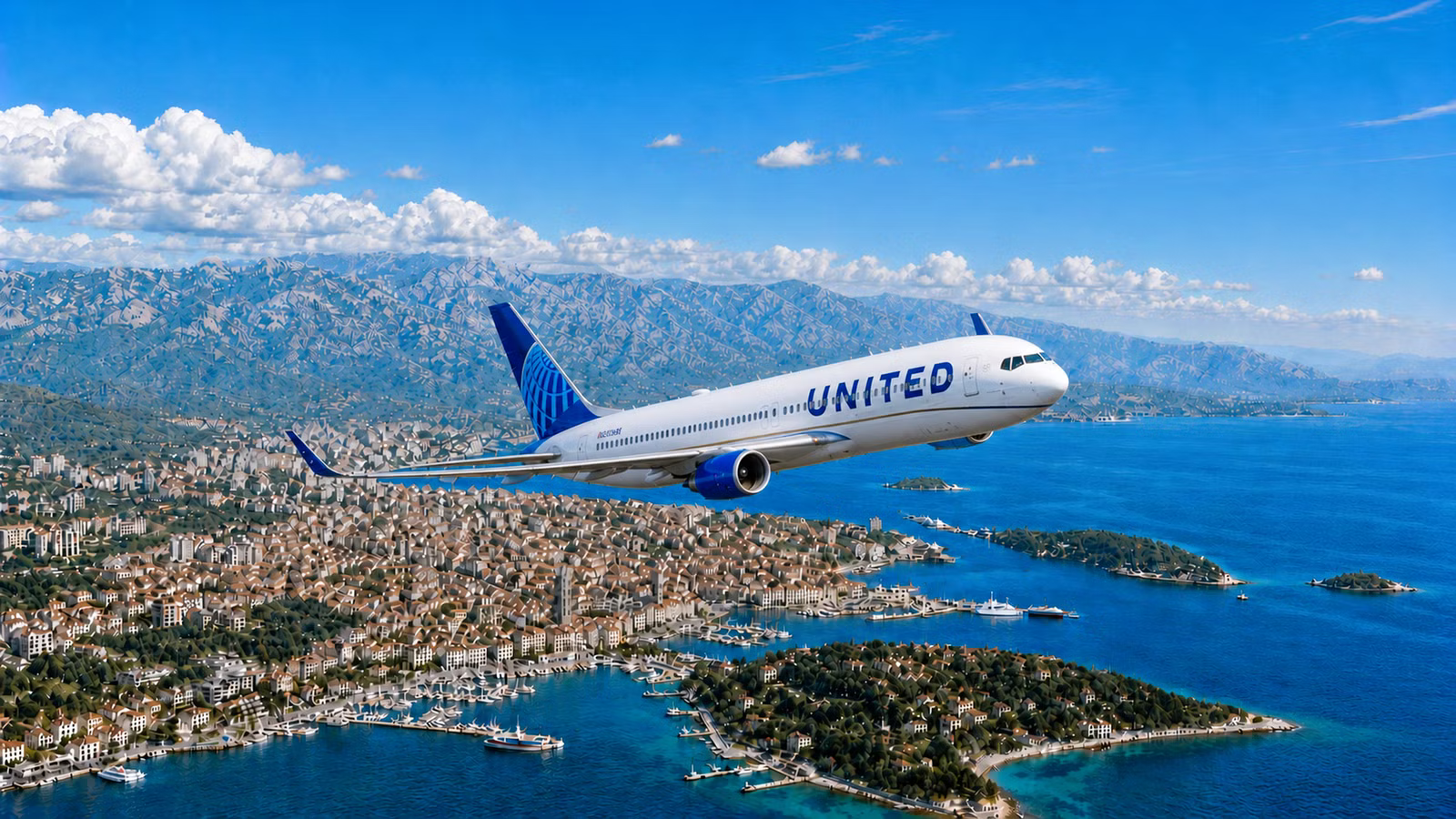
 United Airlines is opening two brand-new long-haul routes from
  Newark Liberty International Airport (EWR) this week, adding nonstop service to two European cities that have historically sat well outside the standard US transatlantic network map.
Yesterday, the  Star Alliance carrier launched its first flight to Split Airport (SPU), making it United’s second destination on Croatia’s beautiful Dalmatian coast. Today, United is beginning Newark to Bari / Palese International Airport (BRI), adding a second niche Adriatic route in as many days.
Together, the launches show how United is using Newark, a premium-heavy Boeing 767, and carefully timed summer demand to bypass Europe’s major hubs and take travelers straight to the vacation regions they actually want to visit.
United Opens Two Adriatic Routes In Two Days

United’s new Newark–Split route launched on April 30 and will operate three times weekly using a 767-300ER. This is the airline’s second nonstop service to Croatia, which continues to grow in popularity among North American travelers. United has had seasonal summer service to Dubrovnik Airport (DBV) for a few years now, but Split gives the airline a second Croatian gateway and opens a more direct path to central Dalmatia and nearby islands.
The second route, Newark–Bari, launched on Friday and will operate four times weekly, also with a 767-300ER. Bari is the capital of Italy’s Puglia region and gives United another southern European leisure market to go along with Naples and Palermo. United says Bari will be its “newest gateway to southern Italy, complementing the broader Italian network while serving a region that has become increasingly fashionable among American travelers.”
|
Route |
Launch |
Frequency |
Aircraft |
Seats |
Key Significance |
|---|---|---|---|---|---|
|
Newark – Split |
April 30 |
3x weekly |
Boeing 767-300ER |
167 |
First-ever North America/long-haul service to Split |
|
Newark – Bari |
May 1 |
4x weekly |
Boeing 767-300ER |
167 |
New US-carrier nonstop link to Puglia |
The most interesting operational detail is that the two routes are designed to work together. Split runs three times weekly, while Bari runs four times weekly, allowing United to cover both markets with a single 767 pattern across the week. That matters because neither city needs daily widebody service to work commercially, and instead, United can optimize the utilization of a single aircraft across two seasonal but high-value leisure markets.
Why United’s Premium 767 Is The Perfect Fit

The aircraft choice is central to the strategy. United is not flying a large, high-density widebody to Split or Bari. It is using a 167-seat 767-300ER, one of the most useful aircraft in its long-haul fleet for thinner, high-value leisure routes. The configuration includes 46 Polaris business class seats, 22 Premium Plus seats, and 99 economy seats, giving the aircraft an unusually premium-heavy layout for routes to secondary European cities.
That lower seat count reduces the commercial risk. Split and Bari are not global business centers like London, Paris, Frankfurt, or Zurich. They are seasonal destination markets where the opportunity is not about filling 250 or 300 seats every day. A 167-seat aircraft allows United to serve the route nonstop without needing huge volumes of connecting traffic or rock-bottom economy fares to make the numbers work.
|
Cabin |
Seats |
Why It Matters For Split & Bari |
|---|---|---|
|
Polaris business class |
46 |
Captures high-yield summer leisure and premium redemptions |
|
Premium Plus |
22 |
Upsell for travelers who want comfort without business class |
|
Economy Plus |
43 |
Useful for MileagePlus elites and paid extra-legroom demand |
|
Standard economy |
56 |
Keeps the number of lowest-yield seats relatively limited |
|
Total |
167 |
Small enough for thin seasonal routes, premium enough to lift revenue |
The high-premium layout also fits the type of traveler these routes are likely to attract. Puglia and the Dalmatian Coast are not bargain-bin city-break markets. They appeal to travelers booking summer vacations, cruises, villa stays, island-hopping trips, destination weddings, and longer itineraries through southern Europe. Those passengers are typically more willing to pay for Polaris or Premium Plus, as well as nonstop convenience on an overnight transatlantic flight.
This is where United’s broader Newark strategy comes into focus. The airline has increasingly pushed into secondary and leisure-heavy European destinations that other US carriers have avoided, using Newark’s massive local market and Star Alliance connectivity to make smaller long-haul markets viable. United says it will serve 36 European destinations in summer 2026, including several that no other US airline serves nonstop. Split and Bari fit neatly into that playbook: while they are not the biggest cities, they are distinctive, under-served, premium-skewing, and otherwise impossible to reach nonstop from the United States.
Bari also shows the competitive impact of United’s entry. Italian leisure carrier Neos had planned flights from Bari to  John F. Kennedy International Airport (JFK), but that route has now been removed from its summer 2026 schedule. United’s Newark service gives the New York market a larger US-network airline option into Puglia, backed by MileagePlus, corporate contracts, and Newark connections. For a thin, once-weekly European competitor, that is a difficult proposition to match.
Why This United Airlines Boeing 767 Only Has 56 Economy Seats
United’s 56-seat-economy 767 shows how far the airline is pushing premium.
The Real Prize Is The Region Behind The Airport

The appeal of these routes is not just Split and Bari as city names on a route map. Both airports are gateways to regions increasingly popular with US travelers but still difficult to reach without a connection.
- Split is one of Croatia’s most important coastal gateways. The city is anchored by Diocletian’s Palace, a UNESCO-listed Roman complex that forms the historic heart of the old town, but its broader value is as an entry point to central Dalmatia. From Split, travelers can easily reach Hvar, Brač, Korčula, Trogir, Šibenik, and other coastal and island destinations. For United, the route also pairs logically with Dubrovnik, allowing travelers to fly into one Croatian city and out of another.
- Bari serves a different kind of Mediterranean itinerary. Puglia has become one of Italy’s most talked-about regions, helped by its coastal towns, food culture, beaches, olive groves, and distinctive architecture. Bari itself is a historic port city, but many visitors will also use the airport as a jumping-off point for places such as Polignano a Mare, Monopoli, Ostuni, Alberobello, Lecce, and Matera.
This is the “fly faster” logic behind the launches. United is not literally flying the 767 faster across the Atlantic; it is cutting out the slow part of the journey. Instead of connecting through a crowded, often inconvenient European hub, passengers can fly directly from the New York area to the region they want to visit. That is the real story behind these two launches: United is leaning into specialty destinations and using a right-sized, premium-heavy aircraft to turn previously niche European vacation regions into high-value nonstop markets from the US.