dailynewsnblog
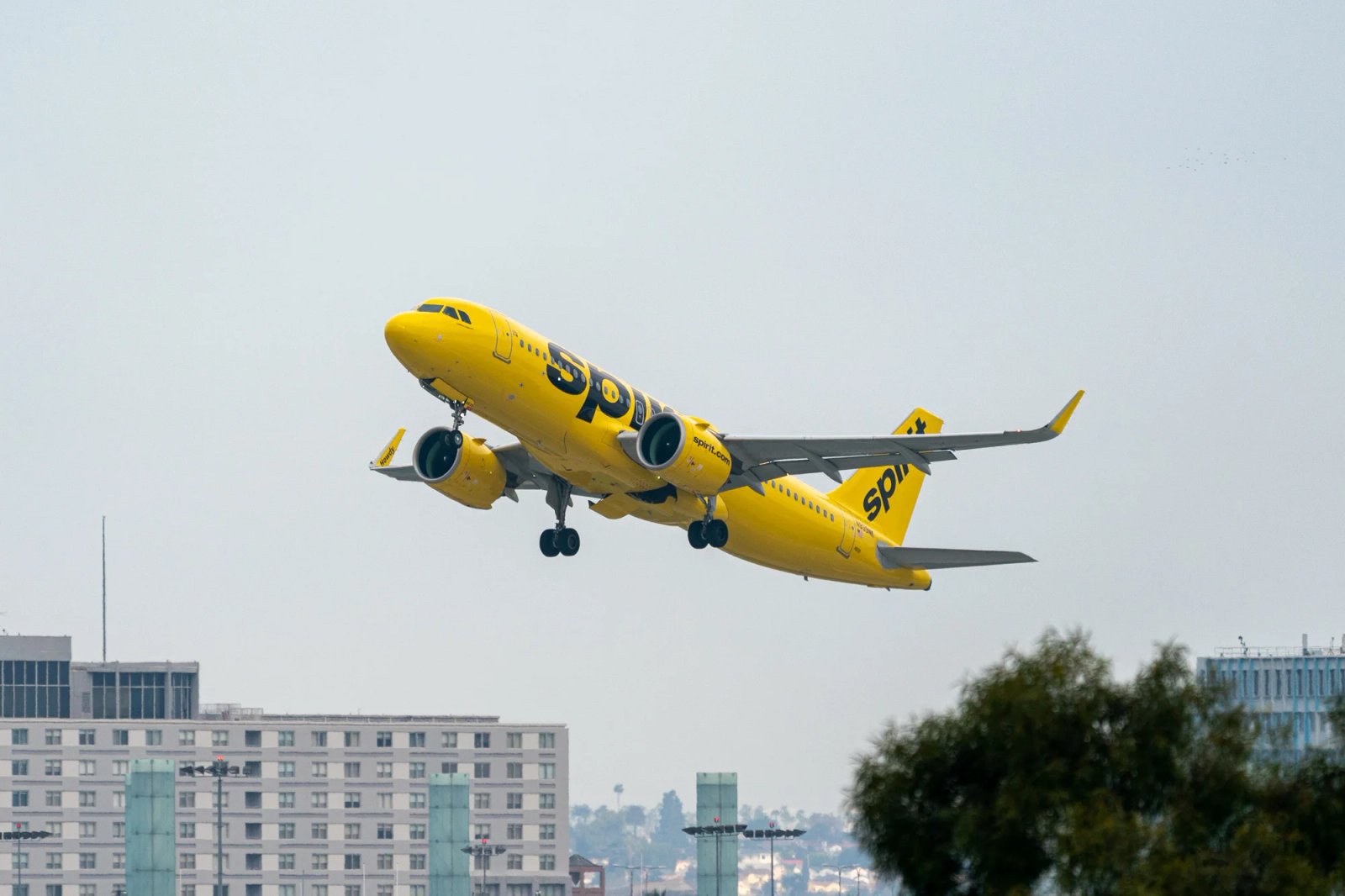
 Hartsfield-Jackson Atlanta International Airport (ATL) has been known famously for being the world’s busiest airport for quite some time.
  Chicago O’Hare International Airport (ORD) has also been near the top of the list of busiest airports as well, and is no stranger to that select group of busiest airports in the United States. So, which airport is truly the busiest?
The question of which airport is truly the busiest in the US has a nuanced answer — and in 2026, it depends entirely on what you measure. The question of which airport is truly the busiest in the US can be answered using different metrics. For example, the number of passenger movements (also known as emplacements) is a different category from total aircraft movements. Rankings will vary based on which primary metric is chosen. In parallel, the “biggest airline” in the US may also vary depending on the metric. For example, while United Airlines is the biggest airline in terms of international connectivity, American Airlines is the leader in overall domestic coverage.
By Passengers: Atlanta Wins — Again

Atlanta is the proven winner in terms of passenger enplanements. An enplanement is defined by the Federal Aviation Administration (FAA) as the total number of revenue passengers boarding aircraft. Hartsfield-Jackson Atlanta International Airport handled approximately 106.3 million passengers in 2025, retaining the title of the world’s busiest airport for passenger traffic — the 27th time in 28 years it has claimed that distinction.
Atlanta’s passenger dominance is deeply rooted in its airline relationship: in Q1 2026,  Delta Air Lines scheduled 74,482 one-way flights from Atlanta, with the carrier controlling roughly 80% of all capacity at the airport — a level of dominance that makes ATL less an airport and more a launch platform for America (Bolt Flight). Delta is widely accepted to have dominance in the Atlanta market due to its operation of a fortress hub. Having faced competition in the past from AirTran Airways, and light pressure from their successor,
  Southwest Airlines, Delta has proven its dominance and market share; there is no indication of a slowdown in Delta’s Atlanta operation.
What Happened To US Low-Cost Carrier AirTran Airways?
Looking back at the life and times of the Orlando-headquartered carrier.
Chicago O’Hare ranked sixth globally with 84.8 million passengers, representing a strong 6% year-on-year increase (ABC7 Chicago). O’Hare is a playground primarily for  United Airlines and
  American Airlines. United operates its headquarters in downtown Chicago’s Willis Tower, with strong ties to the city. American holds its fifth-busiest hub at O’Hare. There are ongoing tensions between the two airlines as both companies are battling for market dominance.
In terms of passenger traffic, Atlanta is the clear winner. There are many different avenues that Chicago O’Hare could take to steal the crown from Atlanta on this metric. Airside construction and improvements are already underway, and have a big impact on large aircraft capacity and efficiency.
By Aircraft Movements: O’Hare Takes The Crown

For aircraft movements — the total number of takeoffs and landings — Chicago O’Hare ranked first globally in 2025, ahead of Atlanta and  Dallas/Fort Worth International Airport(ACI World). The reason for this is due to the equipment types operating in and out of the two airfields individually. Of the 857,392 flights that operated out of Chicago in 2025, nearly 80,000 were designated “air taxi” flights, or small regional planes that carry fewer passengers to and from regional airports. Atlanta had just 7,573 flights of this kind by comparison (USA Today).
Chicago has a much larger-scale regional operation, operating various Essential Air Service (EAS) routes to cities such as Decatur (DEC) or Marion, IL (MWA). Other non-EAS routes include Chicago-Indianapolis on United Express or Chicago-Omaha on American Eagle. These are not government-funded routes, but due to the high frequency and short nature of such routes, regional jets such as the Bombardier CRJ-550 are better suited for such operations.
Essential Air Service In The US: What Is It & How Has It Evolved?
Essential air services have always been paramount for remote communities around the US. let’s discover the history behind them.
Due to Atlanta’s fortress hub structure, Delta is no stranger to operating much larger jets on similar, regional scale routes to and from Atlanta. Delta routinely flies their iconic Boeing 757 from Atlanta to nearby destinations such as Memphis, Savannah, Raleigh-Durham, and Jacksonville.
A Case Study: Chicago Versus Atlanta

Two similar routes below with different aircraft strategies can reflect the true difference in structure that Chicago has versus Atlanta. Chicago is a large city with low density, high frequency regional routes; this supports a competitive market and a large Midwestern hub environment. Atlanta is a medium-large city with similar high density, high-frequency regional routes to support a fortress hub-dominated southeastern hub.
|
Origin |
Destination |
Type |
Frequency |
|
Chicago O’Hare (population 2,721,308) |
Omaha (population 489,265) |
American Eagle Embraer 170, United Express Embraer 175, United Airbus A319, Boeing 737-800/MAX-8 |
12 daily |
|
Atlanta Hartsfield-Jackson (population 520,070) |
New Orleans (population 362,701) |
Delta Boeing 757-200, 737-900, and A321 |
10 daily |
The data for the Atlanta to New Orleans route concludes that Delta has larger-scale connectivity with much larger aircraft in Atlanta, further supporting the higher total number of enplanements for 2025, but a lower number of total aircraft movements. Chicago to Omaha, however, has slightly more daily frequencies, corresponding to a smaller average aircraft type; all aircraft serving this route on the selected date are smaller than in the Delta example. This overall represents a microcosm between the two cities. Delta supports a high density, lower aircraft movement environment in Atlanta to take the crown for the highest passenger volume. Whereas on the contrary, United and American support a lower density, high traffic environment in Chicago to lead the way in total aircraft movements. (Data courtesy of FlightAware and the US Census Bureau, 2024 data)
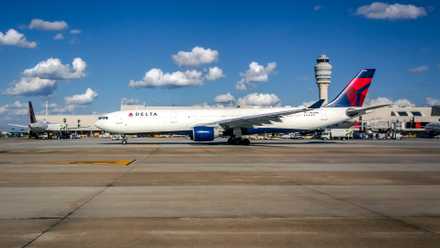
Atlanta Dethroned: The New World’s Busiest Airport For 2026 Revealed
Chicago O’Hare International Airport will take the title of the busiest US airport.
What Other Metrics Might Be Considered?

Other metrics to measure the difference between Atlanta and Chicago’s airports can include number of airlines, revenue, and economic impact. Revenue and economic impact can be difficult to measure, as revenue is a direct product of airlines, not necessarily the airports. However, the other variables can be broken down a bit more objectively.
American Airlines achieved a record annual revenue of $54.6 billion in 2025, a 0.78% increase from 2024 (American Airlines). United Airlines (UAL) reported record full-year 2025 operating revenue of approximately $59.1 billion (United Airlines). Finally, Delta Air Lines reported record full-year 2025 operating revenue of $63.4 billion (Delta Air Lines). This data indicates a generally good financial picture for airlines in 2025, but does not differentiate between cities. Therefore, this is not the primary metric for comparing the two airports under discussion.
Measured by the number of active carriers serving each airport, Chicago O’Hare currently has regularly scheduled flights from 47 carriers, whereas Atlanta sees 27 carriers on a regular basis. These figures include companies and their respective subsidiaries as a single figure. These numbers suggest a greater international reach from Chicago, whereas Atlanta is heavily focused on high-capacity domestic operations, as well as a high concentration of  SkyTeam Alliance Partners. Chicago even has participation across all airline alliances due to its status as a large, cosmopolitan city.
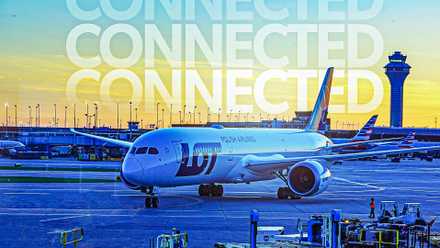
Why Chicago O’Hare Is The Most Dominant Hub Airport In The US
The most connected hub in the US, with millions of passengers passing through each month.
What About Cargo? International Rankings?

Cargo enplanements are also a key factor when comparing airports by traffic size. Both airports handle moderate freight traffic from carriers such as FedEx, UPS, Amazon, and DHL. However, neither O’Hare (ORD) nor Atlanta (ATL) is a keystone (i.e., primary global super‑hub) for any major freight integrator like UPS, FedEx, or DHL. Their true keystone hubs are elsewhere, so we can assume enplanement data is not skewed in that regard.
Other occasions where the two airports may trade off first place on the supreme airport leader board are when international airports are also considered. In that discussion, airports such as Dubai, Beijing,  Paris Charles De Gaulle Airport, and
  London Heathrow Airport are considered. And each metric will look vastly different when variables such as the number of countries or continents are served, as an airport such as Dubai-DXB has greater international reach due to its geographic position.
It’s always important to verify the metrics when comparing international airports. Rankings change depending on what is measured, even on a domestic scale. The good news is that the different rankings can help provide insights into the big picture of the US aerospace environment.
Atlanta Is The Household Name

Atlanta International Airport is the “Household Name” for the “busiest airport in the world.” Having ranked as such in terms of enplanements 27 times in the last 28 years has solidified that message, with only periods of economic uncertainty having a real impact on Atlanta’s crown.

Hartsfield–Jackson Atlanta International Airport Remains North America’s Busiest By Total Passengers
With over 100 million passengers handled in 2025, ATL continues to dominate global rankings for the world’s busiest airport.
With the current “Battle of O’Hare” between United and American ongoing and various operational improvements well underway, Chicago O’Hare does have a fighting chance to beat Atlanta across all metrics in the future. Chicago’s newest airport master plan provides the opportunity for more frequent large aircraft movements, as well as higher throughput for passenger enplanements. Upon completion of the project, three million square feet of new space and 25% more gate capacity are expected. This will reduce competition from other airports in terms of aircraft movements and allow significantly more space for passengers.