dailynewsnblog
You’re a pilot performing a routine departure, but shortly after takeoff, your engine experiences a compressor stall. While slightly alarming, it’s an event you’re trained for: shutting down the problematic engine, climbing to a safe altitude, and dumping fuel before making a safe return to the airfield. While dumping fuel isn’t always necessary, it’s generally preferred by pilots, since landing with a full load of fuel means an overweight landing, longer landing distances, and added stress on the aircraft.
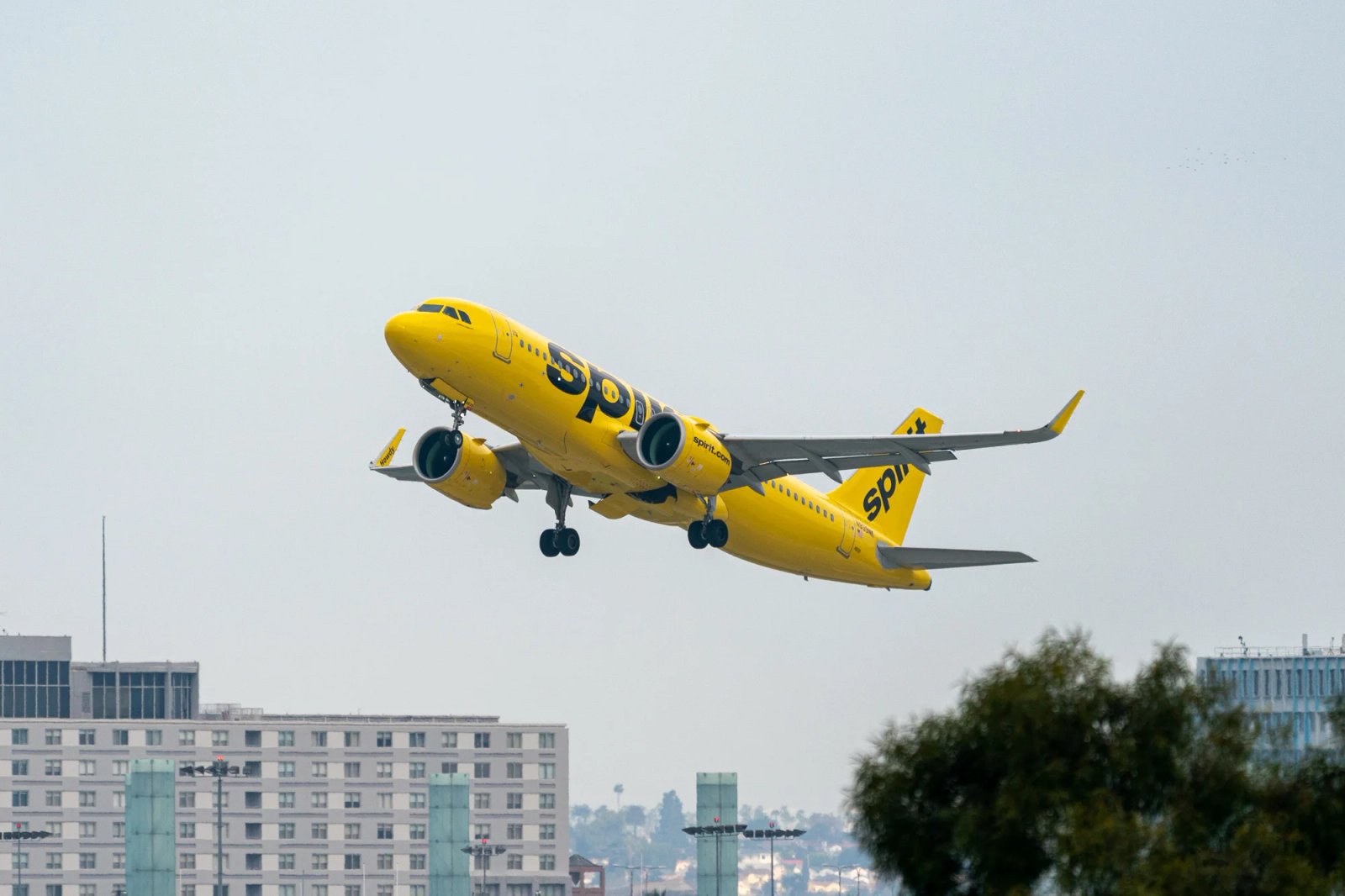
If you’re piloting a Boeing 737, however, you don’t have this option. The plane, known as the world’s second-most common commercial aircraft type, is not equipped with a fuel jettison system, meaning that flight crews performing emergency returns or diversions do not have the option to reduce the aircraft’s weight. This is actually fairly unremarkable to pilots, as many smaller aircraft types lack this system, but it is surprising to non-pilots given the prominent role that fuel dumping plays in emergencies involving aircraft equipped with it.
The Lack Of A Fuel Jettison System On The 737

To date, no 737 model, ranging from the original 1968 737-100 to the still in-development 737 MAX 10, features a fuel jettison system. The 737 is not alone in this, as the Airbus A220, A320, Boeing 717, 757, as well as essentially all regional jets, lack this system. This, however, isn’t a universal omission among narrowbody types, as a fuel jettison system was included on the long-range 707 and Douglas DC-8, as well as the medium-range 727. Instead, this is down to mission role and evolving regulations.
FAA regulations during the mid 20th century stated that if an aircraft’s maximum takeoff weight (MTOW) was higher than 105% of the Maximum Landing Weight (MLW), then it must be designed with a fuel jettison system as standard. Many earlier long-range propeller aircraft, such as the Lockheed Constellation, included fuel dumping to comply with this regulation, and it was also included in the first generation of long-range jetliners for this reason.
Smaller aircraft designed for regional routes, however, were built with high MLWs relative to their MTOW, since they were meant to operate multiple routes in a given day over short distances. As such, the 737, along with the competing McDonnell Douglas DC-9, was not required to be fitted with a fuel jettison system. While this would require crews to perform overweight emergency landings in many cases, the plane’s actual weight wouldn’t be much higher than its certified MLW, meaning an overweight landing wouldn’t put as much added stress on the aircraft as a 707.
Regulatory Changes For Fuel Jettison Systems

The original variants of the 737 and DC-9 were introduced in the 1960s, but Boeing and McDonnell Douglas quickly sought to improve their aircraft by increasing gross weight and range. This, however, would mean they would have difficulty complying with the 105% regulation. Designing a fuel jettison system, however, would have increased development costs and increased complexity, given that they weren’t designed to incorporate such systems. As such, Boeing and McDonnell Douglas aimed to avoid having to incorporate fuel dumping in these models.
Considering that the new variants of the 737 and DC-9 were equipped with more powerful engines, the FAA revised its regulations in 1968.
“The turbine engine-powered airplane must have a fuel jettisoning system installed that meets the requirements of this section unless it is shown that the airplane meets the climb requirements of Secs. 25.119 and 25.121(d) at the weight specified in paragraph (c) of this section.”
In other words, these aircraft wouldn’t need a fuel jettison system if they could meet minimum climb requirements with an engine out in approach configuration during a go-around.
This regulation has allowed  Boeing to avoid a fuel jettison system on the 737, as well as the 757, while Airbus did not include it on the A320 family. Subsequent small narrowbodies also omitted fuel jettison systems since they complied with this regulation. However, there is more nuance when it comes to widebody aircraft. While early three and four-engine widebodies would have had difficulty complying with this regulation, this isn’t necessarily the case for subsequent twin-engine widebodies. However, many modern twin-aisle aircraft still include a jettison system, though not all do.
Airbus A330neo Vs. Boeing 787: Which Aircraft Gets More Miles Per Gallon?
Which jet rules fuel efficiency? Discover real MPG, expert insights, and airline data in this in-depth comparison.
Fuel Jettison Systems On Widebody Aircraft

The 747, DC-10, and Lockheed L-1011 TriStar were designed with fuel jettison systems as standard. The A300 and A310, however, were able to meet regulatory requirements and were not required to incorporate a fuel dumping system, but Airbus still offered it as an option on these planes. The same is true for the A330 and A350, while the A340 and A380 feature fuel dumping as standard. Early models of the 767 offered fuel dumping as an option, while later 767s, along with the 777 and 787, include fuel jettisoning as standard.
This is primarily an economic concern rather than a regulatory issue. The A300, A310, early versions of the A330, and early 767 models were primarily designed for short-to-medium-range flights, meaning these planes were uncommonly operated at extremely high weights. While every airliner is certified to safely land at its MTOW, this can cause significant strain on the aircraft’s structure, requiring a post-landing inspection and possibly requiring expensive repairs.
|
Widebody Aircraft |
Presence of Fuel Dumping System |
|---|---|
|
Airbus A300 |
Optional |
|
Airbus A310 |
Optional |
|
Airbus A330 |
Omitted on early A330-300, optional on A330-200/later A330-300s/A330neo |
|
Airbus A340 |
Standard |
|
Airbus A350 |
Optional |
|
Airbus A380 |
Standard |
|
Boeing 747 |
Standard |
|
Boeing 767 |
Optional on early 767-200/200ER/300ER, standard on later 767-200ER/300ER/400ER |
|
Boeing 777 |
Standard |
|
Boeing 787 |
Standard |
|
Lockheed L-1011 Tristar |
Standard |
|
McDonnell Douglas DC-10 |
Standard |
|
McDonnell Douglas MD-11 |
Standard |
Manufacturers, therefore, gave airlines a choice: if they intend to use their widebodies on longer flights, then it’s better to select fuel dumping to avoid expensive repairs. If their intended mission was primarily short-haul, a jettison system would offer little benefit, since the risk of a severely overweight landing requiring repairs is lower. Later 767 models became more capable, which is why Boeing began offering it as standard, while the A340, A380, 777, and 787 are mainly designed for ultra-long-haul flights operating at extremely high weights.
Fuel Dumping Optionality On Airbus Widebodies

The original A330-300 lacked any fuel dumping capability, as it was intended to be a short to medium-range airliner that couldn’t even cross the Atlantic Ocean. The later A330-200, however, was designed for transoceanic crossings and offered a jettison system as an option. This was later offered on more capable A330-300 models, and is an option on the A330neo. Despite the A330-900neo being a far more capable plane than the original A330-300, its structure is strong enough that there’s less risk of requiring expensive repairs after an overweight landing, since much of it is shared with the heavier A340.
The A380, as the world’s largest passenger aircraft, is an immensely heavy aircraft with complex systems, and Airbus elected to include a jettison system as standard so that airlines would seldom have to perform emergency landings at high weights, given that it was designed to operate ultra-long-haul flights. With the A350, however, Airbus designed an aircraft that would be efficient for medium-range flights while also capable of operating the world’s longest routes, and that offers fuel jettisoning as an option.
|
Airbus A330 Gross Weight Increases |
Year |
|---|---|
|
Original 212-ton A330-300 (center tank deactivated) |
1994 |
|
Original 230-ton A330-200 (center tank activated) |
1998 |
|
230-ton A330-300 |
1999 |
|
233-ton A330-200/300 |
2003 (A330-300), 2004 (A330-200) |
|
238-ton A330-200 |
2010 |
|
235-ton A330-300 |
2012 |
|
242-ton A330-300 (center tank activated) |
2015 |
|
245-ton A330neo |
2017 |
|
251-ton A330neo |
2020 (A330-900), 2022 (A330-800) |
|
253-ton A330neo |
2027 (projected) |
The A350’s structure is strong enough that most emergency overweight landings won’t strain the structure enough to require expensive repairs. A carrier such as  British Airways, for instance, can save money by omitting the system, given that its A350 fleet operates relatively few ultra-long-haul routes, while Cathay Pacific includes it, given that its A350s operate many more 12-to-16-hour routes. In contrast, Boeing includes fuel dumping as standard on its long-range widebodies, but these planes are optimized for a lower structural weight, and Boeing tends to offer less optionality than Airbus.
The Striking Differences Between The Airbus A321XLR & Boeing 737 MAX 10
The Airbus A321XLR and Boeing 737 MAX 10 represent the pinnacle of evolution in the aviation industry, pushing narrowbodies to their absolute limits.
Why There’s A Lack Of Optionality In Narrowbodies

Airbus’ design philosophy regarding fuel jettisoning is generally to build a stronger structure that will seldom require repairs after an overweight landing, while still offering the system to operators who routinely fly their planes close to MTOW. Boeing, in contrast, equips its widebodies with the system as standard so that pilots can dump fuel and operators can avoid the after-landing inspection and repairs. With their narrowbodies, however, neither Airbus nor Boeing offers fuel jettisoning as an option.
An A350-900 can have an MLW of 207 tonsand an MTOW of up to 283 tons, roughly 137% of its MLW. The Boeing 787-9’s MTOW of 259 tons is roughly 134% of its MLW. The Boeing 737 MAX 8, on the other hand, has an MTOW of 82.2 tons and an MLW of 69.3 tons, meaning that the MTOW is only roughly 119% of the MLW. Meanwhile, the A321neo can be specced with a 97-ton MTOW and a 79.2-ton MLW, meaning that the MTOW is only 24% higher than the MLW.
While the latest refreshes of the 737 and A320 can offer extremely long ranges, they’re still optimized for short-to-medium-haul routes. As such, even with a high MTOW, these planes still require a high MLW, since their fuel weight is proportionally lower than that of a long-range widebody. In addition, fuel tankering is a common practice, in which an aircraft carries fuel for multiple flights, requiring a proportionally higher MTOW. With this type of design, a fuel jettison system serves no purpose.