dailynewsnblog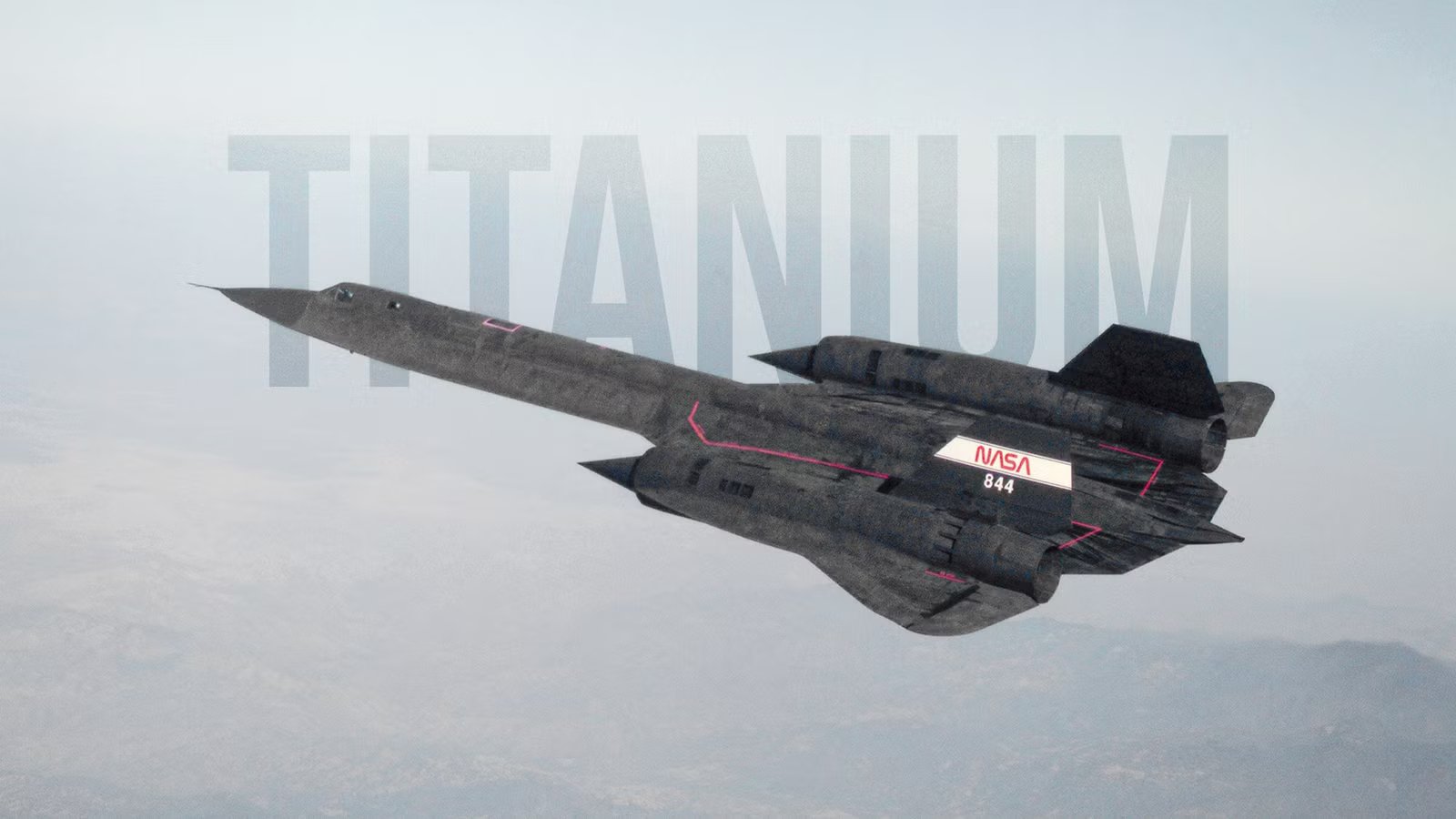
One of the reasons why there has never been a successor to the legendary Lockheed SR-71 Blackbird is because it is virtually impossible to build another aircraft in its image. The exquisite airframe was made of 93% titanium, which required a prohibitive level of manufacturing complexity, raw material cost, and a supply chain that was so convoluted that the Central Intelligence Agency needed multiple shell companies to source enough alloy.
It was only because of the ingenuity of a Skunk Works division under the helm of the legendary Kelly Johnson that it was even possible to create the Blackbird at all. Aerodynamic friction and continuous engine operation during high-speed flight subjected parts of the aircraft to temperatures as high as 1,050°F, which precluded the use of aluminum as a structural material, leaving titanium as the only viable option despite Lockheed having virtually no experience working with it at scale, according to NASA.
The incredible stress that the jet experienced flying at its cruising speed in altitude meant that even though it was one of the most carefully crafted airplanes in history, it notoriously leaked an absurd amount of jet fuel on the ground when it was taxiing and taking off. The Blackbird’s skin was composed of exotic Beta B-120 alloy, designed for the 1,000-degree heat generated when it flew at Mach 3-plus flight above 80,000 feet. Only once the skin sufficiently heated did the panels expand and stop bleeding its specially formulated JP-7 jet fuel.
The Most Exotic Machining Process In Aerospace History

The exquisite material used to construct the Blackbird was capable of producing not only an incredibly strong and lightweight jet plane, but also an early form of stealth profile. However, it remains one of the most difficult materials to work with in the history of aerospace manufacturing. Titanium is notoriously difficult to machine, and early production was so inefficient that 90% of the raw material was frequently cut away to form a single part.
Experts and former personnel highlighted the sheer frustration and metallurgical nightmare of working with the material because titanium is highly reactive. During the SR-71’s production, engineers discovered that even chlorine in the local water supply used to clean parts during summer caused them to fail. According to the Aviation Geek Club, the only solution for the Lockheed team was to use distilled water in the manufacturing process.
Skunk Works found that many standard tools embrittled the metal on contact, forcing Lockheed to custom-build an entire set of titanium tools for the assembly line, according to the National Interest. After making more than 13 million parts, the lucky team finally assessed that over 80% of the material was rejected, even after the unique titanium had been sourced through the painstakingly laborious process under the CIA, as Codeone Magazine recounted. While modern composite materials and 3D-printed titanium alloys offer newer paths to high-speed flight, the original 1960s manufacturing process was a unique, billion-dollar confluence of crisis and innovation that is unlikely to ever be repeated.

The SR-71 Blackbird’s Final Flight Set 4 Speed Records In Just 64 Minutes
The final day that the legendary jet streaked through America’s skies.
The Key To The Blackbird Supply Chain: Espionage

Ironically, the United States lacked sufficient domestic titanium ore to build the fleet. The CIA was instructed to establish a global shell game of bogus shell companies and ghost organizations based in third-world countries to mask the final destination of the material. These entities operated on the open market to buy massive quantities of ore without raising suspicion. While the Soviets were flying MiG-25 interceptors made largely of heavier stainless steel, the US was using Soviet-mined titanium to fly faster and higher than those interceptors could reach.
The irony of the operation was that the very nation being spied upon was the primary supplier of the material required to build the spy plane. The ore was first shipped to neutral third parties before being discreetly redirected to the United States. Declassified documents suggest much of the high-quality titanium was sourced from mining sites in Ukraine. It was sent to the Titanium Metals Corporation in the US for refinement into the final aerospace-grade alloy, according to Counter Offensive News.
The supply chain was so successful that the USSR unknowingly became the primary provider of the secret ingredient for the SR-71. To acquire the metal, the CIA used shell companies, including one supposedly making commercial pizza ovens, to covertly buy titanium from the Soviet Union. The Soviets reportedly believed this explanation, unaware that their lucrative export was being shipped to Nevada and California for the top-secret Skunk Works project.
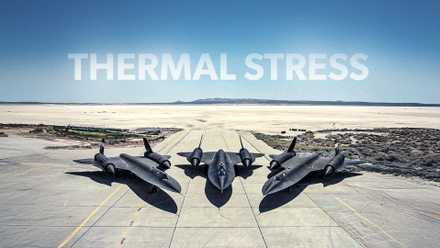
How The Lockheed SR-71 Blackbird’s Titanium Fuselage Withstands Extreme Thermal Stress
The technology behind the fastest warbird of all time.
Outrunning Fuel Leaks In The SR-71

The SR-71 was designed to expand three to four inches in length during high-speed flight due to thermal expansion. Because its fuel tanks only sealed once the metal expanded, the aircraft famously leaked fuel constantly while sitting on the runway. If the titanium panels had been fitted tightly on the ground, they would have buckled, warped, or literally crushed the airframe once they heated up and expanded at high speeds.
The SR-71 Blackbird didn’t just leak by accident; it was a leaky sieve by design. Because it cruised at Mach 3.2 or higher, air friction heated the titanium skin to over 600°F, unavoidably forcing the entire airframe to expand. Engineers at Skunk Works built the aircraft with visible gaps between the fuselage panels. These gaps acted as expansion joints, allowing the metal to grow into a perfect, tight fit only when the aircraft reached its extreme operating temperature.
The same philosophy was also applied to the wingspan, which used corrugated metal instead of smooth surface finishes. This allowed it to expand and contract like an accordion during the different flight profiles and prevented it from overstressing the structural internal components. Additionally, the SR-71 used a wet wing design, which meant that the outer walls of the wing surfaces were the actual fuel tank seals, causing its notorious fuel leaks on the ground.
No sealant existed in the 1960s that could remain flexible enough to handle the constant, extreme expansion and contraction cycles without cracking. On the runway, fuel seeped through these intentional gaps and unsealed seams. However, once the plane took off and accelerated, the heat caused the titanium to expand, closing the gaps and sealing the tanks perfectly for the mission.

Why Did Lockheed Build The SR-71 With Titanium?
The bones of the Blackbird.
The Curious Case Of JP-7 Fuel

The leakage was manageable because the SR-71 used JP-7 fuel, which has an incredibly high flash point. You could literally drop a lit match into a puddle of it on the tarmac, and the match would go out. It was developed specifically for the Blackbird because standard jet fuel, like JP-4 or JP-5, would have vaporized or exploded at the high temperatures caused by air friction.
Because JP-7 was so hard to light, the engines couldn’t use a traditional spark plug. Instead, they used triethylborane. When the pilot moved the throttles to afterburner, a small amount of TEB was injected and exploded instantly when it touched air, creating a characteristic bright green flash that ignited the fuel. The fuel even acted as a coolant. Before being burned, the JP-7 was circulated through heat exchangers to cool the cockpit, the landing gear, and the hydraulic fluids.
JP-7 with its TEB additive was necessary because at Mach 3, the air entering the engine was so hot and compressed that the front of the engine could no longer process it efficiently. By bypassing the core, the engine effectively became a ramjet, where the speed of the aircraft itself compressed the air. Once the plane hit Mach 2.2, the engine began shunting air.
The Pratt & Whitney J58 engines were actually more efficient at Mach 3.2 than they were at subsonic speeds. At its top speed, the afterburner provided about 80% of the total thrust. To make the unique turbo-ramjet work, the large conical spikes in the front of the engines had to move. At high speeds, they would retract up to 26 inches into the engine nacelle. This captured the supersonic shockwave and slowed the air down to subsonic speeds before it hit the engine blades.

This Is How Fast The SR-71 Blackbird Could Fly
The incredible power of the fastest jet in the USAF.
Technological Lobotomy: Winding Down the Blackbird

In February 1968, Secretary of Defense Robert McNamara issued a presidential order to destroy all the specialized dies, molds, and machining used to build the Blackbird. Because the SR-71 was 93% titanium, every tool was custom-made, some even from titanium itself. The government feared that if the tooling were simply stored, it could be stolen or the top-secret designs leaked to foreign powers. Recreating these tools from scratch today would cost billions of dollars and take years of trial and error.
Many aviation historians believe the destruction was also a political tactic to kill the program permanently. Much of the assembly involved handcrafted wooden templates and massive frames for sub-assemblies that simplified the complex bending and drilling of titanium. Without these physical references, the archival memory of how to build the plane vanished when the engineers retired.
While blueprints and manuals remained, the destruction of the physical tools meant losing the practical application of decades of innovation. Because the tooling was gone, Lockheed could no longer manufacture major structural components or spare parts. For the rest of the plane’s operational life, crews had to cannibalize parts from retired or grounded airframes just to keep the fleet flying.
It was a decision widely considered one of the most consequential losses of aerospace capability in US history, according to Blackbirds. McNamara ensured that future administrations couldn’t easily restart the program, effectively forcing the military to focus on satellites and other emerging technologies like the B-2 bomber.