dailynewsnblog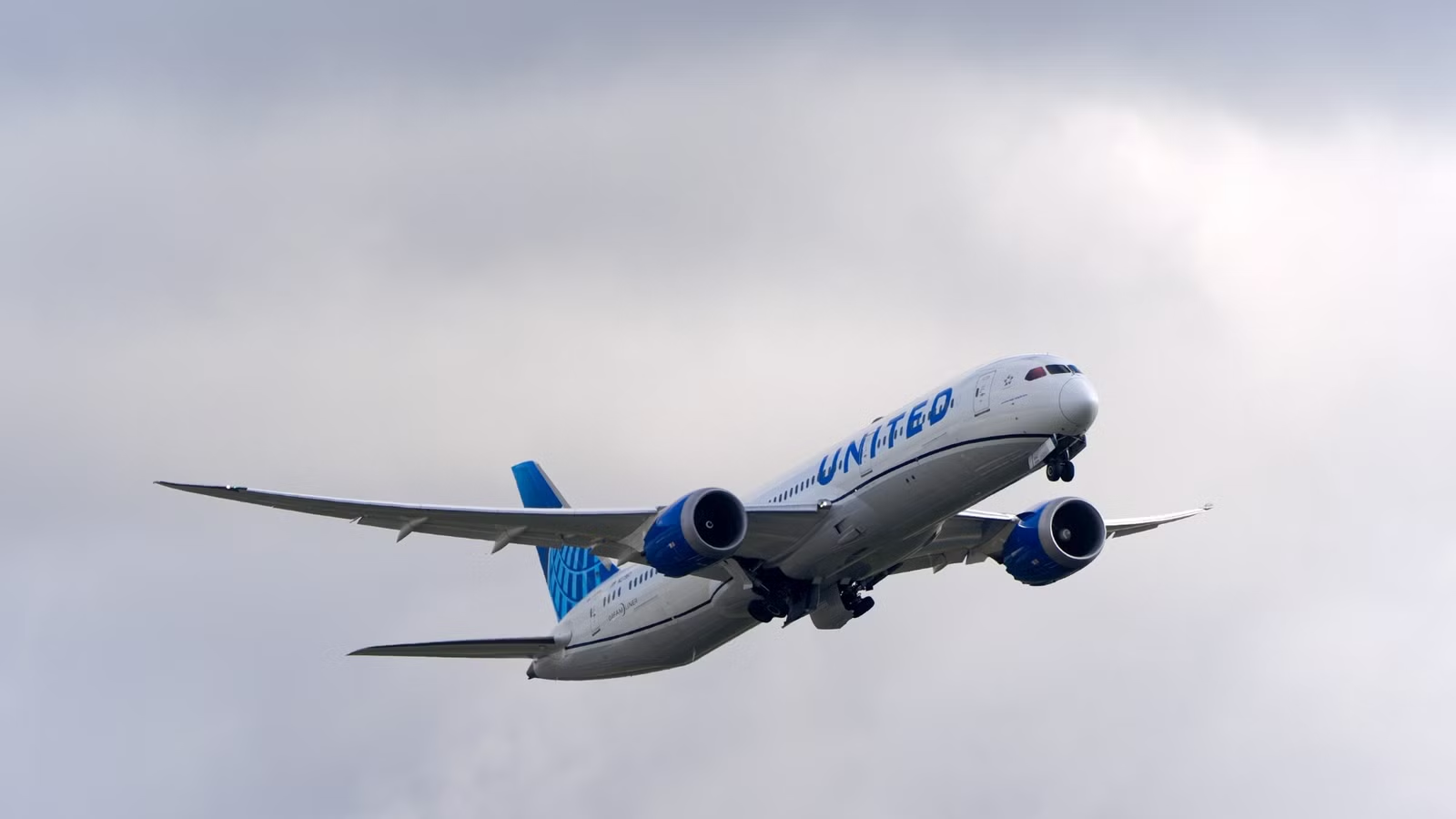
The latest and greatest widebody joining  United Airlines’ fleet has faced a very unfortunate turn of bad luck. Last week, the carrier’s new premium heavy Boeing 787-9 Dreamliner was forced to turn around due to smoking fumes in the cabin, resulting in its very first international service being grounded overnight and later ferried back to San Francisco with zero passengers aboard.
Since then, the jet has been moved to Texas, where it’s undergoing maintenance inspections and an overhaul to identify the source of the electrical smell in the air conditioning. The plane appeared to conduct a test flight that lasted just under two and a half hours around  George Bush Intercontinental Airport (IAH) in Houston on Thursday, according to FlightAware data.
Failure To Launch: United’s Elevated Interior Dreamliner

Credit: Channing Reid
The first incident at Singapore Changi Airport (SIN) occurred 30 minutes after takeoff when both crew and passengers reported a strong electrical smell emanating from air vents in the cabin. It took two hours for the plane to land because it had to circle in a holding pattern. Maintenance tried to rectify the problem before the crew timed out, but was ultimately unsuccessful. They just left the plane on the ground overnight, and the passengers had to get a different flight home when it was ferried back empty.
The plane flew a test sortie out of  San Francisco International Airport (SFO) following the aborted Singapore itinerary. Since then, it has flown between SFO and IAH a handful of times, operating only domestically. United is working to get the plane fully operational and resume service as the flagship on its Singapore and London routes, for which its premium, long-haul-optimized interior was specifically designed.
The debacle surrounding the debut of N61101 has drawn attention from aviation enthusiasts and industry observers alike. From The Tray Table’s Zach Griff commented on the situation in a post on X.
“Tonight, the jet just went mechanical again. This time, at least the plane never took off. Not a great way to inaugurate the new product.”
Simple Flying contacted United for comment on the status of the aircraft, but representatives could not be immediately reached.
Harbinger Of The New Era Of Long-Haul Flying At United

Credit: Channing Reid
This series of mechanical issues has been particularly high-profile because N61101 is the lead aircraft for United’s new 78L subfleet, featuring the high-premium 222-seat configuration and the debut of the Polaris Studio. This plane is one of the least-dense 787-9s in the world, with the front-row studios 25% larger than all the other business-class suites.
There are only eight of these exceptionally large VIP seats, but the rest of the 56 business class Polaris suites also have sliding privacy doors, a major upgrade over the legacy cabin design. Interestingly, Premium Plus is smaller than business class, with just 35 seats, but offers larger, more luxurious amenities than economy class, including privacy dividers and wireless charging.
The standard economy class is relatively small, with a capacity of 123 travelers. Despite being the most basic airfare available on the premium heavy jetliner, coach still boasts a nicer ride than any other airliner in the United fleet. Every single person has Bluetooth-capable seatback entertainment presented on a 13-in 4K OLED screen, the largest of any economy class inflight entertainment display in the world.
For The 1st Time: United Airlines Allowing Passengers To Use Miles For Lyft Rides
The move will expand how travelers can use their rewards.
The United Next Premiumization Campaign

Credit: Channing Reid
United is expecting to receive 20 deliveries of premium heavy Dreamliners this year as a part of a wider fleet expansion that will significantly upgauge its service on international long-haul flying. The primary Stateside base of operations currently planned will be at SFO. The two overseas destinations that will be the first to receive service from these new luxurious widebodies are limited to SIN and LHR until more aircraft arrive.
The new 787-9, or 78L, subfleet is the crown jewel of the United Next strategy, a multi-year transformation focused on aggressive international growth and premiumization. United expects to have 30 of these aircraft in its fleet by 2027. As more are delivered, they will gradually replace older Boeing 767-300ERs on other premium-heavy European and Asian routes.