dailynewsnblog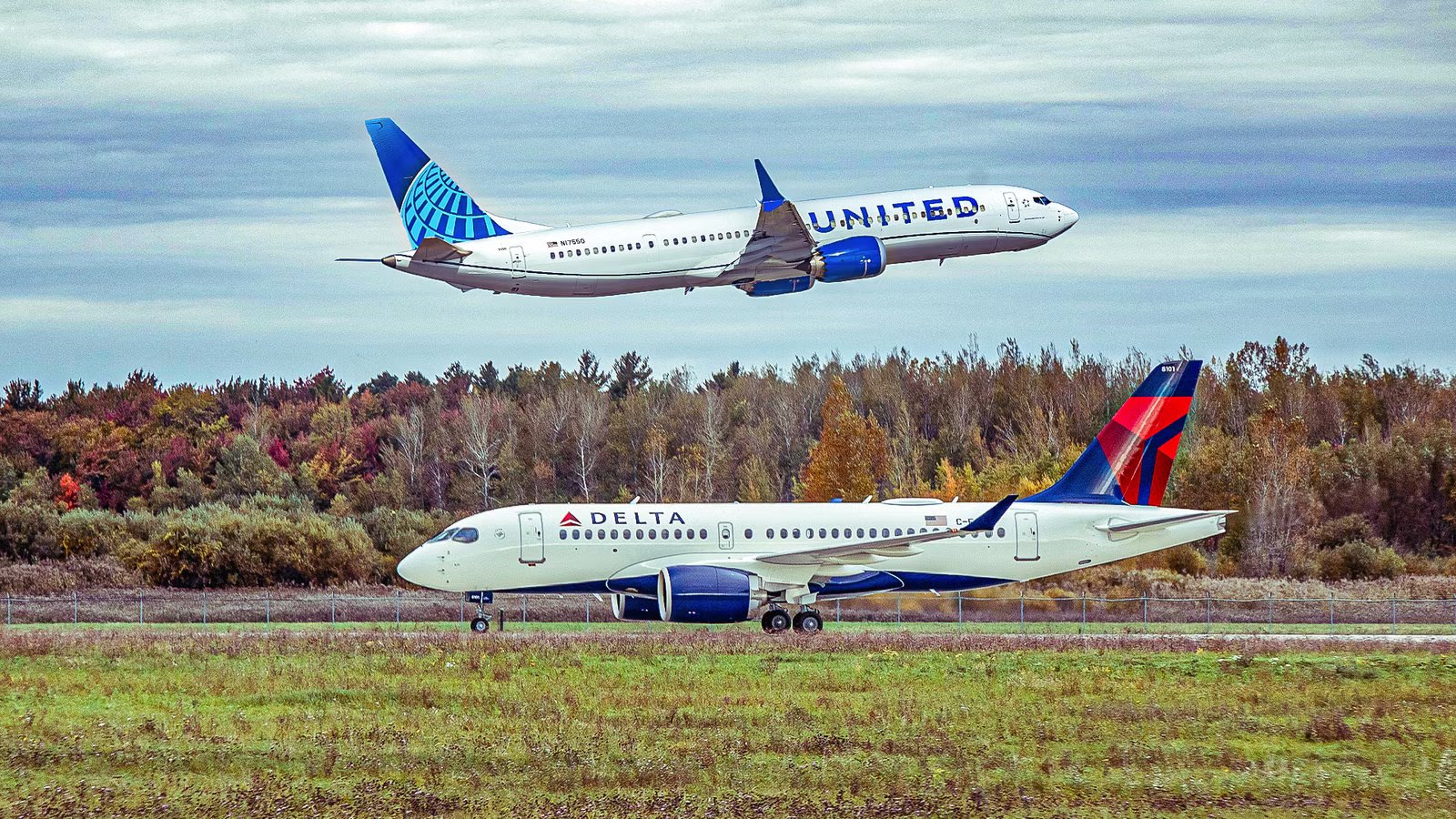
It may be an Airbus in name only, but the famed European planemaker has hardly forgotten about the adopted child in its lineup, the Airbus A220. Bombardier, which originally developed the small airliner, did a fine job in creating a super-efficient aircraft to serve lower-demand routes that could also cross continents, and Airbus knows this. It’s sold more units than all of its comparably-sized competitors combined, which includes Airbus’s own A319neo, and it’s sometimes quoted that the plane has 25% lower per-seat costs compared to the Boeing 737 MAX.
Airbus’s own advertising material, however, attributes that 25% to a quote from Air Canada SVP of Network Planning and Revenue Planning Mark Garlado, who compared the A220-300 to previous-generation aircraft. At Air Canada, this likely means the Airbus A319-100, while across the industry, this means A319-100s and Boeing 737-700s. Compared to the newer A319neo and 737 MAX 7, it’s estimated that the A220-300 likely has a 12% advantage in per-seat costs, which is still a fantastic figure. However, this hardly means that it’s smooth flying ahead for the A220.
The Airbus A220 Versus The Boeing 737 MAX 7

The Boeing 737 MAX 7 is the smallest variant of the 737 MAX family. It has slightly more passenger capacity than the A220-300, and is equipped with the CFM LEAP-1B, an engine comparable in efficiency to the A220’s Pratt & Whitney PW1500G engines. Engines are the biggest drivers behind aircraft efficiency, and combined with the established worldwide fleet of 737s, this should make the 737 MAX 7 competitive against the clean-sheet, but expensive, A220. So far, however, it hasn’t.
The A220 family has racked up nearly 1,000 orders, of which 851 are for the A220-300 variant. The 737 MAX 7 has recorded fewer than 300. The main problem with the 737 MAX 7 is that it’s a shrink of the 737 MAX 8 (different from the relationship between the 737-700 and 737-800), and as such, retains much of its larger sibling’s structure. This makes it extremely heavy compared to the A220, which was optimized for its size, and as such, makes it comparatively fuel-thirsty.
Of course, Boeing doesn’t really care about selling 737 MAX 7s. The plane is largely present to cater to Southwest Airlines, and it became a shrink of the 737 MAX 8 at the request of Southwest. The same is true for the Airbus A319neo, which faces the same issues as the 737 MAX 7, and only exists for the handful of customers who might desire its excellent field performance. Otherwise, Airbus would rather sell pricey A321neos, and Boeing, too, would rather sell the higher-margin 737 MAX 8 or 737 MAX 10 unless a customer specifically wanted the 737 MAX 7.
Where The A220’s Size Becomes A Problem

The A220-300 holds a significant per-seat cost advantage over the 737 MAX 7 because the 737 MAX 7 is a shrink of the 737 MAX 8. The 737 MAX 8, as such, burns only marginally more fuel, but can have upwards of 30 additional seats, meaning that per-seat costs are dramatically lower. What’s more, the 737 MAX 8’s range and field performance are much improved compared to the 737-800, meaning that it can essentially take over former 737-700 missions. This is also why the 737 MAX 10 is becoming popular, as it’s even more economical to operate while being plenty capable in its own right.
At the top of the market, the 737 MAX 8 can do everything that most airlines require and is more compelling economically than its smaller sibling, while the A220-300 eats the 737 MAX 7’s lunch at the lower end of the market. However, the A220-300 struggles to compete against larger narrowbodies because of the same per-seat economics. While an A220-300 is much more cost-efficient than a 737 MAX 7, the 737 MAX 8’s higher capacity means that the two types are much closer in this regard.
A 737 MAX 8 is more costly to operate, but can generate significantly more revenue than an A220-300. Revenue is just as important as cost, and with some airlines, most notably US carriers, now heavily employing price segmentation as part of their overall business strategy, there’s less appeal to adding a small narrowbody aircraft. For destinations with lower demand,  United Airlines, for instance, can either trim frequency or release additional basic economy tickets to fill a 737 MAX 8, rather than buying an entirely new aircraft type just for this purpose.
Milestone 220: Airbus Celebrates 500 Deliveries Of Its “Game-Changing” A220
Airbus has reached 500 A220 deliveries, but challenges still loom.
The Challenging Economics Of Small Planes

Some costs become much lower with small aircraft, such as fuel burn, but other costs remain static or vary slightly. The two highest costs at any airline are fuel and labor, and regional jets were primarily successful because they’re typically flown on behalf of established carriers by regional airlines that pay lower salaries. An Airbus A220, however, is a mainline aircraft. An A220-300 may require one fewer flight attendant than a 737 MAX 8, depending on local regulations and configuration, but pay rates are largely the same, if not identical, and the same applies to pilots.
When approaching this size of aircraft, the low number of seats becomes a problem since the semi-fixed costs become larger in relation to variable costs. The main appeal of the A220, then, becomes its low overall trip cost, which becomes more important with longer segments. Trip cost is, of course, extremely important to airlines; just look at  Delta Air Lines, which tends to use its Boeing 737-900ER fleet on longer segments than its Airbus A321-200 fleet, which burns more fuel overall but is more economical per-seat.
|
Delta Air Lines Narrowbody Types |
Variants |
|---|---|
|
Airbus A220 |
A220-100, A220-300 |
|
Airbus A320 |
A319-100, A320-200, A321-200, A321neo |
|
Boeing 717 |
717-200 |
|
Boeing 737 |
737-800, 737-900ER, 737 MAX 10 (future) |
|
Boeing 757 |
757-200, 757-300 |
But Delta Air Lines is the world’s third-largest airline and can operate large fleets of multiple aircraft types. Most airlines are far smaller and, more often than not, are cross-shopping the A220-300 with the 737 MAX 8 or A320neo rather than their smaller siblings. Given the per-seat cost challenge associated with this size category of aircraft, it’s a fairly tough market position. Meanwhile, the A220-100 is even more heavily impacted by this issue and has therefore only received 108 orders, many of which have already been delivered.
Where The Airbus A220 Sells

Delta Air Lines is the world’s largest A220 customer, with 145 examples ordered in total. However, the main benefit of acquiring an aircraft of this size for Delta is that it allowed the Atlanta-based carrier to add more 76-seat regional jets, as per the carrier’s pilot scope clauses. This is also part of the reason why Delta acquired its Boeing 717 fleet, which was also incredibly cheap to buy. United Airlines’ business strategy, on the other hand, has been network-wide upgauging as part of its ‘United Next’ plan, while American Airlines does not have similar language in its scope agreement.
European legacy carriers tend to fly shorter routes with high competition and operate a large number of daily frequencies, while also employing price segmentation to a lesser extent than US airlines. Cost per trip is highly valued, and these airlines tend to prefer to right-size capacity. As such, you see the A220 operated by the likes of Air France, ITA, and SWISS. Korean Air and Qantas operate the A220-300 to low-demand markets with low frequency, and Qantas benefits from having its A220s operated by a low-cost regional partner.
|
North American Customers |
European Customers |
Middle Eastern Customers |
Asia-Pacific Customers |
African Customers |
|---|---|---|---|---|
|
Air Canada |
airBaltic |
Iraqi Airways |
Air Niugini |
Air Austral |
|
Breeze Airways |
Air France |
Korean Air |
Air Tanzania |
|
|
Delta Air Lines |
Animawings |
QantasLink |
Egyptair (fully removed) |
|
|
JetBlue |
Bulgaria Air |
Ibom Air |
||
|
Croatia Airlines |
TAAG Angola Airlines |
|||
|
Cyprus Airways |
||||
|
Czech Airlines |
||||
|
ITA Airways |
||||
|
LOT Polish Airlines |
||||
|
Lufthansa City Airlines |
||||
|
SWISS |
Many of the A220’s customers, however, are either small carriers or budget airlines. Here, the low trip fuel burn of the A220 is a major benefit, since these airlines are heavily focused on keeping costs low. At some airlines, the A220 is their only narrowbody aircraft type. As such, it’s clear that the A220 does have a place in the narrowbody market and has been a sales success, but it does come with its flaws.
Will Airbus Build The A220-500?
Airbus already operates several variants in its A220 series.
The A220’s Issues Under The Wing

The A220 is exclusively powered by the Pratt & Whitney PW1500G geared turbofan, a variant of the PW1000G family. On paper, it’s a fantastic engine, with low fuel burn and excellent power, while its innovative gearbox has proven reliable. The issue, however, is that other components of the engine have been anything but, as the engine has suffered from significant wear issues, while also experiencing in-flight shutdowns.
Currently, nearly a fifth of the worldwide A220 fleet is grounded due to PW1500G corrosion issues. The engines have been taken out of service, and Pratt & Whitney has not been able to repair the engines quickly enough to avoid large-scale groundings, nor deliver new engines in time. SWISS has grounded its entire A220-100 fleet to transfer the engines to its A220-300s, while Egyptair has removed all of its A220s due to the reliability issues.
This has proven to be a heavy damper on sales for the aircraft. While the A220 is an efficient aircraft, it can’t make airlines money if it’s not flying, and these challenges have led to higher-than-expected maintenance costs. As such, potential customers are certainly approaching the aircraft with caution, with sales likely to come more easily once the engine issues have been thoroughly addressed.