dailynewsnblog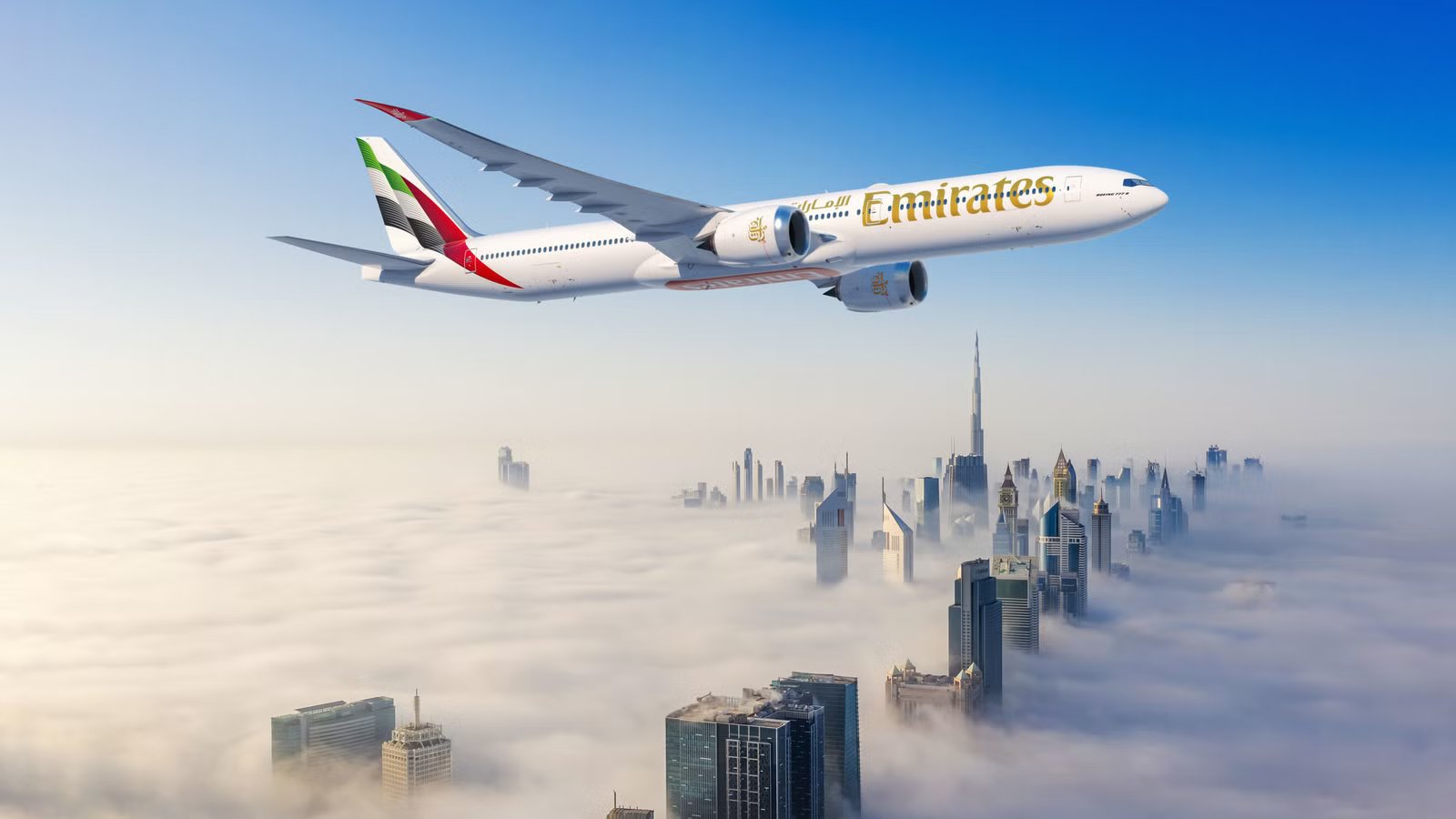
 Emirates has unveiled its upcoming Boeing 777X cabin through renderings revealed in a recent video. The twin-engine widebody will feature a mid-cabin social lounge accommodating up to eight passengers, complete with a self-serve snack bar decorated with the airline’s signature. This concept adapts the popular Airbus A380onboard lounge experience to a smaller aircraft. In addition, business class will shift to a more competitive 1-2-1 layout, while Emirates is also rolling out complimentary Starlink WiFi across its widebody fleet.
The 777X is intended to compete with the iconic A380, of which Emirates operates around 116 aircraft. With the A380 no longer in production, the airline has selected the 777X as its future flagship. This raises an important question: can the 777X truly match or replace the A380 experience?
Emirates 777X Launch & Cabin Reveal

The 777X program was launched in 2013 as the successor to Boeing’s highly successful 777 family. Its objective was to strengthen Boeing’s position in the competitive long-haul widebody market, particularly against the A350 and A380, by offering greater capacity alongside improved fuel efficiency and operating economics.
However, the 777X has become one of the most delayed aircraft programs in recent aviation history. Originally expected to enter service much earlier, its introduction is now projected around 2027. Emirates, the program’s largest customer, is expected to begin integrating the aircraft into its fleet between 2027 and 2038.
Emirates’ commitment to the 777X is unmatched. At the 2025 Dubai Airshow, the airline placed an additional order for 65 777-9 aircraft, bringing its total to 270. This is more than double that of any other customer. Already the world’s largest operator of the 777, Emirates sees the 777X as the natural evolution of its fleet and the future flagship, particularly as the A380 is no longer in production.
This transition is not without risk. Recognizing that customer-facing technology, particularly in seating, inflight entertainment, and connectivity, had advanced significantly, Emirates abandoned its original 777X seat designs. This decision came at a cost of around €20 to 30 million but was considered necessary to remain competitive. Despite placing an order for 270 777X aircraft, Emirates has yet to receive a single jet. Tim Clark noted that, as early as 2019, the aircraft was close to readiness, though key features were still missing. The airline is also exploring the possibility of a further stretched variant, informally referred to as the “777-10”, although this remains at a feasibility stage rather than a confirmed development.
In a recent promotional video celebrating Emirates’ growth and the legacy of its long-time president, Sir Tim Clark, the airline offered an indirect first glimpse of the new 777X cabin. The video featured renderings of the upcoming business class seat, effectively “leaking” key design elements.
This raises two key questions: what exactly do these early visuals reveal about the passenger experience, and can the 777X cabin truly replace the benchmark set by the A380?
The New 777X Business Class

The transition from the A380 to the 777X marks a clear shift in Emirates’ premium strategy, balancing product upgrades with operational realities. Based on what is visible at the 7:45 mark in the video, the 777X business class represents a significant improvement. The move from a 2-3-2 layout to a 1-2-1 staggered configuration with sliding privacy doors aligns Emirates with industry-leading standards. The new seats appear to reflect a continued partnership with Safran, likely based on the Unity platform already in service with Japan Airlines’ A350-1000 and selected by carriers such as Riyadh Air and Qantas. This suggests a focus on reliability and refinement rather than radical innovation.
Design choices such as warmer color palettes and the removal of central overhead bins help create a greater sense of openness within the narrower twin-engine fuselage. These elements are clearly intended to offset the A380’s spatial limitations.
However, these gains come with notable trade-offs. The A380’s defining advantage lies in its sheer physical space and flagship experience. Its upper-deck business class already offers fully flat beds up to 79 inches (200 cm), direct aisle access, and premium finishes. More importantly, it provides a sense of openness and exclusivity that the 777X cannot fully replicate, even with improved seat design.
Ultimately, passengers gain a more modern, private, and competitive business class product, but lose the space, social atmosphere, and distinctive identity that made the A380 a flagship experience.

Emirates A380 Business Class Review: Near Perfect?
Emirates is the largest A380 operator globally.
777X’s Mid-Cabin Social Lounge

An interesting development from the A380 is the evolution of the onboard social space, where Emirates is balancing experience with efficiency.
According to the video, Emirates introduces a mid-cabin lounge on the 777X. It is positioned between two business class sections and seats up to eight passengers. The space is arranged with four seats on either side, centered around what appears to be a self-serve snack and refreshment bar, and decorated with the airline’s Ghaf tree motif. Renderings suggest a structured, relatively compact layout, with a two-seat sofa paired with individual seats opposite, along with small design touches such as lamps, magazines, and a screen-controlled entertainment system. The lounge is located near emergency exits but does not occupy as much space as the A380 bar.
By contrast, the A380’s onboard bar is a defining feature of the aircraft’s premium identity. Located at the rear of the upper deck, it functions as a fully staffed cocktail lounge where passengers can stand, walk around, and socialize freely. The space is significantly larger, with leather seating, standing areas, and a bartender serving freshly made drinks, creating a dynamic and interactive environment. Following its 2017 redesign, the bar adopted a lighter, yacht-inspired aesthetic, with ivory and champagne tones, woodgrain accents, and a mix of seating options, including communal tables and L-shaped benches. This layout encourages movement and interaction, reinforcing its role as a social hub rather than just a seating area.
The transition from the A380 to the 777X, therefore, represents a clear trade-off. While Emirates retains the concept of a social lounge, it is scaled down in size, service, and atmosphere, reflecting the economic constraints of a twin-engine aircraft.
Ultimately, passengers gain a quieter, more controlled space, but again lose the openness, service element, and vibrant social experience that made the A380 bar a standout feature.
High-Speed Starlink WiFi

A further area of change in Emirates’ transition from the A380 to the 777X lies in onboard connectivity, where the airline is making a significant leap forward.
Emirates has begun installing SpaceX’s Starlink WiFi across its entire widebody fleet, with the rollout starting on 777 aircraft and expected to be completed by mid-2027 across 232 Airbus and Boeing jets. This includes a major investment of around $5 billion in retrofitting aircraft, signaling how central connectivity has become to the passenger experience. The service will be free, high-speed, and accessible without membership, allowing passengers to stream content, work, play games, and browse simultaneously on personal devices and seatback screens.
In this regard, the 777X stands to benefit directly. As a next-generation flagship, it will almost certainly feature Starlink from the time of entry into service, positioning Emirates ahead of many global competitors. This is particularly important given that rivals such as Qatar Airways have already begun rolling out Starlink on their 777 and A350 fleets, intensifying competition in the premium long-haul market.

Compared to the A380, this represents a clear gain. While the A380 has long been associated with physical luxury and onboard amenities, connectivity is now becoming equally important to passengers, particularly in business class. The shift towards fast, free, and reliable Wi-Fi enhances productivity and entertainment, aligning with evolving passenger expectations.

Emirates To Equip 200+ Aircraft With Starlink Internet
All the airline’s planes will offer Starlink by 2027.
S Lounge Seats By Safran

When positioned against competitors, Emirates’ new “S Lounge” business class seats by Safran place the airline firmly back into the top tier, but not necessarily at the very top. Features such as wireless charging, 4K entertainment screens, and customizable lighting bring the 777X in line with modern expectations and close the gap that had opened during program delays. However, Qatar Airways’ QSuite still sets the benchmark in business class, offering greater flexibility with its double bed configuration and adaptable “quad” seating, allowing passengers to transform the space into a shared social or work area. Similarly, while Singapore Airlines operates in a higher class altogether with its A380 Suites, its product highlights what Emirates is moving away from: exceptional space, fully separate beds, and a room-like experience. As a result, Emirates’ 777X business class positions itself as a highly competitive, refined product that restores parity with leading airlines but doesn’t seem to attempt to redefine the market the way its rivals have.