dailynewsnblog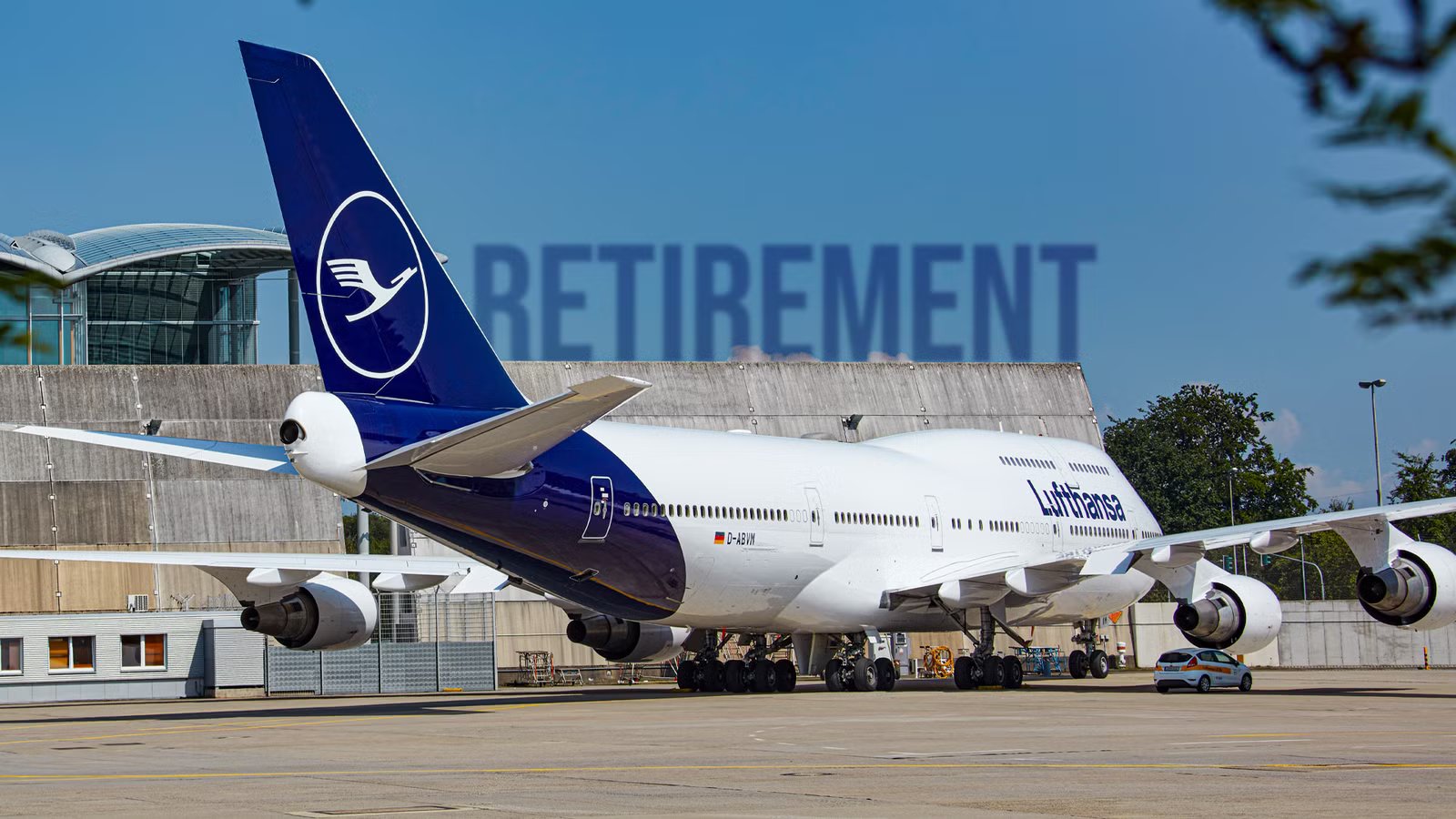
 Lufthansa’s decision to accelerate the retirement of its four-engine aircraft marks a significant shift in long-haul aviation strategy. For decades, quadjets like the Airbus A340 and Boeing 747 symbolized intercontinental travel, offering range, redundancy, and prestige. At its peak, Lufthansa operated more than 60 four-engine aircraft across these families, making it one of the largest quadjet operators in the world.
However, the economic and operational environment that once justified their existence has changed dramatically, forcing airlines to rethink their role much sooner than expected. What’s unfolding now is less about sentiment and more about survival in a high-cost, high-uncertainty industry. Jet fuel alone can account for 25–35% of an airline’s operating costs, and recent spikes have pushed that even higher.
Combined with aircraft delivery delays, labor disputes, and supply chain issues, Lufthansa is now fast-tracking decisions that were originally planned for the late 2020s. The result is a rapid transition toward more efficient twin-engine aircraft like the Airbus A350 and Boeing 787, and a definitive step away from an era of four-engine dominance.
The Sudden Acceleration Of Retirement Plans

Lufthansa had already planned to phase out parts of its quadjet fleet over time, but recent developments have significantly compressed that timeline. The Airbus A340-600, for example, is now scheduled to leave the fleet by October 2026, several years earlier than initially expected. Similarly, the Boeing 747-400, once the backbone of Lufthansa’s long-haul network with dozens of aircraft in service, is being progressively grounded, with full retirement likely by 2027.
In some cases, aircraft are being parked or used less frequently ahead of their official retirement dates, reflecting how quickly the economics have shifted. This acceleration reflects a move away from carefully staged, long-term fleet planning toward more immediate, cost-driven decisions. Airlines typically operate widebody aircraft for 25–30 years, extracting maximum value over decades of service. Lufthansa’s A340-600s, many delivered in the early 2000s, are approaching that window, but not all have reached the end of their economic life.
Despite that, the airline is choosing to retire them early, even if it means absorbing financial write-downs, because the rising costs of fuel, maintenance, and operations now outweigh the benefits of keeping them in service. In practical terms, this will lead to a visible and rapid transformation of Lufthansa’s fleet.
Within just a few years, aircraft that once defined the airline’s long-haul identity will largely disappear from schedules, particularly on routes out of Frankfurt and Munich. They will be replaced by newer-generation twinjets like the Airbus A350 and Boeing 787 Dreamliner, and, eventually, the 777X, which offer improved efficiency, lower operating costs, and greater flexibility, marking a decisive shift in how Lufthansa approaches long-haul flying.
Fuel Costs Are Driving The Decision

The most immediate and powerful force behind Lufthansa’s move is the sharp rise in fuel costs, which has been amplified by renewed geopolitical instability in the Middle East, particularly tensions involving the 2026 Iran Crisis and the wider Strait of Hormuz region, a critical chokepoint for global oil and refined fuel shipments. In 2024–2026, jet fuel prices have at times exceeded the equivalent of $100 per barrel, with volatility spikes triggered by supply fears, sanctions uncertainty, and disruption risk to shipping routes.
Even short-lived escalations in the Iran crisis have tended to ripple through oil markets quickly, tightening global supply expectations and pushing up aviation fuel hedging costs for airlines like Lufthansa. Quadjets are especially exposed to this kind of fuel volatility. A four-engine aircraft like the Airbus A340-600 can burn roughly 10–15% more fuel per seat compared with a modern twin-engine aircraft such as the Airbus A350 on similar routes.
On a single transatlantic flight, that difference can amount to several additional tonnes of jet fuel, translating into tens of thousands of dollars in extra operating cost per sector, costs that become far more painful when fuel prices spike due to geopolitical shocks. For Lufthansa, which operates hundreds of long-haul flights every week across its Frankfurt and Munich hubs, these inefficiencies scale rapidly into millions of euros in additional fuel expenditure.
When combined with geopolitical fuel price shocks linked to the Iran crisis and broader supply uncertainty, quadjets become disproportionately expensive to operate. Retiring them early, therefore, becomes one of the most immediate and effective ways for Lufthansa to reduce exposure to volatile fuel markets and stabilize operating costs.

42 Days To Empty: EU Scrambles For US Fuel As Mass Flight Cancellations Loom
Due to fuel supply from the Middle East being disrupted, the EU is now turning to countries such as the US and Nigeria to increase jet fuel imports.
The Efficiency Gap Between Old And New Aircraft

Modern twin-engine aircraft such as the Airbus A350 and Boeing 787 have fundamentally reshaped long-haul economics. These aircraft use advanced composite materials, accounting for more than 50% of the airframe by weight, and next-generation engines that deliver significantly better fuel burn and lower emissions.
The efficiency gap is substantial. Compared to older quadjets, aircraft like the A350 can reduce fuel consumption and CO₂ emissions by 20–25% per seat. They also offer an improved range, allowing airlines to operate ultra-long-haul routes more efficiently without the need for four engines.
For Lufthansa, this translates directly into competitive advantage. Lower fuel burn not only reduces costs but also helps meet increasingly strict environmental regulations in Europe, including carbon pricing under the EU Emissions Trading System. Continuing to operate older quadjets alongside these newer aircraft creates a growing economic and regulatory disadvantage.
Maintenance & Operational Complexity

Airbus A340-600 carries a structurally higher cost base.
This is the case even before considering airframe aging or operational disruptions. Each additional engine also increases the likelihood of technical issues, which can cascade into more frequent unscheduled maintenance events and higher logistical complexity. As these aircraft age, the challenge becomes even more pronounced. Lufthansa’s A340-600s are typically around 15–20 years old, and older airframes naturally require more intensive inspection regimes, including heavier checks at shorter intervals.
This results in higher parts replacement rates, longer maintenance downtimes, and reduced aircraft availability for scheduling. In addition, sourcing components for aircraft types that are no longer in production can become increasingly expensive and time-consuming, particularly when suppliers shift focus toward newer platforms like the Airbus A350 or Boeing 787. Over time, this creates a compounding cost burden that makes continued operation economically harder to justify.
Reducing fleet complexity is therefore a major strategic priority for Lufthansa. By transitioning away from multiple legacy aircraft types toward a smaller number of modern, standardized platforms, the airline can significantly streamline its maintenance ecosystem. This includes fewer spare parts inventories, simplified engineering training, and more efficient scheduling of heavy maintenance checks. Over time, this also improves operational reliability, since newer aircraft tend to have higher dispatch rates and fewer unscheduled technical delays.

The Aircraft Set To Replace The World’s Largest Commercial Jet
A new era is dawning as the superjumbo fades away, but which aircraft will replace it?
Broader Restructuring Within Lufthansa

The retirement of quadjets is part of a broader restructuring effort within the Lufthansa Group. Like many European airlines, Lufthansa has faced rising labor costs, operational disruptions, and increasing competition from both low-cost carriers and Gulf airlines. In response, the group is implementing cost-cutting measures and restructuring parts of its business. This includes reducing capacity, optimizing routes, and shifting some operations to lower-cost subsidiaries.
For example, certain long-haul services are being reassigned to more cost-efficient divisions within the group. Financially, these changes are significant. Lufthansa has targeted billions of euros in cost savings over the coming years, and fleet simplification plays a key role in achieving those goals. Retiring inefficient aircraft is one of the most direct ways to improve margins in a highly competitive industry.
The End Of An Era Is Being Accelerated

Lufthansa’s decision underscores a broader shift across the aviation industry. At their peak in the early 2000s, quadjets like the Boeing 747 and Airbus A340 dominated long-haul travel, but today the vast majority of new widebody aircraft orders are for twin-engine models. Production of the A340 ended years ago, and even the passenger version of the 747 has ceased production, reflecting how decisively the market has moved on.
Airlines worldwide are now prioritizing efficiency, with newer aircraft delivering 20–25% lower fuel burn and significantly reduced emissions. What was once expected to be a gradual transition has instead become a rapid transformation. External pressures, particularly sustained high fuel prices, stricter environmental regulations, and ongoing supply chain disruptions, have accelerated the decline of four-engine aircraft well beyond earlier projections.
Lufthansa’s continued, but temporary, use of the Airbus A380 highlights this tension: while high-capacity quadjets can still be viable on dense routes, their long-term future remains uncertain as more efficient replacements arrive. Ultimately, this marks the closing chapter of a defining era in aviation. Quadjets will remain iconic symbols of global travel, but their role in everyday airline operations is fading quickly. As Lufthansa and its peers modernize their fleets, the industry is decisively shifting toward aircraft designed for efficiency, flexibility, and sustainability.