dailynewsnblog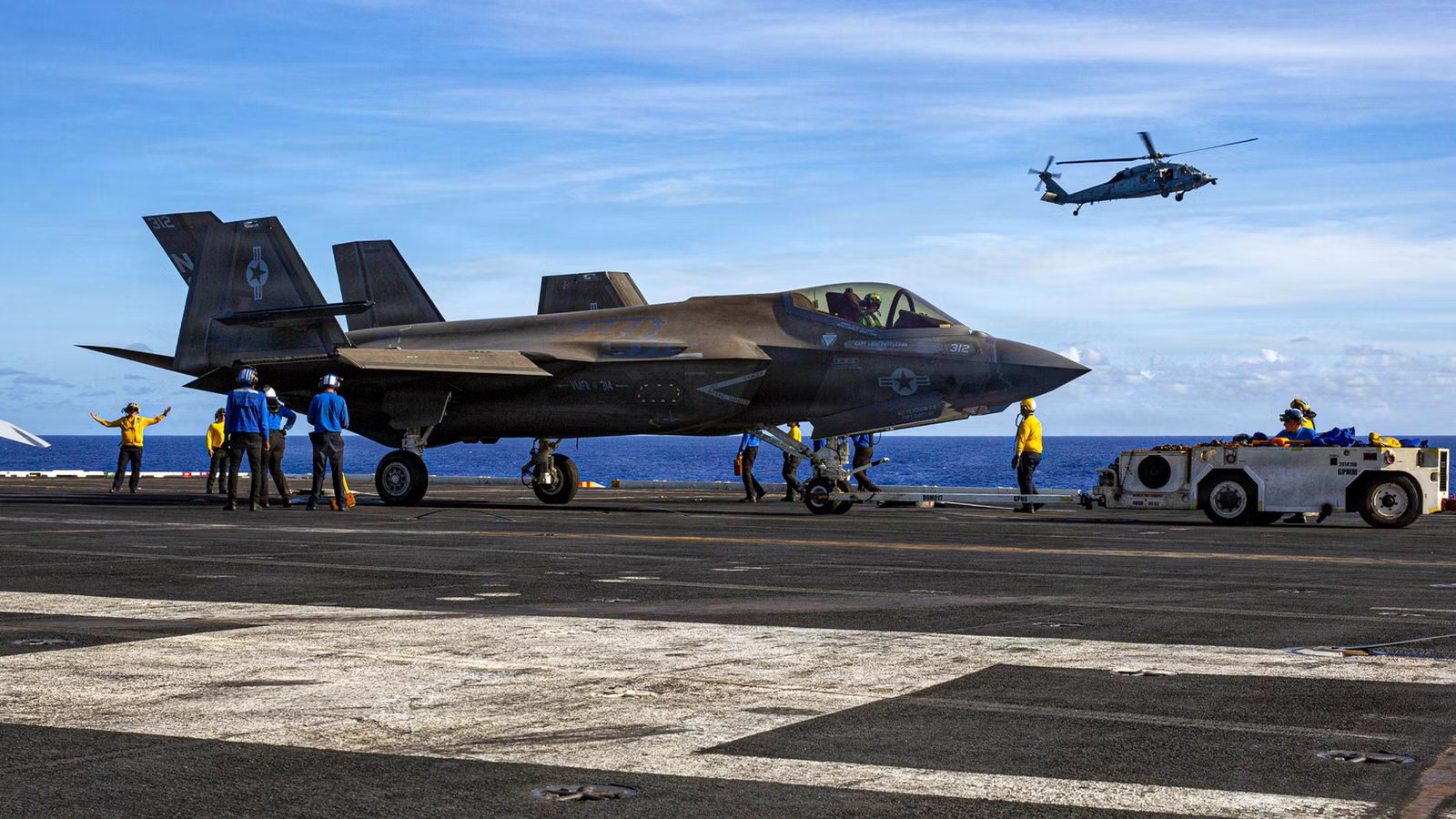
The most technologically advanced carrier-capable fighter jet in the world is currently the Lockheed Martin F-35C Lightning II. However, even with all of its incredible technology, the aircraft still has to hit the deck of an aircraft carrier and essentially come to a halt in a controlled crash every time it lands on the ‘boat.’ Even with digital assistance, there is zero margin for error as the pilot must snag one of four arresting wires with a tailhook while the ship’s stern can pitch vertically by up to 20 feet in rough seas.
The impressive amount of computerization and modern Avionics in the F-35C has made it safer and smoother for pilots than ever before, but going from 155 mph to zero is still a wild ride. Unlike land-based runways, a carrier deck is constantly pitching, rolling, and yawing. Pilots must continuously adjust speed, altitude, and angle of attack to stay aligned with the ship’s motion.
What defines tailhook aviation in the US Navy is bringing an aircraft down to a ‘trap’ on the deck. Successfully catching the wire with a plane’s hook brings the 31,800-kg F-35C to a dead stop in just 320 feet, subjecting the pilot to extreme G-forces. Fat Amy, as the jet is also called, has some of the best automation there is, but putting that 5th-Generation, stealth fighter safely down on the deck ultimately requires a skilled pilot at the controls.
Naval Aviation At A Glance: Landing On The Boat Step-By-Step

Roughly 1.5 miles from the ship, the pilot performs landing checks: wings unlocked, flaps full, and hook down. The pilot turns into the groove,’ aka the final straight approach, which typically lasts less than 20 seconds. The pilot monitors the Optical Landing System, or the ‘meatball,’ on the carrier deck. An amber light aligned with green horizontal lights indicates a perfect glide slope. And the pilot must evaluate, decide, and act almost instantly to any abnormality.
The instant the wheels hit the deck, the pilot slams the throttle to full military power, or max afterburner. This ensures that if the hook misses the wire, which is known as ‘a bolter,’ the jet has enough speed to take off again from the end of the deck and not crash into the water. This is one of the worst-case scenarios, as the aircraft carrier can run over the plane in the water.
If the hook catches a wire, the jet is pulled to a stop in about two seconds. The pilots aim for the #3 wire ideally, known as the sweet spot. Only after a complete stop does the pilot pull the throttle back to idle. If the F-35C cannot catch a wire due to a mechanical failure, like a broken hook, the carrier can deploy a barricade as a backup. This is a large net made of heavy straps to forcibly stop the plane as a last resort.
The Next Era Of Tailhook: Inside The F-35C

Instead of the pilot manipulating the nose pitch to change altitude, the F-35C uses large trailing-edge flaps to heave the airplane up or down through Integrated Direct Lift Control. This provides an immediate response without changing the aircraft’s pitch, making glide path corrections much more stable.
The Precision Landing Mode system decouples flight controls and pilot input. The computer calculates the ship’s speed and movement, maintaining a perfect 3-degree glide slope. The pilot focuses on the lineup, or horizontal alignment, while the jet handles the descent rate. And on approach, the F-35C is designed to be an auto-throttle flyer. The pilot engages the throttles, and the jet manages engine power to stay on-speed for the specific landing weight.
While the ‘magic carpet,’ as the Delta flight path PLM programming is called, offers exceptional computer assistance, the performance of the F-35C is also unique to carrier aviation. Flying the F-35C feels similar to the F/A-18E/F Super Hornet in terms of handling and angle-of-attack, or alpha, but it offers significantly more power at lower altitudes on top of advanced automation. The F-35C’s single F135 engine provides more low-end power and better energy recovery than the Super Hornet’s twin F414 engines, especially when both are in combat configurations.

Inside The F-35’s Cockpit System
At the controls of flying supercomputer.
Strike Fighters Head-To-Head: The Rhino Versus Fat Amy

As a non-stealth aircraft, the Super Hornet depends on jamming pods and sheer numbers to survive. Its truck-like capacity to carry a wide range of external weapons on eleven distinct hardpoints is an advantage. The F-35C is a Very Low Observable (VLO) platform designed to evade radar detection. Its main strength is its ability to slip through sophisticated integrated air defense systems undetected, something the Super Hornet just cannot do, even though it can carry external weapons in a Beast Mode configuration once air superiority is established.
Despite being tailhook versions, the two aircraft handle the boat in different ways. Flying the Super Hornet is a tactile, hands-on experience. The engine configuration is the most obvious physical difference. Because the Super Hornet is powered by two GE F414 engines, it offers the redundancy that naval pilots have historically valued for overwater operations. When loaded with external bombs and tanks, the aircraft becomes extremely draggy and rapidly loses energy during a dogfight. The F-35C, on the other hand, has a single, enormous Pratt & Whitney F135 engine.
|
Specification |
F-35C Lightning II |
F/A-18E Super Hornet |
|---|---|---|
|
Length |
51.5 feet (15.7 meters) |
60.3 feet (18.38 meters) |
|
Wingspan |
43.1 feet (13.1 meters) |
44.9 feet (13.68 meters) |
|
Max Takeoff Weight |
70,000 pounds (31,751 kilograms) |
66,000 pounds (29,937 kilograms) |
|
Max Thrust (Wet) |
43,000 lbf (191.27 kN) |
44,000 lbf (195.72 kN) |
|
Internal Fuel |
19,750 pounds (8,958 kg) |
14,400 pounds (6,531 kg) |
The F-35C stays clean and retains its superior acceleration and maneuverability because it carries its weapons and fuel internally. The F-35C features the largest wingspan of all Joint Strike Fighter variants at 43 feet, specifically to provide the lift required for slow, stable approaches to the flight deck. The Navy’s JSF is much more stable and safer to land on a pitching deck at night thanks to its improved performance and Delta Flight Path software, which was incorporated into its design from the beginning.

How The Boeing F/A-18 Super Hornet Stacks Up Against The F-35C In 2026
The US Navy’s strike fighters go head-to-head.
The Burden Of Technology: Inside The Cockpit Of The F-35C

Because the software takes care of the mechanical, modern pilots frequently refer to the F-35C landing as an administrative task because the mental load has changed. The pilot is now a system manager who must confirm that the computer is responding appropriately to a pitching deck rather than flying the meatball by hand. If the technology malfunctions in the last 100 feet, the pilot will hardly have time to assume manual control and rescue the aircraft.
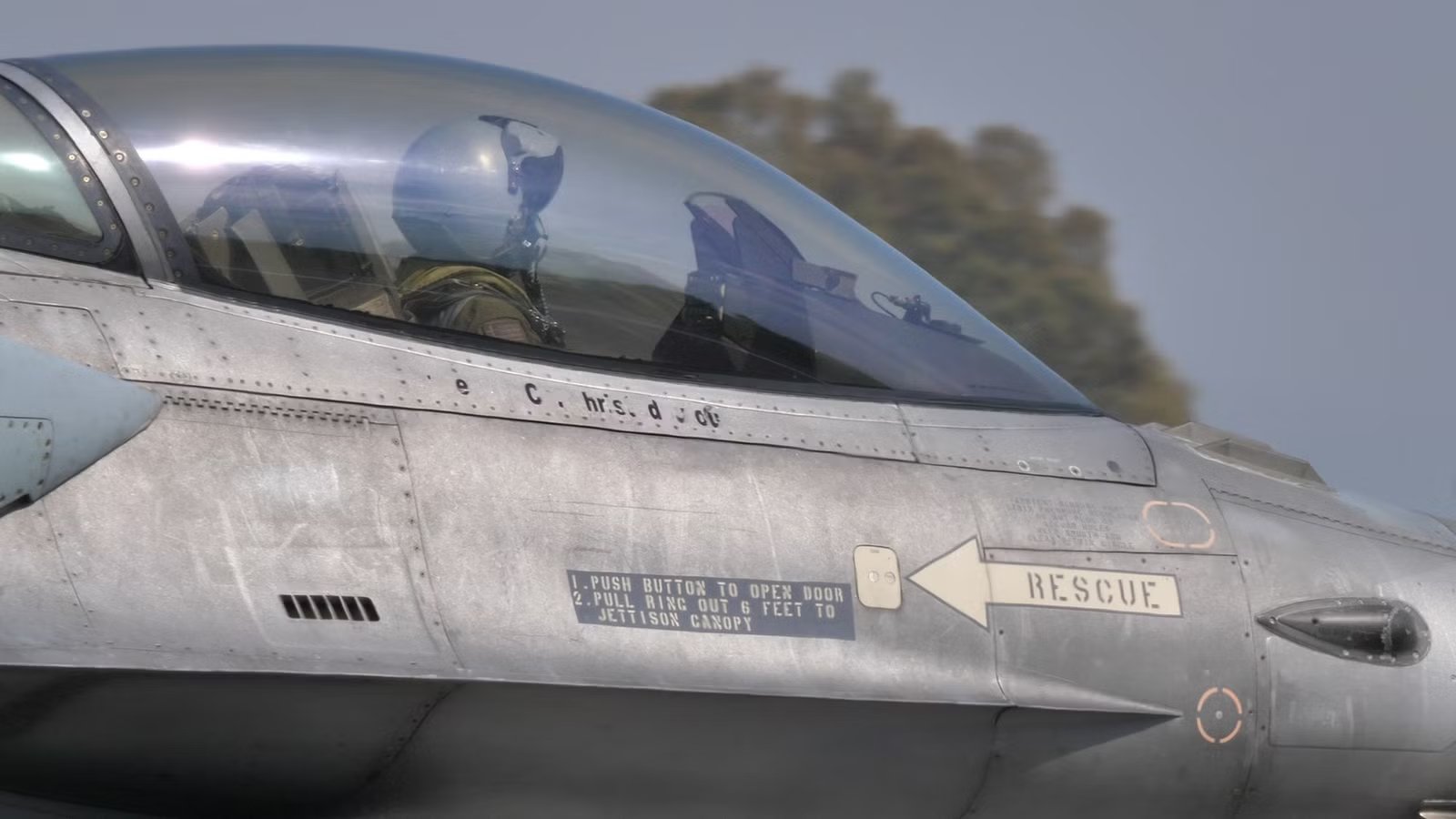
During the final approach, a carrier’s stern can pitch up and down violently. The pilot is keeping an eye on several layers of data, including the ship’s position, possible threats, and aircraft health, while the jet controls the glide slope. One incorrect reading of the Helmet Mounted Display signals at 155 mph (250 km/h) might result in a bolter (missing the wire) or a potentially fatal ramp strike. Pilots have reported that these oscillations can be so severe that the digital symbology in the helmet becomes a blur, forcing them to rely on instinct and muscle memory.
One of the issues that has persisted for F-35C pilots has been light leakage in the HMD Generation III helmet. In complete darkness, the LED backlight might create a green haze on the visor, making it difficult to see the modest lights of the carrier deck. The Gen III helmet is also quite hefty, weighing around five pounds. During the high-G impact of an arrested landing, that weight is tripled, putting significant strain on the pilot’s neck and making it more difficult to keep their eyes exactly aligned with the optical sensors essential for touchdown.

US Navy Pilots In Training Will Now Make Their 1st Carrier Landing In An F/A-18 Or F-35
No tailhook required to earn wings of gold?
A Little Help From The Boat: The Ford-Class Carrier Advanced Arresting Gear

The Navy continuously attempts to make operations safer, smoother, and less taxing for both the aircrew and equipment. The Ford-class is the latest generation of aircraft carriers and features a very long list of innovative technologies that is highlighted by the magnetically powered catapult launcher but complemented by a superior evolution of landing equipment as well.
The Advanced Arresting Gear (AAG) is a next-generation, computer-controlled system on Ford-class carriers that replaces the legacy ‘steam-powered’ electric and water turbine technology. By providing precise energy absorption, the AAG offers a “softer,” tailored stop for diverse aircraft, ranging from heavy F-35C Lightning IIs to lighter unmanned aerial vehicles.
Despite all of this innovation in both the aircraft and on the boat, landing a fighter jet on the deck of a moving ship remains virtually the most dangerous thing that any pilot can do in the world. The flight deck is also one of the most dangerous places in the world to be and is considered one of the most hazardous work environments that exists. For these reasons, the tailhook community will remain one of the most elite groups in the aviation world, with the prestigious wings of gold worn by Naval aviators and Naval flight officers, a coveted testament to their skill and courage.