dailynewsnblog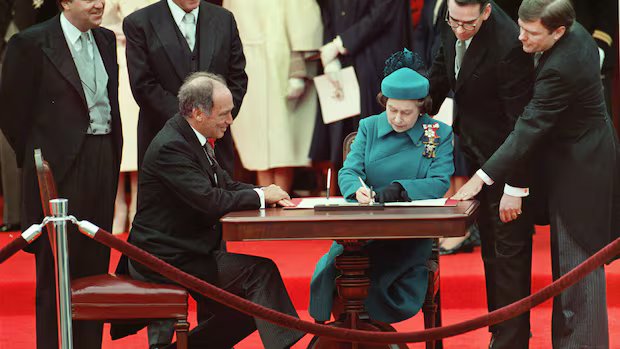
Canada’s Justice Minister Sean Fraser says he has significant concerns with the way the provinces are overriding Charter rights by invoking the notwithstanding clause, and he’s prepared to establish guardrails around its use as the document turns 44.
Fraser made the comments to CBC News during a tour of Library and Archives Canada’s preservation centre in Gatineau, Que., where he saw for the first time the original Canadian Charter of Rights and Freedoms document, which was signed on April 17, 1982.
“If the rights that we have written in the Charter of Rights and Freedoms are existing on paper, but not enjoyed in our communities, is the Charter worth the paper on which it’s written?” Fraser asked.
“We have to strive not to uphold the document in a perfect form, locked away in the archives, but to actually ensure that we breathe life into those ideals.”
The notwithstanding clause is a constitutional provision in Section 33 of the Charter that allows federal, provincial and territorial governments to temporarily override specific Charter rights for a period of up to five years, unless re-enacted. Once invoked, the clause prevents court challenges on grounds such as freedom of expression, equality rights and religion.
Section 33 is only supposed to be used as a measure of last resort in exceptional circumstances, but provinces are frequently turning to it to bypass judicial reviews.

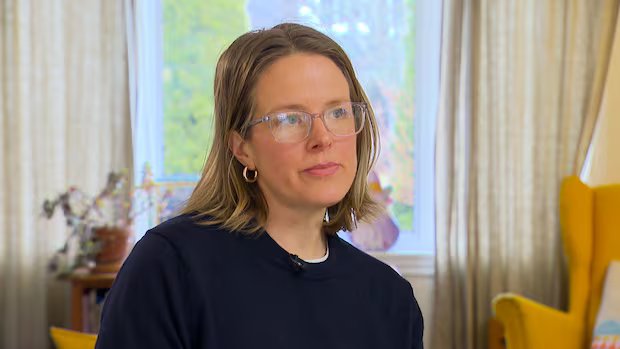
Justice Minister Sean Fraser discusses whether the Canadian Charter of Rights and Freedoms has lived up to its promises.
“I do have significant concerns, both of a legal and public policy nature, about the repeated invocation of the notwithstanding clause, which is being used by governments to adopt laws that, in my view, do violate or could violate the rights of Canadians,” Fraser said.
“We’re going to do what we can to protect the Constitution and protect the ability of Canadians to live freely in this country with the full protection that the Charter is intended to provide.”
Fraser said he’s not considering constitutional amendments, but is open to clarifying how the controversial clause should be used after the Supreme Court of Canada has its say.
In the coming months, the top court is expected to release a decision in a landmark case regarding Quebec’s use of the notwithstanding clause to pre-empt challenges to its secularism law, Bill 21, which bans some public employees including teachers from wearing religious symbols on the job.
The Charter’s ‘slow death’
Quebec has used the notwithstanding clause more than any other province, but Saskatchewan, Alberta, Ontario and the Yukon have also made Section 33 declarations.
Fraser said he’s interested in drawing a framework around the appropriate use of the notwithstanding clause, but would prefer to get clarity from the high court in the Bill 21 case first.
University of Ottawa law professor Errol Mendes said the federal government shouldn’t wait.
“The sooner they do it the better, and not just wait for a decision, which may disappoint people,” Mendes said. “I’m really concerned that what we are seeing is, in my view, a slow death of the Charter due to the excessive use of the notwithstanding clause.”
Fraser said he’s considering taking up a proposed law by Ontario Sen. Peter Harder, Bill S-218, to amend the Constitution Act and establish conditions for Ottawa’s use of the notwithstanding clause.

Parliament has never invoked Section 33 of the Charter, but Conservative Leader Pierre Poilievre said he would.
“We should be very careful in abrogating individual rights and freedoms that are guaranteed in the Charter,” Harder warned.
“Canada has always been a beacon of human rights protections of minorities, and when they are being questioned and being assaulted in various legislatures, I think the Government of Canada can send a clear signal that the Charter of Rights and Freedoms of Canada is definitional.”
Every time Section 33 is invoked, that is a nail in the coffin of the Charter.– Martha Jackman, professor emeritus, University of Ottawa
Manitoba has introduced legislation that would require any provincial legislation invoking Section 33 of the Charter to be automatically referred to the Manitoba Court of Appeal for an opinion on whether it violates Charter rights. Harder said he hopes other provinces will follow.
“The Charter is really at a turning point,” said Martha Jackman, a University of Ottawa professor emeritus specializing in constitutional law. “Every time section 33 is invoked, that is a nail in the coffin of the Charter.”
Federal government facing scrutiny
On the 44th anniversary of the Charter, Jackman said there are also questions about whether the document is living up to its promise.
She said it can be difficult to invoke Charter rights in social justice cases, such as those involving encampment evictions or government inaction on climate change.
“It’s still there and still has a lot of potential,” said Bill Black, a professor emeritus focused on Charter rights at the University of British Columbia.
“When you look at what’s going on in the United States, I think we’re very lucky to have the Charter and to have the court that we have interpreting it.”
The federal government is facing scrutiny for upholding Charter values after it asked the Supreme Court of Canada to consider an appeal of a Federal Court of Appeal decision that found its invocation of the Emergencies Act during the 2022 convoy protest in Ottawa was unconstitutional and violated the Charter rights of participants.

Martha Jackman, University of Ottawa professor emeritus specializing in constitutional law, says the Charter is at risk of becoming meaningless.
It’s also facing criticism from religious groups and the Conservative Party over concerns that the government’s anti-hate legislation, Bill C-9, limits religious freedom — something Fraser denies.
While he’s considering federal parameters to the notwithstanding clause, Fraser said he’s not the provinces’ babysitter on the use of Section 33.
The justice minister also said he’s against invoking disallowance for the pre-emptive use of the notwithstanding clause, which was proposed and voted down at the Liberal convention earlier this month in Montreal.
“The remedy for a position taken by a sitting government, at one level or of another, is not to have a heavy-handed solution come down from the federal government, but it’s for citizens to exercise the rights that are protected by the Charter — to associate, to freely discuss their thoughts, and importantly, to vote,” Fraser said.