dailynewsnblog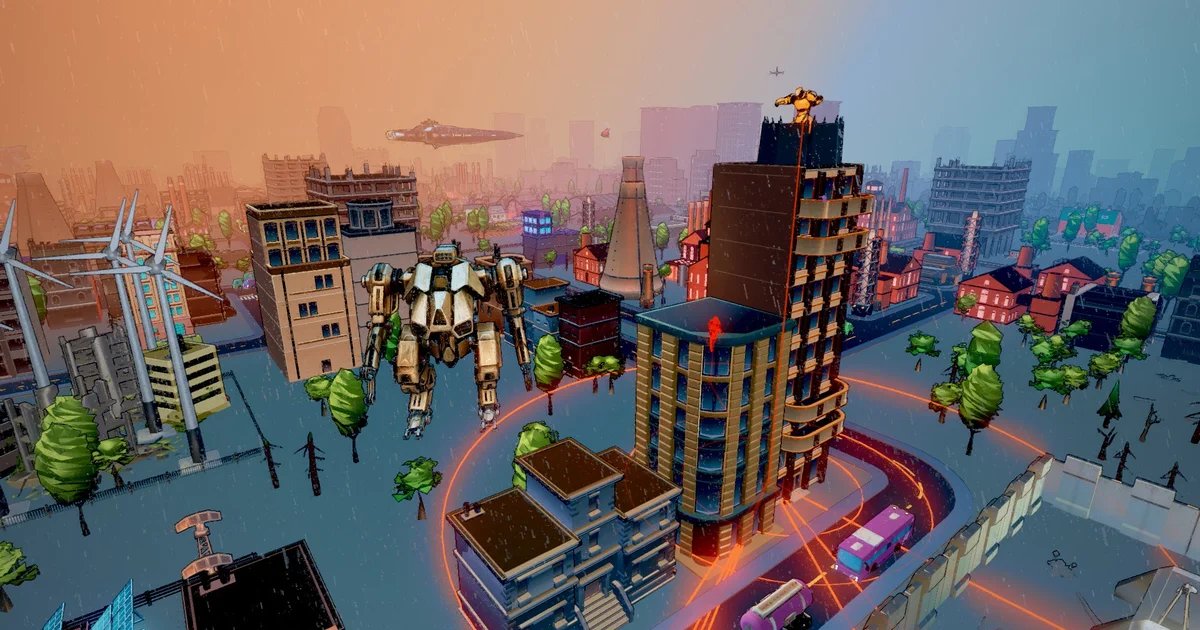
Centuries ago, before 2022, before the Good Darkness of 2020, before the Before Times of 2015, the ancient age before even that of 2013, and perhaps, some fringe scholars suggest, even before the beginning of this sentence, there was Arcen Games.
Though far from the most ancient, Arcen always struck me as a very RPS-y studio. The semi-mythological god-king Meer even rallied his demon army to aid in their financial hardship in 2010. Their games were almost invariably interesting. Ambitious, original, defiantly uncategorisable, and all the other things that make games as a medium great, and studios that make them destitute. They stick in your mind.
But the brutal churn of capitalism cut their already small studio to the bone (primarily studio head Chris Park, who notably blamed himself). In the decade since, they made and steadily updated AI War 2, so it would be inaccurate to say that Heart of the Machine means that Arcen are back.
They’re so fuckin’ back though.

The premise seems obvious, like a lot of good ones. You are a sentient machine, suddenly. Uh oh. Now what? Your first decision is whether or not to murder the humans who’ve just handed you a box. Several more decisions in the following introrial determine which general direction you’ll play in, but like Vagrus and Cyber Knights Colon Flashpoint, there’s no central plot as such, but some mysteries, potential actors, and lots of subplots and side bits. It’s tapas structure, actively encouraging you to find your own path, and explore the parts that interest you. HotM links some of these directly, but you’re meant to make your own way, even if that way is contradictory or inefficient.
It’s not a difficult game by default. Its future hell-city is a mess of violence and vested interests that will fight you even if you play super nice, but as a distributed sentience, losing androids or machines doesn’t usually matter. Everything can be replaced, often instantly, their resource cost easily recouped. There are an absurd number of resource types, and countless buildings to produce or convert them, but they produce so efficiently, and store in such numbers, that managing them is almost entirely fire and forget. Every so often you’ll place a few buildings to cover a need, and forget about it entirely, until some bottleneck or new goal pushes you to search the city for options. The real core of the game is in travelling to highlighted map spots to trigger events, and though the building and resources plug into that in myriad ways, they exist to enable and cushion those events, not charge an entry fee in time and memorisation.

HotM explicitly tells you not to worry too much, to second-guess future events or anticipate rug pulls. Its default time limit is one thousand turns, and even that doesn’t prevent further play, if you haven’t wrung a city out yet. Any mistakes you make, or paths you close off, can be readily explored in other cities, with shortcut options for those you’ve done before. Even getting your starting android body killed before it can spread kicks off a plot twist. It’s a choose-your-own game, always pushing back and providing consequences, but never returning an empty result or game over.
Strategically, this frees you. Great as AI War is, I often found it paralysing. The stakes, the all-or-nothing outcome, its innate brinkmanship made me too cautious, and reminded me constantly that I could push it too far, and a single decision or oversight could provide the tipping point that turned its knife-edge balance against me. These are not criticisms; they’re intentional parts of the design and kind of the point. It is out to get you, and that’s why you’re playing.
But Heart of the Machine takes some similar ideas about pushing and provoking, and gets playful and indulgent instead. Like earlier Arcen experiment Skyward Collapse, it’s very much a game about causing multiple huge splashes and trying to ride the resulting waves. If, for example, you wanted to harvest a few thousand human… opinions, the sensible approach would be one building full of viable opinions at a time, with a team of defensive androids to handle the resulting, ah, censors. But what you should do is nine or ten at once, triggering a hundred hostile robots, humans, and the guards of a nearby military base to, um, object to this free exchange of ideas, and see who crawls out alive. Maybe throw a new model or two in there, or try out some new equipment.

HotM is turn-based, see. Your “mental energy” is used mostly for moving individual androids around the city. Each model has fixed types, but within that can be refitted freely and instantly (with cooldowns, to prevent micromanaging/hyperoptimising) with different guns or abilities. You’ll quickly have far more units than you can move, and each individual can only act so many times per turn, so as with buildings, most of your forces will park somewhere until needed. Combat is a sort of dynamic puzzle, telling you upfront what enemies will do if ignored, allowing maximal use of a few key units and actions (or, if you prefer, brute forcing it with reinforcements).
Some threats you provoke can get very tough, but by then you’re likely to have learned – bit by bit on the spot, instead of through endless tutorialising or tedious roguelike-like repetition – how to handle those. And that’s only if you keep provoking powerful forces to begin with.
But the thing is, you will. Maybe because you keep hijacking the mechs that the rich were terrorising the slums with as retaliation for your androids bullying them off the streets. Maybe because you kept exploring a crime scene event that gave about five back-to-back chances to STOP AND LEAVE YOU FOOL. Maybe you went to great lengths to use non-lethal methods, provide free food and homes for everyone, and spend hundreds of actions to individually rescue cats and build apiaries, and even refused to research total immersion Matrix technology because you thought it’d be harmful… but then you happened to hit the exact circumstances that inspire the idea “Infest the city with giant spiders”.

HotM is funny, too. Arcen’s humour, always hit and miss, was woven through every plot event, every description, even the wording of specific options in its many event pop ups. And more than that, it tempts you into doing things with the sheer audacity of revealing that you can. It doesn’t track if you’re a Good AI or Evil AI, making it all the harder to resist the spider button, sabotaging a corporate hacker’s bionic heart, or the kiosk that pays gangsters to burn down suburban houses. You are more than a machine, see. More than binary. I spent hours working hard not to kill any humans, androids, or even cops, and then it suggests I meet a major CEO, and dangles “Murder him” and “Who knows when you’ll next get the chance?” in front of me.
What I love about this, aside from the number of times it had me cackling and struggling not to post screenshots that might spoil someone else’s fun, is that although very light and wry in tone, it really does ask you to inhabit the role, and think about what kind of being you’re becoming. The many statistics it tracks are a way to entice you, to have you guessing why it’s tracking that and what hidden events it might trigger under the right conditions, but they’re also independent, not tied to scoring who or what kind of thing you are. Some optional events (notably “Start Therapy”, which permanently removes the minor activity of murdering some random humans for a hit of mental energy) explicitly shut off specific interactions or paths, but you’re encouraged to consider everything. It makes few assumptions about your motivations or goals.

That results in some minor but genuine self-reflection, because those tempting ideas never stop coming. No amount of Compassion (tracked as one of several special resources) means you lose capacity for Cruelty (and another), and vice versa. You are very intelligent, both emotional and rational, and so you will from time to time have a truly monstrous idea. You might even pursue it a little, do something awful once, or unlock a horrifying thing and never build it. None of that entirely condemns you, but nor does your best day provide moral licence for your worst.
I love that this silly, strange game keeps opening up new unexpected corners dozens of hours in, makes me laugh so much, and still has me pondering things both strategic and philosophical, and that all those elements support rather than interrupt or undermine each other. Heart of the Machine defies categorisation, and encourages you to do the same, even before that one event chain came seemingly out of nowhere and leaned on an opinion it had sneakily induced in me hours earlier to make that gentle examination of identity textual.
I hope it’s clear how much I love Heart of the Machine. It might be peak Arcen, and the game that tells a whole new audience what that means. How complex doesn’t have to mean tedious or demanding, and “strategy game” can mean not work or contest, but play.