dailynewsnblog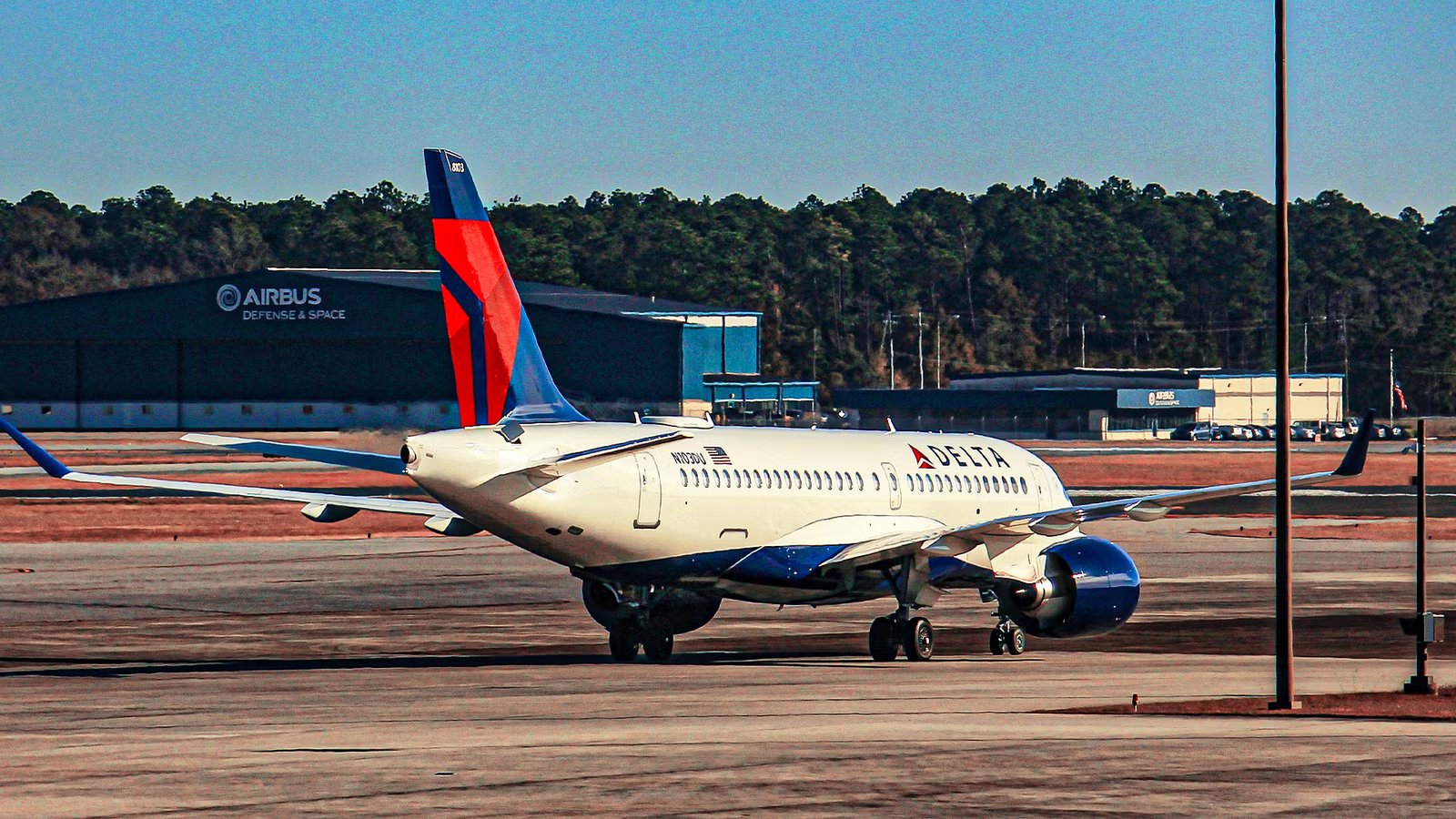
When an airline takes delivery of a brand-new aircraft, it is not uncommon to see a new Airbus plane leave the manufacturer’s facilities in Europe, North America, or Asia and fly thousands of miles before entering commercial service. Before its first revenue flight, Airbus aircraft are frequently ferried between multiple locations, usually for inspections, legal formalities, customization, or service preparation. These movements are carefully planned and form a standard part of the aircraft delivery process.
For aircraft manufactured by Airbus, this process can be especially complex due to the company’s globally distributed production network. Aircraft components are manufactured across multiple countries before being assembled at final assembly lines in cities such as Toulouse, Hamburg, Mobile, and Tianjin. After assembly is complete, the aircraft still must go through delivery procedures and airline induction before it can operate revenue flights. These stages often require aircraft to be ferried between multiple sites, sometimes traveling thousands of miles before the first passenger boards.
Over 20 Airbus Manufacturing Sites Globally

Airbus’ production model is one of the most geographically spread out in global manufacturing. The company operates more than 20 major manufacturing sites worldwide, with each facility responsible for producing specific sections or systems for its commercial aircraft. For example, in the case of the Airbus A350, Airbus’s Broughton factory in the United Kingdom manufactures the plane’s wings while the fuselage is built in Saint-Nazaire, Nantes, and Hamburg. The aircraft then comes together at Airbus’ mega-production hub in Toulouse, France.
These components must then be transported to the final assembly lines, where the aircraft is assembled. The majority of widebody aircraft, including the Airbus A350, are assembled in Toulouse. Narrowbody aircraft such as the Airbus A320neo family are assembled in several locations, including Toulouse, Hamburg, Mobile, and Tianjin. Meanwhile, the Airbus A220 is assembled primarily in Mirabel, Canada, and Mobile, Alabama. In total, Airbus has 12 final assembly lines at five locations globally, reflecting the manufacturer’s worldwide reach.
Transporting these large aircraft components between facilities requires specialized logistics. Airbus operates a fleet of oversized cargo aircraft, the Airbus BelugaXL, specifically designed to transport large aircraft parts. With its distinctive bulbous fuselage, the BelugaXL can carry large structures such as wings or fuselage sections between Airbus factories across Europe. This logistics system allows Airbus to distribute manufacturing across multiple countries while maintaining efficient final assembly operations. Once all components arrive at the final assembly line, engineers begin the process of assembling the aircraft. This stage typically takes several weeks, during which the aircraft’s major systems, avionics, cabin interiors, and landing gear are installed. However, even after the aircraft leaves the assembly line, it still requires extensive testing and inspections before it can be handed over to its customer.
Final Checks Before The Handover

Even once an aircraft rolls out of one of Airbus’ final assembly lines, it is not immediately delivered to the airline customer. Before a formal handover takes place, the aircraft must pass through a rigorous pre-delivery process designed to confirm that the aircraft meets both regulatory requirements and the airline’s specifications. The pre-delivery process typically spans four to five days and involves airline technical representatives working alongside Airbus engineers to ensure the aircraft is ready to transfer.
Airline technical teams conduct detailed inspections of the aircraft, reviewing its mechanical systems and cabin configuration. Engineers examine avionics systems, flight controls, engines, and hydraulic systems to confirm they are functioning correctly. At the same time, airline representatives check that the aircraft matches their specific configuration requirements, including seating layout, galleys, lavatories, and onboard equipment. Even small cosmetic details like paint or cabin finishings are scrutinized. If any discrepancies are noticed, Airbus immediately addresses them before the aircraft can proceed with the delivery.
Another crucial part of this phase is the aircraft’s final test flights. While aircraft undergo extensive testing earlier in the production process, these final flights ensure that all systems operate properly under real-world conditions. During these flights, engineers monitor aircraft performance and confirm that all the systems function correctly. These flights can also be conducted with airline representatives to make sure the aircraft meets all contractual performance requirements. Once these checks are completed, the aircraft receives its airworthiness certificate and is cleared for the formal handover to the airline.

A Look At How Many Planes Airbus Builds Yearly
Explore the challenges and triumphs of Airbus’ global manufacturing empire.
Delivering Airbus Aircraft To Customers

The official delivery of a new Airbus aircraft takes place on delivery day. At the Airbus delivery center, ownership officially transfers from Airbus to the airline. Documentation is finalized, aircraft registration is updated to reflect the new operator, and other important tasks are completed. Only after all the legal requirements are finished can the aircraft finally depart the delivery service bound for its new home.
Delivery days often involve both technical and ceremonial elements, especially when it is an airline’s first delivery of a certain aircraft type or a milestone delivery for Airbus. Representatives from the airline typically attend major handovers, including pilots, engineers, and sometimes senior executives. While the paperwork and technical verification are the most important parts of the process, the delivery also marks a significant milestone for both the airline and the manufacturer. Airlines often commemorate the event with photos, presentations, and occasionally special liveries celebrating the arrival of a new aircraft.
Once ownership has officially transferred, the aircraft is prepared for departure to the airline’s base. At this stage, the aircraft is legally operated by the airline and ready to leave the Airbus facility. However, the aircraft rarely entered passenger service immediately. Instead, its next flight is usually a repositioning flight that brings it to one of the airline’s operational bases for further checks and modifications.
Repositioning Aircraft From Delivery To Commercial Service

After the handover, the aircraft’s next flight is typically a ferry flight. This is otherwise known as a non-revenue repositioning flight with only essential crew onboard. The purpose of this flight is simply to move the aircraft from the delivery center to an airline’s maintenance hub where it can be prepared for entry into operational service. However, depending on the aircraft type and distance from Airbus’s final assembly line to the airline’s hub, the routing of these ferry flights can vary widely.
For airlines based relatively close to Airbus production facilities, the ferry flight may take only a few hours and remain well within the aircraft’s range. European airlines receiving aircraft from Toulouse or Hamburg can usually fly directly to their home bases. However, airlines located further away, such as those in Asia, the Middle East, or North America, may have to complete long intercontinental ferry flights with multiple fuel stops. While Airbus’s spread-out final assembly lines helps with this issue, it is still a consideration for airlines.
These flights also provide valuable operational experience for airline crews. Pilots can gain familiarity with the aircraft while operating long sectors, and engineers can monitor the aircraft’s performance during real flight conditions. Any issues that arise can be addressed before the aircraft begins carrying passengers.

End Of An Era: Airbus BelugaST #5 Set For Final Flight
The aircraft will soon be leaving the skies.
Aircraft Induction And Preparations For Revenue Service

Once the aircraft arrives at the airline’s base, it enters the induction phase before it can begin carrying passengers. Aircraft induction refers to the process of integrating the new aircraft into the airline’s operational systems, maintenance programs, and fleet management structure. This step ensures that the aircraft can be safely and efficiently operated alongside the airline’s existing fleet.
Customization may also happen during induction. While Airbus builds aircraft to detailed specifications, airlines may make further modifications on their own, including installing WiFi systems or additional cabin branding after delivery. This work is often completed at the airline’s primary maintenance facilities to ensure compatibility with existing fleets and engineering practices.
Crew preparation is the final step. For new aircraft types, pilots and cabin crew have to be familiar with the aircraft before they can carry passengers. While pilots typically train in simulators, cabin crew need configuration-specific safety and service training. Sometimes airlines may even operate empty flights for this purpose, as  American Airlines did with its Airbus A321XLR familiarization training.
Only after all of these preparations are complete will the aircraft finally be able to operate its inaugural revenue flight. By that point, it may have traveled thousands of miles since leaving the assembly line, not in passenger service, but fulfilling regulatory and operational requirements to ensure a smooth entry into commercial operations.
Final Thoughts On Airbus’s Delivery Strategy

The journey of a new Airbus aircraft does not simply end when it leaves the factory. Instead, the delivery process involves a series of carefully coordinated steps that ensure the aircraft is safe and ready for service. From Airbus’ global manufacturing network to detailed inspections carried out before handover, every stage of the delivery process is designed to guarantee reliability and also compliance with aviation regulations.
Ferry flights play an important role in this process. They allow aircraft to be repositioned between manufacturing sites, delivery centers, and airline bases, ensuring that all the necessary preparations can be completed before passengers even step onboard. Flights between Airbus manufacturing bases are just a small part of Airbus’s multi-country manufacturing process. While these flights may appear unusual on flight tracking websites, they are an essential part of introducing a new aircraft into service.
By the time a brand-new Airbus aircraft operates its first commercial flight, it will likely have already flown thousands of miles across multiple countries. These early journeys help ensure the aircraft is ready to begin decades of service carrying passengers and cargo around the world.