dailynewsnblog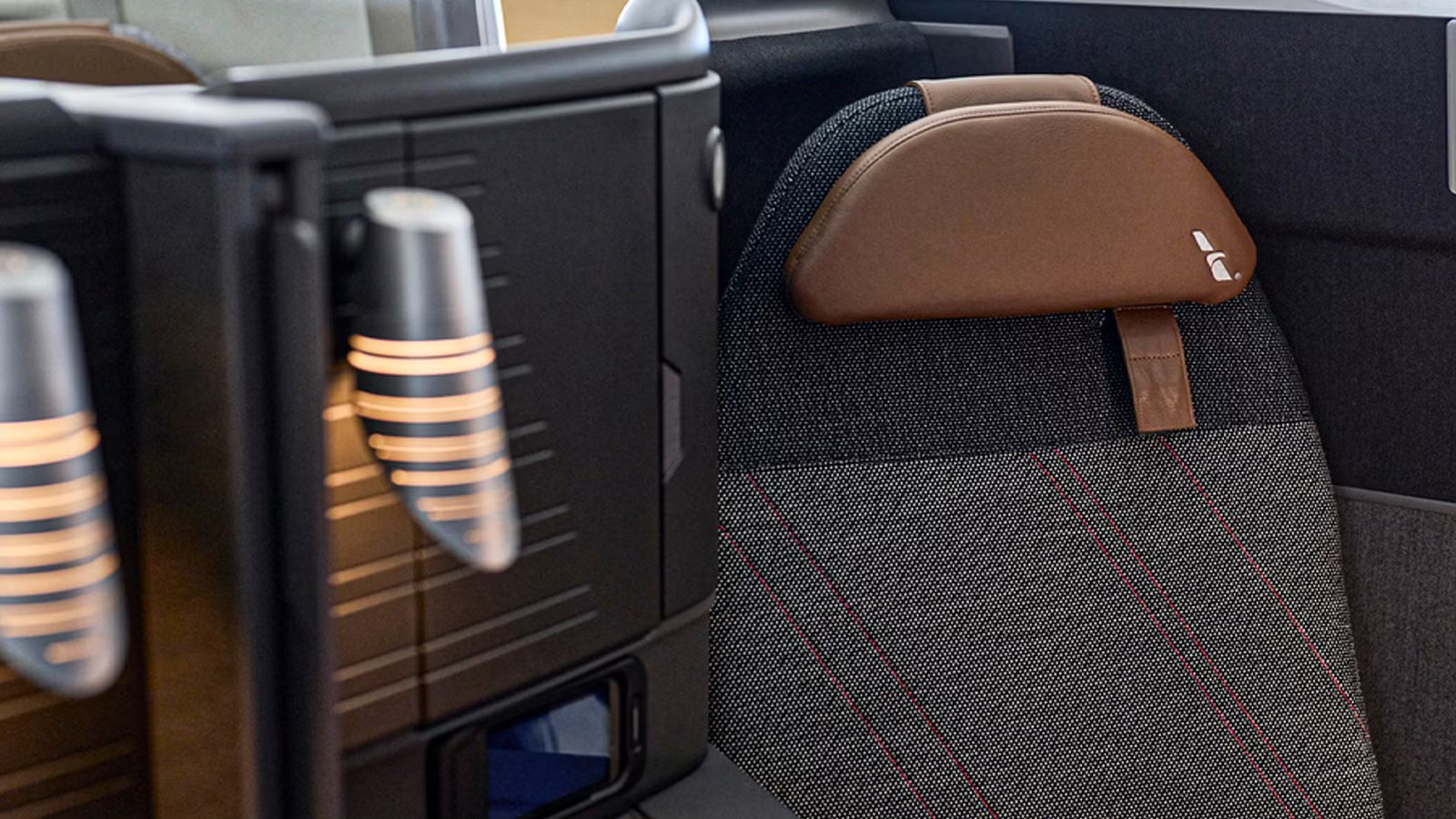
The race to deliver the world’s newest cabin seats is well underway, and in 2026, US carriers are at the center of it. After years of refining premium strategies and investing billions in fleet renewal, the country’s largest airlines are now introducing some of their most ambitious interiors yet, and it is safe to say that from enclosed business class suites to upgraded premium economy and tech-rich economy cabins, the onboard experience is evolving at pace.
What makes this trend particularly notable is that it is not limited to one aircraft type or airline. Across widebody and narrowbody fleets alike, new seats are entering service that aim to compete with the best in Europe, the Middle East, and Asia. Let’s take a closer look at the US airlines flying the world’s newest cabin seats in 2026.
United Airlines’ Elevated Polaris Product

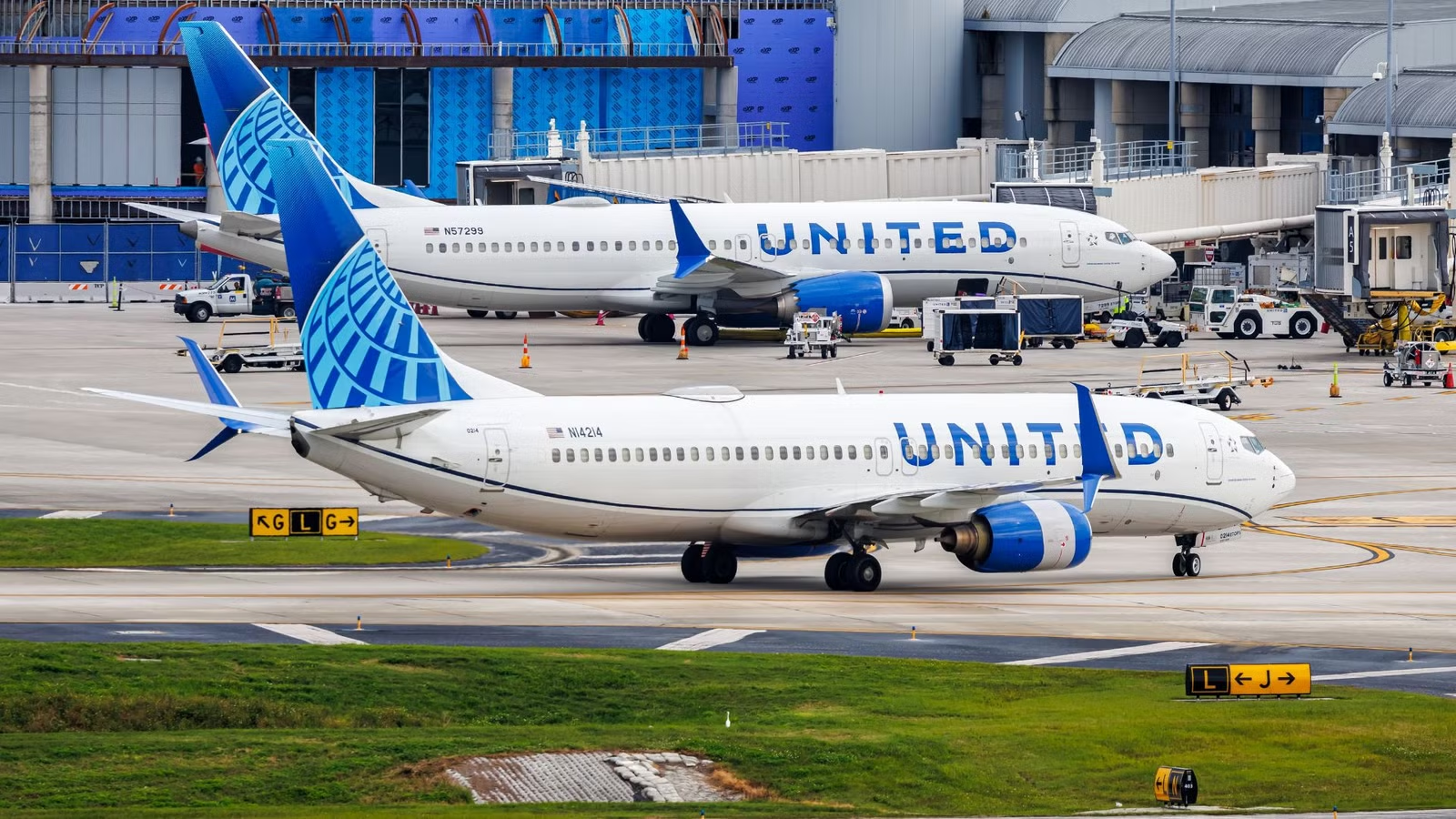
 United Airlines is pushing aggressively into the premium market with its latest Boeing 787-9 aircraft, which debuted a completely reimagined onboard product under the United Elevated concept. Rather than simply tweaking its existing Polaris seats, the airline has opted for a more substantial upgrade that introduces enclosed business class suites with sliding doors.
The  Star Alliance carrier’s new Polaris suites feature larger, high-definition seatback screens, wireless charging pads, Bluetooth audio connectivity, and significantly expanded personal storage. The design reflects an increasingly competitive transatlantic and transpacific environment, where privacy and personal space are now expected rather than exceptional. United Airlines’ decision to install suite doors aligns it more closely with leading international carriers and marks a major evolution from its original 2016 Polaris rollout.
Perhaps even more notable is the introduction of Polaris Studio, a new front-row business class concept offering additional space and upgraded soft product elements. These seats provide ottomans for companion dining, extra surface space, and enhanced comfort touches aimed at high-yield travelers. By layering a business plus concept on top of Polaris, United Airlines is effectively diversifying its business class cabin without creating a separate first class.
The subfleet of Boeing 787 aircraft featuring these interiors also carry a significantly higher number of premium seats overall. United Airlines is clearly betting on sustained demand for premium travel in 2026, particularly on long-haul routes from its hubs such as  Newark Liberty International Airport (EWR), Chicago O’Hare International Airport (ORD), and
  San Francisco International Airport (SFO).
An Enhanced Economy Class Offering

United Airlines’ investment in its new Boeing 787 interiors extends well beyond business class. Premium Plus, the airline’s premium economy product, has also received meaningful upgrades on the newest Boeing 787-9 aircraft. Seats feature privacy dividers, upgraded cushioning, and larger entertainment screens than earlier iterations, while Bluetooth connectivity allows passengers to pair personal headphones directly with the inflight entertainment system, eliminating the need for adapters.
Economy class passengers are also benefiting from the refresh, as United Airlines is installing some of the largest seatback screens offered by a US carrier in economy class, alongside universal Bluetooth audio support and multiple power options. These updates reflect a broader industry shift: even as airlines chase high-yield premium customers, they recognize that the majority of passengers still sit towards the rear of the aircraft.

Why US Carriers Are Doubling Down On Premium Cabins
Airline luxury is going mainstream.
American Airlines’ New Premium-Heavy Boeing 787s

United Airlines is not the only major US carrier to be upgrading its fleet.  American Airlines is also introducing one of its most important cabin upgrades in years with the arrival of its newest Boeing 787-9 aircraft featuring the airline’s all-new Flagship Suite business class, representing the most advanced long-haul seat in its history.
The Flagship Suite includes privacy doors, a chaise lounge-style seating configuration, wireless charging, USB-C and AC power, and increased personal storage, and the design emphasizes both comfort and flexibility, allowing passengers to sit upright, recline for relaxation, or convert the seat into a fully flat bed. Adjustable headrests and refined finishes bring the product closer to what global competitors have been offering in recent years.
Premium economy has also been redesigned on these aircraft, and the new cabin includes 32 dedicated seats with enhanced legroom, calf and footrests, privacy headrest wings, and upgraded inflight entertainment screens. Each seat features USB-C and AC power along with integrated storage solutions for personal devices and water bottles.
Meanwhile, in economy class, passengers will find 4K QLED seatback screens with Bluetooth connectivity, part of a broader technology refresh that ensures even economy travelers benefit from the new aircraft. American Airlines’ strategy with these 787-9s is clearly premium-focused, with a larger proportion of business and premium economy seats than on previous versions of the aircraft. The oneworld carrier’s premium-heavy Boeing 787-9s are currently deployed on services to a number of high-profile destinations, including  London Heathrow Airport (LHR) and
  Auckland Airport (AKL).

Luxury Comfort: Inside American Airlines’ New Premium Boeing 787-9
The airline has introduced brand new business class suites and revamped the premium economy and main cabin.
The Flagship Suite Rollout

The new Boeing 787-9 is only the beginning of American Airlines’ latest premium-focused strategy, and the airline has already indicated that its Flagship Suite concept will expand to additional aircraft types, including retrofitted widebodies and new long-range narrowbodies entering the fleet. By standardizing the suite concept across multiple aircraft, American Airlines is working toward greater consistency in its long-haul offering. This approach also increases the total number of lie-flat seats available across its network, aligning with the broader trend toward premium-heavy configurations.
In practical terms, that means aircraft such as the Boeing 777-300ER and upcoming long-range narrowbody deliveries like the Airbus A321XLR will gradually feature the same design language, privacy doors, and upgraded technology found on the newest Boeing 787-9s. This fleetwide harmonization reduces product fragmentation and ensures that passengers booking premium cabins can expect a similar experience regardless of aircraft assignment.
For frequent flyers, this means a higher likelihood of encountering the airline’s newest seat when booking international travel. It also signals American Airlines’ commitment to competing more directly with both US rivals and overseas carriers that have raised the bar in recent years.
Delta Air Lines’ Expanding Airbus A321neo Fleet

While  Delta Air Lines is not unveiling a dramatically new seat design in 2026, it is significantly expanding the deployment of its newest domestic cabin product through additional Airbus A321neo deliveries. These aircraft feature the
  SkyTeam carrier’s latest narrowbody interiors, which include updated recliner seats in first class and refreshed economy class seating.
The Airbus A321neo cabins are notable for their clean design, large overhead lockers, updated mood lighting, and seatback entertainment screens throughout the aircraft. Delta Air Lines has long emphasized consistency across its fleet, and the continued rollout of these aircraft ensures that more passengers experience the airline’s latest domestic seating standard.
Importantly, Delta Air Lines’ newer Airbus A321neos are configured with higher premium capacity, with a significant portion of the cabin dedicated to the carrier’s First Class and Comfort+ products, reflecting Delta Air Lines’ focus on upselling and premium leisure demand. Although the seat models themselves are already familiar to frequent flyers with the airline, the sheer number of new aircraft entering service in 2026 makes them among the newest cabins flying in the US market. Delta Air Lines has also retrofitted a number of Boeing 757 aircraft, giving them a more modern feel.
By prioritizing fleet renewal and premium density, Delta Air Lines is reinforcing its strategy of offering a reliable, tech-forward onboard experience across a broad domestic network, rather than concentrating innovation in just a handful of long-haul aircraft.

American Vs. Delta Vs. United: Which Carrier Has The Best Premium Economy?
These three airlines offer the most prominent premium economy offerings in the domestic aviation market.
A Premium-Focused Era For US Carriers

Across the board, 2026 is shaping up to be a landmark year for cabin innovation among US airlines. United Airlines’ enclosed Polaris suites and Studio concept push its long-haul product into new territory, and American Airlines’ Flagship Suite on the Boeing 787-9 delivers a long-awaited modernization of its business class. Meanwhile, Delta Air Lines’ continued Airbus A321neo rollout spreads one of the newest narrowbody cabin standards across a growing portion of its network.
At the heart of these investments is the clear commercial reality that premium demand remains resilient. Corporate travel has evolved, but high-spending leisure passengers are increasingly willing to pay for space, privacy, and comfort, and airlines are responding by installing more lie-flat seats, expanding premium economy cabins, and refining the technology that surrounds the seat itself. The result is aircraft that are not only more premium-heavy but also more digitally integrated than ever before.
There is also a competitive dynamic at play. US carriers have historically trailed some international rivals in seat innovation, particularly when it comes to privacy doors and boutique-style business class suites. However, in 2026, that gap is narrowing significantly, and fully enclosed suites are becoming standard rather than novel, and premium economy is no longer treated as an afterthought.
Even economy class cabins are benefiting from this renewed focus, with larger seatback screens, Bluetooth connectivity, USB-C charging, and improved lighting systems creating a more modern baseline experience. The newest cabin seats flying with US airlines this year show an industry recalibrating its priorities, blending revenue strategy with passenger expectations in a way that is reshaping the onboard experience from nose to tail.