dailynewsnblog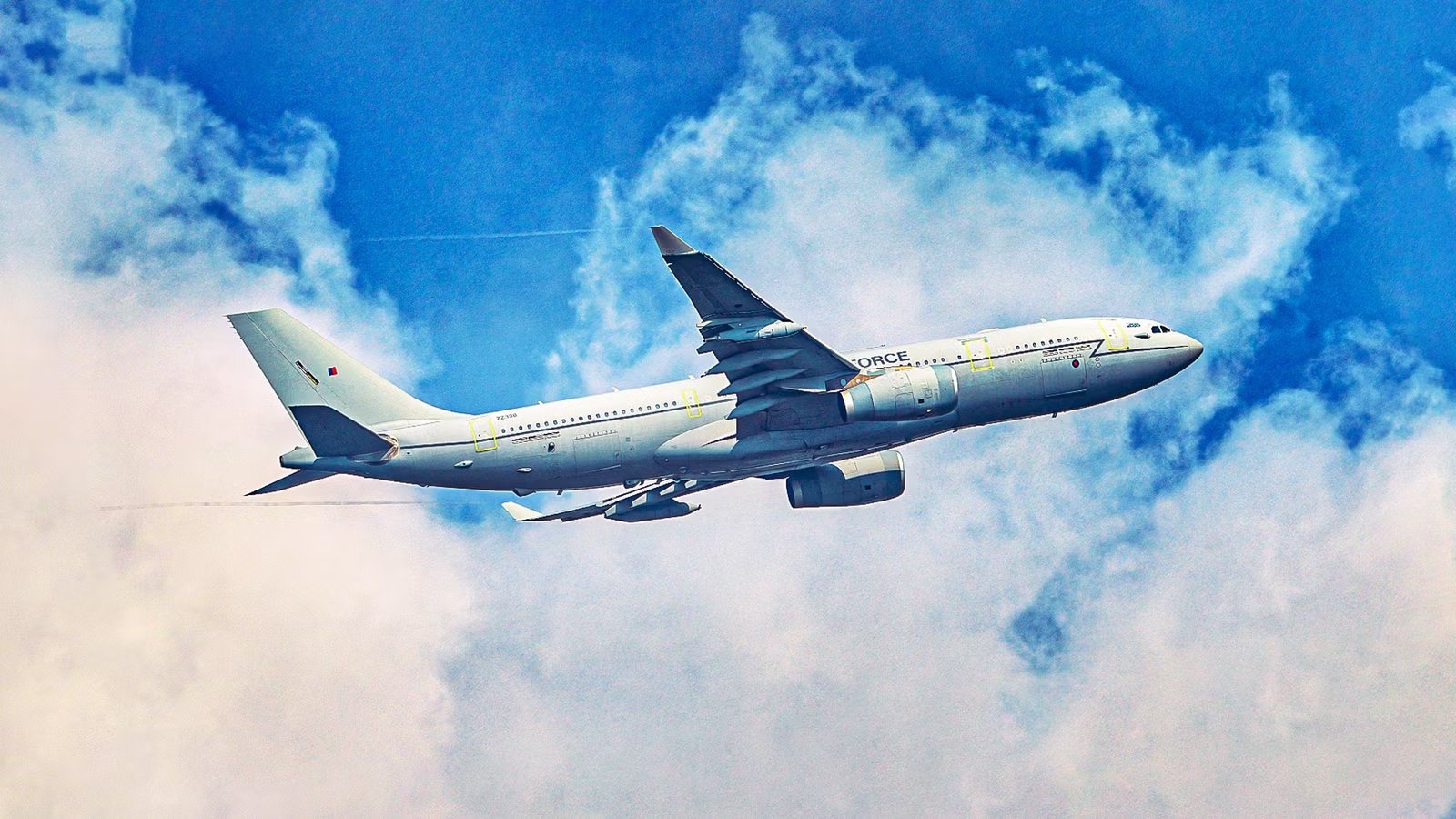
While all aircraft flown by the United Kingdom’s Royal Air Force are given official military designations, a few are derivatives of commercial planes well known in the friendly skies of civil aviation. The most notable would be the Airbus A330, with a fleet of nine examples. These big twin jets are referred to as the ‘Voyager’ by the RAF. Officially known as the Multi-Role Tanker Transport by Airbus, these widebodies are converted by Airbus Defense to serve as air-to-air refuelers and military cargo planes.
There are a handful of other interesting airframes operated by the RAF that have been adapted from their civilian counterparts. The RAF has airframes based on the Boeing 737, 707, Beechcraft King Air 350, and business jets, all of which have been specially outfitted for niche missions. In fact, the most expensive aircraft in the RAF is the  Boeing E-7 Wedgetail AWACS, which is an extensively modified Boeing 737 that houses one of the most powerful radar arrays in the world.
The Most Exquisite Airframe In The RAF

Although the media likes to focus on stealth fighters and high-performance jets like the Lockheed Martin F-35 Lightning II and the Eurofighter Typhoon, the most expensive aircraft flown by the RAF is actually based on a single-aisle airliner. Now that doesn’t sound exciting, but in fact, the highly modified 737 contains some of the most classified and important electronic equipment developed by the United States and its partner nations, with the UK being one of the most prominent members of that multinational program.
The Boeing E-7 Wedgetail represents a ‘quantum leap’ in capability over its predecessor, the E-3 Sentry, primarily through its transition from mechanical to fully electronic scanning technology. The E-7 features the MESA (Multi-Role Electronically Scanned Array) radar and advanced battle management systems, among the most sophisticated electronic systems in the world. The E-7 provides advanced battle management, acting as a force multiplier that can coordinate joint air, sea, and land battles in real time.
The extreme cost of the Wedgetail is driven by the rapid prototyping and bleeding-edge technology it contains. The cost per plane is reported to be a minimum of $700 million and potentially as high as $1.8 billion per unit. As the RAF is one of the primary customers and the UK is one of the top program members, a large portion of labor and engineering has been localized with STS Aviation Services in Birmingham performing conversion work on the RAF examples.
The MESA radar can track up to 180 targets simultaneously and has an instrumented range of 850 kilometers. It is specifically better at detecting smaller targets, like cruise missiles, and performs better in rain than older systems. The E-7 features 10 state-of-the-art mission crew consoles. Sophisticated software and algorithms handle many tasks previously done by humans, allowing for a reduced mission crew while maintaining high-intensity operations.
Strategic Airbus Twinjets

The RAF’s Airbus A330 Multirole Tanker Transport (MRTT), known as the Voyager, is managed under a unique Private Finance Initiative (PFI) with the AirTanker consortium. The fleet of 14 aircraft is divided into a ‘Core’ and ‘Surge’ structure, each with different flying crews and operational rules. The Core fleet consists of aircraft that are permanently available to the Ministry of Defense.
Core Voyager aircraft are primarily flown by RAF pilots from No. 10 and No. 101 Squadrons. They are used for high-end military missions, including air-to-air refueling (AAR) for fighters and strategic transport. The Surge aircraft were purchased to ensure the RAF has extra capacity during times of war or high demand. When not needed by the RAF, these aircraft are leased out by AirTanker to generate revenue. On these commercial leases, they are flown by civilian crews.
The RAF can surge the backup Voyager planes back into military service within a specified notice period. When recalled, they are typically operated by Sponsored Reserve pilots, who are civilian pilots who remain members of the RAF Reserves to provide the necessary military capability in extreme scenarios.
One specific aircraft in the Core Fleet, ZZ336, is specially configured for the Prime Minister and Royal Family, known as ‘Vespina.’ Despite its much more ornate ‘Global Britain’ livery, it is still operated by active-duty RAF aircrew from No. 10 Squadron. When on VIP duty, it is staffed by a larger crew of 13 personnel. When not carrying VIPs, it returns to the pool as a standard military tanker.

Top 10 Active UK Royal Air Force Aircraft With The Longest Range
The UK’s Royal Air Force operates some aircraft with impressive ranges as it is designed to operate around the world.
The South Atlantic Air Bridge

One core aircraft (registration G-VYGJ) remains on the Civil Aircraft Register. It is flown by AirTanker civilian pilots and carries civilian cabin crew. This aircraft is dedicated to the South Atlantic Air Bridge. This is a vital 8,000-mile-long umbilical cord connecting the UK to its overseas territories in the South Atlantic, primarily the Falkland Islands and Ascension Island.
The South Atlantic Air Bridge supports scheduled flights between RAF Brize Norton and the Falkland Islands for both military and civilian passengers. The operation is unique because it uses a civil-registered Voyager. The aircraft is flown by civilian pilots and cabin crew, but it also provides transport for both military personnel and their families, as well as civilian travelers who pay airfare. The Voyager can also provide air refueling to other military aircraft making the same transit, if necessary.
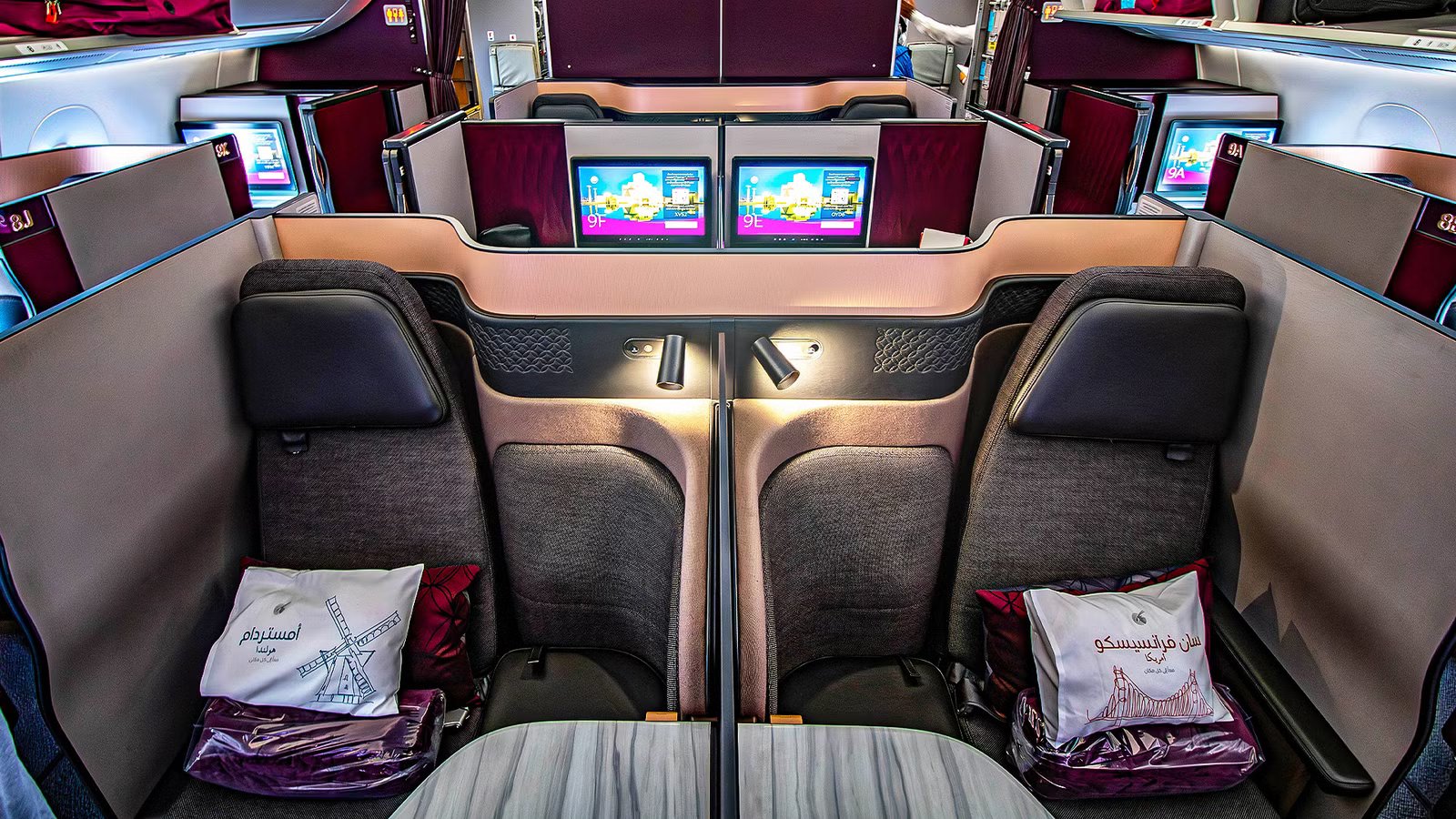
While it looks like a standard airliner inside, the Voyager has a modified hold to carry military freight and can be quickly reconfigured for aeromedical evacuation if a resident or soldier in the Falklands needs urgent specialist care in the UK. Using a civilian-registered A330 allows the flight to use international civil airways and airports more easily than a military jet might. Additionally, the Core Fleet of Voyagers can serve as backup airframes if the air tanker jet is down for maintenance or other reasons.

5 Largest Royal Air Force Bases By Number Of Fighter Jets In 2026
The biggest roosts in the RAF.
Poseidon At The Helm

Another important airframe in the RAF that is based on a civilian aircraft is the Boeing P-8A Poseidon MRA1 Maritime Patrol and Intelligence, Surveillance, Reconnaissance (ISR) aircraft. These jets were prepared to fill a mission capacity gap left by the cancellation of the Nimrod MRA4 modernization program in 2010.
The Poseidon program cost a total of £3 billion to procure nine airframes. The fleet is operated by 120, 201, and 42 Squadrons. The first examples of the Poseidon arrived in 2020, with the final airframe delivered to the fleet’s primary base at RAF Lossiemouth in Scotland in 2022. An additional £360 million was spent upgrading RAF Lossiemouth, including a major runway resurfacing and the construction of a specialized strategic facility shared with Boeing.
These modern twinjet Maritime Patrol aircraft carry advanced sonar and hydroacoustic search systems, including up to 129 sonobuoys. The internal weapons bay can also carry the Mk54 lightweight torpedo, and external hardpoints can be used for Harpoon anti-ship missiles. The ‘big wing’ jet uses the AP-10 radar for high-resolution search and targeting. The aircraft has a 2000-kilometer patrol radius, which also gives it a very long on-station loiter time.
The aircraft were purchased through the US Foreign Military Sales (FMS) program, ensuring they are technically identical to the US Navy’s fleet for easier maintenance and interoperability. While individual airframe costs vary based on contract timing, the average unit price for the UK’s P-8A is estimated at roughly £250 million.

Why The Royal Air Force Relies Heavily On The Airbus A400 Atlas
The dynamic aircraft has some impressive capabilities.
Military Grade Bizjets

The Falcon 900LX bizjet has been adapted to fill the Command Support Air Transport (CSAT) role and is flown by RAF No. 32 Squadron to provide rapid transport to high-ranking military members as well as government officials. The RAF also uses the Embraer Phenom 100 as a training platform, and the Beechcraft King Air 350 is a specialized ISR platform.
The Envoy IV, based on the 900LX, is the RAF’s newest dedicated business jet, having replaced the aging BAe 146 fleet in 2022. This jet fulfills the CSAT mission by providing secure, discreet transport for high-priority military personnel, government ministers, and, occasionally, the Royal Family. The RAF operates two aircraft based at RAF Northolt.
The Phenom 100, or T1, is exclusively used as a training platform for multi-engine aircrew who will progress to primary platforms such as the Airbus A400 M (Atlas C1) or the Voyager. The RAF has five examples of these aircraft in its inventory. Affinity Flight Training Systems manages the fleet under a civilian contract with No. 45 Squadron at RAF College Cranwell.
The Beechcraft Shadow R1, based on the commercial King Air 350CER airframe, is the RAF’s ‘silent workhorse’ for Tactical Intelligence, Surveillance, Target Acquisition, and Reconnaissance (ISTAR). While it looks like a standard business turboprop, it is packed with sensors designed to track ground targets and intercept communications.
The Shadow provides persistent overwatch of target areas for extended periods to gather intelligence and support ground units. It has a high-definition nose in terms of electro-optical infrared sensors, AKA cameras. In addition to having a low profile, because it both appears as a civilian aircraft and has a minimal noise footprint with its turboprop engines, it is capable of defending itself against shoulder-fired missiles.