dailynewsnblog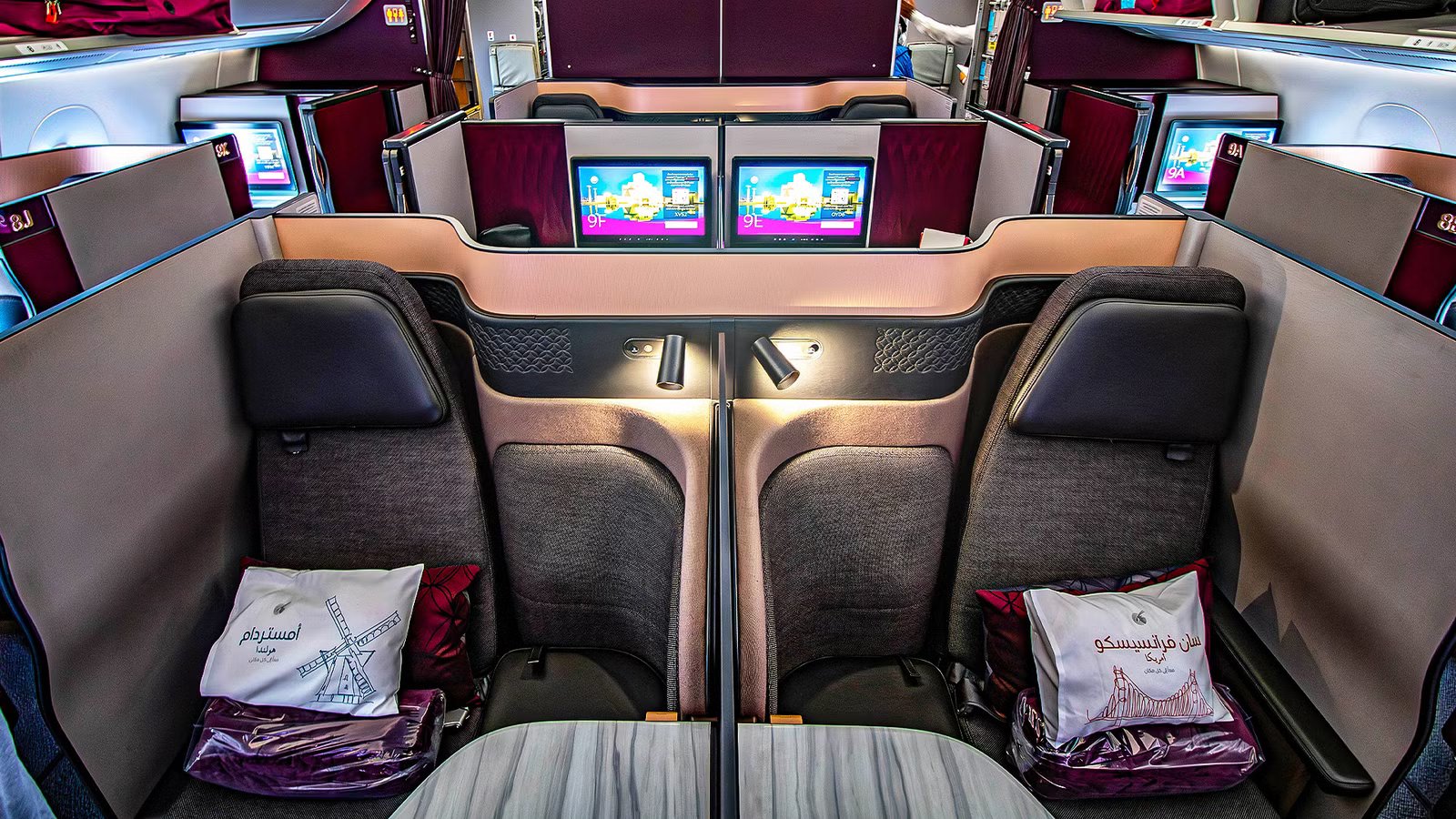
In the fiercely competitive world of commercial aviation, it is easy to assume that the largest product is automatically superior. For years, carriers have marketed their premium cabins by boasting about square footage, leading many travelers to believe that a tape measure is the ultimate judge of luxury. Yet, the most highly decorated business class product in the sky,  Qatar Airways’Qsuite, does not boast the widest dimensions. This guide will explore this fascinating paradox, breaking down why sheer horizontal spaciousness is only a single factor in the luxury equation and what truly makes a premium cabin feel exceptional.
For the past two decades, airlines have been locked in a race to provide the largest possible footprint for their high-paying customers. However, as cabin architecture has evolved, the industry has found that seat measurements alone do not always correlate directly with passenger satisfaction. By peeling back the layers of ergonomics, privacy, and service design, we can see exactly why the world’s best business class seat intentionally sacrifices width to achieve perfection in other areas.
What The Studies Show

When evaluating a long-haul flight, it is natural to wonder whether seat width is the most important factor for comfort. Passengers paying premium fares understandably want to feel that they are getting as much physical space as possible for their investment. The immediate visual impact of a massive seat creates a strong first impression when boarding the aircraft, of course. However, aviation engineers and ergonomists have found that the human body experiences diminishing returns beyond a certain seat width.
The reality of spending a long time in the sky is that an overly wide seat can actually introduce unexpected discomfort. If the distance between the armrests is too vast, a passenger cannot comfortably rest both arms without awkwardly leaning to one side, leading to spine misalignment and shoulder fatigue. Furthermore, during the critical phases of takeoff and landing, being secured in an excessively wide space can feel surprisingly unsupportive, as the body is not physically cradled by the surrounding seat structure. When it is time to sleep, a bed that is too wide can sometimes lack the cozy, secure feeling that helps travelers drift off, leaving them feeling as though they are rolling around in a rigid, open box rather than a dedicated sleeping pod.
Designers have realized that creating the optimal seating experience requires a delicate balance rather than just maximizing inches. By carefully sculpting foam density and focusing on how the seat supports the lumbar region, engineers can craft a profoundly comfortable environment without stretching the seat to its physical limits. This deliberate restraint in width allows the airline to repurpose that valuable horizontal cabin space into other highly functional areas. The space saved by properly contouring a seat is often reallocated to deeper storage compartments, sturdier tray tables, and the crucial privacy walls that ultimately define a world-class passenger experience.
Industry Leaders In Width

The industry average for seat width hovers around 20 to 23 inches (51 to 58 cm), but the East Asian market leaders have taken a radically different approach. All Nippon Airways’ (ANA) The Room, primarily found on its Boeing 777-300ER fleet, is the champion of horizontal space. With a seat width of 38 inches (96 cm), it is nearly twice the size of some of its competitors. Reviewers often describe the sensation of boarding as more akin to entering a private studio apartment, as the seat is essentially a wide, high-end sofa that allows passengers to sit cross-legged or lounge in ways that are physically impossible on any other carrier.
However, even the widest business class seat comes with its own set of critiques from seasoned travelers. Some reviewers have noted that while the width is impressive, the actual bed length of 71 inches (180 cm) can feel slightly restrictive for taller passengers compared to the more generous lengths offered by other airlines.  Singapore Airlines follows closely with its famous 30-inch (76.2 cm) wide seats on its Airbus A350 and 777 fleets, which prioritize an open, expansive feel over the enclosed style. Critics of the Singapore offering often point to the diagonal sleeping requirement, in which passengers must angle their legs into a small footwell, as a frustrating trade-off for the wide shoulder area.
Despite these specific criticisms, the commitment to space as luxury remains a cornerstone of the Japanese and Singaporean hospitality philosophy. For a traveler who finds the narrow pods of Western carriers claustrophobic, these seats represent the pinnacle of comfort. Providing such a wide canvas, these airlines allow passengers to customize their environment, whether they want to spread out their work documents or simply roll over in their sleep without hitting a hard plastic shell.

The Airlines With The World’s Widest Business Class Seats In 2026
The biggest seats for biz flyers.
Why Not Make It The Widest?

So why did Qatar Airways not make the Qsuite the widest option in the sky? The answer lies in a fundamental shift from the quantity of space to the quality of the environment. When it was inaugurated in 2017, it raised the bar for business class by introducing the first-ever suite-style seats with fully closable doors. At approximately 21.5 inches (55 cm) wide, the seat is narrower than those on ANA or Singapore Airlines, but it uses every millimeter of its footprint to provide a sense of total seclusion. By choosing a slightly narrower seat, Qatar Airways was able to install higher partitions and a robust sliding door that creates a private cocoon, effectively making the seat width a secondary concern to the passenger’s sense of personal security and quiet.
The true innovation of the Qsuite is not found in a tape measure, but in its reconfigurable Quad layout. This design allows for a central block of four suites to be combined into a shared social or workspace, or even a double bed for couples, a feat that would be impossible with the massive, fixed dimensions of an ANA-style seat. Qatar Airways prioritized this versatility, enabling the cabin to accommodate solo travelers, families, and business teams alike. The engineering focus was placed on high-quality finishes, such as bespoke stitching and durable leather headrests, rather than raw horizontal space. This allows the airline to maintain a 1-2-1 configuration across its 777 and A350 fleets while still offering a first-in-business feel.
Reviewers often note that the Qsuite feels snug rather than cramped, with the surrounding storage cubbies and side consoles providing enough space to keep all personal items within arm’s reach. Even without the record-breaking width of its competitors, the Qsuite remains the benchmark for functionality; by focusing on the passenger’s emotional need for privacy and control over their immediate surroundings, Qatar Airways has proven that a well-designed 21.5-inch seat can outperform a 38-inch sofa in the eyes of the world’s most frequent travelers.
What Makes A Business Class Truly Great?

Modern aviation rankings for 2026 suggest that the best business class is defined by a delicate synergy between hard and soft products. In the case of Qatar Airways, the Qsuite remains the global benchmark because it addresses the three primary pillars of long-haul travel: privacy, flexibility, and dining autonomy. A massive seat like ANA’s provides plenty of space, but it can often feel sterile. Qatar bridges this gap by offering a dine-on-demand service that lets passengers enjoy a multi-course meal, such as braised beef short ribs with fondant potatoes, on their own schedule.
Reviewers and frequent flyers have increasingly shifted their priorities toward technological integration and sleep hygiene over mere square footage. A world-class seat in 2026 must now include high-speed Starlink-based WiFi, capable of lag-free gaming or 4K streaming, and intuitive seat controls that don’t require a manual to operate. Furthermore, the quality of the bedding has become a major differentiator. The best-rated seats now feature custom-tailored mattresses, velvet-soft blankets, and high-quality pajamas, turning a 21-inch wide seat into a comprehensive sleeping system that outperforms a wider, harder surface.
An airline can have the widest seat in the world, but if the service is robotic or inattentive, the product will never reach the top of the Skytrax or APEX rankings. Carriers like Singapore Airlines and Qatar Airways invest heavily in training their staff to anticipate passenger needs, such as offering a turndown service or remembering a preferred drink order. This human element, combined with a snug but perfectly designed suite, creates a psychological sense of luxury that a tape measure simply cannot capture.

How Qatar Airways’ Qsuite Next Gen Stacks Up Against Every Rival Business Class Suite In 2026
Qatar Airways unveils Qsuite Next Gen, a business class suite designed to silence doubters and maintain its position at the top of luxury travel.
The Global Competition

When we shift our focus to the transatlantic and domestic US markets, the conversation around seat width becomes much more standardized. Major US carriers like  Delta Air Lines and
  American Airlines generally feature business class seats with a width of approximately 21 inches (53 cm). These dimensions are perfectly adequate for the average traveler, but they trail the East Asian giants by nearly 15 inches (38 cm). The challenge for Western carriers is often one of fleet density and diverse route structures; they frequently operate older airframes alongside newer ones, leading to a common situation where a passenger might experience the cutting-edge Delta One Suite on one leg and a dated, narrow, almost slimline seat on the next.
 Lufthansa represents the top tier of the European contingent in terms of raw dimensions, with its new Allegris business class offering the widest seat width at 23 inches (58 cm). This puts it slightly ahead of its American peers, though it still falls short of the sofa-style comfort found on ANA. The primary reason these carriers struggle to break into the top five overall business class rankings is not necessarily a lack of physical space, but rather a lack of cohesive product innovation. While Delta has made massive strides with its suite doors, many European and American offerings still lack the dine-on-demand flexibility and the ultra-premium soft products that define the Middle Eastern and Asian experiences.
|
Airline |
Seat Width |
Bed Length |
Overall Ranking Tier |
|
Lufthansa |
23 inches (58 cm) |
79 inches (200 cm) |
Top 15 |
|
Delta Air Lines |
21 inches (53 cm) |
76-81 inches (193-206 cm) |
Top 20 |
|
American Airlines |
21 inches (53 cm) |
75-78 inches (191-198 cm) |
Top 30 |
|
United Airlines |
20.5-22 inches (52-56 cm) |
78 inches (198 cm) |
Top 25 |
The disparity between width and ranking is most evident with American. Despite having a 21-inch (53 cm) seat that is technically comparable to the Qsuite in width, it consistently ranks lower due to its aging cabin interiors and a less personalized service model. For US carriers, the focus has traditionally been on operational efficiency and fitting as many seats as possible into the cabin while still maintaining a 1-2-1 layout. This results in a product that feels functional and professional but lacks the emotional resonance or wow factor that passengers find when they step into a Qatar or Singapore Airlines cabin.
Feeling Rested Is The Ultimate Goal

As the industry matures, a new generation of middle-ground designs is emerging, proving that the future of business class lies in customized ergonomics rather than a simple tape-measure competition. Qantas is a prime example of this balanced philosophy; its business suite, found on the 787-9 Dreamliner and A380, does not compete for the title of widest seat. Instead, it earns high marks for its 80-inch (203 cm) bed mode and thoughtful seat contouring. By focusing on length and sleep surface quality, Qantas ensures travelers can fully stretch out without feeling the lateral constraints that often plague narrower products.
Anyone who frequently works on flights may find ANA’s The Room’s massive desk space indispensable, whereas a passenger who prioritizes rest above all else might prefer the snug yet expertly cushioned environment of the Qsuite. We are seeing a shift where airlines are no longer designing seats for a generic average passenger but instead creating zones within the cabin, such as front row suites with extra legroom or love seats for couples, to offer a more tailored experience.
The next frontier for business class will likely involve smart-surface technology and adjustable firmness settings. Imagine a seat that can transition from a firm, supportive office chair for a four-hour work session into a soft, pressure-relieving mattress for an eight-hour sleep, all within the same physical footprint. Expert input suggests that as weight-saving composite materials become more prevalent, airlines will be able to offer more amenity space without increasing the seat width. Ultimately, the best business class seat in the world is the one that most effectively makes the physical reality of a very long journey disappear.