dailynewsnblog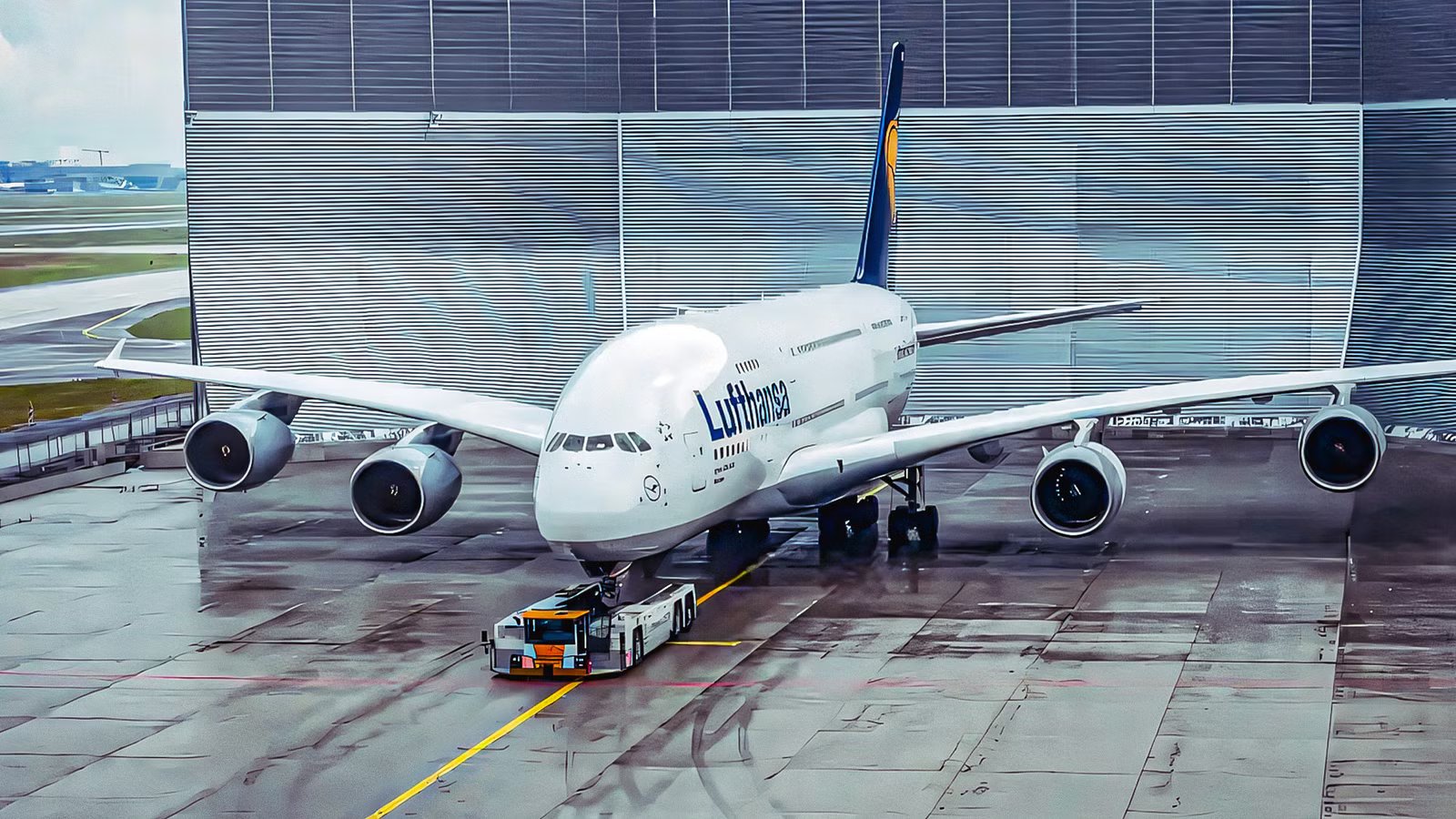
When an airline decides to refresh the livery on the world’s largest passenger jet, the Airbus A380, they aren’t just buying a few cans of spray paint. The sheer surface area of the Superjumbo makes it one of the most expensive and logistically complex maintenance tasks in the aviation industry. Every square inch of paint affects not only the airline’s branding but also the aircraft’s weight and long-term fuel efficiency.
This article explores the massive financial and technical undertaking required to coat an A380 in new paint, breaking down the specialized labor, the hundreds of gallons of high-tech chemicals involved, and the hidden costs that go far beyond the paint itself. From the weight of the dried pigment to the specialized facilities required to house the double-decker jet, here is what it actually takes to paint the world’s largest commercial jet.
The True Cost

While a standard narrowbody jet like a Boeing 737 might cost around $50,000 to paint, a full-scale livery application for the Airbus A380 typically ranges between $200,000 and $300,000. This price reflects the specialized nature of the work, which requires nearly 2 weeks of dedicated hangar time and a massive crew of technicians. For complex, one-off designs like the  Emirates “Expo 2020” or “Year of the Fifty” liveries, costs can climb even higher due to the intricate detailing required on such a large canvas.
The process is so specialized that airlines often fly their aircraft thousands of miles to dedicated paint shops. For example,  Lufthansa has been known to ferry its A380s to specialized facilities in Ireland for heavy maintenance and painting. These facilities must be large enough to accommodate the A380’s 261-foot wingspan and 79-foot height, limiting the number of available vendors and driving up the premium for hangar space.
Historically, the cost of painting has been viewed as a necessary evil for brand consistency, but in recent years, it has become a strategic performance decision. Since the paint begins to degrade after seven to 10 years due to UV exposure and extreme temperature fluctuations at 35,000 feet, failing to repaint can lead to increased skin friction. Discussions among aviation enthusiasts and professionals highlight that the investment is often recouped through the protection of the aircraft’s composite and aluminum skin, preventing multi-million dollar corrosion issues later.
Not Profitable If On The Ground

Painting a double-decker aircraft involves a complex battle against surface area and physics. The final cost burden on airlines typically is a combination of material volume, specialized labor, and the logistical reality of taking a flagship aircraft out of revenue service. Every day the plane sits in a climate-controlled hangar is a day it is not generating ticket sales on high-capacity international routes, making the opportunity cost just as significant as the paint itself.
The primary drivers of the price tag are the volume of high-tech coatings and the intensive labor required for preparation. Technicians must often strip away the old layers by using hundreds of gallons of chemical solvents, before applying a primer and a base coat. According to data from Jalopnik, the sheer amount of liquid required is staggering, with the dried pigment alone adding approximately 1,100 kilograms or roughly 2,425 lbs to the aircraft’s total weight. This added mass creates a permanent fuel penalty that airlines must calculate into their long-term operating costs.
Resource Category | Estimated Requirement | Impact on Cost |
Paint Volume | 175 – 250 gallons | High (Specialized aerospace grade) |
Surface Area | ~3,500 square meters | Total labor hours and material usage |
Labor Hours | 1,000 – 1,500 man-hours | Specialized crew costs |
Hangar Time | 10 – 15 days | Significant lost revenue on routes |
Added Weight | ~2,425 lbs | Increased lifetime fuel burn |
The complexity of the livery design is the final variable. A simple white scheme, where the fuselage is primarily white with a colored tail, is the most cost-effective option because it requires fewer layers and less masking. Conversely, custom liveries featuring gradients or intricate murals require dozens of specialized stencils and multiple curing stages. For an airline like Emirates, which operates over 100 of these jets, maintaining a consistent and vibrant look across the fleet requires a massive, recurring investment in both materials and infrastructure.

How Many Hours Can The Airbus A380 Fly Without Refueling?
The Airbus A380 can fly up to 16 hours nonstop. Here’s how its massive fuel capacity and range make ultra-long-haul flights possible.
A Flying Billboard

Aviation industry analysts view the Airbus A380 not just as a transport vehicle, but as a flying billboard that demands a high-gloss finish to maintain its prestige. Based on information fromInternational Aerospace Coatings (IAC), the sheer scale of the aircraft means that any minor imperfection in the paint application is magnified across its 3,500-square-meter surface. For major legacy carriers, the decision to repaint is a strategic move to signal fleet health and brand dominance, especially as many A380s return to service after long periods of storage.
A prime example of this strategic investment occurred in early 2026, when Lufthansa flew a near-empty A380 to Shannon, Ireland, specifically for a centennial livery update. While flying a massive quad-jet without passengers for maintenance may seem inefficient, Lufthansa and other operators argue that the brand buzz generated by special liveries like the 100 Years anniversary scheme, outweighs the ferry flight costs. These ghost flights are often a logistical necessity because only a handful of hangars globally, such as IAC’s Hangar 7, possess the specialized ventilation and docking systems required to handle a jet of such size.
The A380 is entering somewhat of a revival era currently. With second-hand airframe values rising back toward $30 million in 2026, airlines are more willing to spend the $300,000 required for a premium paint job. This investment protects the underlying aluminum and composite structure while ensuring the aircraft remains a crowd favorite at major global hubs.
Can The A380 Be Vinyl Wrapped?

While traditional painting remains the norm for the Airbus A380, some smaller, often private operators look to vinyl wrapping as a faster and theoretically cheaper alternative for smaller aircraft. In the automotive world, a wrap can be applied in days for a fraction of the cost of a respray, and for smaller private planes, the price difference can be as much as 75%. However, when scaled up to the massive dimensions of a Superjumbo, the alternative options begin to face the harsh realities of high-altitude physics and safety regulations.
The primary complication of using a full vinyl wrap on an A380 is the extreme environment of long-haul flight. At 40,000 feet, the aircraft skin experiences temperature swings from 104°F (40°C) on the tarmac to -67°F (-55°C) in the air, causing the fuselage to expand and contract. While small decals are common for temporary promotions, a full-body wrap on an A380 would pose a significant safety risk. As an example, if a large sheet of vinyl were to peel at 500 mph, it could potentially harm flight control surfaces or be ingested into the massive engines.
Furthermore, the polished aluminum look that was famously used by  American Airlines for decades is physically impossible for the A380. This is because nearly 22% of the A380 structure is made of composite materials like carbon fiber reinforced plastic, so there is no uniform metal to polish. These composite sections require a protective paint layer to prevent UV degradation and moisture ingress, making a full-body paint job the only viable way to ensure the structural integrity of the world’s largest passenger jet.

Where Does Qatar Airways Fly Its Airbus A380s?
The Middle Eastern carrier reserves the superjumbo for use on a select handful of routes.
More Complex, More Expensive

While the $200,000 to $300,000 price range is standard, the complexity of a livery can cause costs to skyrocket. One major drawback is the environmental and health regulations surrounding paint stripping. Traditional chemical strippers, like methylene chloride, are being phased out or heavily regulated due to their toxicity. This shift forces facilities to use more expensive, biodegradable alternatives or mechanical media blasting, such as sandblasting with plastic beads, which can increase the total service time and labor costs.
A notable exception to the standard pricing is the All Nippon Airways “Flying Honu” fleet. These A380s feature a complex sea turtle design that required 16 different colors and a staggering 930 stencils, a massive jump from the 150 stencils used for a typical airline logo. This level of detail pushed the painting time to 21 days and required a crew of 120 specialists, likely pushing the cost well above the $400,000 mark. For such intricate designs, the margin for error is razor-thin as even a slight misalignment in a stencil can ruin the aerodynamic flow of the fuselage.
Feature | Standard “Eurowhite” | Complex Mural (e.g., ANA Honu) |
Stencil Count | ~150 | 900+ |
Color Palette | 2 – 4 colors | 15+ colors |
Hangar Duration | 12 – 14 days | 21+ days |
Specialist Crew | 30 – 35 people | 100+ people |
Estimated Cost | $200k – $250k | $400k – $500k+ |
On aircraft with high composite content like the A380, paint protects the metallic mesh embedded in the fuselage that provides lightning strike protection. If the paint peels or delaminates prematurely, it can expose this mesh to the elements, leading to corrosion and potential safety grounding. If the paint is applied with the wrong viscosity, it can create an almost orange peel texture that increases skin friction, costing the airline thousands in additional fuel every year.
The Cost Is Truly Worth It

Ultimately, painting an Airbus A380 is a massive investment that costs between $200,000 and $300,000 for a standard refresh and can exceed $500,000 for high-detail murals. This price covers plenty, from 10 to 15 days of climate-controlled hangar time, the specialized labor of over 30 technicians, and the management of 2,425 lbs of added weight. While the immediate financial burden is high, the cost of neglect is far more expensive in the long run.
For the aviation enthusiast or traveler, seeing a fresh A380 livery is a sign of an airline’s long-term commitment to the superjumbo era. The resurgence of the A380 in fleets like Lufthansaand  Etihad Airwaysproves that the aircraft remains a powerful marketing tool. If you are planning a trip to spot these giants, keep an eye on maintenance hubs like Shannon, Ireland, or Dubai as these are the rare locations capable of performing these high-altitude makeovers that keep the world’s largest passenger jet looking its best.
Looking ahead, the next evolution in A380 painting will likely focus on sustainability and thermal efficiency. New cool-paint technologies are being developed that can reflect more solar radiation, potentially lowering the energy required for cabin air conditioning while the aircraft sits on hot tarmac. While the age of the quad-jet may eventually pass, the iconic, brightly colored tails of the A380 fleet will continue to serve as a high-gloss monument to the peak of 21st-century aviation engineering.

![6-Hour Flights: Southwest Airlines Launches Exciting New Route To Hawaii In August [Map]](https://dailynewsnblog.com/wp-content/uploads/2026/06/imua_one_departs_santa_barbara_-53981372594-_cropped.jpg)