dailynewsnblog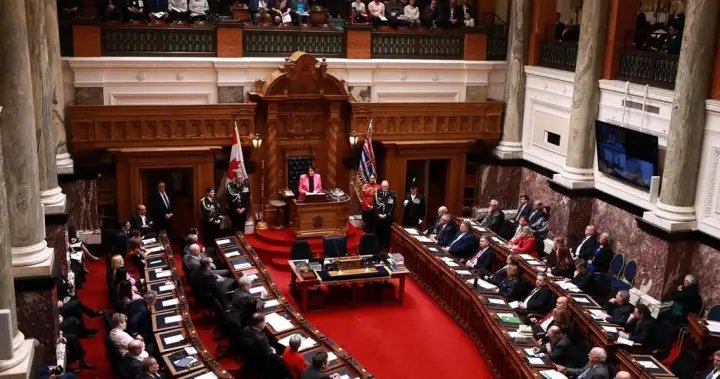
The Business Council of B.C. says its members are worried about the province’s shifting position on the Declaration on the Rights of Indigenous Peoples Act (DRIPA) and the uncertainty it is causing.

Seven years later, a survey from the Business Council finds that 98 per cent now disagree that DRIPA is living up to that promise.
The same number are “very concerned” about how it’s being implemented.
“These numbers are stark, the message is clear, the desire to work with Indigenous communities to create prosperity for all remains strong, but DRIPA is not living up to its promise to create investment certainty and it’s not working for the business community,” Laura Jones with the Business Council of B.C., said.

A court decision in December on mining rights that found DRIPA should apply to all B.C. laws is only adding to that anxiety.
The business survey was done right after B.C. Premier David Eby once again delayed plans to try to suspend or amend the act this spring.

Get daily National news
Get daily Canada news delivered to your inbox so you’ll never miss the day’s top stories.
Facing pressure from First Nations, Eby agreed to negotiate through the summer.
“The numbers that we’re actually seeing from Stats Canada, the investments on the ground, the jobs being created, is contrary to the internal poll they put out,” Ravi Kahlon, B.C.’s jobs minister, said.
However, the numbers from the survey tell a different story.
- Seventy-four per cent say it’s led to decreased investment plans
- Seventy-three per cent say it has increased time, cost, complexity, or uncertainty in permitting
- Forty-one per cent say it’s harder to access external financing
- Thirty-five per cent say it is decreasing hiring plans
“The only certainty in British Columbia right now is uncertainty, and that is a problem,” Jones said.
BCBC surveyed its members from April 21-28, 2026, shortly after the announcement that the province would not proceed with introducing a bill to amend or suspend DRIPA in the spring 2026 session of the Legislative Assembly of B.C.
The survey canvases the views of BCBC members who are senior decision-makers in the province. The survey was distributed to 197 individuals, with 88 responses received, representing a 30 per cent response rate. Of those respondents, 84 per cent identified as representing businesses, 10 per cent industry associations, and 6 per cent post-secondary institutions.
–with files from Ben O’Hara Byrne
© 2026 Global News, a division of Corus Entertainment Inc.