dailynewsnblog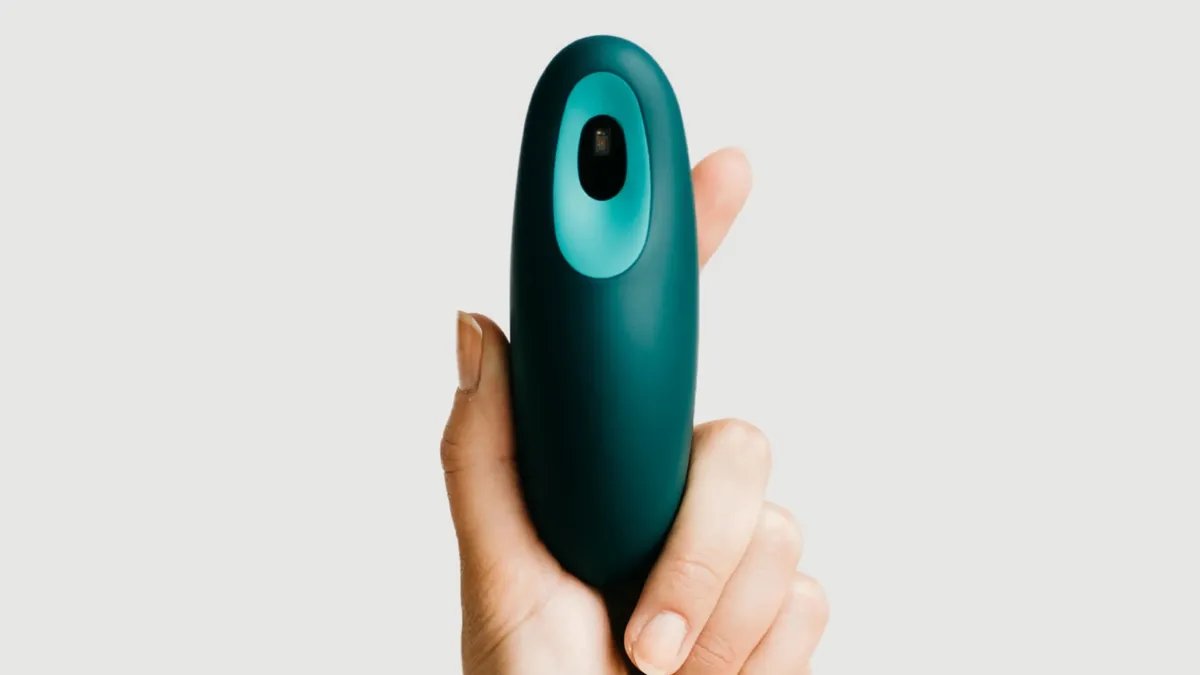
It’s natural to experience stress and anxiety, but on days when it feels like they’re taking over, it’s important that you take time to calm and regulate yourself. Now, during Mental Health Awareness Month, it’s a particularly good time to assess the stress-reducing tools in your toolkit to see if you could benefit from trying new techniques.
While you don’t need to pay for products to boost your mental health, as there are plenty of free activities and services out there, these are the devices and apps that have worked for us. Plus, free habits and actions you can take when anxiety is getting the best of you.
3 free daily habits to improve your mental health
Let’s start with what’s free (we see you, tariffs). These are small mental health rituals we practice daily that won’t hurt your wallet and won’t take up too much of your time.
1. Daily walks
My secret weapon for lessening stress after a long day is going on a walk. Not only is exercise beneficial for mental health, but studies also show that exposure to sunlight can boost the body’s serotonin production.
Serotonin, also known as the “feel-good” chemical, is a neurotransmitter that helps regulate our moods. Higher serotonin levels are associated with feeling happy and calm, while lower levels are linked to mood disorders such as depression.
I vary the intensity of my walk from day to day, and sometimes, it even turns into a run. There’s no right way to do it; just get your body moving to boost your mood.
2. The 3-3-3 rule when anxiety and stress want to take over
I read about this once on social media and keep it in my back pocket for whenever I get anxious. It’s pretty simple:
- Name three things you see
- Name three things you hear
- Move three parts of your body (can be as easy as blinking, wiggling your toes or scrunching your nose)
This method pulls your mind out of the worry of the future and brings you back to the present. It works like a charm every time.
3. Lying on the floor and breathing
You don’t need a mat, music or a meditation app, just yourself and the ground. I like to lie down on my back for a few minutes and just breathe. It sounds silly and simple, but focusing on your breath really can regulate your nervous system. The best part of this is that your pup or cat will most likely join you.
For the breathing part, you really don’t need to follow a guided breathwork session. You can just intentionally follow your natural breathing. But if you’d like to do a more structured breathing exercise, you can check out an app like Breathly or search for YouTube videos.
7 tools that help us destress
As folks who work in wellness, we’ve also tested pretty much everything there is on the market that says it will help you feel calm, and few devices live up to that claim. These are the products we actually recommend that help us feel more balanced. We try to choose products and services that are easy and fun to use, and don’t feel like another chore.
1. Renpho x Headspace Eyeris Zen
The Renpho x Headspace eye massager combines guided meditation with compression and heat.
I get tension headaches often, and after years of pushing through them, I came across a device that alleviates them after only a few minutes. The Renpho x Headspace eye massager combines gentle heat and compression across your eyes and temples with nine built-in guided meditations from Headspace.
What I like most is that there are no screens involved. Everything you need is accessible through the device, although you can pair it with your Headspace app. You get a two-month complimentary membership when you buy the eye massager.
I find I use it most when I feel a headache starting to creep in or when I need to decompress before sleep. This eye massager is lightweight, quiet and has a memory function which remembers your last settings. This little device has become one of my favorite things in my wind-down routine.
2. Finch
As you care for a cartoon bird, you also care for yourself.
I’ve tested a lot of mental health apps over the years, and most have fallen off for me. One that has stuck around is Finch, the self-care app that requires you to take care of a cartoon bird. Think of it like a Tamagotchi for your mental health. You set goals for yourself each day, and as you check them off, you work toward sending your bird on an adventure. The goals can be as simple or as complex as you want. I have some as simple as “drink water” or “read at night.”
The features don’t stop there. There is also a “journeys” feature that you can complete each day to work toward a reward. I’m following a guided “manage anxiety” journey, and one that reminds me to get outside and walk after work.
My favorite part of this app is that it operates on a free-first model, so you don’t have to pay a thing to access 95% of the features. Most of the apps I’ve seen require a subscription to access their features, so this is a huge perk. It’s such a simple concept, and somehow I’ve kept up with it for 215 days. The more I’ve cared for myself, the more my little bird thrives.
3. Headspace
Headspace offers meditation, music and movement sessions.
I’ve had an on-and-off relationship with meditation apps over the years, but Headspace is the one I keep coming back to (and sticking with). I initially downloaded it to cope during a very specific hardship I was navigating, thinking I’d use it until I felt better and then forget about it. But I fell in love with it after seeing how much my mental health improved after just a few weeks. The app doesn’t talk down to you or expect you to already know how to meditate. Instead, it gently guides you back to yourself.
What I love about this app is that it meets you where you are. Some days, I only have five minutes and only need a little boost. Other days, I need more time because I’m dealing with something bigger. Whatever you need, Headspace has something for you. The app also has a library of mindful movement videos and focus music, which I use daily while working.
I also find myself talking to Ebb a lot. Ebb is a little blob-like chatbot that helps you navigate through your feelings when you need help ASAP. It’s not meant to replace your therapist or long-term treatment, but it is there to help you process emotions when you need immediate help.
4. Moonbird
Moonbird’s balloon-like structures expand and contract like lungs.
Moonbird is a handheld breathing device designed to help you manage your anxiety through deep breathing. It’s a funky little gadget that I wasn’t sure I’d like, though I’ll have to say that when using Moonbird, I did feel my anxiety symptoms lessen in tough moments.
To start your breathing session, shake the device and place your thumb on the sensor. Then Moonbird breathes with you. On either side of Moonbird are balloon-like structures that expand and contract like lungs. If you’ve had difficulty following breathing exercises independently, you’ll like Moonbird. All you have to do is hold it and breathe. There are guided audio sessions and plenty of educational content to help you learn more about mental health.
It’s $200, which is a little steep. Though if you’re serious about getting a handle on your anxiety symptoms with deep breathing, I recommend Moonbird.
5. Verilux HappyLight Mini
I’ve noticed that I feel less sluggish with this light therapy lamp.
I didn’t realize how much lack of sunlight can affect your mood until I moved from Puerto Rico to New York last year. Winters in New York can feel especially long, gray and cold — naturally, my energy took a dip right in the thick of winter this past January. I got the Verilux HappyLight light therapy lamp (half excited to try it, half skeptical), and it’s become one of my favorite tools for the shorter days and long stretches of rainy weather.
I keep it on my desk and turn it on in the morning while I check my email and drink my coffee. It’s not a dramatic shift, but it does help me feel less sluggish and more alert. On days when the sky is gray, and I haven’t left the apartment, it really does give me a little boost. If you’re like me and deal with seasonal mood dips, this light is a solid option.
6. Hatch Restore 3
Hatch combines the best of a sound machine and a sunrise alarm clock.
I’ve always struggled to clear my head at night, whether I’m anxious from the day or I’ve scrolled too much on my phone. The Hatch Restore 3 has completely changed my nighttime routine. This sunrise alarm clock and sound machine duo is now a permanent fixture on my nightstand. While I love the sunrise feature that wakes me each morning, I mainly rely on this device for the sound machine. I turn on the rain sounds each night before I go to bed to help me clear my head and settle in for sleep.
Hatch has a collection of sounds ranging from natural to color noises. It even has some wacky ones like zodiac sounds or orange shag carpet. But the features don’t stop there; there are routines, podcasts, ASMR and meditations for mental health. It’s $170 — and a Hatch Plus subscription is $5 per month or $50 per year — though I think it’s worth the money.
7. Truvaga Plus
You can hold Truvaga against your neck for 2 minutes when you need a moment of calm.
I never thought I’d be that person using a fancy (and expensive) tool to regulate my nervous system, but here we are. I first tried the Truvaga Plus out of curiosity because I often felt tired before bed, which affected my sleep quality. Traditional anxiety-relief habits weren’t cutting it, so I decided to give this tool a shot.
Truvaga Plus is small, quiet and surprisingly calming. Just hold it against your neck for 2 minutes whenever you need to calm down. I personally like to use it before bed. But you can use it at any time — after a Zoom marathon at work, after a tough conversation or as a pick-me-up during a stressful day. It’s not a magic switch; the shift is subtle, but I can feel my body settling down after each use. It particularly helps me get out of fight-or-flight mode and eases my mind into a more grounded, relaxed state.
I’m not going to pretend that $500 isn’t a lot of money for a device. If other methods work well for you, you should totally skip this. But if you, too (like me), deal with chronic stress or anxiety, the Truvaga Plus can be a supportive tool.
Mental health-boosting actions that don’t get enough credit
- Saying no: Protecting your mental health also means getting better at setting boundaries. I know, I know. It can be particularly tough at work, with social plans and your own expectations. While not easy, learning to say “no” without guilt has been so freeing for me and will help you stay in control of your time and energy.
- Doing nothing and not feeling bad about it: Contrary to what society expects of you, you’re not meant to be productive all the time. Scrolling through memes, watching trash TV, or simply sleeping all day — it’s all valid. When you stop tying your worth to how much you get done, I promise you’ll start to feel lighter.
- Celebrating small wins: Improving your mental health doesn’t have to be a dramatic shift. Sometimes, it can look like remembering to drink water, going out for a walk, asking for help or noticing you’re being kinder to yourself. These small victories deserve to be celebrated, too.