dailynewsnblog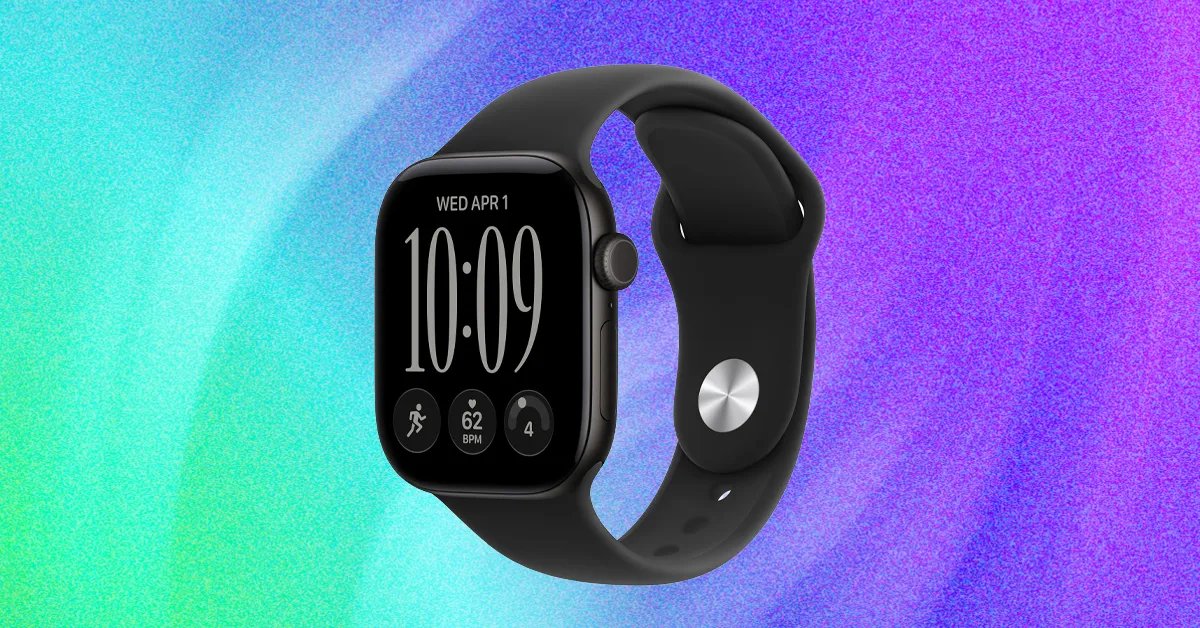
Google Pixel Watch 4 for $330: The Pixel Watch 4 is the first repairable smartwatch from Google, and that alone makes it easy to recommend. With the release of the Pixel Watch 5, I would only snag last year’s model on sale.
Apple Watch SE 3 for $249: Even though Apple hasn’t updated the Apple Watch SE this year, the SE 3 is still a nice upgrade if you’re coming from an older model; it’s also a great option for your older parents or kids. It has the same S10 chip as the Series 11 and Ultra 3, but Apple has further limited the features to lower the price. For example, there are no hypertension notifications, ECG app, or Blood Oxygen app. Brightness is only up to 1,000 nits, and battery life is also limited to 18 hours. It’s not particularly exciting, but you’re still getting a smartwatch that offers many of the new features in watchOS 27.

Photograph: Michael Sawh
Apple Watch Series 11 for $399: Thanks to watchOS 27, the Series 11 has many of the same features as the new Series 12, like Siri AI and perimenopause support. They also share the same 24-hour battery life. You will be missing out on high-frequency background heart rate tracking, the new Readiness score, and Audio Intelligence. There is no price increase with the Series 12, so avoid paying anywhere close to MSRP for this watch.
Apple Watch Ultra 3 for $799: The Ultra 3 is still worth considering, just don’t pay anywhere near MSRP; otherwise, you may as well buy the new model.

Photograph: Julian Chokkattu
Samsung Galaxy Watch8 for $300 and Watch8 Classic for $500: Within last year’s Galaxy Watch8 series, there are three watches: a 40-mm and 44-mm model, and the Watch8 Classic, which is 46 mm and sports Samsung’s mechanical rotating bezel; you can physically rotate the bezel to scroll through the interface. Former WIRED editor Adrienne So tested the tiniest Watch8 and saw disappointing battery life, but senior editor Julian Chokkattu hit close to two full days on the Classic and recommends going for the 44-mm or the Classic if you catch them on sale.

Samsung’s Galaxy Watch Ultra 2025 for $650: The 47-mm Galaxy Watch Ultra is the company’s Apple Watch Ultra and Garmin competitor. This is technically the 2025 model, which is identical to the 2024 version but comes with 64 GB of storage and in a new blue color. It lasts a little over two days on a charge because it’s a big 47-mm watch and can pack a beefy battery. There’s a titanium case and sapphire glass face, plus it’s rated to 10 ATM and IP68, so you can submerge it underwater to 100 meters. The heart rate tracker is remarkably consistent with the Apple Watch Ultra 2, and the dual-band GPS delivers accurate mapping. The software isn’t as intuitive, and a few features are lacking when compared to other performance smartwatches, but this is a good start if you’re in the world of Android. If you don’t care for the blue or the extra storage, you could potentially save some money with the 2024 model. —Julian Chokkattu
Frequently Asked Questions
How Are Smartwatches and Fitness Trackers Different?
Smartwatches typically replicate many of the functions found in your smartphone. For example, you can control smart home functions, respond to Slack messages, and summon AI assistants like Siri or Gemini. This is in conjunction with standard health and fitness tracking features. Unfortunately, smartwatches’ battery life generally last a day or two, if not a little more.
Fitness trackers may not be as feature-rich. You may be able to control music playback or read texts, but you’re generally more restricted. They also don’t typically offer cellular coverage, but they deliver the same, if not better, health and fitness-tracking capabilities than smartwatches. Fitness trackers tend to have a longer battery life to accommodate multi-day excursions, endurance sports, and sleep tracking. Finally, unlike smartwatches, fitness trackers don’t have to be a wrist wearable and can Finally, unlike smartwatches, fitness trackers don’t have to be worn on the wrist and can take the form of a smart ring, chest strap, or even be contactless. You can check out our guide to the Best Fitness Trackers for vetted picks.
Are All Smartwatch Bands Compatible?
You don’t need to stick with the strap you get in the box. Every smartwatch has straps that can easily be swapped out. Apple Watches, Google Pixel Watches, and Samsung’s Galaxy Watches have a proprietary strap system, but analog watch bands will work for others, making your options nearly endless. All you need to do is figure out the band size of your smartwatch and whether or not it’s proprietary. The easiest way to do so is by checking the manual or the website you purchased the smartwatch from.
How Can I Tell If a Band Is PFAS-Free?
A study published in December 2024 found that many smartwatches and fitness trackers that come with fluoroelastomer straps—synthetic rubber—had high concentrations of perfluorohexanoic acid (PFHx4), a type of polyfluoroalkyl substance (PFAS), which is considered a “forever chemical” that can cause immune, thyroid, kidney, and reproductive health problems. The study notes that there’s limited knowledge about the absorption of these chemicals into the skin.
The researchers tested bands from various brands, including Apple, Casetify, Fitbit, Google, and Samsung. If you’re worried, steer clear of bands made from fluoroelastomer (often listed in the product description, but not always). That includes Apple’s Sport Bands and Google’s Active Band, to name a few. Opt for other materials instead, like silicone, metal, or leather.