dailynewsnblog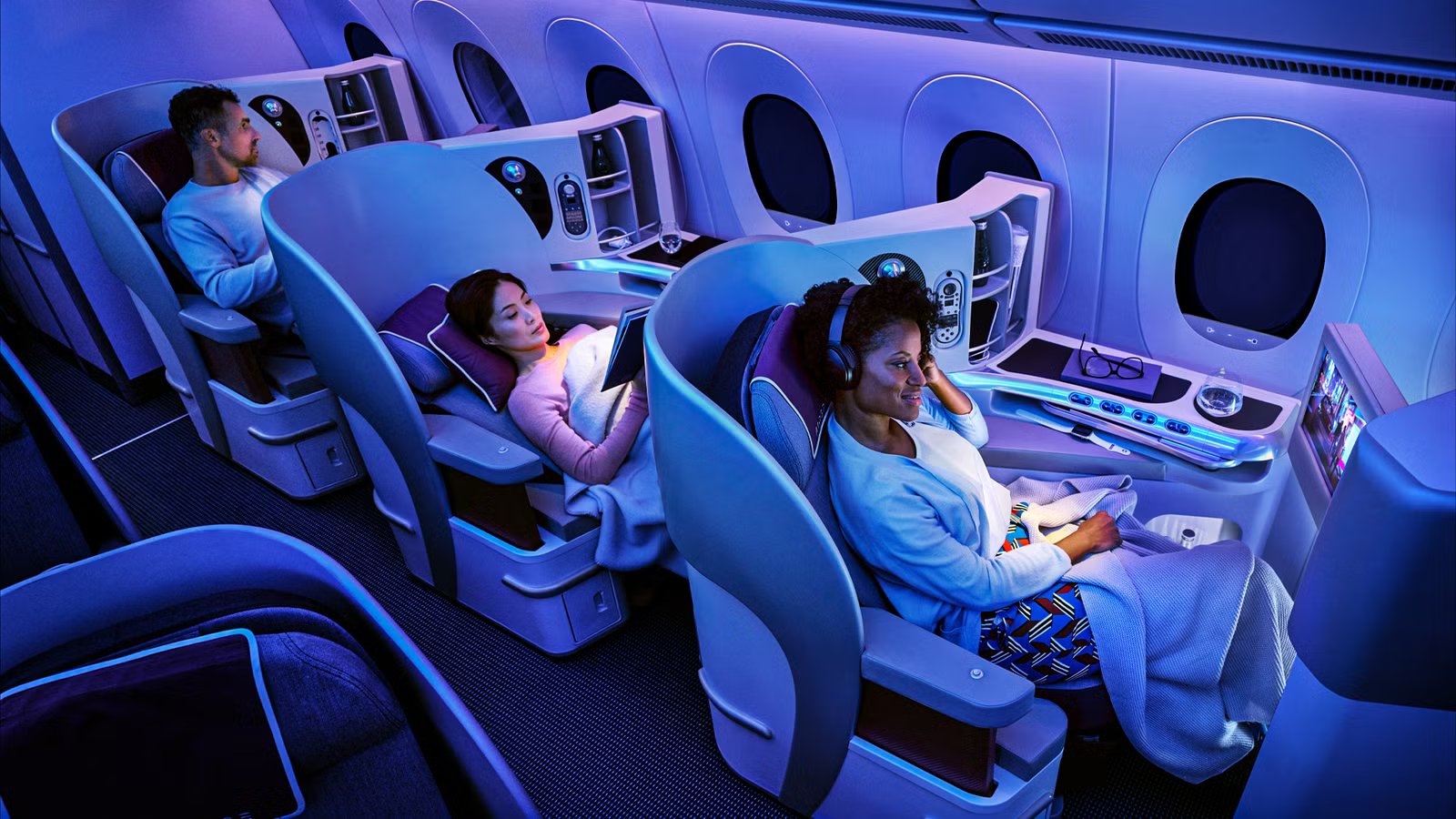
Long-haul flying involves hours over the Atlantic or Pacific Ocean, and to offer more comfort to high-paying customers, airlines have invested significant sums in luxurious premium cabins. By far the largest cabin on most transoceanic flights aside from economy is business class, which sits above premium economy and below first class, although few airlines still offer a true international first-class product today. This means that, in most cases, business class is the best way to fly over the ocean.
Whereas premium economy offers, as the name suggests, an experience similar to economy but upgraded, business class is an entirely different world. Today, direct aisle access and lie-flat seating are an expectation, while many airlines are also installing high walls and privacy partitions. In essence, new business-class seats are scaled-down versions of first-class suites. But while business class offers a significantly upgraded experience, the price to upgrade is also priced extremely high in some cases.
The Transatlantic Market (US To Europe)

The Atlantic Ocean connects the Americas to Europe and Africa. The transatlantic corridor is one of the busiest in the entire world, with the US-to-Europe market being by far the largest. These two regions are relatively close, with flights ranging from six to 12 hours, and, what’s more, they are wealthy, with high local business demand. As such, demand for business class is high, especially as premium leisure bookings continue to climb.
Whereas roundtrip economy tickets tend to cost between $750 to just over $1,000 on many routes, business class fares are much higher. Depending on the route, meanwhile, a roundtrip business class ticket will often cost anywhere from $3,500 to over $5,000. While outliers do exist, this is the general range for business class fares from the US to Europe, and tickets tend to be priced three to five times as high as economy tickets. Premium economy tickets are often priced in the middle but rarely come close to the cost of the most expensive business class tickets.
The transatlantic market is dominated by the metal-neutral joint ventures operated by  oneworld (American Airlines, British Airways, Iberia, Aer Lingus, Finnair, LEVEL),
  SkyTeam (Delta Air Lines, Air France, KLM, Virgin Atlantic), and
  Star Alliance (United Airlines, Air Canada, Lufthansa, SWISS International Air Lines, Austrian Airlines, Brussels Airlines, Eurowings). These airlines essentially act as one in this market, coordinating fares and schedules, which limits competition. While boutique and low-cost carriers also operate in this market with lower fares, they’re comparatively small competitors, which is why prices remain high.
The Transpacific Market (US To Asia)

The Pacific Ocean separates the Americas from Asia and Oceania. While a small market has emerged for South America to Oceania routes and the US to Oceania market remains robust, by far the largest transpacific market is from North America to Asia. Most routes are from the US to Asia, and whereas economy tickets are regularly priced from $1,000 to $2,000 roundtrip, business class fares are routinely priced from $4,000 to over $10,000, a significant premium over transatlantic fares.
Although transpacific fares are more expensive than transatlantic fares, they’ve historically been much cheaper per mile. While the three US legacy carriers also operate joint ventures across the Pacific (American with JAL, Delta with Korean Air, and United with ANA), these joint ventures are smaller than the transatlantic joint ventures. Meanwhile, the joint ventures have traditionally faced heavy competition from other Asian carriers, which operate with much lower cost structures than US carriers and can thereby undercut them on price.
However, the airlines that have traditionally posed the biggest threat to the joint ventures are Chinese airlines, but schedules between the US and China remain significantly lower post the COVID-19 pandemic due to the current bilateral agreement between the two nations. As such, US airlines have benefited heavily from reduced competition. Some carriers still offer lower fares, but transpacific fares are at an all-time high. Meanwhile, flights to Oceania are even pricier, due to the longer distances and even lower competition.

The World’s Most Comfortable Transatlantic Premium Economy Seats You Can Book Today
Discover the best premium economy seats to cross the Atlantic.
Avoiding High Business Class Fares

Business class fares on transoceanic routes are pricey, but you don’t always need to pay the full amount to snag a business class seat. While you don’t typically see a complimentary upgrade list the same way that you do on a domestic flight in the US, airlines do offer paid upgrades. This may occur if the business class cabin is undersold on a particular flight. A paid upgrade may be offered even during booking, until check-in, or at the gate, but pricing can drop significantly.
Depending on the carrier, business-class upgrades may cost less than $1,000 and can be as low as a few hundred dollars. Depending on the airline, you may be able to upgrade for one segment or for an entire trip. While prices often vary by route, flight, and date, some airlines and routes tend to be affordable. Aer Lingus, for instance, is known for offering attractive business class upgrades, particularly on some of its newer routes to smaller US cities like Minneapolis/St Paul and Nashville.
|
Aer Lingus US Destinations |
|---|
|
Boston, Chicago O’Hare, Cleveland, Denver, Hartford, Indianapolis, Las Vegas, Los Angeles, Miami, Minneapolis/St Paul, Nashville, New York-JFK, Newark, Orlando, Philadelphia, Pittsburgh, Raleigh/Durham, San Francisco, Seattle, Washington-Dulles |
Some European airlines offer economy or premium economy passengers the opportunity to bid for a business class upgrade. Passengers can select how much they’d like to pay for an upgrade, and then shortly before departure, the passengers with the highest bids are moved to business class. Airlines that operate a bidding system include Aer Lingus, Icelandair, and Hawaiian Airlines in the US.
Booking Business Class With Miles

By far the most common way to avoid paying for expensive business class fares out of pocket is to use miles. These can be earned by achieving elite status in an airline’s loyalty program and by booking flights and using a co-branded credit card. Award pricing is typically tied to cash prices, so it can remain expensive; however, it is often still preferable to paying thousands of dollars out of pocket. This is one of the most common ways that people upgrade to business class.
While airlines don’t typically offer a complimentary upgrade list to passengers on long-haul flights, they do, instead, give out upgrade certificates to elite members. These are typically granted as rewards for achieving a specific status tier. American Airlines offers eight complimentary upgrade certificates to Executive Platinum members, while Delta Air Lines gives out four certificates to Diamond Medallion status-holders. Meanwhile, United Airlines grants six long-haul upgrades to Premier 1K members.
|
American Airlines AAdvantage Elite Tiers |
Delta Air Lines SkyMiles Elite Tiers |
United Airlines MileagePlus Elite Tiers |
|---|---|---|
|
ConciergeKey (Invite only) |
Delta 360° (Invite only) |
Global Services (Invite only) |
|
Executive Platinum |
Diamond Medallion |
Premier 1K |
|
Platinum Pro |
Platinum Medallion |
Premier Platinum |
|
Platinum |
Gold Medallion |
Premier Gold |
|
Gold |
Silver Medallion |
Premier Silver |
Airline loyalty programs are highly lucrative for the business, but many programs have now switched to a spend-based program. This means that mileage earning is directly tied to how much a person spends, rather than the distance they fly or the number of flights they take, thereby making it significantly harder and more expensive to earn miles. As such, using miles is not always the best way to score upgrades, especially given varying transfer rates between partner airline programs.

Why US Carriers Are Doubling Down On Premium Cabins
Airline luxury is going mainstream.
Where Will Prices Go In The Future

Airlines have become extremely good at selling premium seats. At the same time, frequent flyer programs have become increasingly important to airlines, and airlines are pushing customers to their financially lucrative programs. As such, cash prices are growing due to high demand, while upgrade certificates, cash upgrades from economy/premium economy, and bidding are becoming more important. Award tickets, meanwhile, are losing their luster due to mile devaluations and the switch by many airlines from distance-based earning to a spend-based system.
The dominance of joint ventures across the Atlantic has kept prices high, and given their strength, there are few prospects for a new entrant to disrupt this market. While the 2010s saw multiple new entrants enter this realm, they largely failed. Primera Air and WOW Air both ceased operations, while Norwegian ceased long-haul operations after the pandemic. Neos and Norse Atlantic are operating today with a similar low-cost business model and are losing money.
Across the Pacific, the joint ventures are benefiting from the current US-China bilateral agreement, which restricts US and Chinese airlines to 50 flights per week each. This has curbed the threat posed by low-cost Chinese airlines. With business demand generally recovered from the pandemic and premium leisure demand high, business-class prices will remain high. Prices are also high due to global aircraft shortages, driven by delivery delays due to supply chain constraints.