dailynewsnblog
A typical passenger cabin has long been split into three distinct worlds: standard economy class, business class, and an emerging middle tier of dedicated premium economy seats. However, the economics of modern long-haul flight schedules have been changing rapidly in recent years. Extra-legroom economy seats, once sold as simple preferred seat assignments near emergency exits or bulkhead partitions, have evolved into high-margin seating blocks that directly threaten the financial case for dedicated premium economy cabins.
This list evaluates five core mechanisms driving passengers toward extra-legroom seats over true premium economy, drawing on financial disclosures, operational fleet data, and pricing trends across international carriers. With ticket prices for dedicated premium economy seats climbing across major intercontinental routes, value-focused travelers are increasingly questioning whether built-in footrests, wider cushions, and upgraded catering justify paying double or triple the price of standard main cabin fares.
The Opacity Of Financial Reporting

Financial reporting from major carriers conceals the direct competition between extra-legroom seats and true premium economy by aggregating both products into a single revenue bucket. As reported by Simple Flying,  Delta Air Lines reached a historic milestone in late 2025 when premium cabin revenue totaled $5.70 billion in Q4, surpassing main cabin sales of $5.62 billion for the first time. However, Delta’s internal accounting places extra-legroom Delta Comfort+ seats into the same financial column as dedicated Delta Premium Select recliners and lay-flat Delta One suites. As a result, external observers cannot isolate which specific seating product is pulling customers away from the standard main cabin.
Financial data published by Aerospace Global News via a Wall Street Journal analysis shows a similar pattern at  United Airlines, where premium category passenger revenue jumped 12% in late 2025 while main cabin revenue grew just 1%. United’s premium seat offerings generated passenger revenue per available seat mile (PRASM) figures between 4% and 6% higher than standard economy. Due to these figures combining extra-legroom Economy Plus upgrades with deep-intercontinental Premium Plus fares, airline management teams can celebrate overall yield growth without actually showing if cheaper extra-legroom sales are actively eating into high-margin premium economy bookings.
The financial opacity on display explains why the claim of internal product cannibalization remains widespread but difficult to verify through public earnings calls. Because corporate disclosures merge all non-standard economy seats into one overarching revenue metric, airline executives can report strong growth across premium tiers even if customers are stepping down from dedicated premium economy to extra-legroom seats. Neither Wall Street equity analysts nor industry journalists can know for certain which product is winning the square-footage war, allowing carriers to expand both seating options without publicly acknowledging the internal commercial friction between them.
Confusing The Brands

The underlying confusion between what constitutes an extra-legroom seat and true premium economy comes from how North American airlines marketed economy upgrades throughout the 2000s and early 2010s. Instead of building separate intermediate cabins as European and Asian carriers did, major US legacy airlines attached the label ‘premium’ to standard main cabin seats that simply featured additional seat pitch. According to analysis from Simple Flying, this practice trained millions of frequent flyers to associate premium travel with basic extra-legroom offerings like ‘Main Cabin Extra’ or ‘Economy Plus’. Consequently, when genuine premium economy cabins debuted across US fleets, consumers struggled to distinguish between them.
Catch what other flight trackers miss
Emergency squawks, holds, NOTAMs — live signals, no signup.
Open tracker
Catch what other flight trackers miss
Emergency squawks, holds, NOTAMs — live signals, no signup.
Open tracker
 American Airlines became the first major US carrier to introduce a dedicated international premium economy cabin in 2016 and inherited a significant marketing hurdle. International competitors like EVA Air and Virgin Atlantic had spent two decades establishing premium economy as a separate travel class with distinct wider seats, dedicated cabin partitions, and upgraded service. In contrast, US airlines entered the global market after spending years using the word ‘premium’ to describe standard economy seats with three to five extra inches (eight to 13 cm) of legroom.
That inherited terminology problem continues to affect booking behaviors across long-haul routes today. US passengers were conditioned for over a decade to view extra legroom as the ultimate economy upgrade, so many consumers view dedicated premium economy as an overpriced variation of the same concept. When price-sensitive buyers compare ticket options online, seeing both products labeled with variations of the word ‘premium’ leads many to choose the lower-priced extra-legroom option. Airlines ultimately failed to establish clear brand boundaries before 2016, and created an internal competitor that continuously draws customers away from their higher-margin intermediate cabins.
The Cabin Layout Tradeoff
Available floor space pulls network planning departments into a direct choice between cabin rows

Inside the fuselage of an intercontinental passenger jet, available cabin space is a strictly zero-sum environment. Fleet planning departments need to allocate every square inch of floor space to maximize revenue per available seat mile, meaning every row dedicated to one product is a row unavailable to another. As reported by CNBC, executives at American Airlines frequently emphasize that commercial layout decisions come down to finding the most profitable use of square footage across wide-body aircraft like the Boeing 777 and Boeing 787.
The revenue figures highlight why extra-legroom economy presents such an attractive alternative for airlines. Installing a dedicated premium economy cabin on a 787 typically means changing the cross-section seating arrangement from a nine-abreast 3-3-3 layout to a seven-abreast 2-3-2 configuration with 38 inches (97 cm) of pitch. In contrast, extra-legroom economy keeps the standard nine-abreast layout and simply extends seat pitch to 34 or 35 inches (86 or 89 cm). Consequently, carriers can offer an upgraded product across several rows and sacrifice only a fraction of total passenger density compared to a full premium economy installation.
On seasonal or secondary long-haul sectors where travelers resist paying four-figure fares for dedicated recliners, filling a large premium economy cabin becomes difficult. Extra-legroom seats allow network planners to capture incremental ancillary revenue from budget-conscious passengers without locking wide-body jets into rigid, low-density cabin configurations. Converting seat rows between standard and extra-legroom economy requires minimal engineering overhead, meaning airlines can optimize wide-body floor plans to capture yield without committing excessive floor area to dedicated intermediate cabins.
The Merging Of Premium And Standard Economy
What is the true value of a premium economy seat when pitch is even?
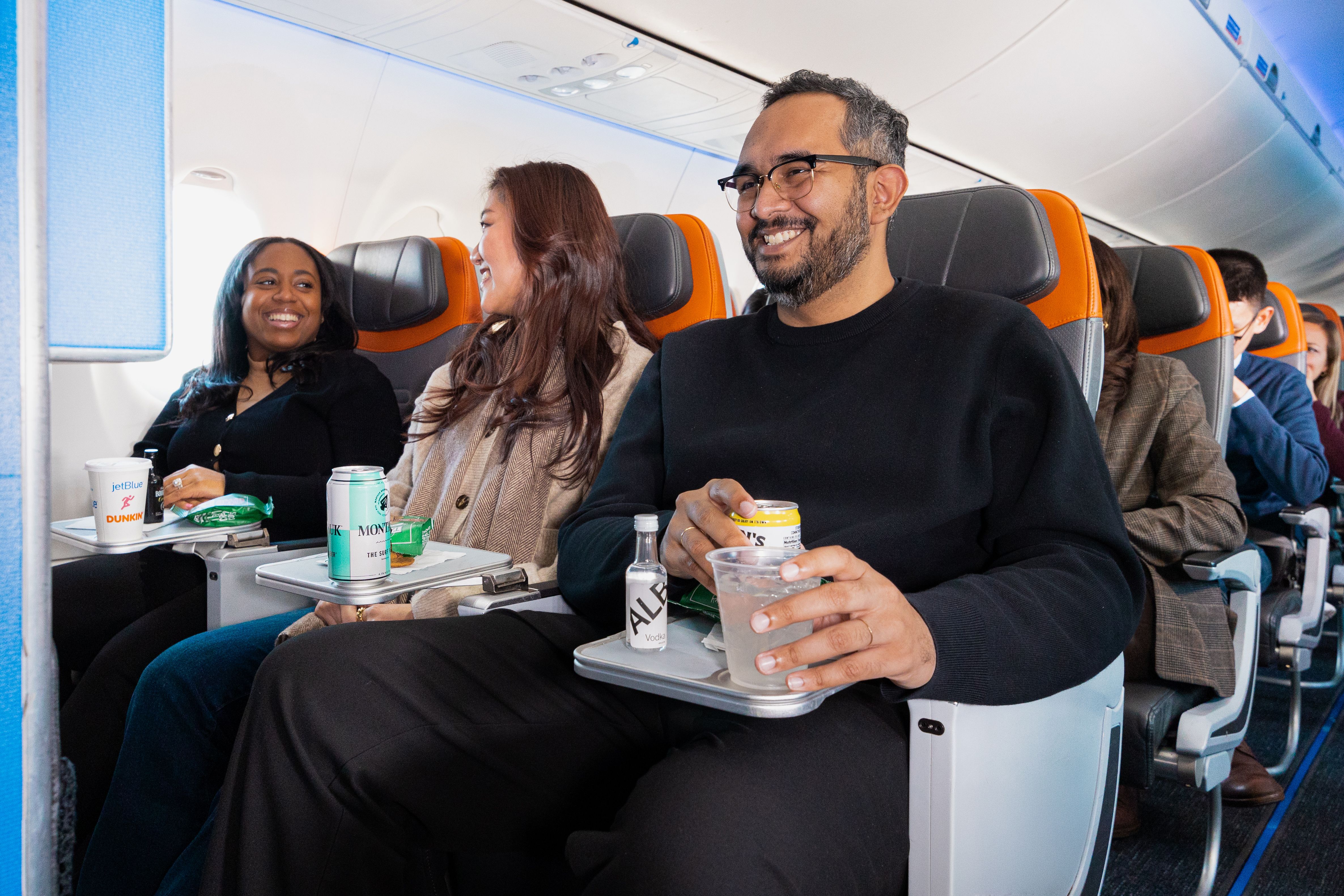
Dedicated premium economy marketing emphasizes wider seat cushions, adjustable leg rests, and multi-course dining, but most long-haul passengers measure personal comfort using legroom. Recognizing this passenger priority, several international airlines have begun to expand the dimensions of their extra-legroom seating blocks. Rather than offering the standard 33 or 34 inches (84 or 86 cm) of seat pitch typical of main cabin upgrades, leading global carriers, like Air New Zealand, have pushed extra-legroom pitch to 35 inches (89 cm), as per Airline Ratings.
As detailed in Simple Flying analysis, JetBlue’s EvenMore product is one of the leading examples of the increased space revolution. By providing up to 38 inches (96.5 cm) of pitch, EvenMore delivers substantial legroom for a fraction of the cost of a dedicated premium economy ticket. When compared to the standard 38 to 40 inches (97 to 102 cm) of pitch offered in traditional premium economy cabins, JetBlue is bringing standard economy offerings directly in contention with premium economy.
The trouble is that the dimensional convergence creates a significant commercial hurdle for premium economy upsells. For many cost-conscious flyers, the promise of an extra four to five inches (10 to 13 cm) of legroom in extra-legroom economy solves the discomfort of long-haul flying, namely, knees pressing against the seat ahead. Once knee room is guaranteed, paying a steep premium for wider armrests or priority meal service seems somewhat pointless to many travelers.
Steep Premium Economy Fare Escalation

Now that there is a steep escalation of international premium economy fares, many travelers feel that extra-legroom economy is a far better value product overall. Premium economy cabins are deliberately kept small, typically featuring between 21 and 28 seats per wide-body airframe, so supply remains fixed regardless of seasonal demand spikes.
According to a market analysis from Simple Flying, ticket prices for dedicated premium economy seats on key transatlantic and transpacific routes have surged well beyond historical averages. When intercontinental round-trip fares approach $2,500 to $3,500, the price differential compared to a standard $800 main cabin ticket becomes difficult for value-seeking travelers to justify.
The pricing escalation has led to a powerful financial incentive for passengers to upgrade from below rather than paying for a dedicated intermediate cabin. An extra-legroom seat assignment often adds between $100 and $250 per long-haul segment, bringing a total economy itinerary to approximately $1,000 to $1,300. When compared against a $3,000 premium economy ticket, extra-legroom economy provides the essential upgrade, notable knee room and freedom from cramped pitch, at less than half the total cost.
Ultimately, skyrocketing premium economy pricing has narrowed the value gap that once made dedicated intermediate cabins an easy sell. While high-earning corporate travelers with generous travel policies continue to book premium economy recliners, self-funded flyers and small business owners are increasingly opting for extra-legroom alternatives.
What has resulted is the rise of premium economy ticket prices closer to business class levels while keeping extra-legroom fees affordable. Commercial airlines have inadvertently created a compelling value proposition within their own main cabins, and that is something that is greatly disturbing the balance of what would be considered the traditional cabin setup.