dailynewsnblog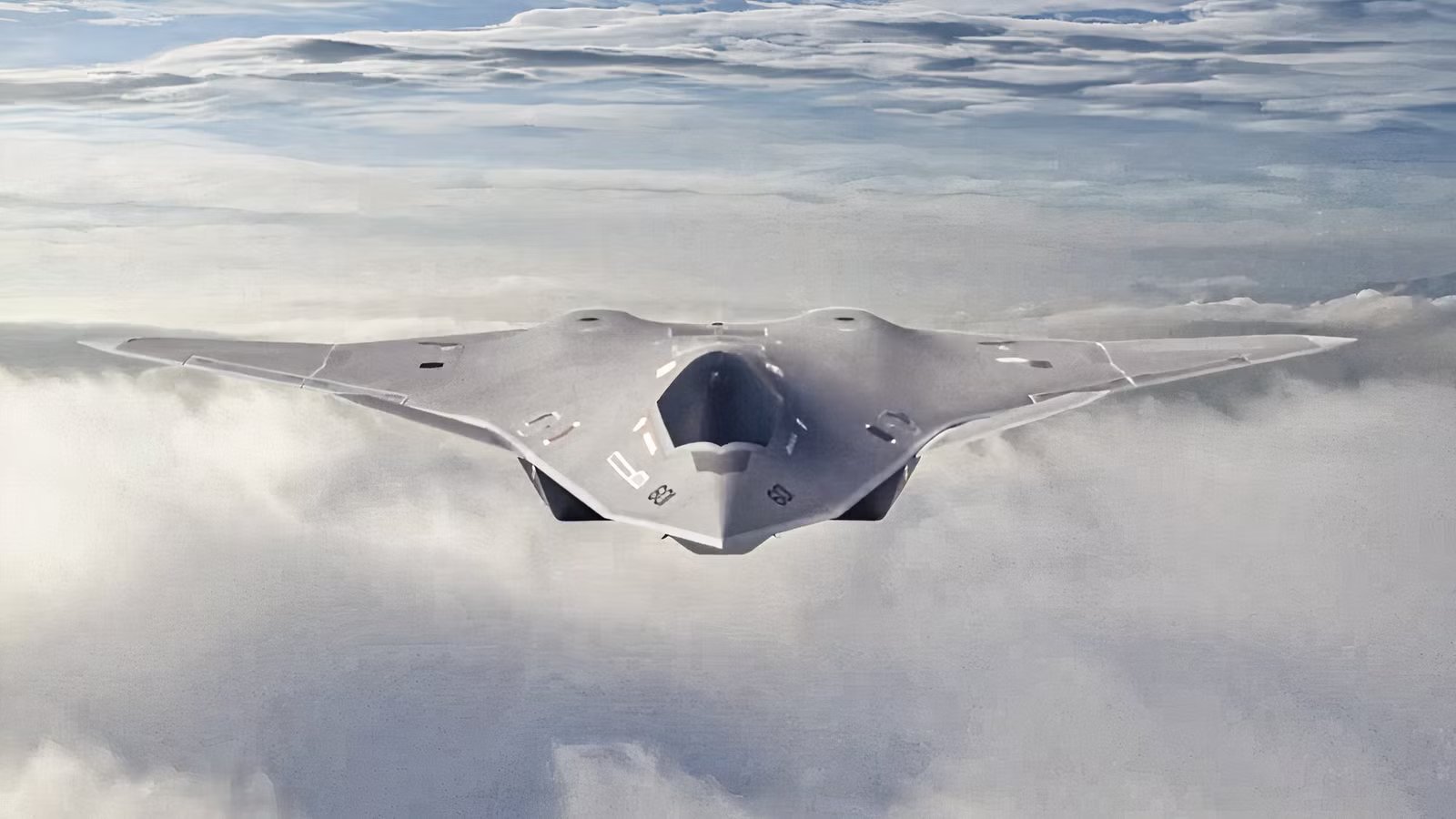
For the United States Air Force (USAF), the tip of the spear for aerial combat is, without a doubt, the fifth-generation Lockheed Martin F-22 Raptor and Lockheed Martin F-35 Lightning II. These highly sophisticated aircraft possess numerous features that allow them to excel at aerial combat and ground-attack missions. While these aircraft can dominate the skies over a battlespace, the next generation of fighters is quickly materializing.
Sixth-generation combat aircraft will build upon the capabilities of the F-22 and F-35 and likely exceed them in several key areas. Advanced sensors, more powerful engines, directed-energy weapons, and semi-autonomous drones are among the defining features expected to allow these new jets to surpass their predecessors. Working in tandem, the advances of sixth-generation fighter technology and legacy platforms will further enhance the combat capabilities of the USAF and Navy for many years to come.
Distributed Electronic Warfare And Sensing Capabilities
Laying groundwork for a successful operation

Electronic warfare (EW) is largely defined as any military action involving the electromagnetic (EM) spectrum; this includes using electromagnetic energy to control the EM spectrum or to attack an enemy. Generally, such actions make use of radio and radar frequencies, infrared, ultraviolet, and other less commonly used portions of the EM spectrum.
The overall purpose of EW is to disrupt, deny, degrade, deceive, or destroy an opponent’s ability to use the electromagnetic spectrum to its advantage. The latter is often associated with advanced communications and sensing equipment, as well as the data storage and processing capabilities needed for defensive or offensive operations. Further, by blinding or disrupting an enemy, a path can be made for kinetic attacks and the destruction of physical infrastructure.
To engage in EW, the F-35 uses an extremely sophisticated EW system built around its AN/ASQ-239 suite. Sixth-generation aircraft are expected to take the concept of distributed sensing further, with multiple apertures and sensors spread around the aircraft rather than relying as heavily on a single forward-facing sensor architecture.
Such a system of sensors could allow the aircraft to detect and characterize threats from multiple directions and contribute to a more complete picture of the electromagnetic environment. Further, a sixth-generation aircraft may not treat radar, electronic support measures, communications, and electronic attack as separate functions. Rather, the fighter could use its various apertures and sensors as a coordinated electromagnetic sensing and electronic attack system.
In terms of electronic attack, the advanced aircraft will not necessarily handle all the heavy lifting alone while engaging across the electromagnetic spectrum. Such a fighter will be an active participant in a larger interconnected battle network, a key defining feature of sixth-generation airframes. These planes could be connected to uncrewed aircraft, other fighters, ships, ground systems, and space-based assets.
Operationally, an uncrewed jet or drone could potentially operate closer to an adversary to collect signals, while the crewed sixth-gen fighter remains farther away. The information could then be shared across the force, creating a distributed EW capability rather than putting every sensor and emitter on one aircraft.
Greater Range & Persistence
With greater ranges, sixth-generation fighters will operate farther from carriers and air bases

Since the close of the Second World War, the premier power-projection asset of any nation with the means to construct or operate one has been the aircraft carrier. While these vessels provide tremendous operational flexibility and responsiveness to various contingencies, they are large ships that are expensive to build and maintain, often with crews of more than 1,000 officers and sailors. Similarly, the air bases from which future fighters will operate are highly valuable, making them high-priority targets.
In the age of great-power competition, the US and its allies cannot dismiss a potential adversary’s ability to strike the locations from which their aircraft operate. Barrages of long-range ballistic missiles and cruise missiles are expected to be a feature of any peer conflict, particularly one involving China, which has built a deep arsenal of such weapons that could be used to strike regional air bases and potentially US aircraft carriers.
The  Boeing F-47 (and aircraft in its class), which is expected to have its first flight in 2028 and cost around $300 million (£225 million) per unit, will likely feature powerful, fuel-efficient engines. These powerplants will propel them farther and allow them to operate in contested battlespaces for longer periods. Reportedly, these aircraft have a 1,000-nautical-mile (1,852 km) range and may exceed Mach 2.
The engine expected to power the F-47 is an adaptive-cycle design capable of providing improved thrust, efficiency, and cooling by automatically adjusting its airflow configuration to deliver the most efficient performance for the mission. By adapting its airflow as conditions change, the engine can provide higher thrust during combat, improved fuel efficiency during cruise, and increased cooling capacity for advanced avionics and sensors. Together, these advantages extend the aircraft’s range, enhance performance and survivability, and support more powerful onboard systems.
The Nose Radar Could Be Going Extinct
Distributed sensors and a “system of systems” is the future of battlespace awareness

Sixth-generation aircraft are expected to take sensor integration and operation far beyond what is installed on today’s fifth-generation fighters, with the technology potentially changing how aircraft detect and track threats. The Tempest/GCAP program is being designed around an Integrated Sensing and Non-Kinetic Effects system that combines radar, electro-optical, infrared, electronic support measures, and electronic warfare capabilities into a deeply integrated architecture. Rather than operating as individual systems, these sensors will operate together to provide pilots with a vastly more detailed picture of the battlespace.
Sensors on Tempest will also be integrated and embedded across the airframe, with miniaturized components that allow more capabilities to be distributed throughout the aircraft. This approach could provide greater flexibility in detecting and tracking threats from different directions, while allowing information from multiple sensors to be combined. The aircraft is also expected to use both onboard and off-board sensors, potentially allowing it to gather information from a wider range of sources and share that data with other platforms. To this point, the Royal Aeronautical Society reports that Tempest will be able to harvest, assess and utilize the equivalent of a medium-sized city’s worth of data in one second, to the benefit of the networked force.
This does not necessarily mean that the traditional fighter radar is disappearing. However, Tempest’s Multi-Function Radio Frequency System will still serve as a future radar system that is intended to provide capabilities beyond those normally associated with traditional radar. Instead, the sixth-generation approach to sensing could see the nose-mounted radar lose its position or possibly be removed completely in future classes of the aircraft or future generations of fighters.
Directed Energy Weapons
A “gun” with an unlimited magazine

Directed energy weapons (DEWs), or lasers, have been the material of science fiction films for decades, but they are now being deployed on naval vessels and ground-based vehicles. Primarily intended to defend against drones, rockets, and missiles, these weapons have yet to be operationally integrated into a fighter aircraft. Sixth-generation aircraft, however, could potentially change that.
With power generation from sources such as adaptive-cycle engines, the new fighters will have greater electrical output, operational efficiency, and cooling capacity, all of which are required for DEWs. It is therefore not out of the realm of possibility that such weapons could be integrated onto sixth-generation fighters.
Once onboard, DEWs, such as high-powered microwaves and lasers, could be used to defend against incoming missiles or as offensive weapons for targeting hostile aircraft or ground targets. The destructive power of a laser would likely be controlled by the aircraft’s systems to deliver the required intensity to damage or destroy a target. Conversely, for defensive engagements, an onboard AI copilot could potentially assist with targeting, laser power levels, and engagement initiation while the pilot attends to other mission objectives.
With the expected power generation of adaptive-cycle engines, a potential laser weapon mounted on a fighter could provide it with a virtually unlimited supply of ammunition, so long as sufficient power and cooling are available. This would allow the pilot to conserve their limited number of missiles for dedicated attacks against high-value ground targets or hostile aircraft beyond visual range.
Manned-Unmanned Teaming
Sixth-gen aircraft will operate with dedicated drones that will expand mission capabilities

One of the most interesting facets of sixth-generation aircraft will be the fact that they will operate alongside Collaborative Combat Aircraft (CCA), which are semi-autonomous drones. The USAF initially plans to place one or two CCAs under the command of each manned fighter, with potentially up to five or more in the future. This will move the pilot from simply operating the aircraft to commanding a small task force, with a set of mission objectives beyond what a typical fighter could handle on its own.
The initial operational version of the Air Force’s CCA concept, called Increment 1, will focus primarily on air-to-air and strike missions, with electronic warfare and intelligence, surveillance, and reconnaissance variants planned for later increments. In terms of numbers, the USAF has expressed interest in procuring 100–150 aircraft, with a longer-term goal of maintaining a fleet of hundreds to low thousands across multiple increments.
The USAF’s FY2027 budget request for the CCA program includes $996.5 million (£750m) in procurement funding to begin production of Increment 1, in addition to $150 million (£113m) in advance procurement for FY28. US Air Force Col. Timothy Helfrich, the Portfolio Acquisition Executive for Fighters and Advanced Aircraft at the Air Force Life Cycle Management Center, stated that the per-unit price for each Increment 1 aircraft is currently estimated to be below $30 million (£22.5m).
In any large-scale conventional war with a peer competitor, mass matters. Being able to bring immense quantities of capable weapon systems to bear has the potential to tip the scales in a combatant’s favor. The Anduril YFQ-44A Fury and General Atomics YFQ-42A Dark Merlin are intended to bring affordable mass to any contested battlespace. These aircraft are intended to complicate enemy targeting, expand the USAF’s sensor and strike network, and take on forward operating risks to enhance the survivability of US manned aircraft.

![Air Canada & Air Transat Are Launching These 5 New Transatlantic Routes Soon [Map]](https://dailynewsnblog.com/wp-content/uploads/2026/08/797-air-transat-airbus-a330-ross-howey-photo-_-shutterstock.jpg)