dailynewsnblog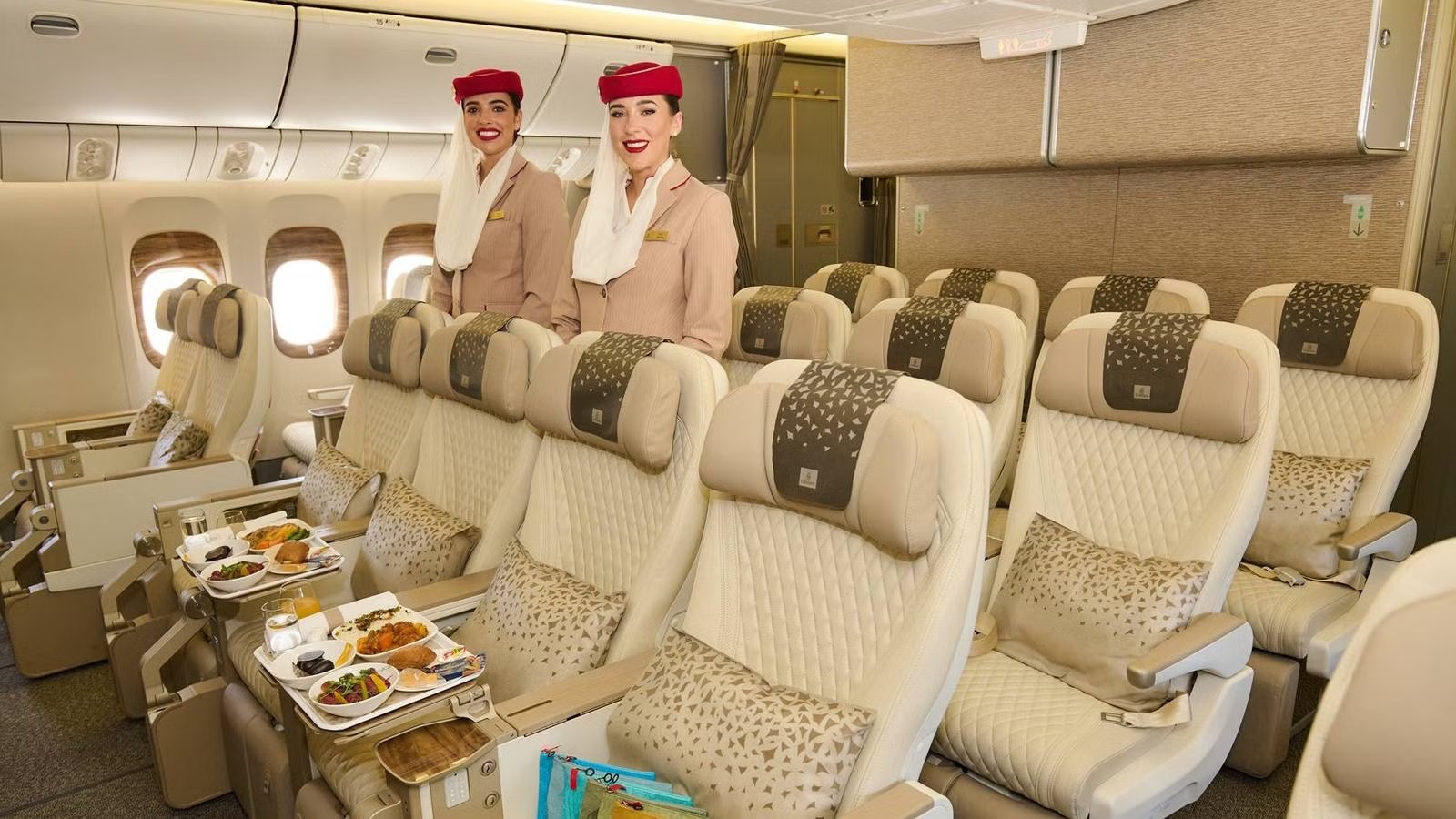
When an airline announces a new business class suite or a cabin redesign, the marketing focuses on the finished product: the wider seat, the closing door, the larger screen. What it does not show is the months of engineering, certification testing, and physical labor required to install that product inside an aircraft that has been flying passengers for a decade. A cabin retrofit is not a furniture swap. It is a regulated aircraft modification that involves stripping the interior down to the bare airframe structure, certifying every new component for that specific aircraft type, and rebuilding the cabin from the floor tracks up.
The scale of the work currently underway across the industry is unprecedented.  Emirates has spent $5 billion and 4.4 million work hours retrofitting 100 widebodies in 44 months, with 119 more to go. Lufthansa is retrofitting its entire A380 fleet in Dresden. American Airlines is sending 777-300ERs to Hong Kong one at a time. Air India, SWISS International Air Lines, Air New Zealand, and British Airways all have major retrofit programs running simultaneously.
The Entire Interior Is Stripped Down To The Airframe Structure
Stripped to bare structure

A cabin retrofit does not involve swapping one set of seats for another while everything else stays in place. The aircraft is stripped. Every seat is removed. Every overhead bin is taken out. The sidewall panels come off. The floor coverings are pulled up. The galleys, lavatories, and crew rest areas are dismantled. The in-flight entertainment wiring that runs under the floor and behind the sidewalls is disconnected and, in many cases, replaced entirely with new routing for a different IFE system. What remains after the strip is the aircraft’s primary structure: the floor beams, seat tracks, fuselage frames, and the bare interior of the pressure vessel.
Emirates’ retrofit program, the largest single-airline cabin overhaul ever undertaken, illustrates the scale. Each Airbus A380 that enters the Emirates Engineering facility in Dubai requires the removal, cataloging, and replacement of more than 4,000 individual parts. Each  Boeing 777 requires more than 2,500. The parts include not just the visible cabin elements but hundreds of brackets, fasteners, clips, ducting segments, wire harness connectors, and structural attachments that hold the interior together and connect it to the aircraft’s systems. Emirates has completed 100 widebody retrofits as of July 2026, comprising 47 A380s and 53 777s, accumulating 4.4 million man-hours of labor across 44 months with a dedicated team of over 400 engineers and technicians.
The strip phase is where the engineering team discovers what the aircraft actually looks like under the panels. Aircraft that have been flying for 10-15 years may have accumulated repairs, service bulletin modifications, equipment replacements, and airline-specific changes that are not fully reflected in the documentation. Two aircraft of the same type and age in the same fleet may not be identical underneath. TAAL Tech, a cabin engineering consultancy, noted in a June 2026 analysis that engineers must reconcile the aircraft’s digital definition against its actual physical configuration before the rebuild can proceed, because a retrofit designed against a theoretical baseline that does not match the aircraft on the hangar floor will not fit.
The First Aircraft Takes Months, The Rest Take Weeks
The first aircraft takes the longest

The first aircraft in any retrofit program takes far longer than every aircraft that follows it. Air New Zealand’s first Boeing 787-9 retrofit spent 184 days at a facility in Singapore before returning to Auckland with its new cabin. American Airlines sent its first 777-300ER to Hong Kong in December 2025 for a project internally designated “Olympus,” and the aircraft spent months in the facility before returning to the United States. Air India’s first 787-8 retrofit, originally planned for mid-2024, did not produce a completed aircraft until mid-2026. SWISS sent its first A330-300 to Hong Kong in July 2026 for the SWISS Senses cabin installation, with no confirmed return date at the time of departure.
The delay on the first aircraft is not caused by slow work. It is caused by certification. Every new seat type installed on an aircraft must be certified for that specific airframe. The certification process involves dynamic crash testing at 16g forward deceleration, static load testing of the seat tracks and floor attachments, flammability testing of all materials including cushions, fabrics, and plastics, and a demonstration that the new cabin configuration meets emergency evacuation requirements with the revised seat count and aisle geometry. The first aircraft carries the full burden of that certification process. Technicians install the new seats, discover fit issues, modify brackets or attachments, retest, and iterate until the installation meets the certification standard. Lufthansa encountered this on its A380 Allegris retrofit, where Tim Kaya, the airline’s cabin fleet manager, acknowledged that developing a custom seat typically takes four years and the airline prioritized speed by adapting an existing Thompson Aero Seating design rather than starting from scratch.
Once the first aircraft is certified, subsequent aircraft move through the process on a predictable timeline. Emirates reduced its A380 retrofit turnaround from over two months on the initial aircraft to approximately 30 days per aircraft after the process was refined and the certification was complete. SWISS expects to complete one A330 every six weeks once the prototype is certified and back in service. The gap between the first aircraft and the production run is one of the largest sources of schedule uncertainty in any retrofit program, because the certification timeline is difficult to predict until the work is underway and the regulatory authority has reviewed the installation in person.
Business Class Seats Sometimes Do Not Fit Through The Door
The seats do not fit through the door

Modern business class suites are larger than the doors and service panels they need to pass through to reach their installed position inside the aircraft. When an aircraft is built at the factory, the interior is installed before the fuselage sections are joined or before certain structural panels are closed, giving technicians access points that do not exist once the aircraft is complete and in service. A retrofit does not have that luxury. Every component must enter the aircraft through the existing passenger doors, cargo doors, or service access panels, and some of the newest business class seats are too large to fit through any of them.
Lufthansa encountered this problem on its A380 business class retrofit, which began in February 2026 at the Elbe Flugzeugwerke facility in Dresden. The new Thompson Aero Seating business class suites selected for the Allegris program are physically wider than the service access points near the aircraft’s second door section. The engineering solution was to temporarily dismantle an entire lavatory positioned near door 2, creating enough clearance to move the seats through the opening and into the business class cabin. Once all the seats are installed, the lavatory is rebuilt with an updated design. The process adds time and complexity to every aircraft in the retrofit sequence because the lavatory must be removed and reinstalled on each one.
The problem is not unique to Lufthansa or the A380. As business class products have evolved from narrow reclining seats to enclosed suites with doors, privacy partitions, and fixed furniture elements, the physical dimensions of the installed product have grown beyond what the aircraft’s access points were designed to accommodate. A 21 inch (53 cm) wide recliner from the 1990s fit easily through any passenger door. A 40 inch (102 cm) wide enclosed suite with a solid door panel and a fixed side table may not. Seat manufacturers and airlines must design the suite to be disassembled into components small enough to pass through the available openings and then reassembled inside the cabin, or the airline must find a creative way to create temporary access as Lufthansa did. The constraint adds engineering hours to the retrofit that have nothing to do with the seat’s design or performance and everything to do with the geometry of getting it into the aircraft.
Every Retrofit Changes The Aircraft’s Weight And Balance
What changes behind the panels

A cabin retrofit that replaces economy seats with premium economy or swaps narrow business class seats for enclosed suites changes the aircraft’s weight distribution in ways that extend well beyond the visible interior. A premium economy seat weighs more than an economy seat. A door-equipped business class suite weighs substantially more than the reclining seat it replaces. When an airline removes 120 economy seats and installs 56 premium economy seats and 18 additional business class suites in the same floor space, the total cabin weight changes, and so does the location where that weight sits along the length of the fuselage. The aircraft’s center of gravity envelope must be recalculated, and the new configuration must fall within the certified limits for every phase of flight.
The structural changes go deeper than weight. New seat types may impose different loads on the floor tracks and support beams than the seats they replace. A business class suite with a sliding door, a fixed side table, and a fold-out dining surface transmits forces to the floor differently than a lightweight economy seat mounted on the same tracks. Engineers must verify that the floor structure can handle the new loading pattern without modification, or design reinforcements where it cannot. The IFE system may change entirely, requiring new servers installed beneath the cabin floor, new wiring routed through cable runs behind the sidewall panels, and new power distribution units to supply the higher electrical demand of larger screens and wireless charging at every seat. Water and waste plumbing may need to be rerouted if lavatories move to accommodate a revised cabin layout. Oxygen mask drop-down zones must be reconfigured if the seat count or row spacing changes.
Passengers boarding a retrofitted aircraft see new seats, new screens, and new finishes. They do not see the modified floor structure beneath the carpet, the rewired cable bundles behind the sidewall panels, the relocated oxygen system components above the ceiling, or the recalculated weight and balance data that the flight crew uses to determine takeoff trim settings. The engineering work behind the panels is often more complex and more expensive than the visible cabin elements, and it is the reason a cabin retrofit is classified as an aircraft modification requiring regulatory approval rather than an interior decoration project that the airline can execute on its own schedule.
The Revenue An Airline Loses While The Aircraft Sits In The Hangar
The revenue lost while grounded

A widebody aircraft in revenue service generates significant income every day it flies. An Emirates A380 operating two daily rotations between Dubai and London or Dubai and Sydney produces revenue from 500-plus passengers per flight across four cabin classes, plus belly cargo. A Boeing 777-300ER on a similar schedule produces comparable revenue at a slightly smaller scale. Every day that aircraft sits in a retrofit hangar in Dubai, Dresden, Hong Kong, or Singapore is a day it earns nothing while the airline continues to pay the lease, insurance, and maintenance reserve contributions that accrue regardless of whether the aircraft is flying.
Catch what other flight trackers miss
Emergency squawks, holds, NOTAMs — live signals, no signup.
Open tracker
Catch what other flight trackers miss
Emergency squawks, holds, NOTAMs — live signals, no signup.
Open tracker
The financial pressure is why airlines stagger retrofits across years rather than grounding large portions of the fleet simultaneously. Emirates’ program covers 219 aircraft and has been running for 44 months with approximately 28 aircraft completed per year. At that pace, the program will take roughly eight years from start to finish. Grounding 20 or 30 A380s at once to accelerate the timeline would remove enough capacity from the network to force route cancellations and leave revenue on the table that exceeds the cost of running a slower, longer program. SWISS plans to retrofit its 14 A330s one at a time at six-week intervals. American Airlines is cycling its 777-300ERs through Hong Kong individually. The pace is set by how many aircraft the airline can afford to have out of service at any given time without affecting its published schedule.