dailynewsnblog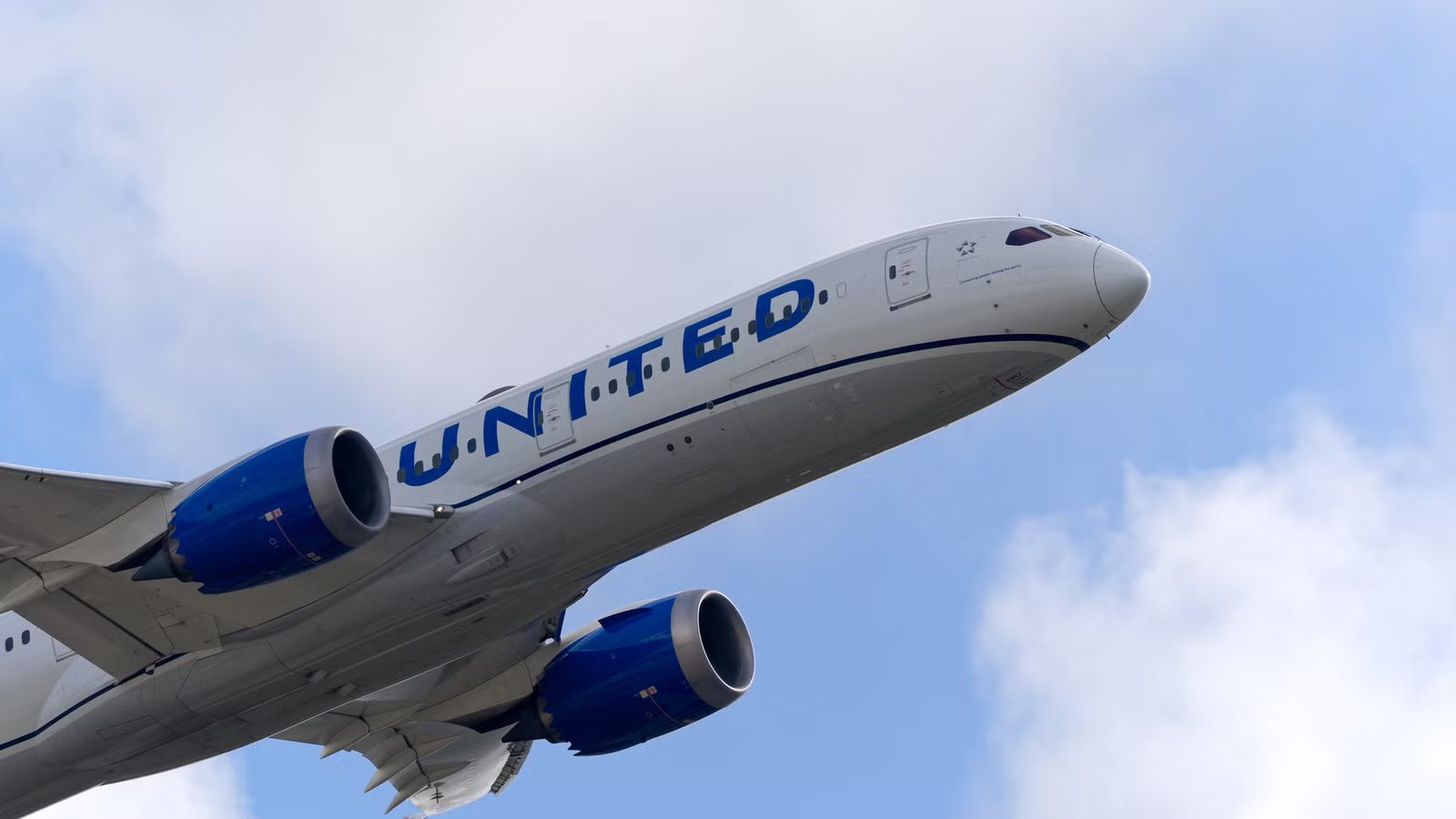
The United States is a geographically massive country that also borders Canada and Mexico, with many more Central American and Caribbean countries in its near abroad. This creates a dynamic where the distinction between international routes associated with premium services and long-haul routes and domestic routes, associated with basic services and short-haul flights, blurs.
For the purposes of aircraft configuration, in-flight service, and in-flight entertainment, some longer-haul domestic flights on prestige routes (such as transcontinental services or those to Hawaii) are treated as international flights. Meanwhile, many international flights, such as many of the routes to Canada, Mexico, and the Caribbean, are treated as domestic routes in terms of their onboard offering.
In the case of some flights from Canada, the ‘internationalness’ of the flights can blur even more with passengers passing US border security in Canada and then arriving at the otherwise domestic-only LaGuardia Airport. Let’s examine some of the things that passengers might not know about booking lie-flat seats on domestic US flights.
Select Domestic Flights Have International Quality
Longest US domestic flight: Boston to Honolulu at 4,427 nautical miles (resuming in December with Delta)

As stated in the introduction, some select, prestige, and transcontinental routes are the same as international flights from the point of view of the quality and style of the products offered by airliners. US-based airlines often task widebody airliners with thick, premium routes, and these aircraft are often configured substantially the same as those tasked with long-haul international flights, including lie-flat beds.
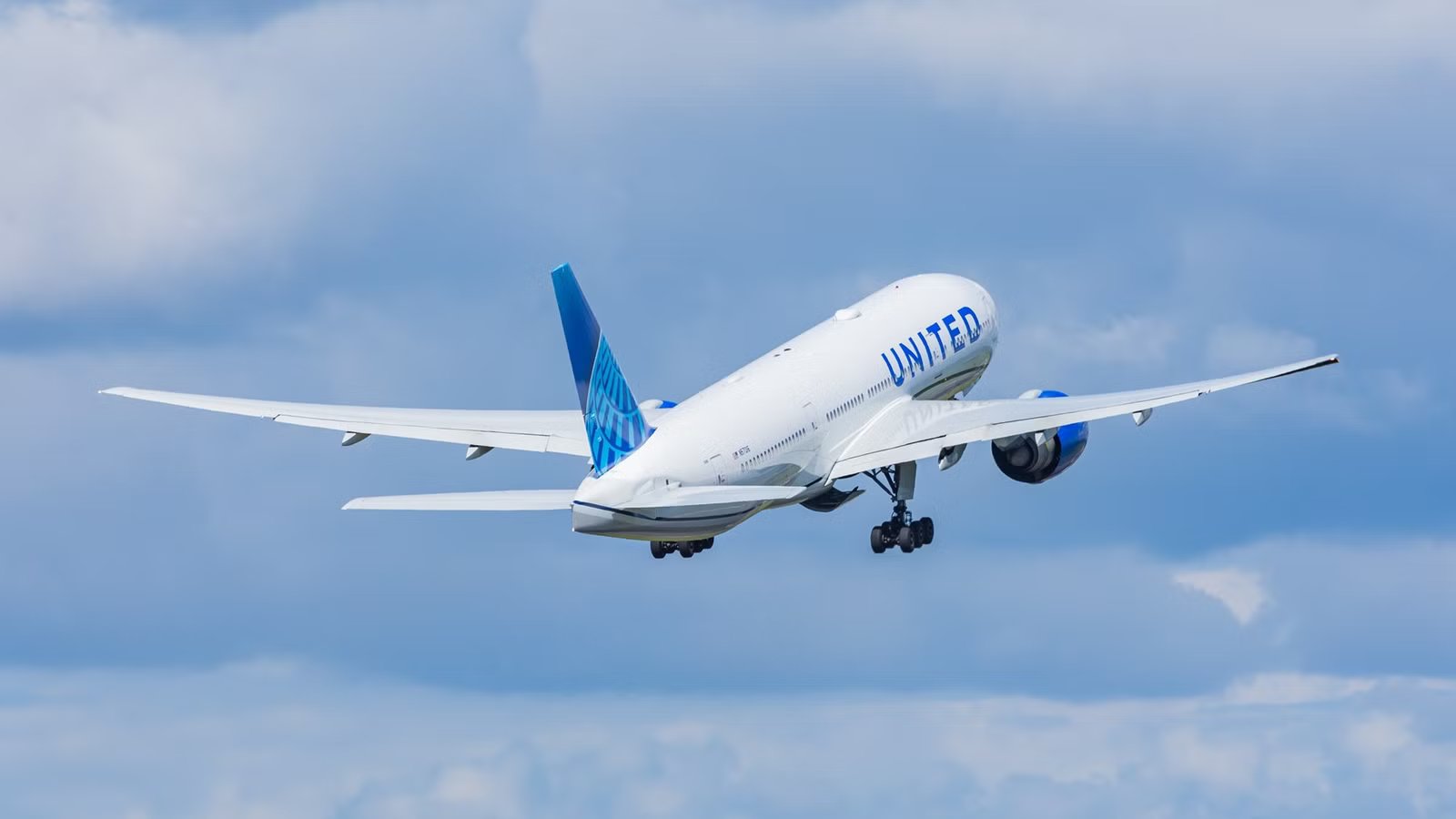
So a United Airlines Boeing 787 flying on the route from Los Angeles to Newark Liberty can expect the same lie-flat Polaris-style seats as the aircraft that United uses on long-haul international routes (such as from Newark to London). The same happens on some routes with American Airlines’ Boeing 777s and 787s along with Delta’s widebodies.
At Delta, passengers can find Delta One lie-flat seats on its widebody aircraft assigned to its key transcontinental routes between New York, Boston, and the US West Coast. This includes Delta’s New York to Los Angeles, New York to San Francisco, Boston to Los Angeles, Boston to San Francisco, and New York to Seattle transcontinental routes. It also offers Delta One on Hawaiian routes to Honolulu from Minneapolis, New York, Seattle, Detroit, and Atlanta, but this is not an exhaustive list of routes.
Delta is also one of the airlines that offer lie-flat seats on its Atlanta to Anchorage route. However, this is not consistent, as United’s routes to Anchorage are typically premium domestic and generally not lie-flat. Ironically, by definition, Air Canada’s flights to Anchorage are ‘international flights,’ but their cabins are not figured as such, as the cabins are generally configured as short/medium-haul domestic flights.
All US Widebodies Have Lie-Flat Seats
There are approximately 532 widebody passenger airliners in the US

As of mid-2026, it appears all of the widebody airliners in regular passenger service with US-based airlines now have lie-flat seats. This includes all of Delta’s approximately 179 widebody aircraft (Boeing 767s, A330s, A350s), all of American Airlines’ 137 widebody aircraft (Boeing 787s, 777s), and all of United’s 187 widebody aircraft (Boeing 787s, 777s). It also includes Hawaiian’s 24 widebodies (A330s) and Alaska Airlines’ five (Boeing 787s).
Delta’s widebody fleet is now equipped with lie-flat Delta One seats fleet-wide on all its widebody aircraft. Until fairly recently, American Airlines has had angled-flat (not fully flat) business-class seats mixed into its Boeing 777-200 fleet, but it has now retrofitted or retired the last of these aircraft, so it is no longer an issue. Separately, American is also becoming the last US-based airline to phase out first class on its aircraft.
This was also an issue on some of United’s older business class seats found on older Boeing 767-300s and Boeing 777-200s, but that issue has also been resolved with the last of the widebodies retrofitted. United has phased out the angled flat business class seats on its widebody aircraft.
This means that now, in the United States context, passengers just need to see if the business class seat is on a widebody aircraft. It no longer matters if the flight is a domestic or international route. Of course, this only applies to the airlines considered here: Delta, United, American, Hawaiian, and Alaska. Some charter airlines, foreign airlines, or others may have their aircraft configured differently.
The Aircraft, Not The Route
Five families of widebodies in service in the US

While the major airlines operate widebody airliners on some prestige transcontinental routes, they don’t exclusively operate these aircraft on the routes. The same route can have widely different seats depending on which aircraft shows up and what time of day it is. On the popular Los Angeles to New York JFK route for the next seven days, data from FlightRadar24 shows American is only operating narrowbody A320 family aircraft.
Meanwhile, on the same route, Delta is operating Boeing 767s and Airbus A330s (depending on the time of day). On the twin route from Los Angeles to Newark Liberty, United operates Boeing 757s and Boeing 787s. Typically, an important factor would also be the stage of cabin retrofit the airline was going through, but as stated, United and American have completed these retrofits.
Routes from Hawaii with lie-flat seats (widebody aircraft) per FlightRadar24 & airline sources | From Honolulu (including seasonal/irregular) | From Kahului (including seasonal/irregular) |
|---|---|---|
American Airlines | Dallas/Fort Worth, Charlotte, Phoenix | Dallas/Fort Worth, Chicago |
Delta Air Lines | Atlanta, Los Angeles, Minneapolis, New York JFK, Salt Lake City, Detroit | Los Angeles, Atlanta |
United Airlines | Chicago, Denver, Houston, Newark, Washington Dulles, San Francisco, Los Angeles | Chicago |
Hawaiian Airlines | Boston, Las Vegas, Los Angeles, New York JFK, Oakland, Phoenix, Portland, Sacramento, San Diego, San Francisco, Seattle | Los Angeles, Seattle |
Alaska Airlines | none | Seattle (limited) |
Even so, there is variation within the fleet. For example, Delta’s new Airbus A350s come with Delta One Suites with privacy doors, while its older Boeing 767s don’t. Older 767s come with more basic lie-flat seats. The experience can vary significantly by aircraft. One passenger may fly with a modern suite with a privacy door, while another may fly the same route on another Boeing 767 without it.
Delta is operating around 13 flights daily between Los Angeles and its hub at Atlanta using the A320 family, Boeing 767s, Boeing 757s, and new A350s equipped with its Delta One Suites. From Los Angeles, the only A350 flight with Delta One Suites departs at around 5.00 pm. Delta says of its Delta One Suites that “our most premium travel experience, designed to make every moment feel personal, indulgent and effortless.”
The Seat Does Not Equal Service
American’s A321T aircraft are a special case

Perhaps one of the most important distinctions between short-haul flights (often domestic) and long-haul flights (often international) is the quality of services. Some short-haul flights in the United States employ widebody aircraft with fully lie-flat seats, but these don’t always come with all the frills associated with long-haul international flights.
For example, on short-haul hops, like that from Miami to New York City, passengers might not get Casper bedding, noise-cancelling headphones, or any of the premium amenity-kit treatment. In-flight meals may also be more limited compared with their long-haul counterparts.
The same distinction applies to the airport. Domestic passengers flying business with lie-flat seats might not get the same premium lounge experience as international passengers. After all, international lounges are in a different part of the airport and are inaccessible to domestic passengers. Domestic is its own terminal with its own lounges.
It is also worth noting that American distinguishes its Flagship Business Transcontinental experience from the ordinary domestic First. American’s transcontinental offerings include lie-flat seating and enhanced dining and ground services. American has a special fleet of A321 narrowbodies specially configured for high-end business class transcontinental service with lie-flat seats, but as narrowbodies, they are outside the scope of this article.
The Five US-Based Widebody Operators
Alaska Airlines’ five Boeing 787-9s now qualify

The three primary US-based airlines to operate widebody airliners are Delta, United, and American. These all use widebody airliners configured with their premium business-class lie-flat seats on select routes. Most other airlines, including Southwest, JetBlue, Frontier, Breeze, and Allegiant, only use narrowbody aircraft.
Hawaiian Airlines is the primary airline to operate widebody airliners after the Big Three. It exclusively operates a fleet of Airbus A330CEOs, as its order for Boeing 787-9 Dreamliners has been taken over by Alaska Airlines following its acquisition. Hawaiian also uses these widebody aircraft on select domestic routes. For example, in 2021 Hawaiian reported that “guests traveling between HNL and SEA will enjoy the roominess and comfort of Hawaiian’s wide-body Airbus A330 aircraft, which features 18 lie-flat leather seats.“
As for Hawaiian, domestic flights with these lie-flat seats are mostly from/to Honolulu. Routes from Honolulu include flights to Las Vegas, Los Angeles, New York JKF, Phoenix, Portland, Sacramento, San Diego, San Francisco, and Seattle. Additionally, there are routes with lie-flat Hawaiian seats from Kahului to Los Angeles and Seattle. Alaska Airlines now possesses a fleet of five Boeing 787-9 aircraft.
These feature 36 “fully lie-flat suites with privacy doors, direct aisle access, and spacious lounge-style seating that converts into a true flat bed.” As of mid-2026, Alaska Airlines’ 787-9s are flying primarily on international routes out of their new Seattle hub, but there’s one notable domestic exception. Alaska Airlines has been deploying 787-9s on the Seattle to Kahului, Maui route during peak holiday windows. This is limited to specific high-demand periods, but it still means Alaska appears on the list.