dailynewsnblog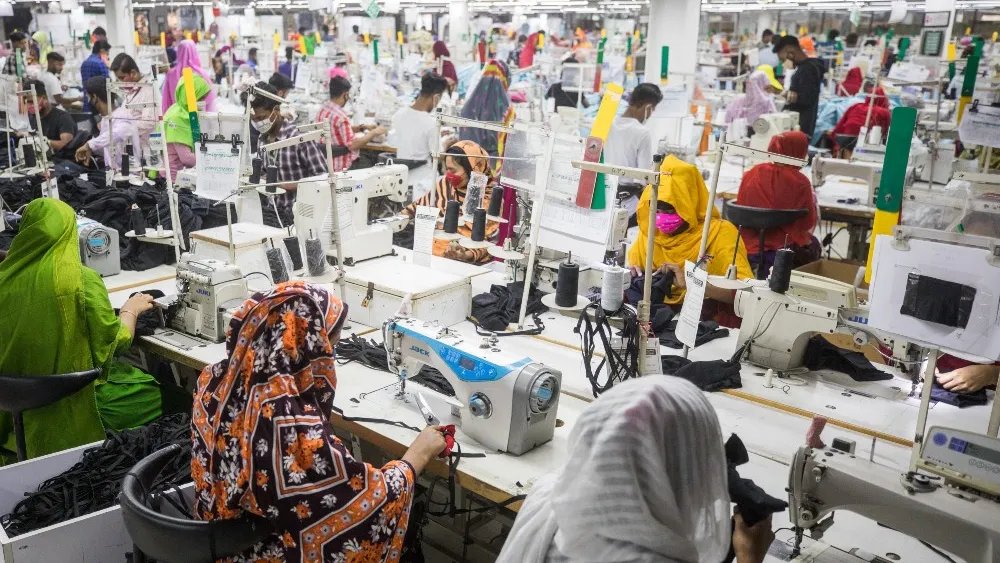
Having crossed a historic milestone of 300 signatories, the International Accord is preparing for its next phase of factory safety and expansion.
The framework now covers more than 2,000 factories across Bangladesh and Pakistan, representing approximately $26 billion in annual sourcing and 3.4 million workers.
“This is the highest number of brands that we have to date,” Joris Oldenziel, executive director of the International Accord for Health and Safety in the Garment and Textile Industry told Sourcing Journal, emphasizing the scale of accountability the framework now commands. “This represents a very strong commitment to workplace health and safety,” he said.
Yet, behind the milestone, significant challenges are coming to a head.
Bangladesh‘s manufacturers, who have spent more than 13 years remediating factories since the Rana Plaza collapse and the birth of the original Accord, are increasingly pushing back against the framework’s direction.
Nafis Ud Doula, director of the Bangladesh Garment Manufacturers and Exporters Association (BGMEA) and a member of the RSC board, is emphatic about the industry’s position.
“From the industry, we are saying, ‘It is enough! We don’t want any external gatekeeper. We are mature enough to handle ourselves. We do not want the Accord as a gatekeeper. We want to change the protocols; to change the process.’”
Global unions, meanwhile, are pressing for changes to its governance and a broader approach to worker protection as negotiations begin over the renewal of the Bangladesh Safety Agreement.
The present Bangladesh program is due to continue until December 31, 2026, with brands and the two global unions preparing to negotiate its renewal.
In Bangladesh, the program is implemented through the RMG Sustainability Council (RSC), established in 2020 as a national tripartite body bringing together industry, global brands, and trade unions. The RSC took over the Accord’s operational functions, including factory inspections, remediation monitoring, safety training, and the worker complaints mechanism.
“IndustriALL and its affiliates are pushing for expansion: broader coverage, stronger complaint mechanisms, more effective governance. Trade unions will not settle for the status quo,” said Atle Høie. “Three hundred signatories is a significant achievement and represents a massive shift in how global brands approach worker protection.”
The International Accord’s Steering Committee is jointly constituted by global unions IndustriALL and UNI alongside signatory brands, with the International Labour Organization (ILO) serving as the neutral chair to create a balanced, tripartite governance structure.
While all the parties agree that worker safety is the ultimate priority, there is growing disagreement over how the next phase should be implemented.
Bangladesh’s manufacturers are particularly unhappy with the direction of the RSC and the prospect of an expanded mandate. Meanwhile, Pakistan is readying for the next phase.
“At the moment, we are renegotiating the Bangladesh Safety Agreement, because that is expiring at the end of this year, so there is a lot of discussion going on about the kind of renewal that is necessary,” said Oldenziel. “There are discussions about moving toward another sort of governance model, but it is clear that fire and building safety still needs monitoring, even though a lot of progress has been made. For example, we still have hundreds of factories where fire alarm and detection systems have not been fully verified.”
Pakistan, however, is at a very different stage of development.
Having launched in 2023, the program is considerably newer than its Bangladesh counterpart. It entered its fourth year in 2026, following a renewal in January, with provision for automatic renewal for a subsequent three-year period.
“We have now completed inspections in almost all the factories, and that too is a big milestone. Now we are ready to move to the next step, which is remediation, and we are really focusing on that in the coming months,” Oldenziel said.
“There is still a lot of work to be done,” he added.
The two programs also differ in scale. While some brands source from both countries, others operate in only one, with approximately 247 brands sourcing from Bangladesh and 143 from Pakistan.
Manufacturers in Bangladesh have been calling for a greater say in how the system operates, contending that the present RSC structure is slowing down remediation and increasing costs.
Meanwhile, the unions are concerned that the RSC’s governance structure is not effective enough and needs a broader mandate covering labor issues, alongside a more effective review process to ensure that the program is implemented properly.
“You can’t have this program without the involvement of the manufacturers, but at the same time, you do want the program to be independent and free of interference or particular dominance by one of the parties,” said Oldenziel.
The BGMEA however, wants a fundamental change in approach.
With the wars in the Middle East and Ukraine, shipping disruptions, shifting consumer demand, and continuing geopolitical uncertainty, manufacturers in both countries are increasingly cautious about making financial commitments.
Brands, too, are operating in an uncertain environment. Given the financial pressures, the impact of how responsibilities and costs should be distributed is causing more strife.
“We are not convinced that the RSC should expand its mandate. It is even failing to deliver its existing mandate,” said Ud Doula.
He argued that the program’s operating costs have risen considerably over the past six years, while its processes and protocols have not kept pace with the industry’s changing needs.
“When the RSC took over, we had the mandate to take on all the staff. We haven’t changed anything. The world has changed and come a long way, but we haven’t changed any protocols. We are still following the same ones,” he said. “We have never done an assessment of the people at the RSC—and if the inspectors or the staff are not delivering, we need to be able to make changes when needed.”
Ud Doula also questioned the role of consultants in the process, arguing that some had been brought in without sufficient scrutiny.
“They came out of nowhere, they made a lot of mistakes, and till now they are making a lot of mistakes. With this, the RSC is also suffering,” he said, adding that manufacturers are also paying a price for changing requirements, despite heavy investments in remediation.
“We see the Accord keeps shifting the goalposts. Even as we spend hundreds of millions of dollars on remediation, these keep changing. It is very difficult for us. In addition, there are a lot of delays. To get one design approval takes more than a year. These things are holding us up,” he said.
There are other problems too, he pointed out, citing a small example: “I installed some equipment in 2014. Some of the print on that product has faded, and they are saying, ‘We can’t see that.’ But they saw it initially! Now they are saying I have to change it, even though it cost a lot to put in. These are the things we don’t know how to handle,” he said.
“They don’t know the pain we are going through. We want faster remediation. In the board, we said no to occupational safety and health (OSH) and labor practices. When the RSC was formed, we thought it would be a service-based organization, not just for policing,” he added, underscoring the depth of the disagreement over whether the RSC should expand its complaints mechanism beyond OSH to cover wider labor issues.
For BGMEA, the immediate priority is to improve the existing system rather than broaden its remit.
Ud Doula reiterated that the RSC had failed to deliver adequately on its existing mandate and that the industry had already demonstrated its capacity to improve factory safety.
“The performance has been really good for the industry, and now Bangladesh is one of the safest countries in the world for sourcing. We have matured a lot in the last 13 years. We have proved what the industry can do,” he said.
Brands and members of the Accord steering committee have often acknowledged the step up in safety measures in Bangladesh factories, as well as the financial burden on suppliers,
Yet, as Oldenziel pointed out, “The objective is to help factories become safer and more competitive, rather than drive them out of business.”
“We realize it’s a heavy lift for some of the suppliers. Sometimes it involves a lot of investment, and our aim is certainly not to destroy any industry, but rather to help it become safe and sustainable, and also to help it grow and attract more business from brands,” he said.
He pointed to sourcing growth in both countries as evidence that independent safety oversight can strengthen brands’ confidence in their supply chains.
In Pakistan, brands participating in the Accord sourced approximately $3.5 billion worth of apparel and textiles, a figure that rose to $4.5 billion in 2025. In Bangladesh, sourcing increased from approximately $17 billion in 2023 to $20 billion in 2025, according to Oldenziel.
“Part of it is that brands feel that there’s now an independent entity overlooking safety, and they can feel comfortable increasing their sourcing,” he said.
For Oldenziel, one of the most pressing challenges is ensuring that inspections translate into actual improvements on the factory floor. While inspections have been completed in the vast majority of factories covered by the programs, the next step is to accelerate remediation and ensure that identified risks are addressed.
Pakistan faces additional hurdles because its safety program is still developing.
“A particular challenge in Pakistan is that there is quite a lack of engineering consultancy expertise, and we are working hard to build that capacity,” Oldenziel explained.
“The majority of factories will have to hire external consultants to help them draft designs and drawings for fire alarm systems or carry out detailed engineering assessments. It is challenging for factories to find consultants.”
The availability of technical expertise is particularly important because remediation can involve complex engineering work, from designing fire alarm systems to assessing building structures and installing fire suppression equipment.
Another concern is that factories and consultants may spend too much time preparing designs and drawings while relatively straightforward safety improvements remain outstanding.
“There are a lot of big-ticket items, like fire alarm systems or fire suppression systems, while others are relatively quick fixes. We see that the focus has been a little too much on preparing designs and drawings with consultants and not enough on fixing these immediate items,” he said. “That is something we are really prioritizing. If a factory doesn’t have a fire suppression system yet, but at least there is safe egress, then workers can get out safely in the immediate moment. Quick fixes can already significantly improve the safety of a factory.”
The distinction is important for both programs.
While long-term remediation may require substantial investment and specialist expertise, immediate interventions can reduce risks while more complex work is being completed.
Despite the deep divide on governance, and disagreements on governance in Bangladesh, the 300-signatory milestone demonstrates that international brands remain committed to the Accord’s core principle.
The International Accord is also continuing to explore expansion into other countries, with Cambodia emerging as a potential next step.
“The brands and unions still need to negotiate the details of the program and engage with local stakeholders, the industry, and the government on exactly what the program will address,” Oldenziel said, looking ahead toward 2027.