dailynewsnblog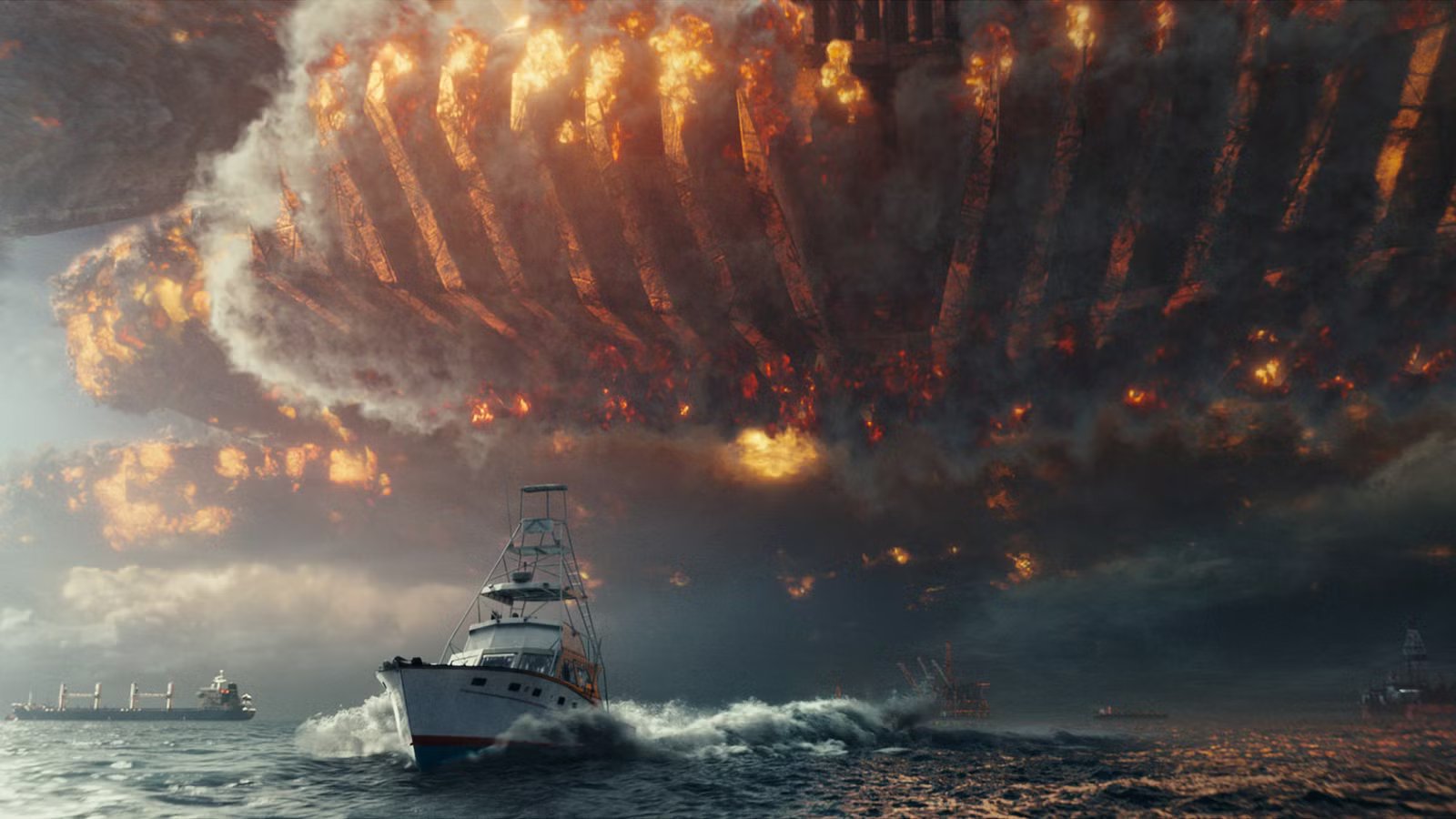
There was a time when the biggest name on a movie poster wasn’t the title. It was the actor — names like Harrison Ford, Arnold Schwarzenegger, Julia Roberts, Tom Cruise, and Bruce Willis. Audiences weren’t just buying tickets to a story, they were buying tickets to spend two hours with performers they already loved. Today, blockbuster marketing usually works the other way around. The franchise comes first. The actors are often secondary.
30 years ago, one alien invasion movie proved an original blockbuster could still create a movie star. Even as Hollywood was beginning to move in a different direction.
When Independence Day arrived in theaters on July 3, 1996, it looked like the ultimate summer blockbuster: dazzling visual effects, unforgettable set pieces, and one of the most crowd-pleasing presidential speeches ever committed to film.
Independence Day follows an unlikely group of heroes who must unite after an alien invasion threatens to wipe out humanity. It also did something Hollywood blockbusters rarely do anymore. It helped turn Will Smith into one of the biggest movie stars in the world while quietly marking the beginning of an era in which franchises became Hollywood’s biggest attraction.
Smith had already found success on The Fresh Prince of Bel-Air and co-starred in Bad Boys, but Independence Day transformed him into someone audiences would watch in anything (including Men in Black the following year). Smith’s charisma helped define the film, but so did Jeff Goldblum’s neurotic brilliance as David Levinson and Bill Pullman’s unexpectedly iconic President Thomas J. Whitmore. Viewers walked out quoting the movie. (“Welcome to Earth!” is something I will definitely say if I ever punch an alien.) They were cheering Smith and remembering Pullman’s speech long after the credits rolled. The movie wasn’t remembered just for blowing up the White House. It made movie stars.
That used to be one of Hollywood’s greatest strengths. Original blockbusters didn’t just make money. They transformed relatively unknown actors into A-listers. Bruce Willis was a television star before Die Hard. Keanu Reeves had already built a career before Speed. Both emerged from those films as the kind of Hollywood leading men audiences would follow from one movie to the next. Eventually, Hollywood’s biggest blockbusters stopped working that way.

Today, audiences buy tickets to Marvel, Jurassic Park, Avatar, or Star Wars. Chris Hemsworth became a star because he played Thor. You could say the same of Tom Holland as Spider-Man or Daisy Ridley as Rey in the Star Wars prequels. All three have built successful careers beyond those roles, but unlike Will Smith after Independence Day, their careers have remained closely tied to the worlds that introduced them.
That’s not necessarily a bad thing. Franchises create shared cultural events and give talented actors enormous platforms. But they also change the relationship between audience and performer. In the 1990s, a breakout hit could leave moviegoers eager to see whatever an actor did next. Today, audiences are often more invested in the next chapter of the franchise than the next chapter of an actor’s career. The Jurassic Park franchise has starred Sam Neill, Jeff Goldblum, Laura Dern, Chris Pratt, Bryce Dallas Howard, and now Scarlett Johansson. Through all those cast changes, the constant has never been the stars. It’s the dinosaurs.

Movie stars haven’t disappeared, of course. Tom Cruise can still open a blockbuster on the strength of his name, while Leonardo DiCaprio, Denzel Washington, Sandra Bullock, and a handful of others remain rare examples of actors whose reputations can sell a film. The difference is that Hollywood doesn’t produce movie stars in the same way it once did. 30 years ago, Independence Day helped launch Will Smith into an entirely different stratosphere. That almost never happens anymore.
That’s what makes revisiting Independence Day on its 30th anniversary so fascinating. The movie wasn’t responsible for Hollywood’s shift toward franchise-first filmmaking, but it arrived at the exact moment the industry was beginning to change. It proved an original blockbuster could dominate the summer, introduced one of the defining movie stars of his generation, and then watched Hollywood spend the next three decades investing more heavily in recognizable brands than recognizable faces.
In hindsight, Independence Day feels less like the beginning of the franchise era than the bridge between two different versions of Hollywood. One still believed a blockbuster could create its next great movie star. The other increasingly trusted that audiences would show up for the logo before they showed up for the person standing underneath it.