dailynewsnblog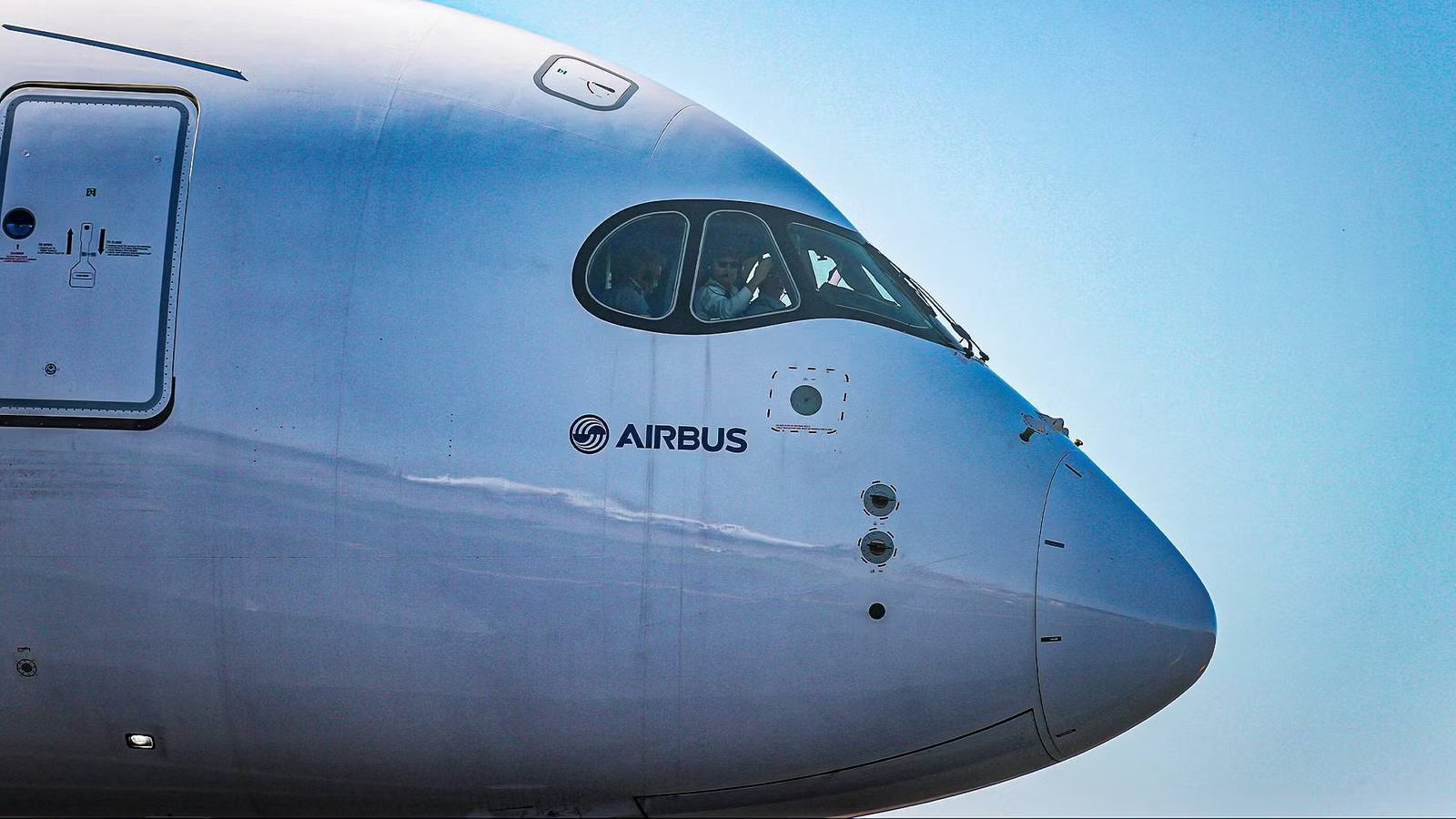
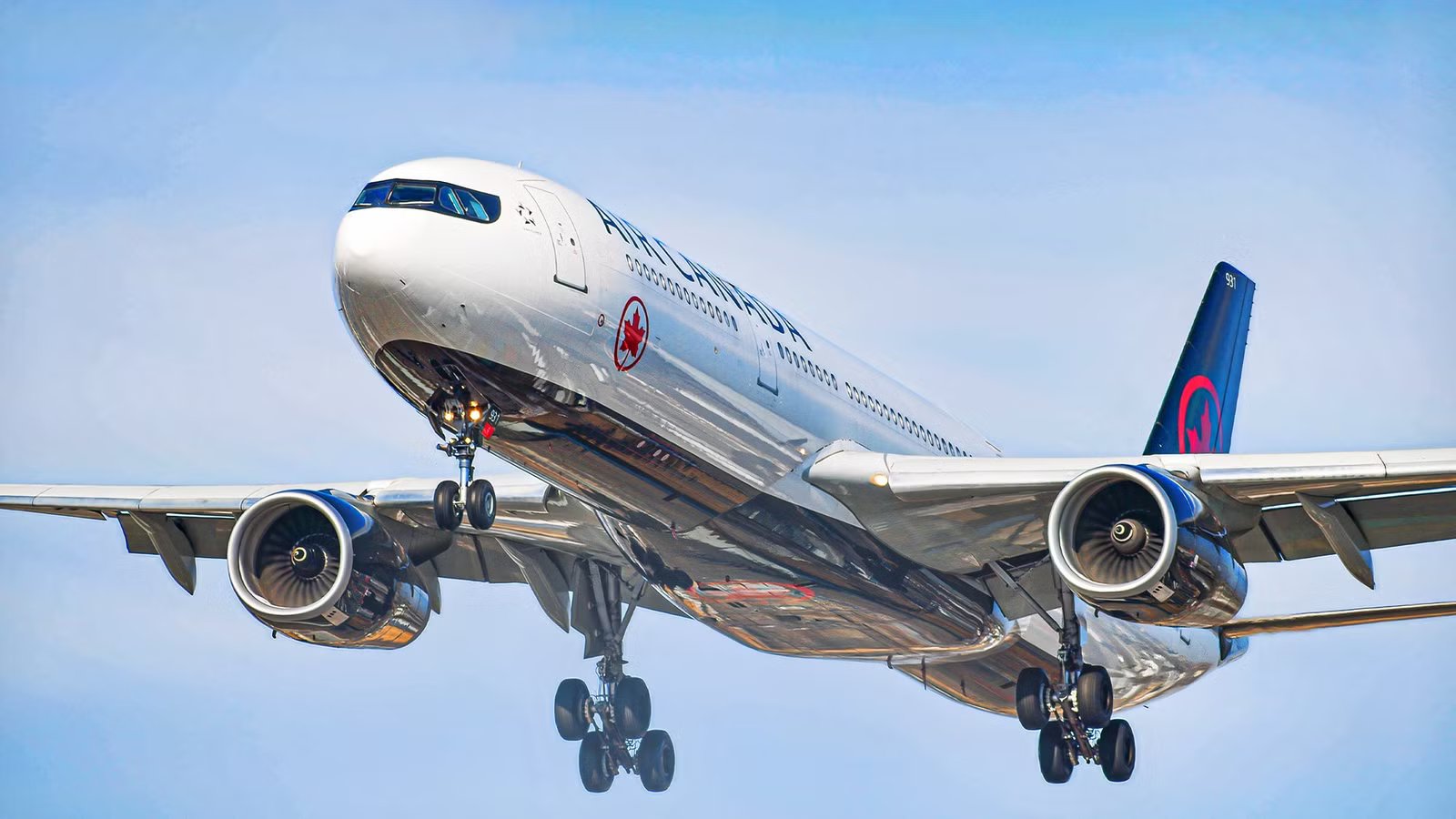
Aircraft development has its ups and downs, especially when it comes to advancing aircraft design. When reports first surfaced regarding localized surface degradation on the Airbus A350, it sparked an intense public and legal debate over the long-term airworthiness of composite commercial transport aircraft. This guide explores how the European airframe manufacturer resolved this sophisticated surface tension issue through targeted material adjustments, without incurring the massive operational and financial disruptions of a fleet-wide grounding.
Unlike traditional aluminum commercial aircraft, modern twin-aisle jets rely heavily on carbon fiber-reinforced polymer (CFRP) to reduce structural weight and optimize fuel efficiency on ultra-long-haul routes. However, introducing these advanced non-metallic materials introduces entirely new operational variables for exterior coatings and lightning-protection layers.
Rapidly Changing Temperatures

The cause of the surface cracking issue on the widebody comes down to a complex material science phenomenon involving highly dissimilar structural layers. Carbon fiber reinforced plastic behaves very differently from traditional aerospace aluminum when exposed to the extreme environmental fluctuations of international flight profiles. Specifically, CFRP has a remarkably low coefficient of thermal expansion, meaning the composite fuselage shell barely changes its physical dimensions whether it is sitting on a hot tarmac or cruising at high altitudes.
The exterior coatings applied to the aircraft, along with the underlying expanded copper foil (ECF) layer used for lightning strike protection, exhibit markedly different expansion and contraction characteristics. When an aircraft departs an equatorial runway at 110 degrees Fahrenheit (43.3 degrees Celsius) and climbs rapidly to a cruise altitude where ambient temperatures plummet to minus 65 degrees Fahrenheit (minus 53.9 degrees Celsius), the swift temperature drop creates immense mechanical stress at the interface layer. What happens is that the outer paint and metallic foil attempt to shrink while the underlying composite shell remains completely rigid, so the resulting shear forces stretch the exterior coating beyond its physical limits.
This structural tension caused the outermost layers of paint to develop fine cracks, flakes, and localized blisters, primarily along the manufacturing joints where different fuselage panels meet. These surface blemishes were visually apparent to passengers and airline maintenance teams; however, deep non-destructive testing confirmed the peeling was entirely restricted to the superficial exterior layers and the thin protective foil mesh. The underlying structural carbon-fiber fuselage frame remained completely intact, dry, and unaffected by the separation of the exterior coating.
Disagreements Over The Safety Reality

Despite aggressive demands for an immediate worldwide grounding of the fleet from  Qatar Airways, international aviation oversight bodies maintained a highly measured, data-driven approach. EASA and the FAA launched exhaustive technical reviews of the airframe manufacturing data rather than resorting to precautionary operational bans. Safety regulators need clear evidence of a structural or systemic flight safety hazard before taking the drastic step of halting a global aircraft fleet.
The technical analysis quickly demonstrated that the paint degradation did not compromise the underlying structural airworthiness of the twinjet. Regulatory directives mandated localized inspections of the lightning protection mesh on specific early-production airframes rather than pulling the type from active service. Doing so allowed the vast majority of international operators to maintain their scheduled passenger networks while also firmly addressing cosmetic paint issues during normal hangar visits.
Qatar Airways chose to unilaterally withdraw more than 20 of its jets from service over the cosmetic dispute, but even still, global safety authorities repeatedly verified that the multi-layered composite hull remained completely safe for continuous transoceanic operations. Regardless, the airline remained opposed to these views, and launched a legal battle in response.
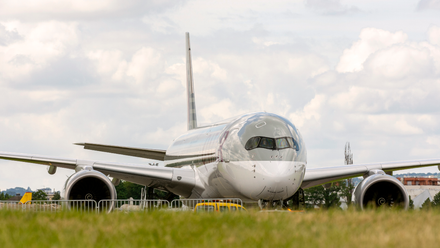
Airbus Asks Judge For $220m In Damages Over Qatar A350 Case
Airbus started its own legal action against Qatar Airways in a UK court on Monday, asking a judge for $220 million over two undelivered A350s.
The Resulting Solution

To completely eliminate the interface stresses that drive cosmetic issues, design teams had to re-engineer the conductive lightning strike protection layer embedded directly beneath the paint coat. The original manufacturing layout used expanded copper foil mesh, a material produced by stretching a solid sheet of copper to form an open diamond pattern. It is highly effective at conducting electrical currents, but the properties of this expanded mesh resist the subtle micro-movements of the surrounding composite skin, acting as a rigid barrier that concentrated shear forces directly into the paint layers.
Airbus resolved this structural mismatch by developing an inline material substitution, replacing the traditional expanded mesh with an advanced perforated copper foil (PCF). This new foil variant features precisely drilled, uniform microscopic apertures that give the metallic layer significantly greater multi-directional flexibility. So, by allowing the metallic lightning shield to flex in perfect harmony with both the underlying carbon fiber skin and the outer paint primers, the perforated design eliminates localized shear stresses that caused the original coatings to fracture.
The upgraded material standard began rolling out to active assembly lines in late 2022, so newer production airframes left the factory with built-in protection against premature coating separation. Airbus’s quick evolution highlights how aerospace manufacturing teams can deploy an engineering improvement to protect long-term fleet reliability without halting active factory production lines. The implementation of the perforated foil standard permanently corrected the root material conflict, keeping widebody deliveries free from early paint degradation.
Keeping Existing Aircraft Operating As Normal

For the hundreds of aircraft already operating within global airline networks, the engineering fix took the form of a localized repair methodology that could be executed during standard maintenance cycles. The issue, however, is that stripping and repainting the entire exterior of a widebody requires weeks of hangar time and costs millions of dollars per airframe. To protect the integrity of airline scheduling, technical teams developed a targeted microlayer patch protocol that focuses exclusively on the affected panel joints.
Maintenance crews follow a highly precise procedure: first, they sand down the localized areas of degraded paint, carefully clean the underlying metallic foil shield, and then apply a specialized microlayer resin patch compound. The advanced composite resin restores the smooth aerodynamic profile of the fuselage section while reinforcing the physical bond between the composite skin and the surrounding lightning protection layer. These targeted touch-ups require only a few days of downtime, allowing airlines to seamlessly complete the work during routine intermediate service stops.
Operators like  Delta Air Lines,
  Singapore Airlines, and
  Lufthansawere able to maintain complete network integrity throughout the cosmetic crisis, managing the paint blemishes through data-driven line maintenance rather than emotional operational halts. These carriers avoided massive scheduling disruptions for passengers, successfully mitigating complex material issues without harming corporate profitability or fleet utilization rates.
Catch what other flight trackers miss
Emergency squawks, holds, NOTAMs — live signals, no signup.
Open tracker
Catch what other flight trackers miss
Emergency squawks, holds, NOTAMs — live signals, no signup.
Open tracker
Truth To Qatar’s Argument?

Even as these carriers worked to return to normal operations, there was, of course, Qatar Airways, with its paint-degradation dispute centered on whether the fine surface cracking compromised the aircraft’s lightning-strike protection system, particularly around the high-capacity fuel tanks embedded within the wings. Commercial passenger aircraft are struck by lightning an average of once per year, according to Airbus, and so the structural integrity of the conductive exterior skin is vital for protecting sensitive onboard systems. Any compromise to this system near fuel storage zones would immediately elevate the issue to a severe airworthiness hazard.
Detailed engineering documentation and teardown inspections demonstrated that the widebody wing skin incorporates multiple redundant layers of protection. Even in localized areas where the outermost paint layers showed visible cosmetic cracking, the continuous path for safe electrical dissipation remained fully functional. Testing verified that the underlying metallic mesh retained its full capability to conduct large electrical currents and safely route them across the exterior skin to the static wicks, keeping the energy well away from internal fuel vapor barriers.
Regulatory investigations confirmed that the superficial cracking did not create localized electrical hot spots or spark hazards near the wing structures. This technical validation provided the scientific justification needed for safety authorities to reject any mandatory grounding orders and gave operators the complete engineering confidence required to keep their widebody fleets flying safely while factory teams prepared the permanent production material updates.
Lesson Learned And Acted Upon

The resolution of the surface cracking issue ultimately finalized a long-term step forward in how composite widebodies are manufactured, finished, and managed at the factory level. Now, by incorporating the perforated copper foil standard and updated paint-curing processes directly into the central assembly infrastructure in Toulouse, new A350 aircraft are already protected against a recurrence of this issue.
Now we can look back on this multi-year aerospace saga as the validation of advanced composite materials under intense real-world operational and environmental scrutiny. The ability to isolate, analyze, and correct an unprecedented material-interface problem without disrupting global fleet operations demonstrates just how far modern commercial aerospace engineering has come. It demonstrates that complex material science challenges can be resolved through precise technical iterations rather than sweeping operational stoppages.
The global fleet continues to accumulate millions of flight hours across demanding intercontinental flight paths, bringing this crucial learning curve in the industry-wide transition away from traditional aluminum airframes with it. The engineering adjustments developed during this period ensure that the twin-engine widebody platforms are an exceptionally efficient, long-term asset capable of leading the world’s premier route networks. Empirical science has saved the A350 today with a more resilient material standard that secures the operational future of the aircraft.