dailynewsnblog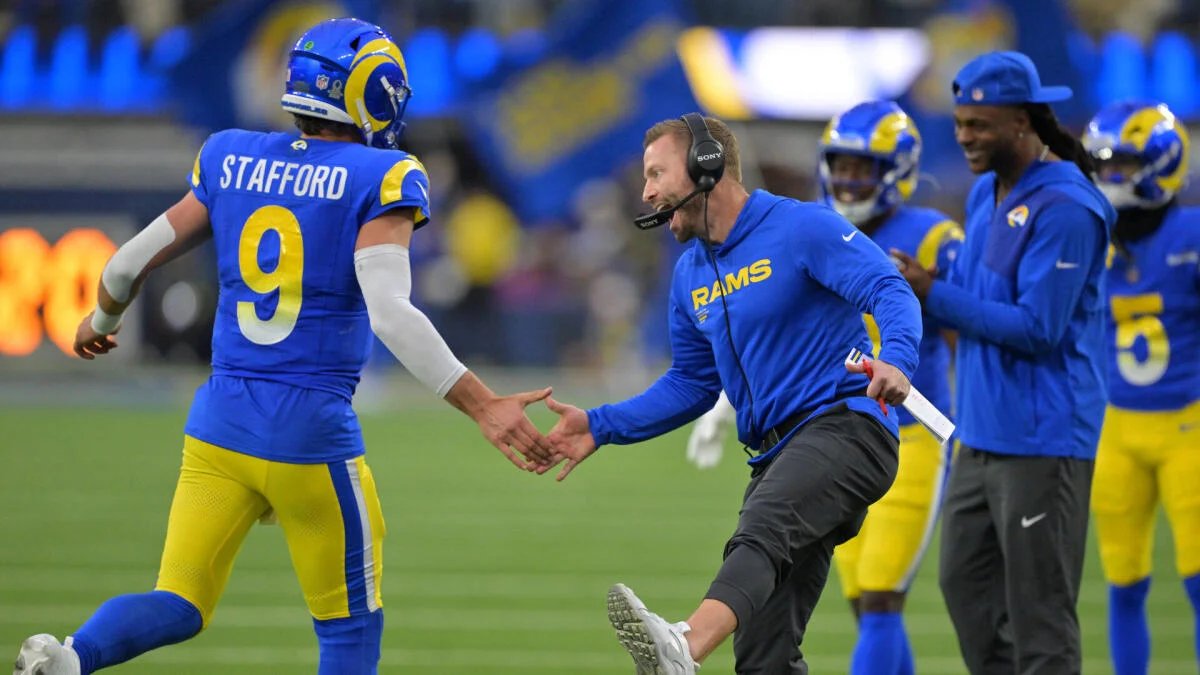

There is nothing that matters more in the NFL than putting your quarterback in the best possible position to succeed. Quarterback play is more closely correlated with success than anything else in football, but the quarterback of course can’t just do everything on his own — even the best of the best. That’s why you need to surround him with an appropriate level of talent.
Who is protecting your franchise passer? Who is on the other end of his passes? Who is working alongside him in the backfield? Who is scheming those players open and making sure they’re in the right places at the right times? Are there injury and/or depth issues at any or all of those positions?
All the pieces matter. The degree to which they matter varies greatly, of course, but each plays a role in allowing an offense to hum at peak efficiency. And with all that in mind, we welcome you to the sixth edition of our offensive infrastructure rankings — with a twist.
A few important notes before we begin:
- We used a weighted grading system where each team was given a 1-5 rating (1 = terrible, 3 = average, 5 = elite) in the following areas: Play caller (head coach and/or offensive coordinator), offensive line, pass catchers (WR/TE), and running backs. Those scores were then weighted so that the importance of the play caller, offensive line, and pass catchers were greater than that of the running backs, so that the weights reflected as closely as possible the reality of the way modern NFL offenses work.
- This is a change from past years. In previous seasons, we included the quarterback in the infrastructure rankings and in fact made him the most important component in the weighted grading system. We’re changing things up this year, because we feel that the rankings should be an attempt to quantify how well teams have set up their quarterback for success, and including the quarterback himself in the grading sort of defeats the purpose of doing that.
- These are not necessarily rankings of how we expect these offenses to perform during the 2026 season. They’re an attempt to capture which offenses are best positioned for success based on the the talent with which the organization has chosen to surround their quarterback. There is, of course, the possibility that players elevate their games or transcend and raise the level of their supporting cast, or that a quarterback’s subpar performance undermines an otherwise fairly strong offensive unit or that a unit is so bad that it undermines any chance the quarterback has of success.
- The tiers are more rigid than the order within them, and teams within the same tier should be considered of roughly similar quality, as exemplified by their weighted grades. It would take more convincing to move a team up or down a tier than it would to move it ahead of or behind a team in the same tier.
- Just as I did the past four years, I compiled an initial draft of these rankings, which I then ran by the rest of the writers, editors, and podcasters on the CBSSports.com NFL staff. I incorporated their feedback to create the version of the rankings you’ll see below. The commentary in each section is mine.
Got all that? OK, great. Here we go …
Tier 7: The Dolphins (32)
32. Miami Dolphins (2.55)
The distance between the Dolphins in last place and the next-closest team is larger than the distance between any other two teams in the rankings. That’s how bad we think the infrastructure the Dolphins have placed around Malik Willis is. This ranking is dragged down by the 1 the Dolphins got in the pass catcher department, where the options range from Jalen Tolbert, Malik Washington, Tutu Atwell and an injured Chris Bell, to Greg Dulcich and Will Kacmarek.
Tier 6: Help Needed (31-29)
31. Tennessee Titans (2.85)
30. Cleveland Browns (2.90)
29. Washington Commanders (2.95)
We had concerns about the group the Titans surrounded Cam Ward with heading into his first season, and things aren’t much better this year despite their efforts to upgrade the wide receiver corps with Wan’Dale Robinson and Carnell Tate. Hiring Brian Daboll gives them an average play caller (an upgrade from last year, sadly) but they didn’t do nearly enough to take care of the issues along the offensive line.
Cleveland has one of the NFL’s worst quarterback situations, but the environment in which that quarterback will play isn’t that much better. Todd Monken is a very good play caller (we gave him a 4 ranking) but the offensive line and the weapons have to be considered below-average until we see proof that they’re better than that. Even the running back duo probably isn’t as good as you think (Quinshon Judkins averaged 3.6 yards per carry last year).
I was somewhat surprised to see the Commanders finish this low in the rankings, but we give all first-time play callers an average ranking (3 for David Blough) and Washington has a very thin pass-catching corps and one of the weakest running back groups in the NFL. That’ll do a lot to drag down an offensive line that is above-average at best.
Tier 5: Help Wanted (28-24)
28. Carolina Panthers (3.00)
27. New York Giants (3.20)
26. New York Jets (3.25)
25. Houston Texans (3.30)
24. Arizona Cardinals (3.40)
The Panthers received average rankings across the board except. They got a 3 at every position group.
I tried to bump the Giants up, because this ranking seems pretty low for them. But Matt Nagy has to be considered a below-average play caller. The offensive line is probably slightly above average (3.5) until we see how the group fares with Francis Mauigoa sliding in at guard; the pass-catching group (3.5) has a star (Malik Nabers), but he’s hurt and might not be ready for the season; and we can’t give the running back duo higher than a slightly above-average grade (3.5) when Cam Skattebo is also coming off a major injury.
We also gave the other New York team’s play caller (Frank Reich) a below-average grade, and we were even less kind to him than Nagy considering what happened in his previous two NFL stops. The slight difference between the Jets and Giants comes at running back, where we feel better about the Breece Hall-led group than we do about Skattebo and Tyrone Tracy.
The Texans would probably rank higher if we had seen more from their young wide receivers during their rookie seasons (when the Texans limited their opportunities) or if we knew that Tank Dell would be able to come back fully healthy from his devastating injury. Nick Caley is an above-average play caller but the offensive line will likely be lucky to achieve average status and the David Montgomery-Woody Marks duo in the backfield is solid but uninspiring.
The Cardinals got average grades for their play caller and offensive line, but Trey McBride and Jeremiyah Love carried the rankings for their skill-position groups and raised Arizona’s ranking ahead of some other teams that seem like they have better infrastructures on the surface.
Tier 4: Average Incubators (23-18)
23. Pittsburgh Steelers (3.50)
22. Baltimore Ravens (3.50)
21. Las Vegas Raiders (3.55)
20. Seattle Seahawks (3.60)
19. Tampa Bay Buccaneers (3.70)
18. New England Patriots (3.70)
The division rival Ravens and Steelers ended up exactly tied in the rankings but got there in different ways. Baltimore made up a deficit in the play caller grades (again, first-time play callers all get an average grade, while we gave Mike McCarthy a slightly above-average grade) thanks to the fact that they have Derrick Henry. Remember, quarterbacks are not factored into the grading system this year. If they were, Baltimore would rise in these rankings considerably. By our numbers, the Ravens would be the single-biggest riser when you compare their grade including quarterbacks to their grade in the non-QB rankings.
The Raiders have a very good play caller in new head coach Klint Kubiak, a solid offensive line anchored by Tyler Linderbaum and Kolton Miller and a solid running back with Ashton Jeanty, all of which helps prop up the fact that their pass catchers are below-average outside of Brock Bowers. Add it all up and you come up with an ecosystem that is just about average for No. 1 overall pick Fernando Mendoza.
Speaking of Kubiak, his former team saw a downgrade in the play-calling department because we give first-timers an average grade. The offensive line is solidly above-average and the pass catchers are good (Jaxon Smith-Njigba is great and there is some depth there even if there is no clear No. 2 option), but the running backs have to be considered average at best until we see what we get from rookie Jadarian Price.
The Bucs and Pats wound up exactly tied in the rankings, with Tampa’s advantage on the offensive line made up for by New England’s edges in the play caller and pass catcher departments. Thank Josh McDaniels and the A.J. Brown-Romeo Doubs duo for that one.
Tier 3: Above Average (17-11)
17. Indianapolis Colts (3.75)
16. Philadelphia Eagles (3.75)
15. Denver Broncos (3.80)
14. New Orleans Saints (3.85)
13. Green Bay Packers (3.85)
12. Atlanta Falcons (3.95)
11. Minnesota Vikings (3.95)
The Colts and Eagles also ended up tied here, and this is a bit of a drop-off from where the Eagles usually sit in these rankings. But a first-time play caller (Sean Mannion) combined with the departure of the aforementioned A.J. Brown knocked Philly’s grades down in two important categories, and the offensive line and running backs couldn’t prop the Eagles up any farther than this. Indy’s advantage at play caller (Shane Steichen) helped make up for the Eagles’ edge along the offensive line in the grading system.
The Broncos would rank higher here if it weren’t for their insistence that it will actually be Davis Mills calling the plays and not Sean Payton. Again, we give all first-time play callers an average grade, no matter how sought after they were on the market the previous offseason. If Denver had Payton (a 4.5 or 5 on the grading scale) in place, the Broncos would jump up to somewhere between fourth and fifth in these rankings. That’s how big a difference your play caller can make in our system, especially when you pair it with an elite offensive line that is arguably the best in the league.
We had two more ties in the next two spots. The Saints and Packers got to their ranking in different ways, with Green Bay’s edge at play caller (Matt LaFleur vs. Kellen Moore) making up for New Orleans’ advantage along the offensive line, while we gave the same grades to each of their pass-catching and running back rooms; and the Falcons’ elite running back grade for the Bijan and Brian Robinson pairing making up for a disadvantage in the pass catcher department, where the Falcons are much thinner than are the Vikings. Both Kevin O’Connell and Kevin Stefanski received 4 grades for their play calling.
Tier 2: Very Good Environments (10-5)
10. Los Angeles Chargers (4.00)
9. Cincinnati Bengals (4.00)
8. Kansas City Chiefs (4.00)
7. Buffalo Bills (4.00)
6. Jacksonville Jaguars (4.05)
5. San Francisco 49ers (4.20)
Now we get into the top 10, where we have a FOUR-WAY TIE for what is technically seventh place on the list. The grades for each of those teams look like this.
We gave the edge at play caller to Mike McDaniel and Andy Reid over Zac Taylor and Joe Brady, though we dropped Reid from a 5 to a 4.5 for the first time because the Chiefs have been so comparatively lackluster offensively over the last few seasons. Perhaps the return of Eric Bieniemy as offensive coordinator, where he replaces Matt Nagy, will help on that front.
Buffalo clearly has the best offensive line of the group, while the Chargers have potential but we have injury concerns about their tackles and we have to see how the interior holds up this year. Kansas City gets the advantage over both L.A. and Cincinatti because of the strength of its stars in Creed Humphrey and Trey Smith.
Cincinnati’s pass catcher advantage is obviously buoyed by Ja’Marr Chase and Tee Higgins, who we last week named our top wide receiver duo in the NFL. The Chiefs and Bills lag behind here because they don’t have true No. 1 options who can be relied on every week. (The Bills don’t have one at all and the Chiefs’ option in Rashee Rice can’t stay on the field for various reasons.) And all four teams sport very good running back rooms. Add it all up and we come to a tie between more than two teams for the first time ever in these rankings.
The Jags ranking this highly on the list might be surprising at first glance, but it speaks to how well they were able to play last season. Liam Coen has established himself as one of the best play callers in the NFL. The offensive line is an above-average unit. The pass catcher corps has incredible depth beyond almost any team in the league, and still has a potential star in Brian Thomas Jr. if he can rediscover his rookie year form. The running back duo is only average, but the Jags’ strength in other areas makes up for it.
The Niners would be higher if we knew that they had a fully healthy George Kittle, but he’s coming off a torn ACL. Kyle Shanahan is obviously one of the best play callers in the NFL. Christian McCaffrey is the league’s most versatile running back. But there’s not much behind CMC in the backfield and the pass catcher corps is either unproven or aging even beyond Kittle. So the Niners end up here, just outside Tier 1 but also a good distance ahead of the next-closest team in Tier 2.
Tier 1: The Best Ecosystems (4-1)
4. Dallas Cowboys (4.40)
3. Detroit Lions (4.40)
2. Chicago Bears (4.45)
1. Los Angeles Rams (4.45)
We have another two ties in the elite group, where it seems like we’re splitting hairs.
Dallas and Detroit both received above-average grades for their play callers in Brian Schottenheimer and Drew Petzing. The Cowboys’ slight advantage on the offensive line (where Detroit used to be the best in the NFL but is now merely pretty good instead of great) is made up for by the Lions’ significant advantage at running back, where Jahmyr Gibbs is arguably the league’s best and Javonte Williams leads a very thin group behind him for the Cowboys. The pass catching groups are both excellent, with both CeeDee Lamb and George Pickens, and Amon-Ra St. Brown and Jameson Williams ranking highly on our aforementioned wide receiver duos list.
And then we come to the two best offensive ecosystems in the NFL: Chicago and L.A. Ben Johnson and Sean McVay are two of the very small handful of best offensive minds in the league. The pass catching groups have either huge stars (Rams) or great depth (Bears). The offensive lines are above-average to good, and the running backs are solid. When you account for the quarterback, the Rams have the advantage, and that’s why Matthew Stafford was able to win MVP last year, but in a vacuum, Caleb Williams has just about as good a chance for success on a play-to-play basis as he does because of the talent around him on all areas of the field.