dailynewsnblog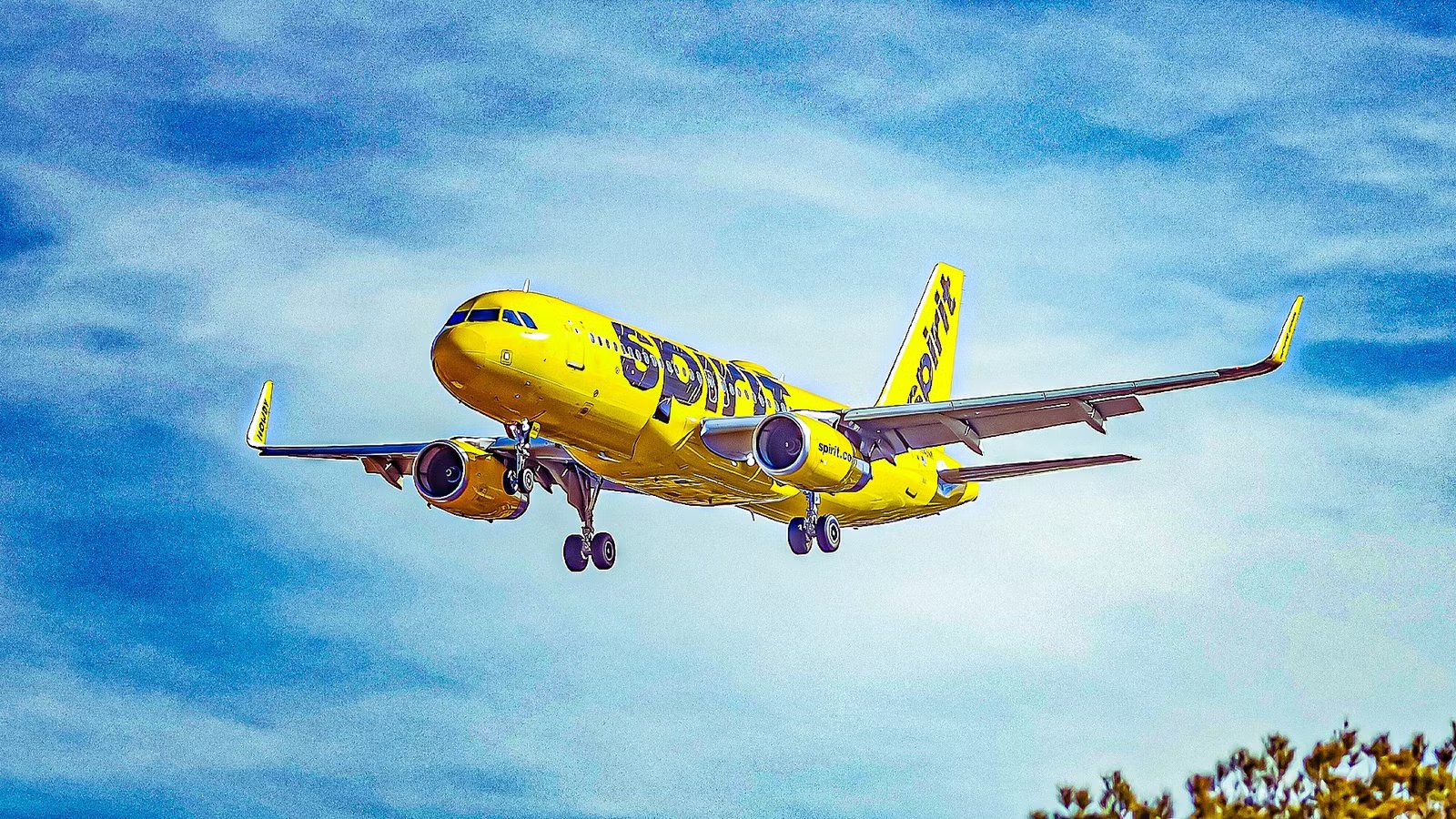
President Donald Trump unexpectedly opened the door to a Spirit Airlines bailout on Tuesday, floating federal support for the troubled Ultra-Low-Cost Carrier during an interview that was otherwise centered on airline consolidation. Trump said he opposed a potential United-American merger, but drew a distinction with Spirit, saying he would “love somebody to buy” the airline and suggesting Washington might need to help preserve it.
That is a remarkable turn for a carrier that the federal government previously fought to keep independent by blocking JetBlue’s takeover on competition grounds. The twist is that Spirit’s crisis now gives the White House a very different policy problem. In March, Spirit said its restructuring would cut debt and lease obligations from $7.4 billion to about $2 billion post-emergence, but Reuters reported last week that a sudden jet-fuel shock has blown a hole in those assumptions, pushing the airline back toward the edge.
In other words, the same government that once argued Spirit was too important for low fares to be swallowed by JetBlue may now be forced to use taxpayer dollars to keep it alive long enough to do a different deal.
Trump Floats Potential Spirit Airlines Bailout

Trump made the comments in a CNBC interview on Tuesday, while dismissing the idea of a merger between  United Airlines and
  American Airlines. Reuters reported that he said he did not like the merger idea because both airlines were already doing well, then pivoted to Spirit as a different kind of case — one involving a weaker carrier, lower fares and 14,000 jobs. That framing matters because it suggests the administration is treating Spirit less as a failed airline, and more as a competition problem.
“I don’t mind mergers. I think I’d love somebody to buy Spirit, as an example. You know, Spirit’s in trouble. … Maybe the federal government should help that one out.″
The irony is obvious. The Biden administration went to court to block JetBlue’s proposed $3.8 billion acquisition of Spirit, arguing that removing the carrier would harm competition by eliminating an airline that helped keep fares down. Trump is now signaling something different: not that Spirit should disappear into a larger rival, but that the government may need to keep it alive long enough for another solution to emerge.
That would be politically explosive. A direct rescue for one airline would hand critics an easy “corporate welfare” attack line, while rival carriers would almost certainly question why Washington was favoring one competitor over another. Reuters has already reported that other value-focused airlines are seeking broad tax relief from Washington over fuel prices; that makes a Spirit-only rescue even harder to justify unless the White House can clearly present it as a jobs-and-competition exception rather than a precedent.
Three Possible Bailout Paths

Assuming Trump’s remarks are more than just off-the-cuff commentary, and the federal government does go down the path of putting together a rescue plan for Spirit, then there are three different options open to it.
The cheapest option would be an emergency bridge — essentially a temporary lifeline designed to stop Spirit tipping into liquidation. J.P. Morgan sees the latest fuel shock adding about $360 million in incremental 2026 costs, more than Spirit’s year-end unrestricted cash. At the end of 2025, Reuters says Spirit had about $273 million in unrestricted cash, so a bridge of roughly $400 million to $600 million would be the minimum plausible check if Washington only wanted to buy time.
The most realistic path is a structured rescue. Spirit’s smaller-airline plan projected cash could fall to less than $90 million at its low point, and that the carrier must also use $150 million of encumbered cash to repay bankruptcy loans, maintain minimum restricted balances and make an additional $100 million payment to lenders on exit. Once those obligations are added to the fuel hit, the likely bill climbs to around $600 million to $1 billion if the administration wants Spirit to emerge with a genuine cushion rather than a few weeks of breathing room.
Why is this the likely option? Because it’s the one you would pick if the goal is to provide a sufficient liquidity buffer to get Spirit to a merger further down the line. Let’s not forget that just earlier this month, Transportation Secretary Sean Duffy said that there’s room for more mergers in the US aviation sector, and that his boss, the same one floating a bailout today, “loves to see big deals happen.”
|
Bailout option |
What It Means |
Likely Cost |
|---|---|---|
|
Emergency Bridge |
Short-term liquidity to avoid immediate collapse |
$400 million — $600 million |
|
Structured Rescue |
Fuel-cost support plus enough liquidity to reassure creditors and fund exit |
$600 million — $1 billion |
|
Full Recapitalization |
A deeper reset designed to preserve Spirit as a viable long-term standalone carrier |
$2.5 billion — $3 billion+ |
The most dramatic option would be a full recapitalization — the kind of intervention that tries to rebuild Spirit as a viable long-term competitor. That is where the numbers jump into the low billions, because the airline’s pre-emergence obligations were still enormous even after the restructuring plan, and because a real recap would need to do more than cover a fuel spike. Politically, though, this is the least likely outcome: it would be too costly, too easy for the president’s own party to attack as “socialism”, and too provocative for rival airlines that would argue Washington was effectively creating a state-backed competitor.

Spirit Airlines Seeking Emergency Government Bailout To Avoid Liquidation
The airline needs a serious cash infusion.
No Guarantee Of Success

Even if Washington did write a check, there is no guarantee Spirit would become a sustainable airline. Spirit built its turnaround plan on 2026 average fuel costs of about $2.24 a gallon, only to see prices soar to more than $4.80 a gallon earlier this month, more than double its projections. J.P. Morgan estimates that if fuel stays near current levels, Spirit’s 2026 operating margin could swing to negative 20%. That is a reminder that in aviation, bailouts only buy time — not certainty — especially when the business model is unusually exposed to volatile fuel and weak pricing.
History offers plenty of warnings. Among the examples where governments intervened, and the airline still failed or had to be replaced:
-
Alitalia: Italy provided €900 million in 2017 and another €400 million in 2019, but the carrier still collapsed and was replaced by
ITA Airways
. - Air Berlin: Germany offered a €150 million bridge loan in 2017, but the airline still broke up soon after insolvency.
- Flybe: The UK backed a rescue plan involving a potential government loan and tax deferral in early 2020, but the carrier collapsed weeks later.
- Air Malta: Malta previously secured approval for €130 million in restructuring aid, but the airline still shut down and was replaced by KM Malta Airlines.
- Blue Air: Romania’s support ultimately proved unsustainable, with the European Commission ordering recovery of €35 million in incompatible aid after the airline’s restructuring plan failed.
There is also a credibility risk. In 2018, the Trump White House said government subsidies “undermine healthy and fair competition” when it announced an Open Skies understanding with the UAE after years of US complaints about government support for Gulf carriers. If Washington now steps in to prop up Spirit, it will invite an obvious question: why is state aid unacceptable when it helps foreign rivals, but acceptable when it saves a domestic airline?