dailynewsnblog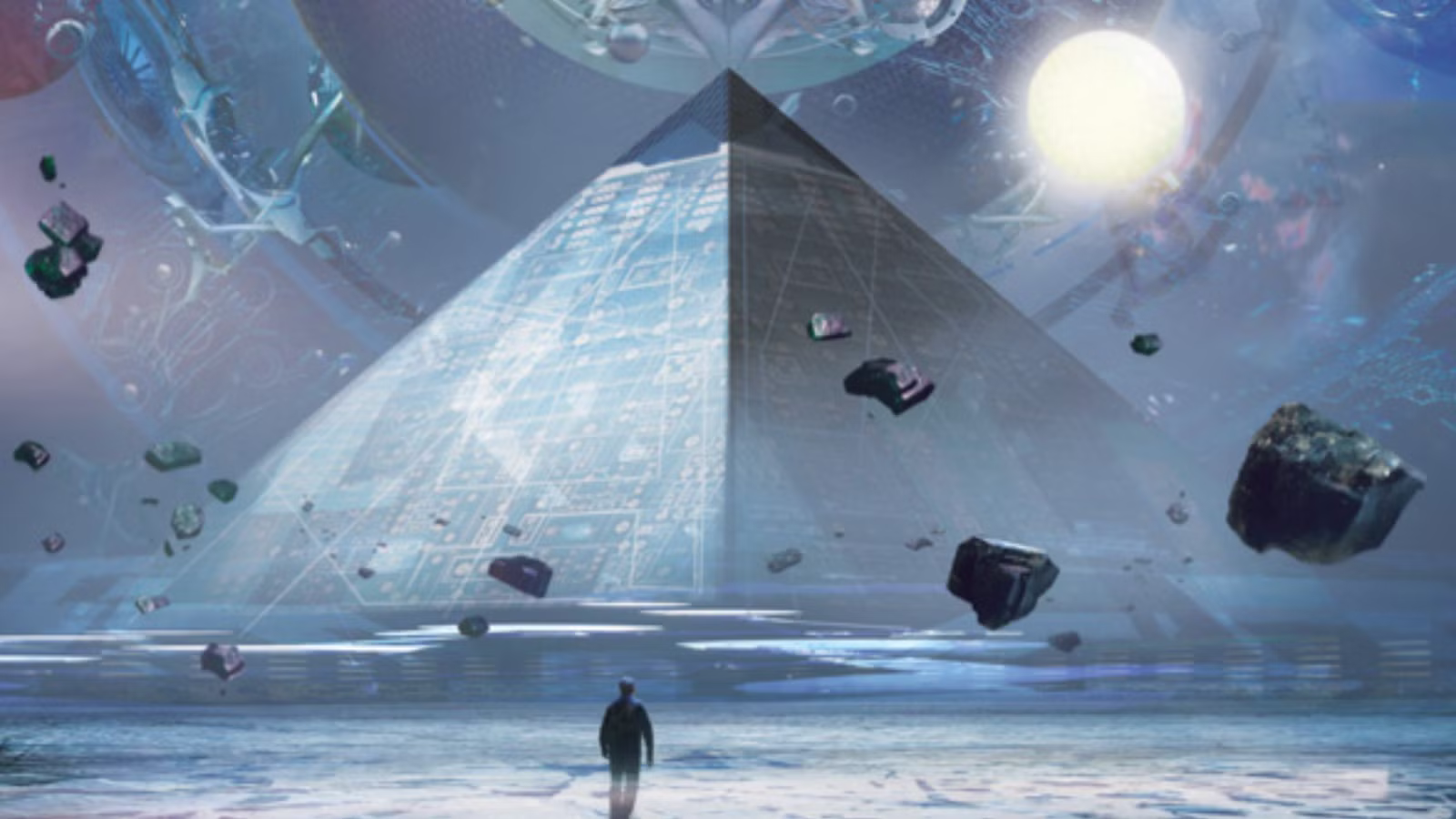
Sci-fi remains one of the most expansive playgrounds for storytelling, capable of charting distant galaxies and alien frontiers just as easily as it exposes the immediate horrors of modern-day technology. At its peak, speculative fiction uses its invented worlds and distant planets to interrogate what it means to be human, cracking open philosophical questions that grounded genres simply can’t reach.
Distilling the essential sci-fi canon into a single reading list is a formidable task. Pillars like Dune and 1984 built the genre’s bedrock, but some of speculative fiction’s most brilliant feats lie along far stranger, less-traveled paths. Short story collections, hallucinatory mind-benders, and sociopolitical thought experiments have constantly redrawn the boundary lines of what a sci-fi narrative can achieve. Some of these still prove the most essential reading to this day.
Whether you’re seeking a genre-defining landmark or a cult masterpiece, these essential sci-fi novels demonstrate just how far this kind of fiction can push the boundaries of reality.
10
Beyond the Curve (1991) by Kōbō Abe

Kōbō Abe’s Beyond the Curve is vital for the intrepid sci-fi reader. This collection of 12 short stories span Abe’s 17-year career, from 1949 to 1966. Beyond the Curve is a compendium of strange tales that operate more like fever dreams than narratives. In “Dendrocacalia,” a bewildered man begins to transform into a plant, while “The Crime of S. Karma” follows a person who discovers his name has abandoned him.
Abe approaches these increasingly surreal scenarios with a matter-of-factness that makes them all the more unsettling, blending science fiction, dark comedy, and existential horror to explore the fragility of identity and the absurdity of modern life. The author may well be more celebrated for The Woman in the Dunes and other fantastic novels, but his shorter work commands equal reverence from readers seeking the genre’s eerie fringes.
9
The Invention of Morel (1940) by Adolfo Bioy Casares

What if the people standing beside you were mere ghosts of light? That haunting premise drives Adolfo Bioy Casares’ The Invention of Morel, a novella following a desperate fugitive who stumbles onto an island thought abandoned, only to find a mysterious enclave of tourists trapped in loops like the Hosts of Westworld. Their baffling behavior pulls him toward a terrifying technological breakthrough with profound implications for human memory and mortality.
Published in 1940, Casares’ masterwork predates modern virtual reality and simulation theory, yet uncannily predicts our obsession with preserving experience and lost affection. It’s a stark reminder that a speculative masterpiece doesn’t need a sweeping cosmic canvas to leave a permanent emotional scar.
8
Snow Crash (1992) by Neal Stephenson

Much like Adolfo Bioy Casares, Neal Stephenson imagined a world where people escaped their reality into a virtual environment, but things get far more action-packed in this cyberpunk thrill ride. The story of Snow Crash follows Hiro Protagonist, a hacker and pizza-delivery driver who becomes embroiled in a conspiracy involving a mysterious digital drug, ancient Sumerian mythology, and the relationship between language and the human brain.
Stephenson’s novel helped popularize the term “metaverse” and remains a foundational cyberpunk text, even as some of its predictions have aged in unexpected ways. Its corporate-run enclaves, privatized infrastructure, and fragmented society feel particularly recognizable today, especially for fans of Cyberpunk 2077 and Blade Runner.
7
We (1921) by Yevgeny Zamyatin

Published decades before 1984 and Brave New World, Yevgeny Zamyatin’s We helped establish the blueprint for the modern dystopian novel. Its protagonist, D-503, lives in a society governed by mathematical precision, where citizens surrender their individuality to the authority of a government known as the One State. Even their daily routines are regulated, and the glass walls of their homes leave little room for privacy, something eerily reminiscent of the prevalence of digital surveillance today.
Zamyatin’s greatest trick with We is making this world feel both absurd and frighteningly logical. Written in 1921, amid the ideological aftermath of the Russian Revolution, We was deemed an existential threat by early Soviet censors and promptly banned. It spent decades surviving in secret printings before being published abroad, casting an inescapable shadow over the entire genre. We remains a vital masterpiece that, almost a century later, still proves sci-fi is often at its most potent when turned into a weapon of political dissent.
6
Ubik (1969) by Philip K. Dick

Trying to explain the plot of Ubik without spoiling its sci-fi pleasures is nearly impossible, but that’s the beauty in Philip K. Dick. The novel opens in a hyper-capitalist 1992, when corporate espionage is fought between spy agencies and “inertials,” anti-psychics hired to block telepathic industrial theft. When field technician Joe Chip and his employer, Glen Runciter, take a team of inertials to the Moon to secure a client’s facility, an explosive ambush throws the mission into chaos.
Dick turned the camera inward at a time when most hard sci-fi relied on grand space adventures and time travel, pioneering a psychological framework that redefined the genre. Ubik is the crucial bridge connecting mid-century speculative fiction to the cyberpunk and simulation-theory classics that followed, laying the conceptual groundwork for everything from The Matrix and Dark City to Satoshi Kon’s Paprika. Dick delivered a masterclass in philosophical sci-fi simply by transforming mundane commercialism into a divine force. More than five decades later, it still proves that the most terrifying frontier in speculative fiction isn’t deep space, but the human mind.
5
The Three-Body Problem (2008) by Liu Cixin

First contact is usually treated as an opportunity for terror, popularized best in H. G. Wells’ War of the Worlds. Other times, it can be represented as wonder, like Carl Sagan’s Contact, or even a combination of the two. Liu Cixin’s The Three-Body Problem takes a colder approach, asking instead what humanity’s place in the universe might look like if the civilizations beyond Earth operate according to rules we barely understand. Beginning amid the upheaval of China’s Cultural Revolution, the novel moves into a scientific mystery involving an alien civilization struggling to survive in an unpredictable planetary system.
Liu combines theoretical questions with a gripping mystery, gradually expanding the scale of the narrative until humanity itself becomes only a small piece of a much grander puzzle. The novel helped bring Chinese science fiction to an international audience, and its uncompromising cosmic perspective, now poart of a trilogy, makes it one of the defining works of modern hard sci-fi.
4
A Canticle for Leibowitz (1959) by Walter M. Miller Jr.

A Canticle for Leibowitz tracks the monks of the Albertian Order of Leibowitz in the deserts of the American Southwest as they painstakingly preserve the “Memorabilia,” a scattered collection of blueprint fragments, shopping lists, and technical manuals saved from an anti-intellectual backlash. Divided into three distinct eras separated by centuries, the narrative watches humanity claw its way out of a dark age of illiteracy, rediscover electrical power and nuclear technology, and inevitably build toward the same catastrophic precipice once again.
Walter M. Miller Jr. constructs a dark and ironic historical cycle where the very church keeping the light of human knowledge alive must watch in horror as civilization uses that salvaged intelligence to engineer its own destruction. Miller, a former WWII bomber radioman haunted by the destruction of the Monte Cassino monastery, fused humor and speculative history into a warning against forgetting our dark past.
3
Foundation (1951) by Isaac Asimov

Normally, I’d call out The Gods Themselves, but Isaac Asimov’s Foundation feels more essential reading for sci-fi fans. If anything, it’s the quintessential space opera spanning years of fictional history, like J.R.R. Tolkien’s The Silmarillion but for sci-fi. The story starts first with Hari Seldon, a mathematician who develops a science called psychohistory. He believes he can shorten the dark age that’s set to come for the Galactic Empire, preserving knowledge and guiding the future through a series of carefully planned crises over the course of centuries.
The resulting story is less concerned with individual heroes than with the rise and fall of civilizations, making politics, economics, and historical forces the real engines of its drama. Asimov’s vision helped define the grand scale of modern space opera, influencing generations of writers who wanted to imagine the future in terms of entire societies rather than single adventures. It’s hard to overstate the ambition of a series that treats the fate of a galaxy as a problem to be solved, and while it does toss away characters quicker than Game of Thrones at times, the overarching text is gripping to the last word.
2
Hyperion (1989) by Dan Simmons

Dan Simmons takes an unconventional approach to space opera in Hyperion, structuring the novel around a group of seven pilgrims traveling a fatal journey to the mysterious Time Tombs of a dying world. Drawing directly on the framework of The Canterbury Tales, each pilgrim recounts their personal history during the voyage, allowing Simmons to seamlessly shift tones and subgenres across the anthology of their lives.
The result is a book that feels far larger than its central quest. Each narrative reveals another exciting corner of a richly imagined future. Rather than leaning on conventional space battle tropes, Simmons uses his disparate characters — a tormented priest, a battle-hardened soldier, a grieving scholar whose daughter ages backward, a cynical poet, a detective, and a Templar — to interrogate humanity’s gravest fascinations.
1
The Left Hand of Darkness (1969) by Ursula K. Le Guin

Ursula K. Le Guin’s The Left Hand of Darkness is one of those rare science fiction novels that can permanently change how you think about the world you inhabit. Set on the perpetually frozen world of Gethen, the novel follows Genly Ai, a lone human envoy sent by an interstellar confederation to invite the planet’s nations into a peaceful alliance. His diplomatic mission falters not just against treacherous court intrigue and xenophobic cold wars, but against his own deeply ingrained prejudices. As Genly traverses icy landscapes with the exiled Gethenian statesman Estraven, their grueling trek transforms from a political survival story into a quiet journey of mutual understanding across an immense cultural divide.
Le Guin’s thought experiment dismantled centuries of gender assumptions by asking what a society looks like without rigid gender roles, innate male dominance, or gender-driven warfare. Beyond its pioneering gender critique, the novel also stands as a timeless meditation on patriotism versus nationalism, the warmth of human connection against existential isolation, and the sheer difficulty of loving someone whose worldview radically differs from your own. It remains a masterclass in how speculative fiction can strip away our daily biases to reveal what it truly means to be human.