dailynewsnblog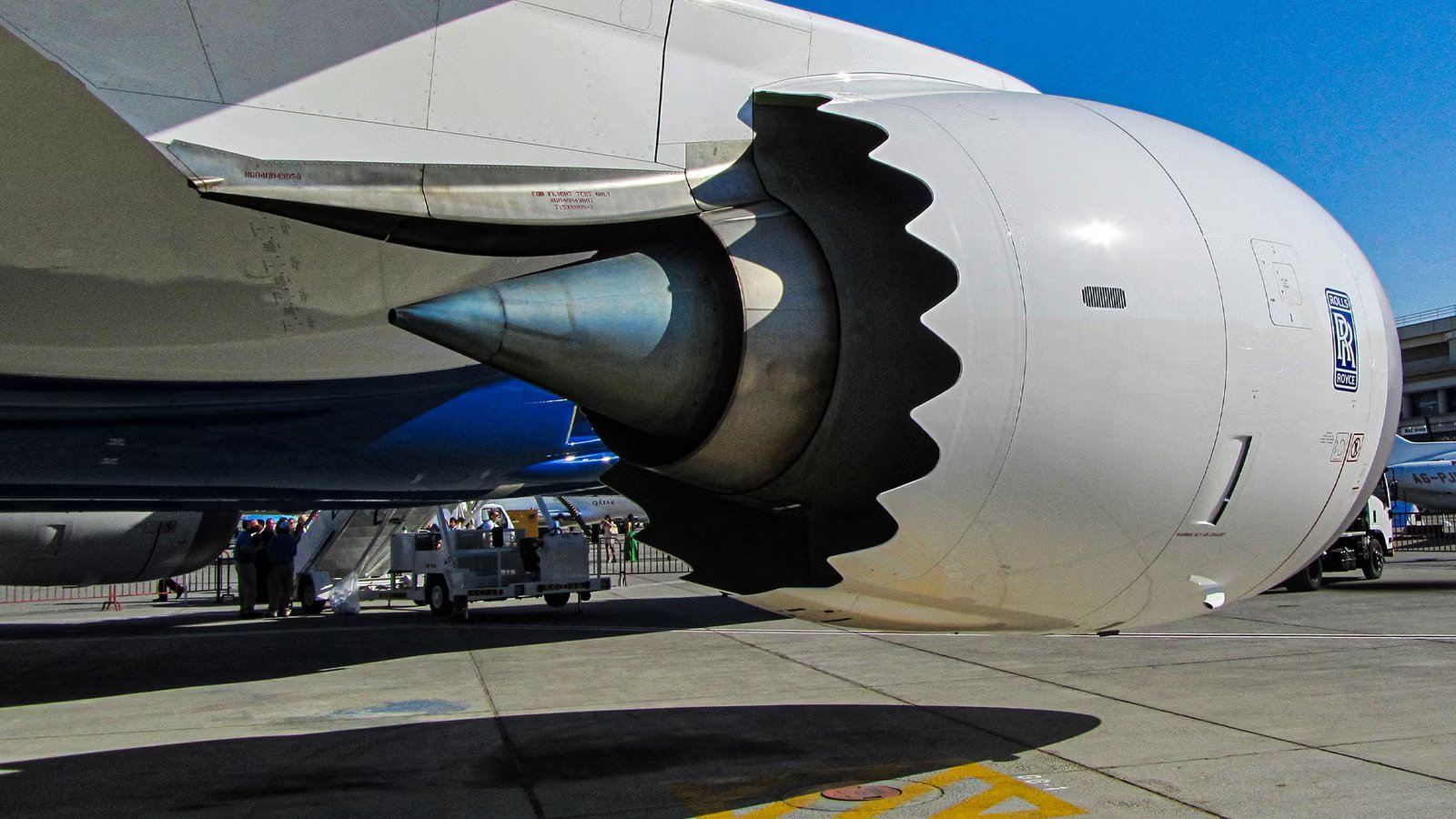
One redesigned blade could determine whether a Rolls-Royce Trent 1000 spends years flying between shop visits or returns to the maintenance facility far sooner than an airline would like. Rolls-Royce says its Trent 1000 XE standard delivers three times the time on wing of the Trent 1000 TEN it replaces, with Chief Executive Tufan Erginbilgiç putting the real-world figure as high as six years between shop visits for some customers. The improvement matters far beyond maintenance planning: the original Trent 1000 durability problems cost Rolls-Royce more than $3 billion, contributed to General Electric securing roughly two-thirds of the Boeing 787 engine market, and created a reliability challenge that followed the engine for years.
The obvious question is how Rolls-Royce moved from that history to an engine standard promising such a substantial improvement. The answer was not a single redesign or a single certification campaign. Rolls-Royce divided the upgrade into two certified phases, transferred proven technology from the Trent 7000, and expanded maintenance capacity as it prepared to retrofit the global 787 fleet. The result is a program whose success will ultimately be measured not by the engineering claims alone, but by how long the upgraded engines actually remain on wing and whether airlines continue choosing them.
What Actually Broke On The Original Trent 1000

The Trent 1000 entered service on the Boeing 787 in 2011, but within five years, corrosion-related fatigue cracking had emerged in its intermediate- and high-pressure turbine blades. As documented by Aviation Week, Rolls-Royce eventually acknowledged that durability issues extended to as many as 500 engines across the global fleet.
The consequences reached beyond individual engine inspections. Groundings peaked at close to 50 Dreamliners in 2018, and in April of that year the FAA reduced extended-range twin-engine operations for Package C-powered aircraft from 330 to 140 minutes. That restriction particularly affected long trans-Pacific routes, where additional diversion requirements could have a direct impact on network planning. The financial consequences were similarly significant. Total in-service costs tied to the Trent 1000 eventually ran past £2 billion ($2.704 billion), and General Electric GEnxused the opening to capture roughly two-thirds of the in-service 787 fleet.
Rolls-Royce responded with the Trent 1000 TEN, which incorporated technology from the newer Trent XWB and addressed several of the original engine’s durability weaknesses. As Simple Flying has detailed, however, the TEN retained elements from the original Trent 1000 architecture and did not deliver the same durability and performance as the clean-sheet Trent XWB. The central question, therefore, became much more specific: what had to change inside the engine for Rolls-Royce to make a three-times improvement credible?
Why The New Blade Is Different

The most important change is the high-pressure turbine blade, but the Trent 1000 XE is not simply an engine fitted with a stronger replacement part. Rolls-Royce divided the durability improvements into two certified phases, allowing the company to introduce the technology progressively while addressing several interacting factors affecting turbine life.
Phase one, certified by the FAA in June 2025, introduced a redesigned HPT blade with 40% more cooling, alongside changes to the combustion system, fuel spray nozzles, and engine electronic controller software. Rolls-Royce says the package on its own improves the time on wing more than double, and it was confident enough in the design to start building it into new engines from January 2025, five months before certification, to save lead time once approval came through, as confirmed by Rolls-Royce.
Phase two, certified in late 2025 and entering service through 2026, goes after the same blade from a different angle. The HPT blade shroud was redesigned to reduce weight and thus centrifugal stress, while advanced coatings were introduced on the blades and nozzle guide vanes. Rolls-Royce also revised nozzle guide vane film cooling and incorporated a combustor-to-turbine interface from the Trent XWB-84-EP. According to AeroMorning’s technical breakdown, phase two adds another 30% on top of phase one. Together, the two phases produce the Trent 1000 XE, the standard Rolls-Royce says triples time on wing over the TEN it replaces.
That distinction is important. The headline improvement comes from a coordinated set of changes around the turbine rather than from a single isolated component operating independently. But engineering changes still have to prove themselves under real operating conditions, and Rolls-Royce had an unusually useful source of evidence available before applying the technology to the 787.
Why Rolls-Royce Tested The Technology Elsewhere First

The strongest operational evidence behind the Trent 1000 XE comes from the related Trent 7000, which powers the Airbus A330-900. The engine has been flying with the same core durability technology since 2022, giving Rolls-Royce an opportunity to observe the behavior of the redesigned components before deploying them across the Trent 1000 fleet.
Rachel Walker, the Trent 1000 program manager, said some of the Trent 7000’s high-pressure turbine blades were already achieving up to triple time on wing in service, a result Rolls-Royce has pointed to directly when explaining its confidence in the 787 fix, as covered by Simple Flying.
By mid-2026, that evidence base had become considerably larger. Erginbilgiç told analysts the fleet operating with the new blades had accumulated almost three million engine flying hours, according to Leeham News and Analysis. That gives Rolls-Royce a substantial and more mature dataset than a typical new engine standard would have at this stage. It also explains why the company was prepared to build phase-one hardware into new engines five months ahead of FAA certification: the underlying technology was not new, only its application to the Trent 1000 was.
For airlines, that distinction matters. A new engine standard always involves some degree of uncertainty, but the XE is not being introduced without operational evidence from another engine. The remaining challenge is therefore less about proving that technology can work and more about implementing it across hundreds of engines already in service.
How Rolls-Royce Is Retrofitting The 787 Fleet

Turning an engineering improvement into a fleet-wide upgrade is a considerably larger task than certifying a new blade.  Lufthansa became the first airline to fly a Trent 1000 XE-powered 787 in November 2025, and the XE is now the production standard on every new Dreamliner delivery. Retrofitting the in-service fleet is a slower process: by early 2026, upwards of 50 in-service engines carry the improved blades, as reported by MRO Business Today, with Rolls-Royce targeting the full fleet by the end of 2027.
Hitting that date requires more than a finished blade design. Rolls-Royce has added dedicated maintenance capacity in the UK, Germany, and Singapore, representing roughly 100 additional shop visits per year, as outlined in Products Finishing’s reporting on the blade coatings. The Trent 1000 effort is only part of a wider £1 billion ($1.352 billion) durability push covering the whole modern Trent portfolio, including the Trent 7000, Trent XWB-84, and Trent XWB-97, and which has pushed Rolls-Royce’s own mid-term time-on-wing target from an original 40% improvement up to 80% by 2027.
A retrofit schedule and new hangar capacity fix the supply side of the problem. Once the hardware, certification, and maintenance network are in place, the next question becomes commercial: are customers actually responding to the improved proposition?
Why Market Response Matters

Investors reacted quickly. Rolls-Royce shares jumped after the company raised its profit guidance on the back of the engine fixes, Reuters reported via TradingView, treating the durability program as a credible turnaround rather than another interim patch. That distinction matters because Rolls-Royce has claimed to have fixed the Trent 1000 before, with the TEN itself pitched as the definitive answer in 2016.
Customer orders are a harder test than a share price, and here Rolls-Royce has its clearest data point yet: LATAM Airlines selected the Trent 1000 XE for its Boeing 787 fleet, a customer win Roll-Royce explicitly credits to the time-on-wing improvements and expanded MRO network, per Aerotime’s coverage of the deal. That single order will not close a gap as wide as two-thirds of the fleet going to GE’s GEnx, an engine that, like GE Aerospace’s other current flagship, the exclusive and equally expensive GE9X detailed by Simple Flying, benefits from being the safer, higher-volume choice on a program Rolls-Royce is still working to win back.
LATAM’s selection provides an important data point, but one customer cannot establish a market reversal. The more revealing measure will be whether additional operators reach the same conclusion as their existing Trent 1000 engines enter the retrofit cycle and the XE accumulates more years of service.
The 2027 Test For The Trent 1000 XE

The Trent 1000 XE’s real test is therefore already on the calendar. Rolls-Royce’s target to complete the in-service retrofit program by the end of 2027 will put the new standard across the fleet at a scale that makes its durability claims much easier to evaluate. The key evidence will not simply be the number of upgraded engines, but the intervals between their subsequent shop visits.
That evidence will also matter beyond the 787. The blade, coating, and cooling technology form part of Rolls-Royce’s wider £1 billion ($1.352 billion)Trent durability program, which spans the Trent 7000 and Trent XWB variants as well as the Trent 1000. A successful XE campaign would therefore provide additional operational evidence for technologies being used across a much broader portion of the company’s civil engine portfolio.
For now, the numbers point the right way: two certified phases, a fleet already flying past 50 upgraded engines, and a returning customer in LATAM. Whether that adds up to a genuine second choice for 787 operators, rather than a well-engineered footnote to GE’s dominance of the program, is a question only the next two years of shop visits will answer.
What makes this attempt different from the earlier ones is that Rolls-Royce is no longer asking airlines to take three times the time on wing on faith. It is asking them to look at nearly three million hours already flown on a sister engine, a production line already building to the new standard, and one carrier that has already been signed. That is a much smaller leap of faith than the one the TEN asked for ten years ago, which may be the real reason this fix is landing differently.